For today’s students, the autumn break is a welcomed respite—a week or two of relaxation nestled between the start of the new school year and the approach of the winter holidays. However, for many generations of Germans, the term "Herbstferien" (autumn holidays) is inseparable from a much more labor-intensive reality: the "Kartoffelferien" or "Potato Holidays." This uniquely European phenomenon, rooted in the agricultural necessities of the 19th and 20th centuries, represents a fascinating intersection of education, rural economy, and social history.
Main Facts: The Origin of a Tradition
The term "Kartoffelferien" describes a period in the academic calendar that was specifically synchronized with the harvest of the potato. In an era before mechanized farming, the potato was the most vital staple crop for the German population, particularly during the winter months. Because harvest cycles were labor-intensive and manual, the lack of sufficient adult manpower necessitated the recruitment of the youngest members of society.

Historically, the school system in the 18th and 19th centuries was not the rigid, year-round institution we recognize today. As compulsory education became more widespread, state authorities faced a recurring problem: during the peak harvest season, classrooms were often empty. Parents, facing the economic reality of potentially losing their winter food supply, prioritized field work over school attendance. Rather than punishing this widespread truancy, regional authorities and school boards adopted a pragmatic approach: they formally closed the schools, effectively turning the harvest season into an official school holiday.
A Chronological Perspective: From Agrarian Necessity to Modern Leisure
The 19th Century: Pragmatism Meets Education
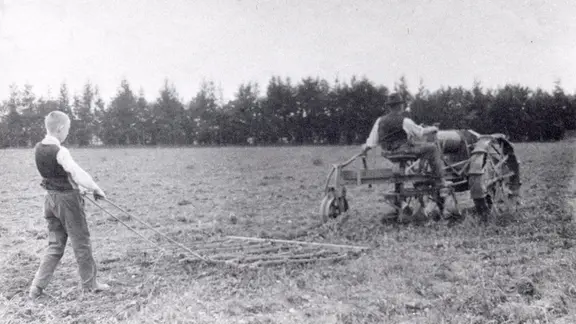
In the 1800s, the introduction of compulsory schooling was frequently at odds with the "rhythm of nature." As children were essential labor on small farms, the absenteeism rate during the autumn months was staggering. The decision to codify the "Potato Holidays" was an admission that agriculture took precedence over literacy. This practice was not a monolithic event but a series of regional adjustments. In some areas, these were known as "Heuferien" (Hay Holidays) in the summer or harvest breaks in the autumn.
The Early 20th Century: Hard Labor
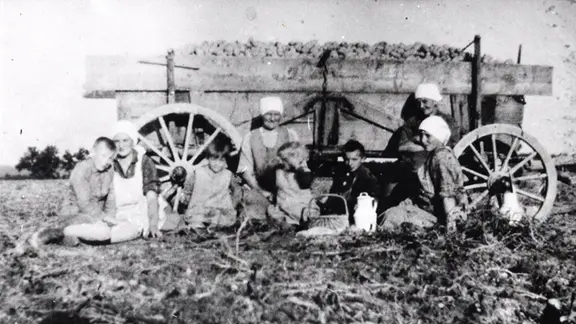
By the early 1900s, the practice was firmly established. Photographs from this era show children—some as young as six or seven—working alongside adults on large harvest wagons. The work was physically demanding: digging, gathering, and hauling heavy baskets of potatoes. It was not a vacation in the modern sense; it was a seasonal shift in employment.
The Era of the DDR: State-Organized Service
The post-World War II period saw a divergence in how these holidays were handled. While in West Germany the practice slowly faded as mechanized farming rendered child labor unnecessary, the German Democratic Republic (DDR) transformed the "Potato Holidays" into a state-organized institution.
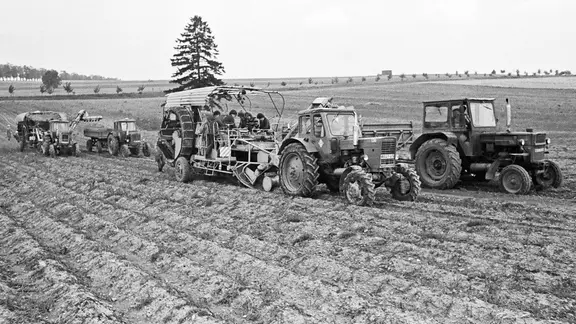
Under the socialist regime, the "Ernteeinsatz" (harvest deployment) became an ideological tool. The 1965 Law on the Integrated Socialist Educational System linked schooling with "productive labor." Students were no longer just helping their families; they were mobilized to assist the LPGs (Agricultural Production Cooperatives). Participation was officially "voluntary," but in practice, there was immense social and political pressure to attend. Entire school classes were transported to the fields, and attendance was strictly monitored.
Supporting Data and Personal Narratives
The lived experience of those who grew up in the 20th century provides a nuanced view of this era. For many, the "Potato Holidays" remain a vivid childhood memory—part of a communal experience that is often remembered with a mix of fondness and exhaustion.

The Economics of the Harvest
Manfred Ramminger, who grew up in Aue-Bad Schlema in the 1960s, recalls the financial incentive. "We would fill the baskets together, and then split the money," he says. For a child in that era, the 30 to 50 Pfennigs earned per basket represented a meaningful contribution to their pocket money. Similarly, Heinz Poller, an local historian, notes that while the work was hard, it was also a time of camaraderie. For many students in the 6th to 8th grades, the work day was limited—often running from 8:00 AM to 1:00 PM—and was punctuated by simple, hearty meals like milk and bread with lard.
The "LAE": Labor and Recreation
As the DDR matured, the state developed the "Lager für Arbeit und Erholung" (Camps for Labor and Recreation, or LAE). These camps were intended to combine agricultural work with socialist upbringing. Carmen Piper, who experienced these camps in Mecklenburg in the late 1980s, remembers them as a formative, if not always voluntary, experience.

"In the next holidays, you could—usually the boys—even drive the tractor across the field," she recalls. The work, often four to six hours a day, was balanced with evening activities like campfires, sports, and swimming. For many, this was their first time living away from home, and the bonds formed during those harvest seasons lasted long after the fields were cleared.
Official Responses and Ideological Framing
The state’s reliance on children for the harvest was a symptom of chronic labor shortages in the centrally planned economy. Because agricultural machinery was often outdated or unavailable, the "human factor"—specifically the "free" labor of the youth—was an essential line item in the state’s economic plans.
Official documents and school curricula of the time framed this labor as an educational necessity, teaching children the "value of work" and their duty to the collective. By integrating the FDJ (Free German Youth) and the Pioneers into the management of these harvests, the state ensured that the "Potato Holidays" served a dual purpose: securing the food supply and fostering socialist loyalty.
Implications: The Legacy of the Potato Holidays
Today, the "Potato Holidays" are largely a relic of the past. Modern, highly efficient agricultural machinery has eliminated the need for manual labor in the fields. The term itself has survived, though its meaning has shifted from a period of toil to a period of leisure.

Cultural Continuity
Interestingly, the concept is not unique to Germany. Denmark also has a tradition of "kartoffelferie," proving that the agrarian influence on the school calendar was a shared Northern European reality. In regions like Bavaria and parts of Austria, the term remains in common usage, even though the connection to the potato harvest has long since been severed.
Sociological Impact
For the generations that lived through the organized harvest deployments of the 20th century, the "Potato Holidays" represent more than just a calendar date. They symbolize a time when the boundaries between the classroom and the field were porous. It was a time of collective responsibility, where the survival of the community—ensuring the winter potato supply—rested on the shoulders of the youngest citizens.

While the physical hardships of the past have vanished, the cultural footprint remains. Every autumn, when the leaves turn and schools close, the nostalgic references to the "Potato Holidays" serve as a reminder of a time when the rhythm of the school year was dictated not by pedagogical theory, but by the fundamental human need to bring in the harvest. It is a chapter of history that highlights the remarkable adaptability of societies in the face of economic necessity—and the enduring power of shared experience.