As Europe navigates the complexities of the climate transition, the search for sustainable, scalable heating solutions has reached a critical juncture. In Germany, the vision of a carbon-neutral building sector is increasingly tethered to an unlikely source: the country’s major waterways. From the Rhine to the Elbe and the Danube, cities are beginning to tap into the massive, latent thermal energy stored in river water. This process, known as "aquathermie," represents one of the most promising technological leaps in the race to decarbonize urban heating systems.
The Dawn of Aquathermie: Tapping the Current
The concept is deceptively simple: use the consistent temperature of river water as a heat source for massive industrial-scale heat pumps. While individual heat pumps have become a standard fixture in residential retrofitting, the municipal-scale application—pumping heat from a river into district heating networks—is a game-changer for densely populated urban centers like Cologne, Dresden, and Hamburg.
In Cologne-Niehl, at the banks of the Rhine, a massive construction site serves as a physical manifestation of this shift. Here, Rheinenergie is currently executing a 280-million-euro project, a facility designed to extract thermal energy from the Rhine starting in 2028. This isn’t just a pilot project; it is a powerhouse of infrastructure. Once fully operational, the plant will utilize three massive compressors to generate 150 megawatts of thermal output. To put this into perspective, that is the equivalent capacity of roughly 30,000 standard residential heat pumps.

A Chronology of the Thermal Shift
The path to this moment has been paved with years of meticulous planning and a fundamental shift in energy policy.
- Initial Feasibility (2020–2022): As the federal "Wärmewende" (Heating Transition) became a central pillar of climate legislation, municipal utilities began exploring non-combustion alternatives to gas-fired district heating.
- The Planning Phase (2023–2024): Extensive environmental impact assessments and technical scaling studies were conducted. Engineers realized that a larger, centralized unit was more economically and ecologically efficient than several smaller, decentralized plants.
- Construction Launch (Summer 2025): Ground was broken in Cologne-Niehl. The project moved from theoretical modeling to reality, supported by significant federal subsidies, without which such a capital-intensive investment would struggle to remain competitive against legacy fossil fuel systems.
- Target Operational Date (2028): The facility is scheduled to go online, with projections estimating an annual reduction of 100,000 to 150,000 tons of CO2.
The Physics of River-Based Heating
The efficiency of river-based heat pumps is rooted in the fundamental properties of water. Unlike air, which is the heat source for typical household heat pumps, water is significantly denser.
"If you cool one kilogram of water by just one degree, it releases four times more thermal energy than the same volume of air," explains Jessika Gappisch, a leading expert in aquathermie at the Technical University of Darmstadt. Because river temperatures are more stable than air temperatures—they do not fluctuate as wildly during cold snaps—the heat pumps can operate with a much higher coefficient of performance (COP).
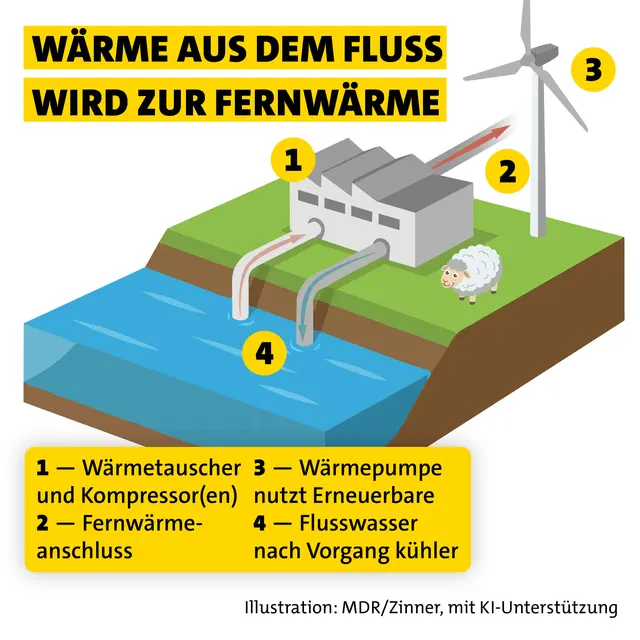
The process functions like a reversed refrigerator: a heat exchanger pulls thermal energy from the river water, a heat pump elevates that energy to the required temperatures for district heating, and the cooled water is then returned to the river. The system is designed with sophisticated safety protocols, including intake systems located deep in the riverbed to ensure operations can continue even during extreme low-water conditions, which have become more frequent due to the climate crisis.
Supporting Data and Scaling Potential
The potential for this technology across Germany is immense. A recent analysis by Gappisch’s research team suggests that cities situated along major rivers—Frankfurt, Magdeburg, Bonn, and beyond—are sitting on a massive, untapped thermal reserve.
The Cologne project alone targets the heating needs of 50,000 households—roughly the size of a small German city. While the current focus is on the Rhine, the scalability of this model is being explored nationwide. From Zittau to Flensburg, smaller pilot projects are testing the limits of local water bodies, including lakes and even coastal seawater.

The economic argument is bolstered by the fact that the hardware—the heat pumps and compressors—is increasingly manufactured within Germany, creating a domestic supply chain that supports the green transition while keeping high-tech manufacturing jobs within the country.
Official Perspectives and Regulatory Hurdles
Despite the technological promise, the implementation of aquathermie is not without its bureaucratic and ecological challenges. The primary concern among regulators and environmental groups is the impact of water temperature changes on aquatic life.
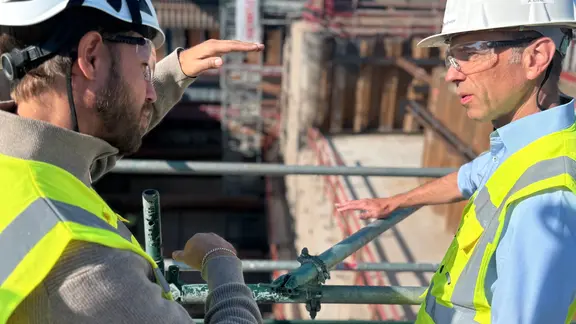
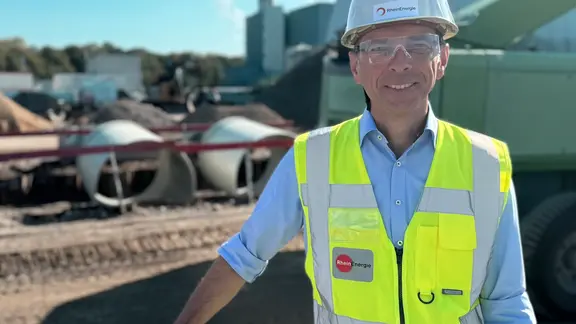
"We are dealing with a new frontier in environmental regulation," notes Armin Ehret, Head of Power Plants at Rheinenergie. "The goal is to extract heat without disrupting the delicate ecological balance of the river."
Current projections indicate that the water returned to the Rhine will be approximately two to four degrees cooler than the intake temperature. Experts argue that this is actually a net positive. As climate change continues to drive up average river temperatures—often to levels that threaten native fish species—the cooling effect of these heat pumps acts as a localized countermeasure, providing a thermal refuge for aquatic ecosystems.
Furthermore, the scale of water diversion is remarkably low. Even during periods of record-low water levels, the volume required for the Cologne plant represents less than one percent of the total flow of the Rhine. "The fish are not going to be swimming in ice," Ehret asserts, emphasizing that the engineering is designed to be highly conservative and protective of the river’s biodiversity.
Broader Implications: A Model for Europe
The German push into aquathermie is part of a broader European trend. Neighboring countries, particularly in Scandinavia, have been utilizing large-scale heat pumps for years. Critics of the German pace often point to the success of cities like Esbjerg, Aarhus, and Aalborg in Denmark, where river and seawater heat pumps have already been integrated into municipal grids using German-engineered technology.
The "German lag" in adopting this technology is currently being rectified. By integrating these systems directly into existing district heating networks—often alongside gas-fired peaking plants that act as a bridge—utilities are building a resilient, hybrid infrastructure. This approach ensures that when renewable energy is abundant, the heat pumps run on green electricity, making the heating process entirely climate-neutral.
The Path Forward
The transition to river-based heating is not a silver bullet, but rather a vital component of a diversified energy strategy. As Jessika Gappisch highlights, the feasibility of aquathermie is highly dependent on local circumstances. It is a location-specific solution that requires a deep understanding of river hydrology, urban density, and the availability of district heating infrastructure.
However, the success of the Cologne-Niehl project serves as a beacon. It demonstrates that the path to a post-carbon society does not always require inventing new forms of energy, but rather identifying and capturing the energy that is already flowing right beneath our feet. As the construction continues and the first pipes are laid, the residents of these river cities are looking at their local waterways with new eyes—not just as scenic landmarks or trade routes, but as the essential, pulsing arteries of a future, sustainable urban energy system.
The "Wärmewende" is no longer a theoretical debate about policy; it is being forged in steel and concrete on the banks of the Rhine. If successful, the model of tapping into the kinetic and thermal power of rivers will likely be exported to every major river city in Europe, marking a quiet, watery revolution in how we keep our homes warm in a warming world.