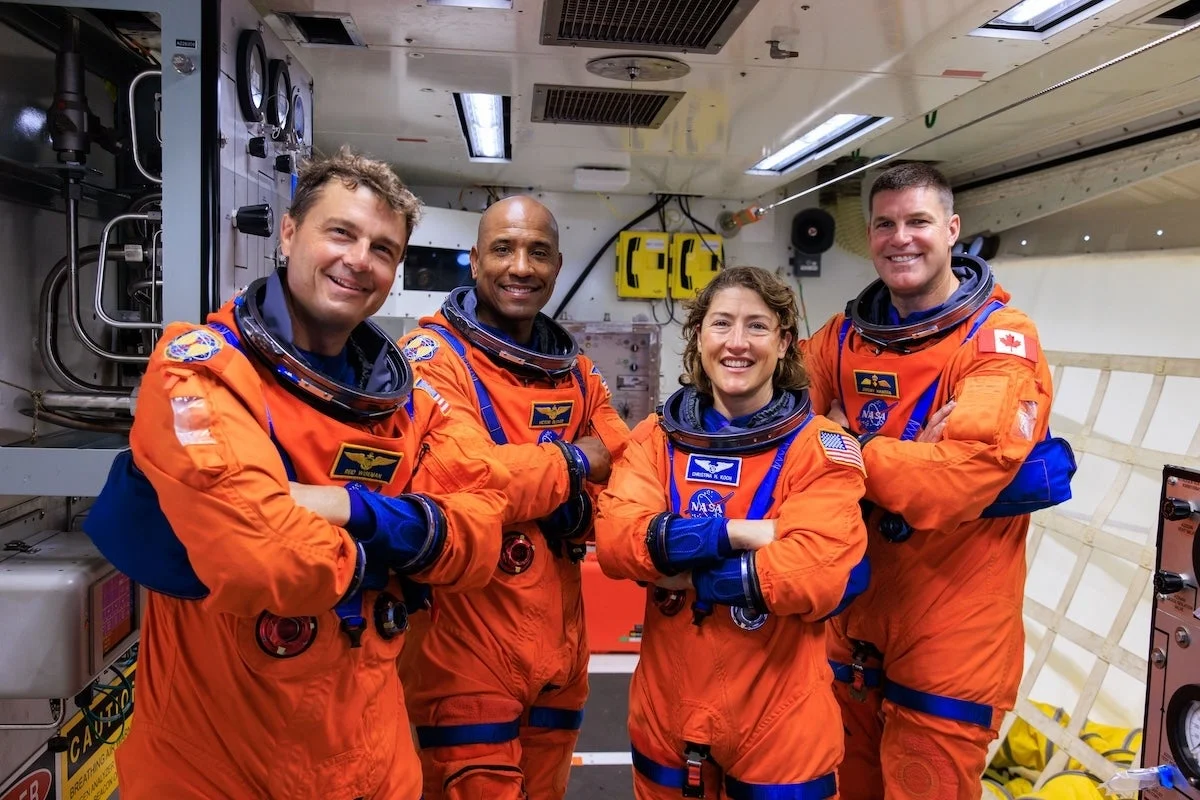
The Artemis II mission, NASA’s ambitious endeavor to return humans to the lunar vicinity for the first time in over half a century, was heralded as a "historic" leap into a new era of space exploration. While the world watched through high-definition live streams and virtual reality simulations, cheering for the triumphant return of humanity to deep space, the reality for those inside the Orion capsule was far more visceral.
For mission commander Reid Wiseman, the mission was not merely a technical triumph; it was a psychological journey marked by moments of profound existential dread. Speaking at the Starmus Festival in Tenerife, Spain, the 50-year-old astronaut provided a rare, unvarnished look at the fear that gripped him as he and his crew ventured into the silent, unforgiving vacuum of space.
The Chronology of Fear: A Moment of Doubt
The tension reached its zenith during the most isolated phase of the mission: the transit around the far side of the moon. NASA’s mission control in Houston had provided the crew with specific telemetry data, stating that the maximum distance from Earth would be 219,667 nautical miles (approximately 407,000 kilometers).
For an astronaut, these numbers are not just statistics; they are the tether to survival. Wiseman recalled the intense focus required to track the distance metrics in real-time. "I was watching the display, and when it hit 219,667, I thought, ‘Great, that’s the furthest point from Earth; the next value will be 219,666—we’re on our way back,’" Wiseman explained.
However, space rarely adheres to the expectations of human logic. Three minutes later, the display read 219,668. Then, it continued to climb. As the telemetry crept toward 219,669, a cold, creeping realization set in. "I thought, ‘Wait a minute, this is strange.’ As the number continued to climb, I was overcome by real fear, because I was terrified that we had gone too far," Wiseman confessed. "I thought we were never coming home. I was terrified."
It was only when the numbers finally began to descend that the tension in the cabin broke. The moment the trajectory turned back toward the blue marble, the crew erupted into spontaneous celebration. "That was the moment I knew there was a very good chance we were going to make it," Wiseman said.
The Historical Context: Bridging the 1972 Gap
The Artemis II mission represents a monumental milestone in aerospace history. As the first crewed mission to orbit the moon since the conclusion of the Apollo program with Apollo 17 in 1972, the stakes were impossibly high. Launched on April 1 from the Kennedy Space Center in Florida, the crew spent six days traversing the vast expanse between Earth and the lunar orbit before executing their return trajectory.
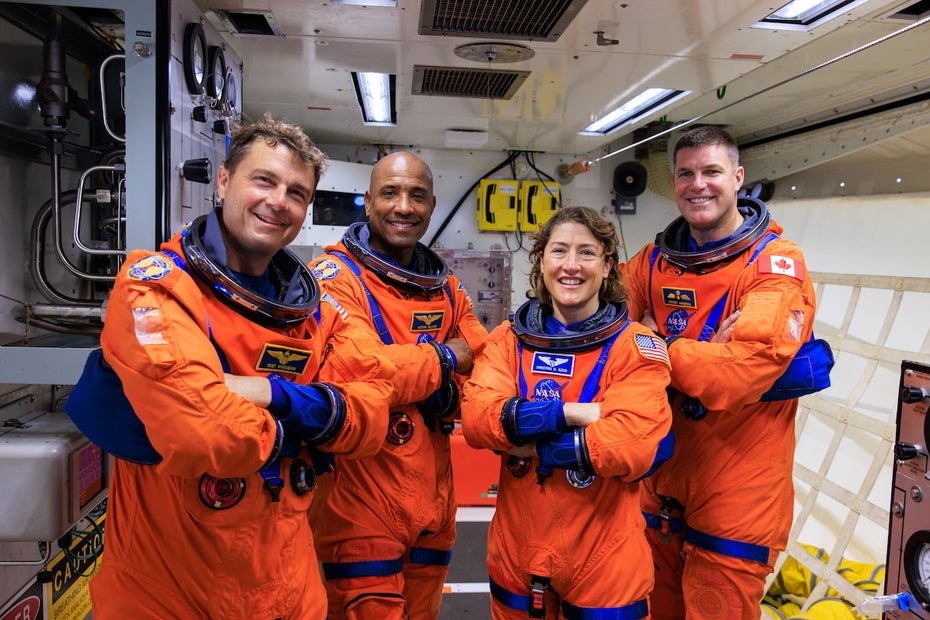
Unlike the Apollo missions, which were defined by the Cold War space race, Artemis II is defined by international cooperation and the goal of establishing a sustainable presence on the moon. However, the physical and psychological toll of such a mission remains as daunting today as it was in the early 1970s. The distance involved—nearly 400,000 kilometers—places the crew in a category of human experience shared by only a handful of individuals in history.
The "Earth-Woe": A New Psychological Phenomenon
In an extensive interview with The Telegraph, Wiseman described a lingering emotional residue from his time in deep space. He characterized his experience as a profound, specific form of homesickness he termed "Earth-woe."
This phenomenon is distinct from the mundane longing for home. It is a shift in perspective born from the fragility of the human condition. "You look at an Earth that is so tiny that it fits under your own thumb," Wiseman reflected. "Around it, there is absolute blackness, and that tiny dot down there is our home."
This perspective created an intense desire for the sensory realities of Earth. Wiseman spoke of the longing for simple, terrestrial comforts: the sight of his children, the embrace of friends, the feeling of grass underfoot, and the taste of fresh salad. It was a yearning for the biological reality of existence, a stark contrast to the sterile, pressurized environment of the Orion capsule.
Supporting Data: The Rigor of Deep Space Travel
The physical challenges of the Artemis II mission are underpinned by a massive array of telemetry and life-support systems. To understand Wiseman’s fear, one must understand the environment. The Orion spacecraft is designed to sustain human life in an environment that is lethal by nature.
- Radiation Exposure: Unlike low-Earth orbit missions, Artemis II crews are subjected to higher levels of cosmic radiation as they exit the protective magnetosphere of the Earth.
- Communication Lag: At 400,000 kilometers, the light-speed delay in communication becomes a tangible barrier. While only a few seconds, this latency creates a psychological divide between the crew and mission control, forcing the astronauts to rely heavily on their own judgment.
- Structural Integrity: The re-entry phase, where the capsule must survive temperatures of nearly 2,800 degrees Celsius, is the ultimate test of human engineering.
Official Responses and Mission Implications
NASA officials have praised the transparency of the Artemis II crew, noting that understanding the psychological aspect of long-duration space flight is just as critical as testing the rocket’s propulsion systems.
"The emotional vulnerability expressed by Commander Wiseman provides us with invaluable data on how human beings process the isolation of deep space," stated a NASA spokesperson. "We are not just sending machines; we are sending people. Their mental resilience is the most important component of the mission architecture."
The implications of these insights are already influencing the training modules for future Artemis missions, including the upcoming Artemis III landing. By acknowledging the "Earth-woe" and the fear of the unknown, NASA is better equipped to support future crews as they embark on longer stays, such as those planned for the Gateway lunar station and eventually, the transit to Mars.
The Final Descent: A Moment of Survival
The culmination of the mission occurred during the atmospheric entry. As the Orion capsule pierced the Earth’s atmosphere, the deployment of the three main parachutes served as the final threshold of safety.
Wiseman recalled the atmosphere inside the cabin at that exact moment: "The crew members grabbed each other’s hands and started cheering, because for the first time, it really hit us—we were actually going to survive this whole thing."
The relief was palpable, but the transformation of the crew was complete. The journey back was not just a return to the physical world, but a reconciliation with the value of life on Earth.
Conclusion: Looking Toward the Future
The Artemis II mission has successfully proven that humanity can return to the moon, but it has also served as a profound reminder of the cost of exploration. Reid Wiseman’s candid admission of fear does not diminish his achievement; rather, it elevates it.
True courage is not the absence of fear, but the ability to perform one’s duty in the face of the unknown. As NASA looks toward the next phase of the Artemis program, the lessons learned from Wiseman and his team will serve as a foundation for all who follow. The "Earth-woe" they experienced is a small price to pay for the expansion of human knowledge, but it is a vital reminder of why we explore: to better understand the fragility and the beauty of the home we leave behind.
As we prepare for the next giant leap, the world now understands that behind the sleek hardware and the mission patches are human beings who, despite their rigorous training, feel the same terror and longing as any of us—and who find the strength to return, forever changed by the vastness of the void.