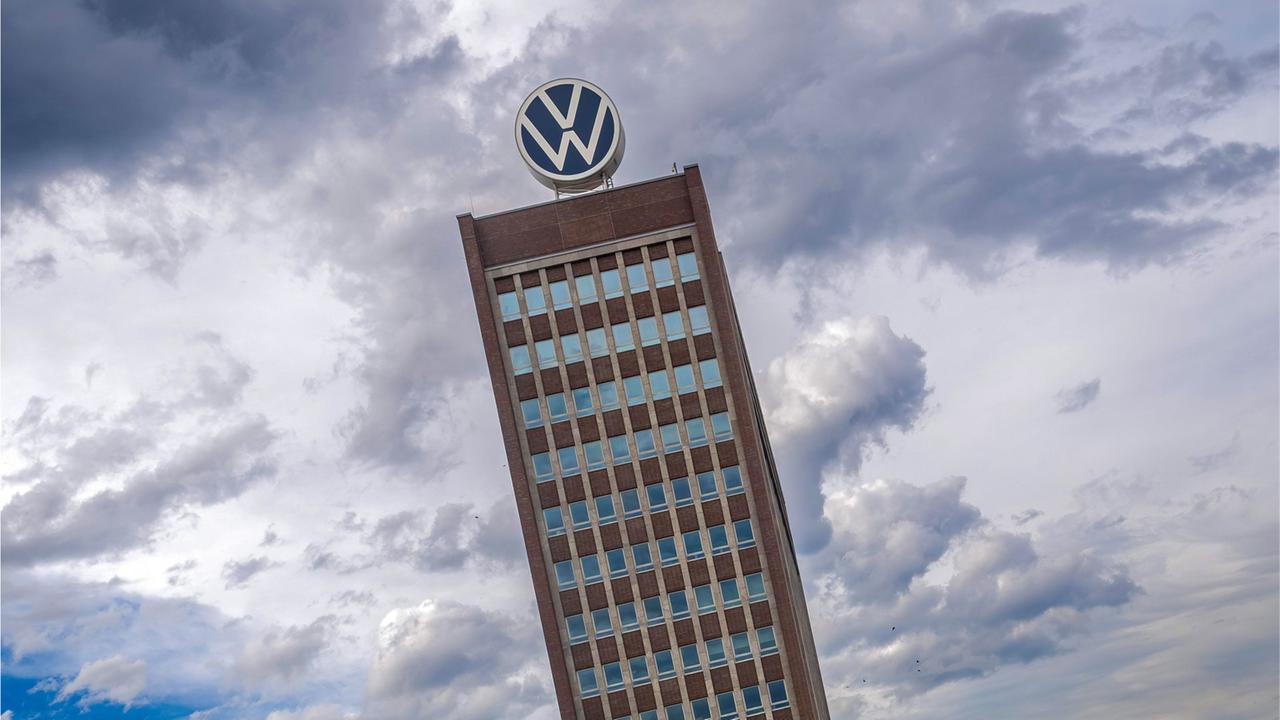
Wolfsburg, Germany – October 23, 2026 – The iconic Volkswagen tower in Wolfsburg, a symbol of German industrial might, stands witness today to a pivotal moment in the company’s history. High-level talks are underway between Volkswagen’s executive board and representatives from the powerful IG Metall trade union and the works council, aimed at addressing a deepening crisis that threatens to redefine the future of Europe’s largest automaker. With a backdrop of proposed mass job cuts, sweeping cost-saving measures, and looming factory closures, the atmosphere is charged with tension, reflecting a fundamental struggle between corporate profitability and long-held assurances of employee security.
The automotive giant, facing unprecedented global competition and the immense costs of transitioning to electric mobility, is pushing for radical restructuring. However, these plans collide head-on with a "Future Collective Bargaining Agreement" forged just two years ago, which guaranteed job stability and investment in German sites in exchange for significant worker concessions. As Volkswagen seeks to renegotiate the terms of its survival, the outcome of these discussions will not only shape the fate of over 130,000 employees in Germany but also serve as a critical barometer for the future of industrial relations in the heart of Europe.
The Core of the Crisis: A High-Stakes Showdown
At the heart of today’s meeting lies a review of the "Zukunftstarifvertrag 2024" (Future Collective Bargaining Agreement 2024). The works council and IG Metall demanded these talks in mid-September, seeking urgent clarity on the new, far-reaching cost-cutting decisions approved by VW’s supervisory board. For the union, these new measures directly contradict the spirit and letter of the 2024 agreement, which was hailed as a landmark achievement designed to secure the company’s future while protecting its workforce.
Employees, having already made substantial sacrifices under the previous accord – including reduced bonuses, frozen wage increases, and the phased elimination of 35,000 jobs – now face the prospect of even deeper cuts. The central question looming over the negotiating table is whether, and how, Volkswagen intends to uphold its hard-won commitments. Conversely, management has also requested the meeting to explain why the previously agreed-upon savings are no longer deemed sufficient in the face of escalating economic pressures. The dissonance between past promises and present imperatives has ignited a fierce debate, threatening to unravel decades of cooperative industrial relations at Volkswagen.
A Chronology of Escalation: From Promises to Precarity
Understanding the current standoff requires a look back at the sequence of events that have led to this critical juncture, highlighting the rapid deterioration of Volkswagen’s economic outlook and the subsequent corporate response.
The 2024 "Future Collective Bargaining Agreement": A Fragile Truce
Just two years ago, Volkswagen and its labor representatives brokered what was then considered a visionary agreement. The "Zukunftstarifvertrag 2024" was designed to navigate the initial phases of the automotive industry’s seismic shift towards electrification and digitalization. In exchange for significant concessions from the workforce, VW management offered robust guarantees: a steadfast commitment to no forced redundancies, a pledge against factory closures at German sites, and a promise of substantial investments in new products and facilities within Germany.
Workers contributed by accepting reduced bonuses and allowances, agreeing to a temporary freeze on wage increases, and facilitating the gradual reduction of approximately 35,000 jobs, primarily through early retirement and natural attrition. This deal was lauded as a model for how a major industrial player could adapt to technological change while maintaining social responsibility. It established a fragile truce, predicated on mutual trust and a shared vision for a sustainable future.
The "Zukunftsplan 2030": A New Era of Austerity
The optimism surrounding the 2024 agreement proved short-lived. By early September 2026, Volkswagen’s supervisory board, acknowledging the deepening challenges in the global auto industry, unveiled a far more aggressive strategy: the "Zukunftsplan 2030" (Future Plan 2030). This new blueprint aims to drastically improve the company’s profitability, setting an ambitious target of achieving a 9% operating profit margin by 2030, a significant leap from the recent 3.8%.
This audacious goal granted management a sweeping mandate to reorganize the entire group, identifying and implementing billions of euros in savings. The plan signals a departure from incremental adjustments, indicating a shift towards a more aggressive, market-driven approach to ensure long-term competitiveness. The sheer scale of the envisioned savings and restructuring measures immediately raised concerns among the workforce and union leadership about the viability of the previous commitments.
The Sword of Damocles: Mass Job Cuts and Uncertain Futures
One of the most contentious elements of the "Zukunftsplan 2030" is the proposed reduction of an additional 50,000 jobs worldwide over the next few years. Crucially, these are in addition to the job cuts already agreed upon in the 2024 contract. Reports suggest that up to half of these new reductions could impact German operations, intensifying fears of widespread unemployment within Volkswagen’s domestic workforce.
Beyond the immediate job losses, the plan casts a dark shadow over several key German production sites. The future of VW plants in Emden, Hanover, and Zwickau, along with Audi’s Neckarsulm facility, is explicitly stated as "open" beyond the years 2031 to 2034. This uncertainty directly contradicts the 2024 agreement’s promise of no factory closures, leaving thousands of employees and entire regional economies grappling with existential questions. For regions heavily reliant on Volkswagen, such as Lower Saxony, the prospect of such instability is profoundly unsettling.
Unilateral Contract Terminations: A "Declaration of War"
Further exacerbating tensions, Volkswagen escalated the situation dramatically at the end of September by unilaterally terminating ten collective bargaining agreements, either wholly or partially, effective December 31, 2026. These terminations include the crucial "Manteltarifvertrag," which governs fundamental aspects of employment such as working hours, holidays, and sick leave. Other agreements cover wage classifications and various allowances.
While not all provisions within these contracts will cease immediately, the termination affects approximately 130,000 employees of Volkswagen AG in Germany. This move, unprecedented in recent VW history, was immediately interpreted by IG Metall as a provocative act. Thorsten Gröger, IG Metall’s regional director for Lower Saxony and Saxony-Anhalt, characterized it as a "deep breach of VW culture" and a "declaration of war" against the workforce, indicating the union’s readiness for a fierce confrontation.
The Driving Forces: Why Volkswagen is Cutting Deep
Volkswagen’s management argues that these drastic measures are not optional but essential for the company’s survival and future prosperity in a rapidly evolving global automotive landscape.
Global Headwinds and Fierce Competition
Arne Meiswinkel, HR Board Member for the core VW brand, articulated the company’s rationale, stating that the economic environment has "gravely intensified" for the industry and, consequently, for Volkswagen. He emphasized that these "market changes are structural and profound," citing the aggressive entry of Chinese manufacturers into the European market with competitive, lower-cost electric vehicles as a primary driver of increased pressure.
Beyond the immediate threat from Asian competitors, Volkswagen faces a multitude of systemic challenges. The colossal investment required for the transition to electric vehicles, including battery production and charging infrastructure, strains financial resources. Simultaneously, the company must also invest heavily in software development, an area where traditional automakers have lagged behind tech giants. Persistent supply chain disruptions, fluctuating raw material prices, and a global economic slowdown further compound these difficulties. Volkswagen’s complex and often expensive internal structures, coupled with comparatively high labor costs in Germany, make it particularly vulnerable in this hyper-competitive environment.
The Profitability Imperative
The core objective behind the "Zukunftsplan 2030" is to significantly boost Volkswagen’s profitability and cash flow. A healthy profit margin is deemed crucial for funding the massive research and development needed for future technologies, maintaining shareholder confidence, and attracting top talent. Management believes that the previous savings initiatives, while substantial, are no longer sufficient to secure the desired level of competitiveness against global rivals who often operate with leaner structures and lower production costs.
Meiswinkel underscored the urgency, stating that the measures outlined in the "Zukunftsplan" must be implemented "quickly and consistently." This signals a determination from the executive board to act decisively, even if it means confronting strong resistance from labor representatives and potentially disrupting long-standing industrial peace.
The Battle Lines Drawn: Union Demands vs. Corporate Restructuring
The current negotiations are setting the stage for what could become one of the most challenging and complex industrial disputes in Germany’s recent history, pitting management’s drive for efficiency against labor’s demand for security and fairness.
IG Metall’s Stance: Upholding Agreements and Protecting Workers
The initial talks in late September, following the announcement of the "Zukunftsplan 2030," revealed a significant gap between the two sides. According to IG Metall, Volkswagen management expressed "considerable doubts" about its ability to fulfill the investment commitments for new models and factories agreed upon in the 2024 accord. Thorsten Gröger articulated the union’s strong reaction, stating that they were "disappointed and angry" by this revelation.
IG Metall and the works council are steadfast in their demand for answers to a comprehensive catalog of questions, seeking full transparency on the implications of the new savings plan. Betriebsrat (works council) chairwoman Daniela Cavallo has already warned of a "heftige Auseinandersetzung" (fierce confrontation) around the turn of the year. For the union, this is not merely a negotiation over numbers but a defense of collective bargaining agreements, job security, and the very culture of co-determination that has historically defined Volkswagen. They view the unilateral termination of contracts as an attack on workers’ fundamental rights and a betrayal of trust.
The Impending "Mega-Tarifverhandlung"
The termination of the ten collective bargaining agreements by Volkswagen is not merely an act of defiance but a strategic move designed to "open up a negotiation space," as the company put it. This indicates a desire to renegotiate the entire framework of employment conditions at VW. It is highly probable that all these contentious issues – the proposed savings measures from the "Zukunftsplan 2030," the amendments to the terminated contracts, the future of the threatened factories, and the union’s wage demands – will be bundled into one colossal negotiation.
Adding another layer of complexity, IG Metall is simultaneously pushing for a 5% wage increase for its members. While traditionally negotiated separately, it is widely considered unlikely that these diverse strands of conflict can be isolated. The comprehensive nature of the issues at stake suggests that the upcoming talks, which must commence by early December at the latest, will constitute a "mega-tariffverhandlung" unlike any seen at Volkswagen in recent memory. The outcome will determine not only the economic future of the company but also the social contract governing its workforce.
Implications and the Road Ahead
The unfolding crisis at Volkswagen carries profound implications, not just for the company and its employees but for the broader German industrial landscape and the celebrated model of co-determination.
The Threat of Industrial Action
The "Friedenspflicht" (peace obligation), which prevents strikes during ongoing collective bargaining agreements, will officially end for Volkswagen on December 31. This expiration date is critical. Given the deep dissatisfaction and anger expressed by IG Metall and the works council, industrial action is not merely a possibility but a distinct likelihood. Production standstills and widespread strikes could severely disrupt Volkswagen’s operations at a time when it can ill afford further setbacks, potentially causing significant financial damage and further delaying its ambitious transformation plans. The rhetoric from union leaders suggests they are prepared to mobilize their members to defend their interests vigorously.
A Test for the German Model of Co-Determination
Volkswagen has long been considered a prime example of the German model of co-determination, where employee representatives hold significant power on supervisory boards and in strategic decision-making. The state of Lower Saxony, as a major shareholder, also plays a unique role, often acting as a mediator and safeguarding employment interests. The current conflict, with its direct challenges to established agreements and the unilateral termination of contracts, represents a severe test for this model. Should management succeed in implementing its plans without significant union input or concessions, it could weaken the role of labor in Germany’s leading industries. Conversely, a strong showing from IG Metall could reaffirm the enduring power of collective bargaining and co-determination, albeit after a potentially bruising battle.
Volkswagen’s Pivotal Transformation
Ultimately, this profound struggle over jobs and profitability is intrinsically linked to Volkswagen’s existential transformation into a sustainable, future-proof mobility provider. The company faces a dual challenge: simultaneously managing the decline of its legacy internal combustion engine business while rapidly scaling up its electric and software capabilities. This requires immense capital, agility, and a highly motivated workforce. The current dispute, if not resolved constructively, threatens to undermine these efforts, distracting leadership, eroding employee morale, and potentially delaying crucial investments.
The outcome of the negotiations over the coming weeks will therefore be decisive. It will determine whether Volkswagen can achieve the necessary cost efficiencies to compete effectively in the global market, how it balances this imperative with its social responsibility towards its vast workforce, and whether the German model of industrial cooperation can adapt to the harsh realities of the 21st-century automotive industry. The eyes of the global automotive world, and indeed Germany itself, are fixed on Wolfsburg.