JAKARTA, Indonesia – October 23, 2026 – The world’s oldest known cave paintings, ancient masterpieces adorning the limestone walls of Indonesia’s remote islands, face an existential threat as the nation battles its most devastating wildfires in over a decade. Researchers are sounding the alarm that the intense heat and pervasive smoke from these blazes could irreversibly accelerate the decay of these priceless artworks, some dating back more than 67,000 years.
The fragile heritage, which predates European cave art by tens of thousands of years and offers unparalleled insights into early human creativity and migration, is now caught in the crosshairs of an environmental catastrophe. Experts warn that even without direct contact with flames, the extreme temperatures and the deposition of corrosive soot and particulate matter are creating a hostile microclimate within the caves, jeopardizing their survival.
A Priceless Heritage Under Siege
The significance of Indonesia’s rock art cannot be overstated. For decades, the narrative of early human artistic expression was largely centered on sites in Europe, such as Lascaux and Altamira. However, discoveries in Sulawesi and its surrounding islands have fundamentally rewritten this chapter of human history, pushing back the timeline for complex artistic endeavors by tens of millennia and highlighting the diverse origins of our creative impulses.
Unveiling Ancient Narratives
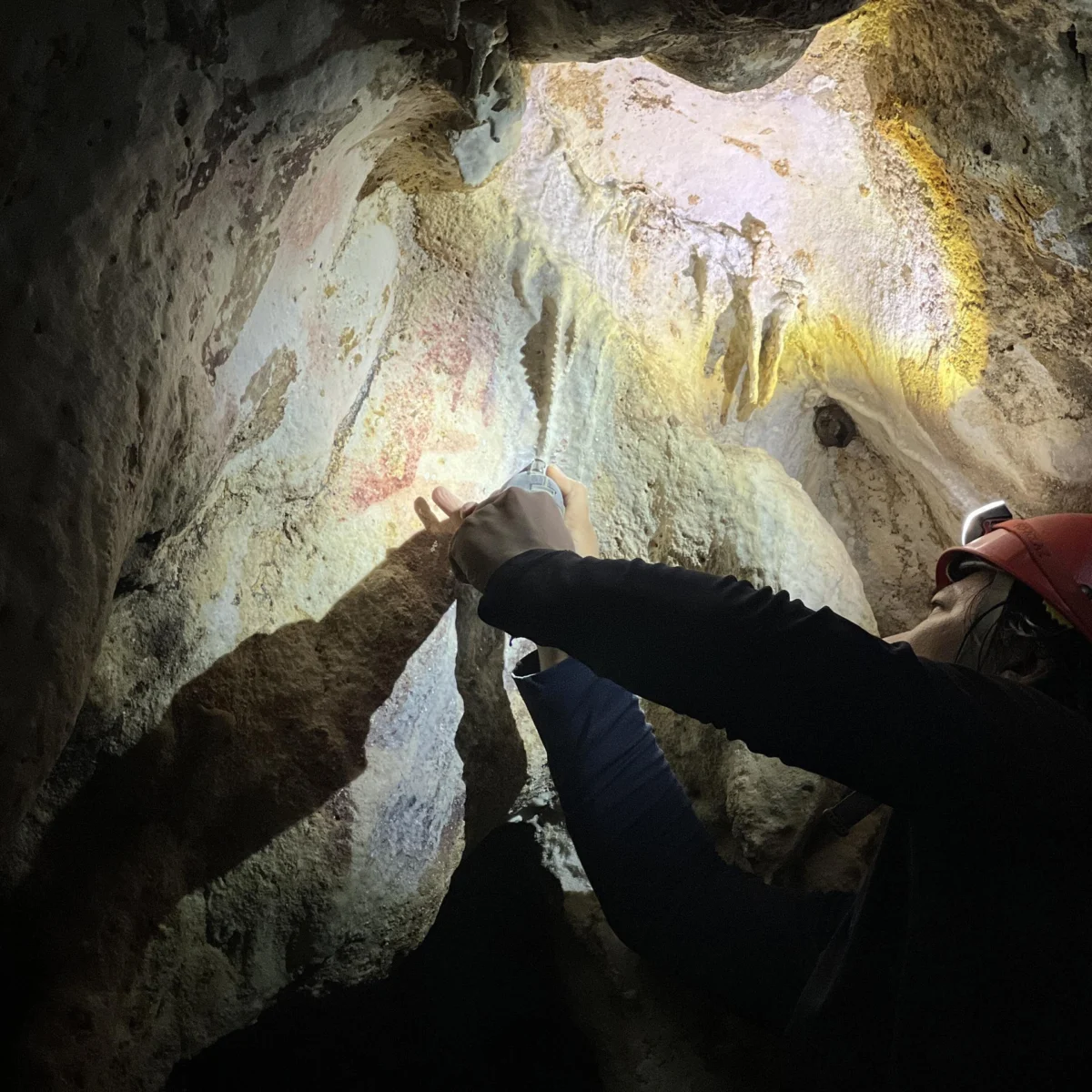
Among the most remarkable finds is a reddish hand stencil discovered in a cave on Muna Island, off the coast of Sulawesi. Dated to a staggering 67,800 years old, this simple yet profound imprint serves as a direct link to a human hand that lived during the Late Pleistocene epoch. It is a testament to the cognitive and symbolic capacities of early modern humans long before their widespread dispersal across the globe. These stencils, often created by blowing pigment over a hand pressed against a rock surface, are not merely decorative; they are believed to be deeply symbolic, potentially marking presence, identity, or even ritualistic practices.
Beyond hand stencils, the caves of Sulawesi and Muna are adorned with a menagerie of zoomorphic figures, depicting local fauna such as Sulawesi warty pigs and anoa (dwarf buffaloes), alongside anthropomorphic figures and abstract designs. These intricate compositions offer a window into the rich natural environment and spiritual lives of these early inhabitants, providing crucial data for archaeologists, anthropologists, and art historians alike. The precise dating of these artworks, achieved through methods like uranium-series dating of overlying mineral crusts (speleothems), has cemented their status as among the very earliest known examples of human artistic expression globally.
The Art of Sulawesi and Muna
The karst landscapes of Sulawesi and its satellite islands, characterized by dramatic limestone formations, hidden valleys, and labyrinthine cave systems, have long been a haven for both unique biodiversity and ancient human habitation. These geological formations, sculpted over millennia by water, have provided natural shelters and canvases for our ancestors. The rock art is typically found in deep recesses or high on cave walls, suggesting deliberate placement and a profound connection to these sacred spaces.
The pigments used, primarily ochre-based reds and blacks, demonstrate an advanced understanding of material sourcing and preparation. The longevity of these artworks, surviving for tens of thousands of years in relatively stable cave environments, underscores their resilience. However, this resilience is now being tested by unprecedented external pressures, as the climate crisis intensifies and human activities encroach further into sensitive ecosystems.
The Unfolding Catastrophe: Indonesia’s Wildfire Crisis
Indonesia is currently grappling with a wildfire crisis of epic proportions, described by officials as the most severe in over a decade. The archipelago, particularly its vast peatlands and rainforests, is highly susceptible to fires, especially during the dry season. This year, however, a potent combination of climatic factors and human-induced environmental degradation has created a perfect storm, leading to widespread and intractable blazes.
A Decade of Devastation
The current wildfire season, which escalated dramatically in the preceding months, is largely attributed to a prolonged El Niño event, a natural climate phenomenon that typically brings hotter, drier conditions to Southeast Asia. This natural variability has been exacerbated by decades of deforestation and land-use change, primarily for agricultural expansion, particularly palm oil and pulpwood plantations. The draining of peatlands, which are highly combustible when dry, has turned vast tracts of land into tinderboxes, making fires easier to ignite and incredibly difficult to extinguish.
Satellite data and ground observations indicate that millions of hectares have already been consumed by the fires across Sumatra, Borneo, and other parts of the Indonesian archipelago. The sheer scale of the blazes has generated immense plumes of smoke and haze, leading to severe air quality issues across Indonesia and neighboring countries, causing public health emergencies and disrupting daily life. The ecological impact is equally catastrophic, threatening critically endangered species such as orangutans, Sumatran tigers, and rhinos, and releasing vast quantities of carbon dioxide into the atmosphere, further contributing to global warming.
The Proximate Threat to Prehistory
While many of the fires rage in agricultural areas and forests, the smoke and heat are now encroaching upon the remote karst regions where the ancient cave paintings are located. The rugged terrain, while offering some natural protection, also makes fire suppression efforts incredibly challenging. The immediate concern for the cave art is not necessarily direct incineration, as the limestone caves themselves are largely fire-resistant. Instead, the threat comes from the indirect effects of the fires.
Reports from archaeologists and conservationists indicate that a pall of smoke hangs heavy over regions near the archaeological sites. Soot, a product of incomplete combustion, is settling on the cave walls, potentially obscuring the delicate pigments and, more critically, introducing acidic compounds that can react with the rock and the art itself. The elevated temperatures, even if not directly scorching, can alter the microclimate within the caves, accelerating natural weathering processes.
The Science of Decay: How Fires Threaten Ancient Art
The mechanisms through which wildfires can damage ancient cave art are complex and insidious, often operating on a microscopic level. It’s a race against time for scientists to understand and mitigate these processes before irreplaceable damage occurs.
Soot, Heat, and Humidity: A Lethal Cocktail
Archaeologists and conservation scientists explain that the primary threats arise from three interconnected factors:
-
Soot Deposition: The particulate matter released by wildfires, commonly known as soot, is a complex mixture of carbonaceous materials, organic compounds, and trace metals. When this soot settles on the cave paintings, it can physically obscure the art, making it less visible. More dangerously, soot often contains acidic components (e.g., sulfuric acid, nitric acid precursors) that, in the presence of moisture (even ambient humidity within a cave), can react with the limestone (calcium carbonate) of the cave walls and the mineral pigments. This chemical reaction leads to corrosion, altering the original composition of the rock and the pigments, causing them to fade, flake, or become discolored. The physical removal of soot, if attempted, is also extremely delicate and carries a high risk of damaging the fragile surfaces.
-
Heat Exposure: While the caves themselves might not burn, the surrounding rock masses and the air within the caves can absorb significant heat from nearby fires. Elevated temperatures can have several detrimental effects:
- Thermal Stress: Rocks, including the limestone of the caves, expand and contract with temperature fluctuations. Extreme heat can induce thermal stress, leading to micro-fractures, delamination (peeling off of layers), or spalling (flaking) of the rock surface, taking the artwork with it.
- Accelerated Chemical Reactions: Many chemical degradation processes, including the corrosion mentioned above, are accelerated by higher temperatures. The rate of decay generally increases with temperature, meaning that even a few degrees rise can significantly shorten the lifespan of the artworks.
- Moisture Dynamics: Heat can alter the humidity levels within the caves. While some caves are naturally stable, a sudden influx of dry, hot air can desiccate surfaces, making them more brittle, or conversely, a subsequent influx of cooler, moist air can lead to condensation and further chemical reactions or microbial growth.
-
Changes in Microclimate: Caves are typically stable environments with specific temperature and humidity profiles that have allowed the art to survive for millennia. Wildfires, by introducing heat, smoke, and altered air currents, can disrupt these delicate microclimates. Changes in airflow can bring in more dust and pollutants, while shifts in temperature and humidity can foster the growth of destructive microorganisms (bacteria, fungi, algae) that feed on organic components in the pigments or rock, creating biofilms that obscure and degrade the art.
Beyond Direct Flames
"A fire doesn’t need to directly touch the cave paintings to ruin them," explained Dr. Anya Sharma, an archaeologist specializing in rock art conservation, in a statement released by a consortium of research institutions. "The secondary effects of heat and smoke are just as, if not more, insidious. We’re talking about damage that might not be immediately visible but will progressively degrade these irreplaceable artifacts over time. It’s a slow-motion catastrophe." Her concerns echo those of local Indonesian archaeologists who have been monitoring the situation on the ground. The very act of attempting to fight fires near these sites also poses risks, from the physical disturbance to the introduction of firefighting chemicals that could have unforeseen long-term effects on the cave environment.
Global Alarm: Responses and Relief Efforts
The escalating threat to Indonesia’s ancient cave art has triggered a wave of concern and calls for action from national authorities and international scientific communities. The urgency is palpable, given the global significance of these archaeological treasures.
Indonesia’s Urgent Call
The Indonesian government, through its Ministry of Environment and Forestry, Ministry of Education, Culture, Research, and Technology, and local provincial authorities, has acknowledged the severity of the threat. Emergency response teams, comprising firefighters, military personnel, and volunteers, are working tirelessly to contain the blazes, often in extremely challenging terrain. While the immediate focus remains on human safety and preventing further environmental destruction, specific measures are being deliberated for the protection of heritage sites.
Initial reports suggest that access to some of the more remote cave systems is being restricted to prevent unauthorized entry and potential damage, and to allow for preliminary damage assessments once the smoke clears. There are discussions about deploying specialized cultural heritage rapid assessment teams, including archaeologists and conservators, to evaluate the extent of the impact and recommend urgent stabilization measures. However, the sheer scale of the fires and the logistical difficulties in reaching these isolated sites pose significant hurdles. The government has also renewed its calls for international assistance, recognizing that the scale of the disaster transcends national capacities.
International Solidarity and Scientific Scrutiny
The plight of Indonesia’s ancient art has resonated deeply within the international archaeological and conservation communities. UNESCO, which lists several Indonesian sites as World Heritage, has issued a statement expressing grave concern and offering technical assistance to the Indonesian authorities. Experts from institutions worldwide, including those who have collaborated on the dating and study of the Indonesian cave art, are mobilizing to offer their expertise in damage assessment, conservation strategies, and mitigation techniques.
Organizations like the Getty Conservation Institute and the International Centre for the Study of the Preservation and Restoration of Cultural Property (ICCROM) are reportedly coordinating with Indonesian counterparts to formulate emergency response protocols. This includes remote sensing analysis to identify fire proximity to known sites, and preparing teams for on-site assessments that will be crucial for understanding the exact nature and extent of the damage. There is a strong emphasis on documenting the current conditions of the art before and after the fires, using advanced imaging techniques to monitor subtle changes. The international community is also stressing the need for long-term strategies that integrate climate change adaptation into cultural heritage management plans.
Local communities, who often serve as informal custodians of these sites, are also playing a crucial role. Many have a deep ancestral connection to the caves and their art, and are involved in monitoring and reporting any changes they observe, often risking their own safety to do so. Their traditional knowledge of the local environment and their commitment to preserving their heritage are invaluable assets in this crisis.
Far-Reaching Implications: A Warning for World Heritage
The unfolding crisis in Indonesia carries implications that extend far beyond the immediate damage to its ancient cave art. It serves as a stark reminder of the global vulnerability of cultural heritage in an era defined by climate change and environmental upheaval.
Irreplaceable Loss and Scientific Setbacks
The potential degradation or outright loss of these 67,000-year-old artworks would represent an irreparable blow to humanity’s collective heritage. Unlike modern artworks, these cannot be replicated or restored to their original state once damaged. Each faded pigment, each flaking surface, represents a piece of our shared past irrevocably lost. For archaeologists and paleoanthropologists, the damage would mean a significant setback in understanding the origins of human cognition, the dispersal of modern humans out of Africa, and the early development of symbolic thought and artistic expression. Critical scientific data, embedded within the material composition and context of these paintings, could be permanently compromised, hindering future research for generations.
Moreover, these sites are not just individual paintings; they are part of complex archaeological landscapes that include habitation sites, tool assemblages, and other cultural remains. The fires threaten the broader archaeological context, potentially destroying unexcavated evidence and disrupting the delicate ecological balance that has preserved these sites for millennia.
Climate Change’s Cultural Toll
The Indonesian crisis is a poignant illustration of how climate change is increasingly becoming a direct threat to cultural heritage worldwide. From melting glaciers threatening ancient alpine mummies to rising sea levels engulfing coastal archaeological sites, the impacts are diverse and profound. The extreme weather events – prolonged droughts, intense heatwaves, and devastating wildfires – exacerbated by a changing climate, are placing immense pressure on cultural sites that have endured for centuries or millennia.
This situation underscores the urgent need for integrating cultural heritage protection into global climate action strategies. Without a concerted effort to mitigate climate change and adapt to its inevitable consequences, more of humanity’s shared history will be lost. The loss in Indonesia is not just a national tragedy; it is a global one, diminishing the collective human story for all.
The Path Forward: Preservation and Prevention
Looking ahead, the immediate priority remains containing the wildfires and assessing the damage. However, the crisis also necessitates a fundamental rethinking of how ancient art and archaeological sites are protected in an era of accelerating environmental change. This includes:
- Enhanced Monitoring and Early Warning Systems: Implementing advanced satellite monitoring and ground-based sensor networks to detect fires early and track their trajectory in relation to heritage sites.
- Proactive Conservation Strategies: Developing and deploying non-invasive conservation techniques to stabilize vulnerable art, potentially including localized climate control within caves or protective coatings, though such interventions require careful scientific scrutiny.
- Community Engagement and Education: Empowering local communities with resources and training to act as first responders and guardians of their heritage, integrating traditional ecological knowledge with modern conservation practices.
- Sustainable Land Management: Addressing the root causes of the wildfires, particularly unsustainable land-use practices, deforestation, and peatland drainage, through robust policy frameworks and enforcement.
- International Cooperation and Funding: Fostering greater international collaboration in research, resource sharing, and financial aid to support conservation efforts in vulnerable regions.
The events unfolding in Indonesia serve as a powerful and distressing reminder that our past is not impervious to the challenges of the present. The race is on to save a priceless legacy, not just for the people of Indonesia, but for all of humanity, before the flames of climate change consume the earliest chapters of our shared story.