As of October 2026, the landscape of German higher education has shifted. With the announcement of three new individual universities and two university consortia entering the "Excellence" tier, the federal government and the German Research Foundation (DFG) have signaled a significant expansion of the nation’s academic elite. While the injection of millions in funding promises to bolster research capabilities, the move also reignites a long-standing debate over equity, prestige, and the true purpose of the academic mission.
The New Elite: Who Made the Cut?
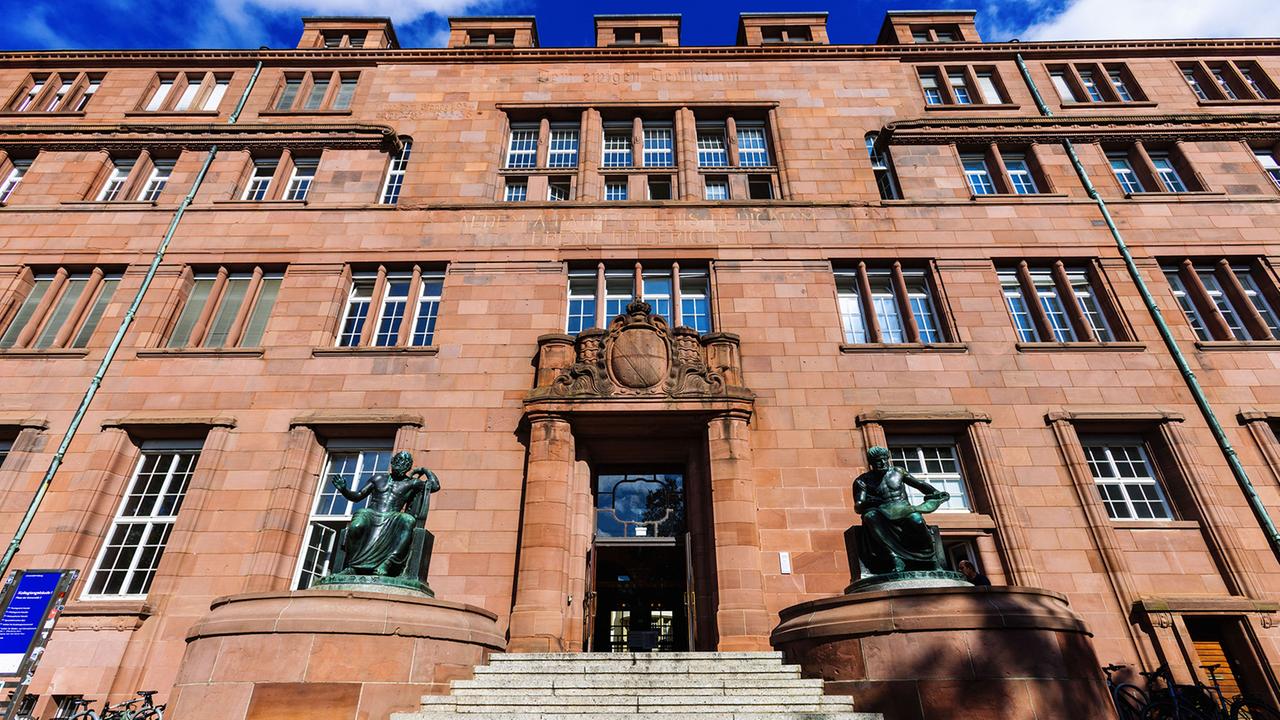
The German Council of Science and Humanities (Wissenschaftsrat) and the DFG have officially designated the universities of Freiburg, Cologne, and Jena as new individual "Excellence Universities." Joining them are two powerful regional alliances: the Rhein-Main Universities (a collaboration between Darmstadt, Mainz, and Frankfurt am Main) and the Ruhr Innovation Lab (a joint effort by TU Dortmund and the University of Bochum).
These institutions were selected after a rigorous evaluation process led by an international panel of experts. To qualify, candidates had to demonstrate not only world-class research output and innovative strategic planning but also maintain a prerequisite of at least two active "Excellence Clusters"—specialized research areas that had already secured independent funding during the initial phase of the Excellence Strategy.
A Legacy of Competition: The 2027-2033 Cycle
The selection process is never a "set-it-and-forget-it" arrangement. Even institutions that previously held the title were required to re-prove their mettle in a high-stakes competitive environment. Out of the eleven existing elite universities, ten successfully defended their titles, ensuring their status for the upcoming 2027-2033 funding period.
The notable exception is the University of Konstanz. Despite its long-standing reputation, the university lost its status after failing to retain one of its mandatory Excellence Clusters, thereby falling short of the eligibility criteria. This underscores the brutal nature of the German excellence model: status is tethered to active, high-performing research outputs, and even the most prestigious institutions can be demoted if their research output wanes.
The remaining elite circle, which continues to hold its status, includes:
- RWTH Aachen
- University of Bonn
- TU Dresden
- University of Hamburg
- University of Heidelberg
- Karlsruhe Institute of Technology (KIT)
- Ludwig-Maximilians-University Munich (LMU)
- Technical University of Munich (TUM)
- University of Tübingen
- The Berlin University Alliance (Freie Universität, Humboldt-Universität, and TU Berlin)
Financial Stakes: Funding vs. Prestige
The German Excellence Strategy is backed by a substantial annual budget of approximately 687 million euros. The vast majority of this funding is provided by the federal government, with the individual states (Länder) contributing a smaller share.
For an individual university, the title brings an additional 10 to 15 million euros annually, while the consortia can expect between 15 and 28 million euros. To the layperson, these figures sound astronomical; however, when viewed against the massive multi-billion-euro budgets of Germany’s largest research universities, these grants represent only a fraction of total operating costs.
If the money is relatively small, why the obsession? The answer lies in the "Prestige Effect."
The title "Excellence University" acts as a powerful international magnet. It signals to top-tier researchers, graduate students, and global industry partners that an institution is a "lighthouse of research." This branding is essential in an era where universities must compete globally against the massive endowments of American Ivy League schools or the top-tier institutions of the United Kingdom. Being labeled "excellent" makes it significantly easier to recruit global talent and secure further third-party funding from the private sector and international grants.
Implications for Students and Staff
Despite the excitement surrounding the announcements, there is a recurring critique regarding the direct impact on the student body. The funding is specifically earmarked for research programs, laboratory infrastructure, and specialized equipment. It is not designed to improve undergraduate teaching ratios or student services.
For the average student, the benefit of studying at an "Excellence University" is mostly indirect. They may gain access to state-of-the-art facilities or have the opportunity to study under world-renowned researchers who have been drawn to the institution by the grant money. However, critics argue that the "teaching-versus-research" divide is widening, as faculty members at elite institutions are increasingly incentivized to prioritize grant-writing and high-impact publications over classroom instruction.
The Historical Trajectory: From Three to Fifteen
The evolution of this program reveals a shift in German academic policy. In 2006, the original "Excellence Initiative" was far more exclusive, designating only three institutions: LMU Munich, TUM Munich, and the Karlsruhe Institute of Technology.
The goal then was to create a "German Ivy League" to challenge the global hegemony of English-speaking universities. However, pressure from the states to distribute these prestige markers more broadly led to a gradual expansion. When the program was rebranded as the "Excellence Strategy" in 2019, the capacity for the elite circle was increased to 15, reflecting a political desire to reward a broader range of regional hubs rather than concentrating all resources in a tiny handful of cities.
The Critical Perspective: A Widening Divide
The Excellence Strategy has not been without its detractors. Academic critics, such as sociologist Professor Richard Münch, have long argued that the program creates a "Matthew Effect"—a phenomenon where the rich get richer.
1. The "Rich Get Richer" Syndrome
Because the application process requires universities to already possess existing "Excellence Clusters," it inherently favors institutions that are already well-funded and established. Smaller or newer universities, which might have high potential but lack the massive historical research infrastructure, find it nearly impossible to break into the elite circle. This creates a permanent class system within German higher education.
2. Administrative Burden
The bureaucratic effort required to maintain the "Excellence" status is immense. Faculty and administrative staff are caught in a cycle of constant evaluation and report writing. Critics argue that this leads to "strategic isomorphism," where universities stop focusing on organic, curiosity-driven research and instead tailor their research agendas to fit the specific criteria of the DFG evaluation panels.
3. The Erosion of Institutional Diversity
There is a fear that by pushing all top-tier German universities to mirror each other in their pursuit of the same "Excellence" metrics, the unique regional characteristics and specialized missions of different institutions are being smoothed over in favor of a homogenized, high-performance mold.
Strategic Goals: The Global Arms Race
Despite the criticism, the federal government remains steadfast in its support for the strategy. The primary motivation is defensive: the global academic market is hyper-competitive. Without a state-sponsored mechanism to elevate specific "flagship" institutions, German universities risk falling behind in the global rankings.
The strategy is intended to foster "clusters of excellence" where interdisciplinary teams can solve complex, large-scale problems—such as climate change, digital transformation, and medical breakthroughs—that cannot be addressed by single departments or under-resourced labs.
The success of the Rhein-Main and Ruhr consortia indicates that the government is moving toward a model of cooperative excellence. By encouraging universities to pool their resources, the state is attempting to create "super-hubs" that have the critical mass necessary to compete with massive international university systems.
Conclusion: A Double-Edged Sword
The designation of Freiburg, Cologne, Jena, and the new consortia as "Excellence Universities" marks a new chapter in German academia. It is a system that excels at producing high-impact research and maintaining international prestige, yet it faces persistent questions regarding its social equity and the potential for bureaucratic exhaustion.
As the 2027-2033 cycle begins, the German university system stands at a crossroads. It has successfully created a tier of global "lighthouses," but the challenge remains to ensure that this elite status does not come at the expense of the foundational academic mission: the broad, inclusive, and balanced education of the next generation. The "Excellence" title is a victory, but it is one that requires careful management to ensure that the pursuit of prestige does not blind the system to the diverse needs of a modern, democratic society.