As global leaders gather in Yerevan, Armenia, for the UN Biodiversity Conference, the goal of protecting 30 percent of the Earth’s land and sea by 2030 remains the cornerstone of the international agenda. While successes like the resurgence of the grey seal in Germany provide a glimmer of hope, experts warn that achieving this target requires far more than drawing lines on a map—it demands a radical rethink of human interaction with nature.
The statistics are harrowing: over the past half-century, nearly three-quarters of the world’s wild vertebrate populations have vanished. This rapid decline is not merely a loss of individual animals, but a systematic unraveling of the ecosystems that sustain human life, agriculture, and climate stability. With the UN Biodiversity Conference currently underway in Yerevan, the international community is doubling down on a ambitious "30×30" pledge. However, the path to implementation is fraught with logistical, financial, and ethical hurdles.
The State of the Crisis: A Fragile Planet
The modern biodiversity crisis is unprecedented in human history. Habitat fragmentation, over-exploitation of natural resources, and the accelerating impact of climate change have placed millions of species on the brink of extinction. For decades, the international community has grappled with the realization that traditional conservation—often reactive and localized—is insufficient.
The 30×30 initiative seeks to shift the paradigm by creating a global network of protected areas (PAs). The premise is simple: by granting nature the space to exist without the pressure of industrial or commercial exploitation, we provide a buffer that allows species to recover, migrate, and adapt.
Success Stories: From Extinction to Resurgence
While the macro-data remains grim, regional successes offer a blueprint for what is possible when protection is properly enforced.
The Return of the Grey Seal
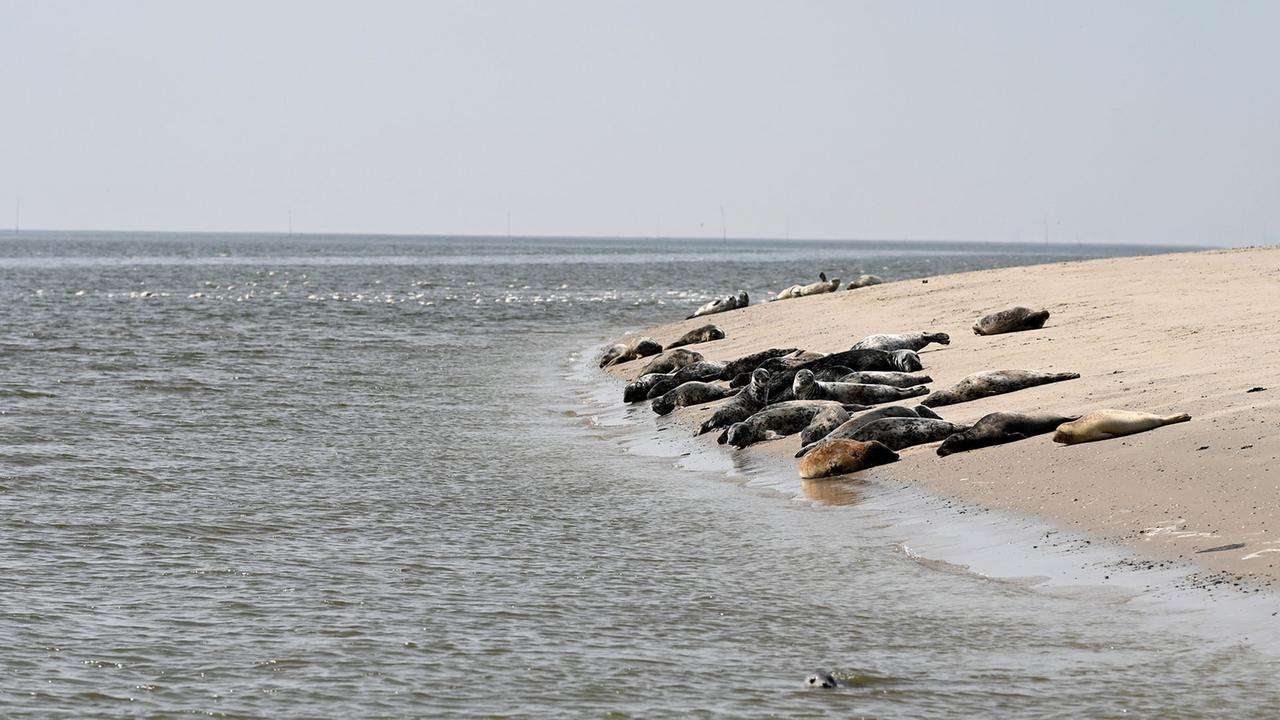
Forty years ago, the grey seal was functionally extinct in German waters. Today, the Wadden Sea National Park in Lower Saxony serves as a sanctuary for 12,500 seals, with 3,500 residing in Germany alone. According to Thea Hamm, a specialist at the National Park, the recovery was not a stroke of luck, but the result of rigid zoning.
"Grey seals require undisturbed sandbanks that remain exposed even during high tide," Hamm explains. "Without these quiet, human-free zones, the pups have no chance of survival. The National Park designation essentially ‘locked’ these essential corridors, allowing the population to rebound from the brink."
The High-Maintenance Miracle: The Bearded Vulture
In the Bavarian Alps, the return of the bearded vulture tells a more complex story. Once extinct in the region, the species is being reintroduced through the intensive efforts of the Berchtesgaden National Park and the Bavarian Society for the Protection of Birds (LBV).
Unlike the seals, which require passive protection, the bearded vultures require active, round-the-clock stewardship. Young birds are brought from zoos and breeding stations and placed into secure, monitored rock niches. "It’s not enough to simply release them," says Magdalena Deelmann, deputy project lead. "We have teams observing the birds from dawn until dusk to ensure their health. It is a work-in-progress that demands constant surveillance and public education to ensure that human presence does not disturb their breeding sites."
The Science of Protection: What Makes a "Protected Area"?
A new discussion paper from the Leopoldina (the German National Academy of Sciences) challenges the assumption that any protected area is a "good" protected area. The authors argue that the quality of protection is more important than the quantity of hectares.
The Ethics of "Nature for Nature"
Thomas Potthast, Professor for the Ethics of the Life Sciences in Tübingen and a contributor to the Leopoldina paper, suggests that the focus must shift toward areas free from direct human material usage. "We need more areas where nature is allowed to be nature," Potthast states. This includes banning bottom-trawling in marine zones and ending intensive logging in old-growth forests. According to the research, a "paper park"—an area marked as protected on a map but still subjected to resource extraction—is a waste of political capital that fails to halt biodiversity loss.
Monitoring and Adaptive Management
The consensus among experts is that static protection is a fallacy. As climate change alters habitats, the "ideal" location for a species may shift geographically. Therefore, effective conservation requires "adaptive management"—a dynamic process where regulations are tightened or loosened based on real-time ecological data.
In the Wadden Sea, this meant lowering speed limits for shipping in 2023 to reduce underwater noise pollution and collisions with marine mammals. In Berchtesgaden, it meant cordoning off specific hiking trails during the sensitive nesting periods of the vultures.
Global Implications and Challenges
As delegates in Yerevan negotiate the specifics of the 30×30 goal, the conversation is dominated by two primary concerns: financing and equity.
The "Hidden" Successes
A recent study published in the journal Nature suggests that the world may actually have more protected areas than official statistics reflect. Bob Smith, a biodiversity researcher at the University of Kent, notes that many community-led or indigenous-managed areas effectively preserve biodiversity but are not captured in the UN’s formal databases. Recognizing these areas could help reach the 30 percent goal faster without displacing local populations.
The Cost of Conservation
The financial burden of maintaining these areas is immense. For developing nations, the pressure to exploit natural resources for economic growth is often at odds with the global imperative to preserve biodiversity. The Yerevan conference is tasked with finding a mechanism to distribute these costs fairly. Wealthy nations are under pressure to provide funding to the Global South, where the majority of the world’s remaining "biodiversity hotspots" are located.
The Road Ahead
Is 30 percent enough? The scientific community is divided. While 30 percent is a mathematically significant target, Professor Smith suggests that for countries with exceptionally high endemic biodiversity, 30 percent is not a ceiling, but a minimum baseline.
The implementation of the 30×30 mandate represents a turning point in the human relationship with the natural world. It marks a transition from a consumerist mindset—where land is viewed strictly for its output—to a stewardship model, where the intrinsic value of a species is recognized as a prerequisite for human survival.
As the UN Biodiversity Conference concludes, the world will be watching to see if governments move beyond the rhetoric of the "30×30" goal and commit to the hard, expensive, and often politically unpopular work of enforcing real protection. As the grey seals and bearded vultures have proven, when given the space and protection they need, nature is remarkably resilient. The question is no longer whether we can save these species, but whether we have the political will to provide them with the room to thrive.
Chronology of Recent Biodiversity Milestones
- 2022: The Kunming-Montreal Global Biodiversity Framework is adopted, setting the 30×30 target.
- 2023: Wadden Sea National Park implements strict ship-speed limits to protect marine mammals.
- 2024: New research in Nature identifies thousands of "hidden" protected areas managed by indigenous communities.
- 2025: Leopoldina releases a critical assessment calling for "human-free" core zones to be the standard for future parks.
- 2026 (October): UN Biodiversity Conference in Yerevan, Armenia, assesses the progress of the 30×30 initiative and debates global financing mechanisms.
Key Data Points
- 75%: The approximate decline in wild vertebrate populations over the last 50 years.
- 12,500: Current grey seal population in the Wadden Sea region.
- 30%: The global target for land and sea protection by 2030.
- 3,500: The number of grey seals currently residing in German waters.