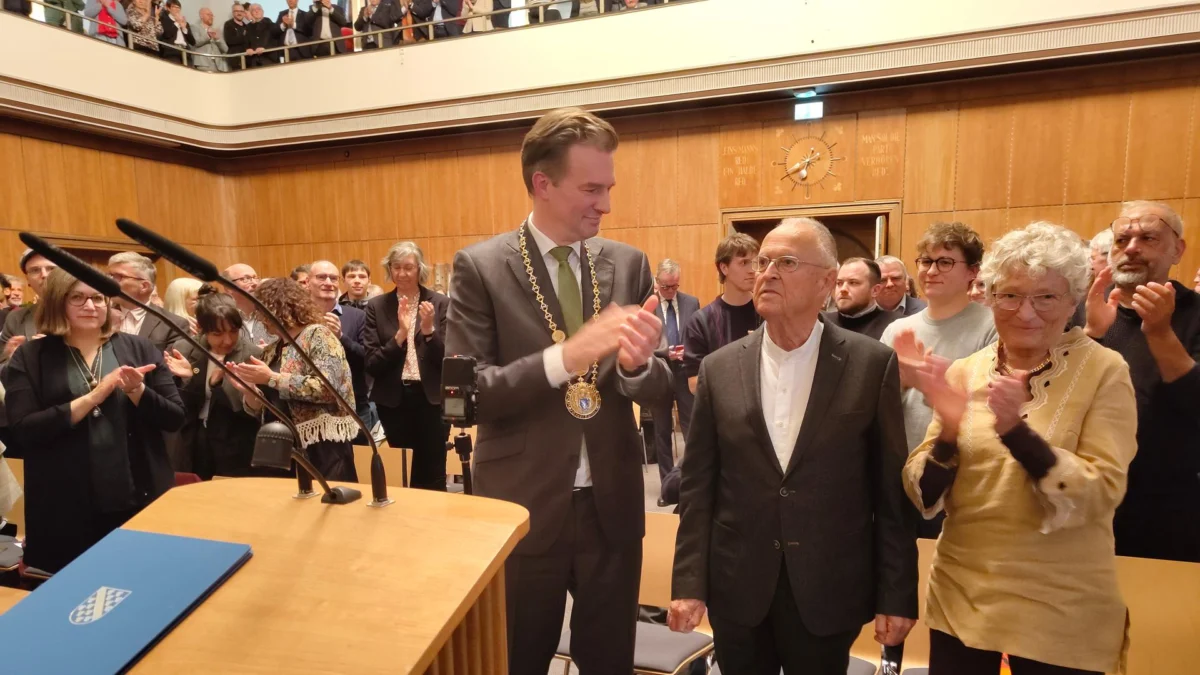
Berlin, Germany – Igor Levit, the globally acclaimed classical pianist renowned for both his virtuosic interpretations and his outspoken political activism, has embarked on an ambitious new venture: the launch of his independent record label, "No Silence." This bold move, officially celebrated on October 22nd, 2026, at Berlin’s Columbia Theater, marks a significant turning point in Levit’s illustrious career, cementing his dual identity as an artist and a public intellectual. More than just a platform for musical releases, "No Silence" is a deeply personal statement, its very name a direct and poignant response to the profound silence and introspection that followed the horrific Hamas terror attacks on Israel on October 7th, 2023.
Levit’s label aims to champion artistic independence, offering a home not only for his own recordings but also for a diverse roster of artists across various genres. It represents a defiant stand against the perceived complacency and silence in the face of escalating global crises, particularly antisemitism and political extremism. As Levit himself passionately articulated, "My life is No Silence. I believe in it, I believe in this energy. To be able to celebrate the birth of the label tonight with everyone here means so much to me. So much, I don’t even know how to put it into words." This initiative underscores Levit’s unwavering commitment to using his artistry as a powerful vehicle for dialogue, solidarity, and change.
A Pianist’s Audacious New Venture: "No Silence" is Born
The atmosphere at the Berlin Columbia Theater on the evening of October 22nd, 2026, was charged with anticipation. Backstage, the final preparations for Igor Levit’s performance were underway, while in the main hall, the pianist sat for an interview, reflecting on the profound significance of the moment. With a thoughtful pause, he declared, "Tonight, I celebrate, we celebrate together the birth of ‘No Silence.’" This wasn’t merely a business launch; it was, as he affectionately termed it, "my first non-human baby," a project brimming with personal investment and a clear artistic and ethical imperative.
From Stage to Studio: An Independent Vision
The decision for a musician of Levit’s stature to establish his own record label is both a testament to his entrepreneurial spirit and a reflection of the evolving landscape of the music industry. In an era where established labels grapple with shifting paradigms, streaming dominance, and the constant demand for content, artists like Levit are increasingly seeking greater autonomy. His motivation stems from a desire to navigate the uncertainties of the modern music business on his own terms, taking control of his artistic narrative and output. This independence allows him to curate not only his own releases but also to handpick emerging and established talents whose artistic visions resonate with his own. He and his team will collectively decide on the artists and their repertoire, ensuring a cohesive yet diverse output that truly reflects the ethos of "No Silence."
The challenges for classical musicians in the contemporary recording industry are manifold. Traditional revenue streams have dwindled, and artists often find themselves constrained by commercial pressures or genre limitations imposed by larger labels. By founding "No Silence," Levit is carving out a space where artistic integrity and freedom take precedence. It’s a strategic move to secure his creative future and to foster a community of like-minded musicians who prioritize authenticity and impact over market trends. The name itself, "No Silence," hints at a broader mission: to ensure that important voices, both musical and social, are not muted.
The Inaugural Soundscape
The first three albums under the "No Silence" imprint, slated for release on Friday, October 23rd, 2026, immediately showcase the label’s diverse and ambitious artistic vision. The debut includes the highly anticipated first album from promising young pianist Lukas Sternath, featuring works by Schubert and Liszt, signaling Levit’s commitment to nurturing new talent. Sternath’s inclusion underscores the label’s dedication to providing a vital platform for the next generation of classical artists, allowing them to present their interpretations with creative freedom.
Levit himself contributes a monumental recording of Ludwig van Beethoven’s Third Symphony, "Eroica," in a captivating arrangement for solo piano by Franz Liszt. This choice is emblematic of Levit’s interpretive daring and his profound connection to Beethoven, whose works have been central to his career. The "Eroica," originally a symphony for a full orchestra, is transformed into an intensely intimate yet no less powerful experience through Liszt’s transcription, demanding extraordinary technical and emotional depth from the pianist. This album promises to be a masterclass in solo piano performance, inviting listeners to rediscover a familiar masterpiece through a fresh lens.
Completing the inaugural trio is a fascinating and conceptually bold recording of Erik Satie’s "Vexations." This avant-garde piece consists of a short, cryptic musical motif to be repeated 840 times, resulting in a performance that can span approximately 16 hours. Satie’s "Vexations" is not merely a test of endurance but a profound exploration of time, repetition, and the listener’s perception. Its inclusion on "No Silence" demonstrates the label’s willingness to embrace experimental and challenging repertoire, pushing the boundaries of what classical music recording can be. It’s a statement that "No Silence" is not afraid to provoke thought and engage with the unconventional, mirroring Levit’s own boundary-pushing artistic philosophy.
The Journey of a Musical Maverick: Igor Levit’s Ascendant Career
Igor Levit’s journey to becoming one of the most compelling figures in classical music has been marked by both prodigious talent and an unshakeable commitment to his art. Born in Nizhny Novgorod, then part of the Soviet Union, in 1987, his early life was shaped by a profound connection to music. At the tender age of eight, he moved with his family to Germany, a transition that would profoundly influence his artistic development and his sense of identity. He honed his craft at the Hochschule für Musik, Theater und Medien Hannover, where he later returned as a professor in 2019, passing on his knowledge and passion to a new generation of musicians.
Beethoven and Beyond: A Formative Legacy
Musically, Levit’s career has been most profoundly shaped by the monumental works of Ludwig van Beethoven. His debut album in 2013, featuring Beethoven’s last five piano sonatas, immediately garnered international critical acclaim, establishing him as a pianist of exceptional intellectual rigor and emotional depth. These late sonatas are considered cornerstones of the piano repertoire, demanding not only technical mastery but also profound philosophical insight. Levit’s interpretations were lauded for their fresh perspective, marrying meticulous detail with an overarching narrative vision.
This initial success was followed by an even more ambitious undertaking in 2019: the complete recording of all 32 Beethoven piano sonatas. This monumental cycle, a Mount Everest for any pianist, solidified his reputation as a definitive interpreter of Beethoven. Critics praised his ability to navigate the vast emotional landscape of the sonatas, from their youthful exuberance to their late, transcendental introspection. His Beethoven recordings have earned him numerous accolades, including the prestigious Gilmore Artist Award in 2018, an honor bestowed only every four years to an extraordinary concert pianist, and the coveted Artist of the Year award from the British classical music magazine "Gramophone" in 2020. These awards are not merely acknowledgments of his technical brilliance but celebrations of his profound artistry and intellectual engagement with the music.
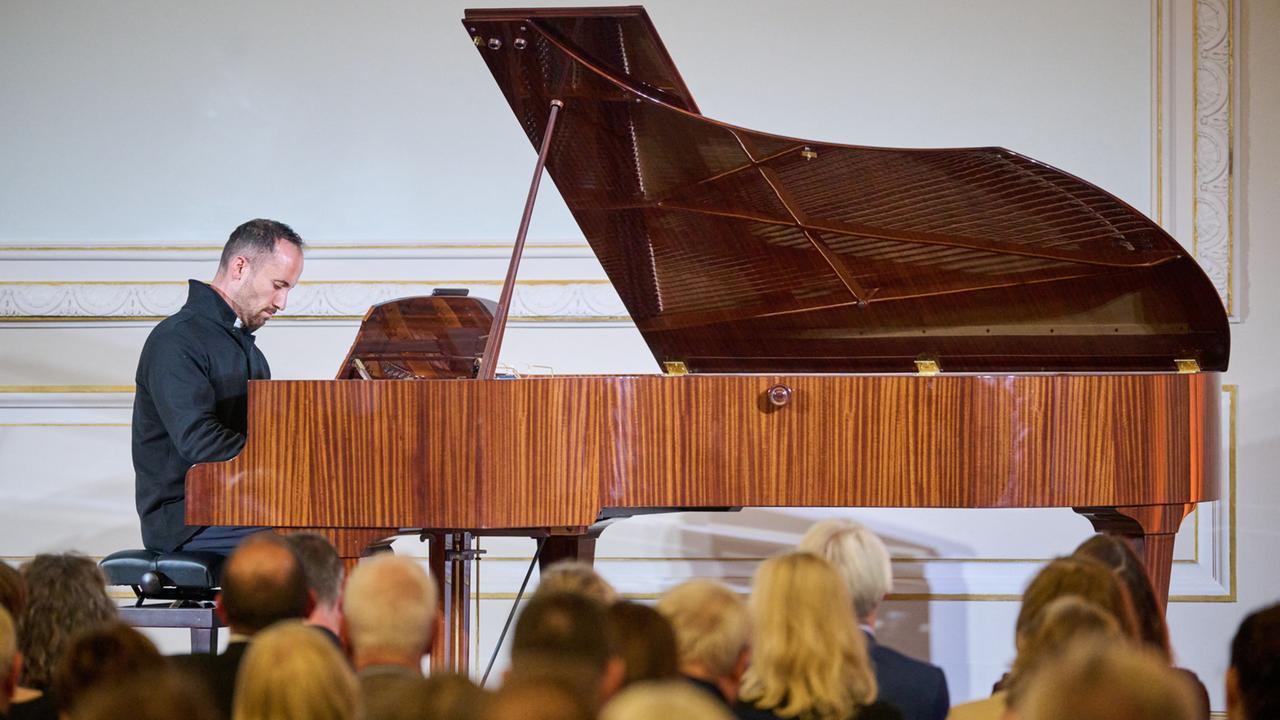
Beyond Beethoven, Levit’s repertoire is expansive, encompassing works from Bach to Ligeti, always delivered with a distinctive blend of intellectual curiosity and visceral emotion. He is known for programming challenging and thought-provoking concerts, often juxtaposing familiar masterpieces with lesser-known or contemporary works, inviting his audience into a deeper engagement with the music.
A Voice Beyond the Keys: The Genesis of an Activist
While his musical prowess is undeniable, Levit has always been clear that his role extends beyond the concert hall. "I don’t just want to be the man who presses the keys," he famously stated in an interview with "Die Zeit," a phrase that now prominently features on his homepage. This declaration encapsulates his belief that art and life, music and politics, are inextricably linked. For Levit, the piano is not an escape from the world but a tool to engage with it, to reflect its complexities, and to inspire action.
His journey from a celebrated classical musician to a prominent public voice has been gradual but resolute. It stems from a deep-seated conviction that artists have a responsibility to address societal issues, especially when fundamental values are threatened. This conviction, coupled with his sharp intellect and articulate communication style, has made him a powerful advocate for various causes, often at personal cost. He has consistently used his platform to speak out, challenging audiences and colleagues alike to confront uncomfortable truths and to take a stand.
The Unyielding Stand: Levit’s Political Engagement and Its Repercussions
Igor Levit’s public profile dramatically expanded during times of global crisis, cementing his reputation as an artist whose commitment to social justice rivals his musical dedication. His interventions, often bold and uncompromising, have not been without controversy, but they underscore his belief in the artist’s role as a moral compass.
Concerts in Crisis: Amplifying Voices During the Pandemic
In the spring of 2020, as the world grappled with the unprecedented challenges of the COVID-19 pandemic and concert halls fell silent, Levit found an ingenious way to connect with audiences and offer solace: his "house concerts." From the intimate setting of his Berlin apartment, he live-streamed more than 50 impromptu performances on Twitter (now X). These digital recitals, broadcast free to anyone with an internet connection, offered a lifeline of beauty and community during a period of isolation. People from around the globe tuned in, finding comfort and connection in his music. The profound impact of these concerts was recognized when he was invited by the German President to perform one such concert from the prestigious Schloss Bellevue, the official residence of the head of state, symbolizing the vital role of art in times of crisis. These digital performances were not just about playing music; they were an act of solidarity, a refusal to let silence prevail.
Confronting Injustice: From Climate to Culture
Levit’s activism extends across a spectrum of issues, all rooted in a fundamental commitment to human dignity and a sustainable future. He has been a vocal opponent of racism and antisemitism, and a passionate advocate for climate protection. His willingness to take his art to unconventional spaces for these causes has been particularly striking. In 2019, he performed at a "Fridays for Future" climate strike, lending his voice and his music to the youth movement demanding urgent climate action. A year later, in 2020, he famously played the piano in the Dannenröder Forst, a ancient forest slated for deforestation to make way for a new autobahn, standing in solidarity with environmental activists protesting its destruction. These actions highlight his belief that art is not confined to gilded concert halls but can be a powerful force on the front lines of social and environmental struggles.
Perhaps one of his most publicized acts of protest came in 2018, following the controversial Echo award ceremony. The German music prize was awarded to rappers Kollegah and Farid Bang, whose lyrics contained openly antisemitic statements. In a powerful act of defiance, Levit returned his own Echo award, stating unequivocally that he could not stand by and accept an honor from an institution that condoned such hateful rhetoric. His decision sparked a major debate within the German cultural scene and ultimately contributed to the Echo award being abolished, underscoring the profound impact of an artist taking a principled stand.
The "Anstalt" Controversy: Art, Censorship, and Free Speech
Levit’s commitment to artistic freedom and free speech was again put to the test in July 2026, when a planned television appearance ignited a public dispute. He was scheduled to perform the song "Keine Angst" (No Fear) with rapper Danger Dan on the ZDF satirical program "Die Anstalt." However, ZDF cancelled the appearance, citing concerns that the song’s lyrics could be interpreted as a call to violence. The song, known for its politically charged content, advocates for standing up against fascism and right-wing extremism, sometimes employing provocative language.
Levit vehemently criticized ZDF’s decision, calling it an "interference in freedom of opinion and art." He argued that the cancellation amounted to censorship and that the network had fundamentally misunderstood the satirical and critical nature of the song. The controversy sparked a wider debate in Germany about the boundaries of artistic expression, the role of satire, and the responsibilities of public broadcasters. For Levit, this incident was a clear example of how institutions can inadvertently stifle important voices, reinforcing his conviction that vigilance and direct action are necessary to protect fundamental freedoms. It is precisely these experiences that inform the ethos of "No Silence" – a label dedicated to ensuring that artistic voices are heard, even when they challenge established norms or comfortable narratives.
The Genesis of "No Silence": A Response to Unspeakable Horrors
The name "No Silence" is not a mere artistic flourish; it is a direct and deeply personal response to one of the most traumatic events in recent memory: the Hamas terror attacks on Israel on October 7th, 2023. This date, etched into global consciousness, irrevocably altered Igor Levit’s perspective, catalyzing a profound period of self-reflection and redefinition.
October 7th and the Quest for Identity
"This day was the starting gun, completely unconsciously, for a kind of self-discovery and also a clarification of who I want to be in this life," Levit revealed. The aftermath of October 7th plunged him into a period where words failed him, a time when "music was still there, but language was not." The scale of the atrocities, the brutal targeting of civilians, and the subsequent global reactions forced him to confront his identity, particularly his Jewishness, with unprecedented intensity. He spoke of how "very much plays into it. The way I speak, the meaning of my Jewishness, the question of belonging."
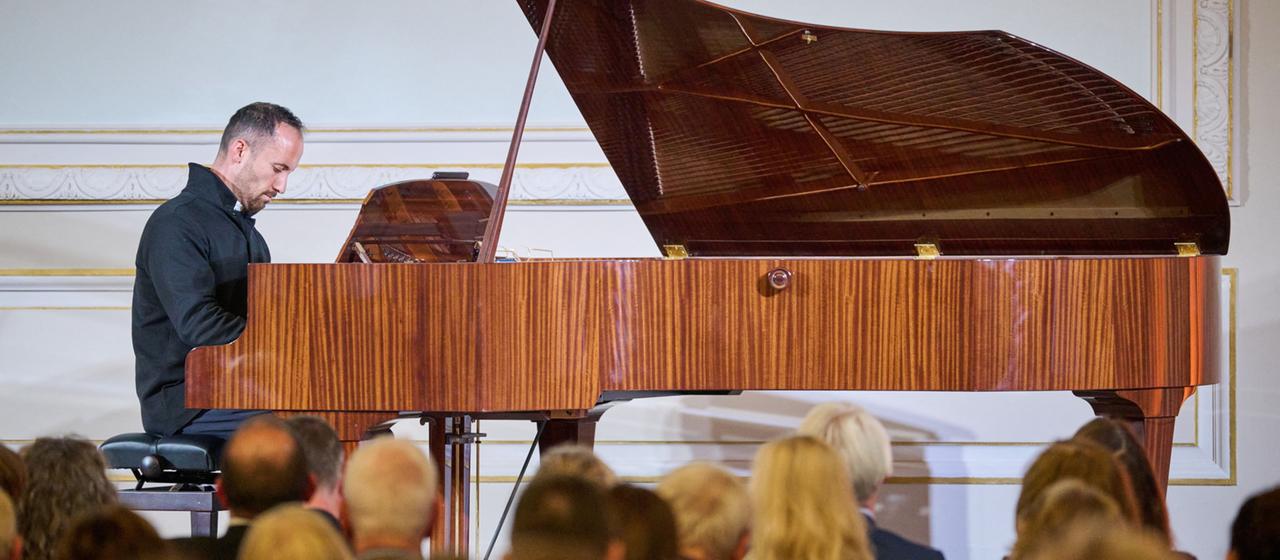
For Levit, the events of October 7th and their aftermath were not distant geopolitical occurrences but a visceral assault on his very being. As a prominent Jewish artist living in Germany, the rise of antisemitism and the often-muted or complex reactions from parts of society were deeply unsettling. He felt a profound sense of isolation and a burning need to articulate a response, even when conventional language seemed inadequate. This period of intense emotional and intellectual processing laid the groundwork for "No Silence," imbuing the label with a mission far greater than mere music production. It became a vessel for his renewed commitment to speaking truth to power and fostering solidarity.
"Gegen das Schweigen": A Collective Cry
In November 2023, amidst this personal turmoil and a perceived societal silence, Levit initiated a powerful act of collective resistance: a solidarity concert titled "Gegen das Schweigen. Gegen Antisemitismus." (Against Silence. Against Antisemitism.). Held at the Berliner Ensemble, one of Germany’s most prestigious theaters, the event brought together a diverse group of prominent figures, including Holocaust survivor Margot Friedländer, songwriter Wolf Biermann, the punk band Die Toten Hosen, and public intellectual Michel Friedman. It was a remarkable demonstration of unity against hate and apathy.
Levit vividly recalls the evening at the Berliner Ensemble as "a kind of explosion," a moment of profound catharsis. "That was like an outburst," he explained. "Before, no one had shown themselves after October 7th, everyone had ducked away. And then I was on my way home, and it was clear to me: the name of my label has to have something to do with that. No more keeping silent, no more stillness. In English: No Silence. Then it was clear to me: that’s the name." This concert was not just a performance; it was a communal refusal to accept silence in the face of escalating hatred and indifference. It gave voice to the voiceless and emboldened those who felt isolated. The label’s name, born from this powerful experience, stands as a permanent testament to this moment of collective awakening and defiant solidarity.
A City Transformed: Berlin in the Aftermath
The events of October 7th and the subsequent rise in antisemitism have profoundly impacted Levit’s perception of his adopted home, Berlin. A city historically grappling with the legacy of the Holocaust, Berlin has, for Levit, undergone a disturbing transformation. "The city has become darker, the city has become more aggressive, and for the Jew in me, the city has become shittier," he candidly stated. This raw assessment reflects the deep emotional toll of experiencing a resurgence of anti-Jewish sentiment in a place that had once represented a haven and a future.
In response to this heavy atmosphere, Levit has found a unique coping mechanism. He now frequently shares Jewish jokes on his social media channels. This seemingly lighthearted act is, in fact, a poignant form of resistance and self-preservation. "Should I comment on coalition building every day? I don’t feel like it," he mused. "I feel like sharing what does me good. And that, besides music, is Jewish humor right now." This practice allows him to reclaim a sense of agency and cultural pride, using humor as a shield against despair and a bridge for connection, reminding himself and his followers of the resilience and spirit of Jewish culture. It’s another facet of his "No Silence" philosophy: finding ways to speak, to cope, and to connect, even when the world feels overwhelmingly grim.
Implications and the Future of "No Silence"
Igor Levit’s launch of "No Silence" is more than a personal endeavor; it carries significant implications for the classical music industry, artistic freedom, and broader social discourse. It represents a potent combination of artistic entrepreneurship and profound ethical commitment, poised to leave a lasting mark.
Redefining Artistic Autonomy
In an age where artists increasingly seek greater control over their creative output and intellectual property, "No Silence" offers a compelling model for artistic autonomy. By owning his label, Levit gains unprecedented freedom over recording decisions, production quality, marketing, and distribution. This allows for a more direct connection between the artist and their audience, bypassing traditional gatekeepers and potentially fostering a more equitable system for musicians. The label’s commitment to supporting other artists underscores this ethos, providing a platform where creative integrity is paramount, and the artists’ visions are truly championed. It sends a powerful message to the industry: artists can, and should, take the reins of their careers, especially when their artistic and personal values diverge from mainstream commercial imperatives. This independent path offers a template for how artists can navigate the complexities of the modern music landscape, prioritizing purpose alongside profit.
Beyond Classical: An Inclusive Platform for Expression
One of the most exciting aspects of "No Silence" is its expansive artistic vision. Levit explicitly states, "There are no artistic limits under the roof of No Silence." This inclusive philosophy means the label is open to exploring genres beyond classical music, with potential for releases in jazz and even hip-hop. This commitment to genre-fluidity reflects Levit’s own eclectic tastes and his belief that compelling artistry transcends traditional boundaries. What matters most to him is the artist’s passion and conviction: "How much someone burns for an idea is important to me – even if the project initially seems crazy."
This open-minded approach ensures that "No Silence" will be a vibrant and dynamic space, fostering cross-genre collaborations and pushing creative boundaries. It’s a direct challenge to the often-rigid categorizations within the music industry, proposing a more holistic view of artistic expression. By embracing diverse voices and styles, "No Silence" aims to create a rich tapestry of sound that reflects the complexity and interconnectedness of contemporary culture.
A Beacon Against Silence: Levit’s Enduring Legacy
Ultimately, "No Silence" is a profound manifestation of Igor Levit’s enduring commitment to using his immense talent for a greater purpose. It is a testament to his belief that music is not just entertainment but a powerful force for social commentary, emotional resonance, and collective action. The label’s name, born from a period of intense personal and political upheaval, serves as a perpetual reminder of its core mission: to resist silence, to amplify marginalized voices, and to foster dialogue in a world that often seems to prefer complacency.
Levit envisions "No Silence" as a collaborative venture, emphasizing, "It is clearly not a label that I bring into the world only for myself. No, I want to go through this time together with great colleagues." This statement encapsulates the spirit of solidarity and shared purpose that defines the label. As a public intellectual and an artist of profound integrity, Igor Levit continues to challenge, inspire, and provoke. With "No Silence," he not only launches a record label but also cements his legacy as a tireless advocate for artistic freedom, social justice, and the transformative power of music, ensuring that the vital voices of artists will always find a platform and resonate with unwavering clarity. In a world often plagued by noise and disinformation, "No Silence" promises to be a sanctuary for truth and authentic expression.