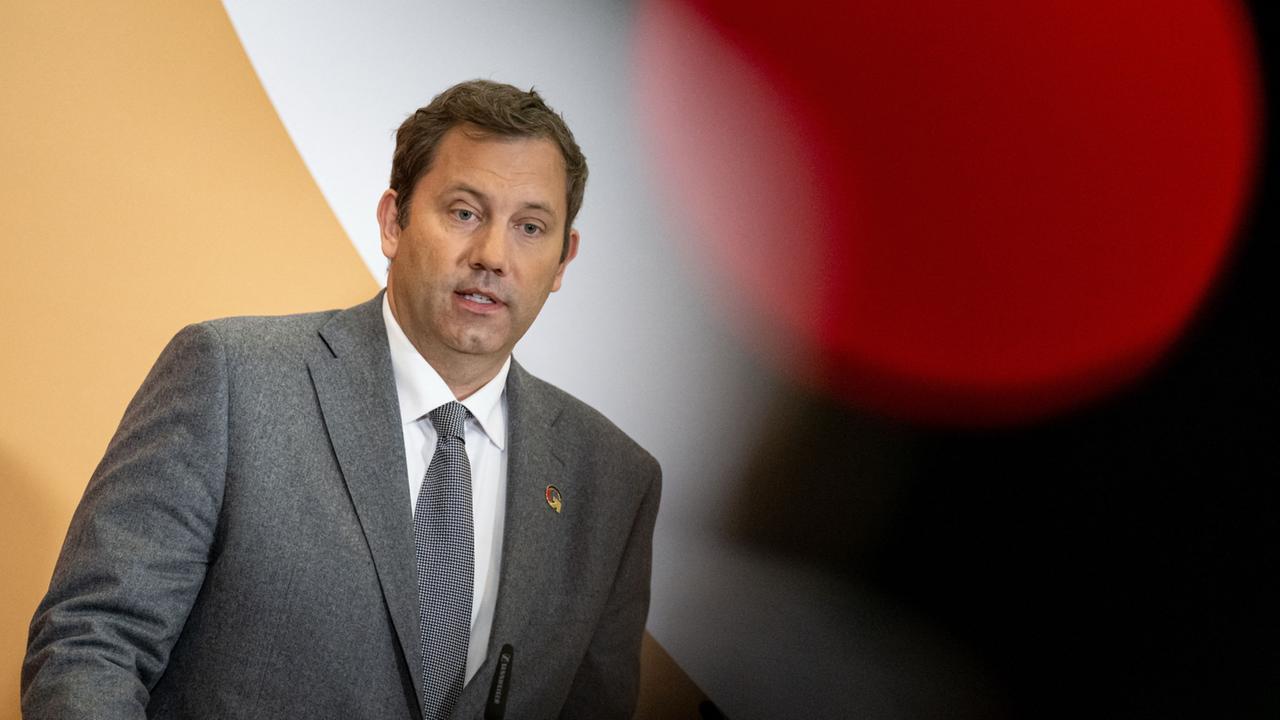
Berlin, Germany – October 22, 2026 – Germany’s federal government finds itself in a peculiar fiscal paradox. Despite an anticipated increase in tax revenues for the upcoming year, Federal Finance Minister Lars Klingbeil (SPD) has emphatically stated that these additional funds will not translate into new budgetary "room for maneuver." The updated tax estimate for 2027, released today, projects billions of euros more than initially expected, offering a glimmer of economic resilience amidst persistent global crises, including the ongoing "Iran War." However, this seemingly positive development is tempered by pre-existing fiscal constraints and a cautious outlook from the finance ministry, which warns against new spending demands without concrete financing plans.
The announcement comes as the federal government grapples with the intricate finalization of the 2027 budget, a process fraught with political negotiations and competing demands from various stakeholders. While the higher revenue forecast could have been perceived as a boon, Minister Klingbeil’s immediate clarification underscores the tight fiscal discipline Germany intends to maintain, particularly given the constitutional "debt brake" and the need for long-term financial consolidation.
Main Facts: A Glimmer, Yet No Green Light for German Fiscal Policy
The Federal Ministry of Finance confirmed today that the latest tax estimate for 2027 forecasts additional revenues amounting to approximately four billion euros for the federal government alone. For the entire state apparatus, encompassing federal, state (Länder), and municipal governments, the increase is even more substantial, projected at 10.9 billion euros compared to the previous forecast in May. This upward revision reflects a more optimistic economic outlook, which the federal government recently adjusted upwards, even in the shadow of ongoing geopolitical conflicts such as the "Iran War."
Despite these promising figures, Finance Minister Lars Klingbeil, speaking in Berlin, delivered a sobering assessment: "For 2027, we are not gaining any new room for maneuver overall; however, we also do not have to close any new gaps." He emphasized the continued necessity for fiscal consolidation within the federal budget to cultivate future flexibility. Klingbeil issued a direct challenge to political parties and interest groups advocating for new spending initiatives, such as a reduction in the electricity tax, demanding that they simultaneously present viable financing proposals. "I am open to such proposals," he stated, "but I have not yet heard these financing suggestions."
This stance highlights a central tension in German fiscal policy: the balance between economic recovery, prudent financial management, and addressing pressing societal and economic needs. The increased tax revenues, while welcome, appear to be earmarked for shoring up existing commitments and mitigating unforeseen financial pressures, rather than fueling new policy ambitions.
The 2027 Tax Estimate: A Detailed Look at the Figures
The precise figures from the latest tax estimate paint a detailed picture of the nation’s expected financial inflows. For the upcoming year, 2027, the working group responsible for the tax estimation projects a total of 398.6 billion euros in tax revenues flowing directly into the federal budget. This represents a significant portion of the overall state revenue, which is expected to exceed one trillion euros when combining federal, state, and municipal income.
Looking further ahead, the cumulative forecast for the years leading up to 2030 reveals a projected increase of 43.4 billion euros for the entire state compared to the estimations made in May. These figures are crucial for budget planning across all levels of government, dictating the fiscal capacity for investments, social services, and debt management.
The "Arbeitskreis Steuerschätzung" (Working Group for Tax Estimation) is a critical institution in Germany’s fiscal planning. Comprised of a diverse panel of experts from the federal government, leading economic research institutes, the Federal Statistical Office, the Bundesbank (Germany’s central bank), the German Council of Economic Experts, and representatives from the federal states and municipalities, this group provides an independent and comprehensive basis for tax revenue forecasts. Their assessments are grounded in the latest economic developments and any legislative changes with financial implications enacted since the previous estimation. This collaborative approach aims to ensure a robust and credible foundation for the nation’s financial planning.
Chronology of Fiscal Challenges and Policy Decisions
The current fiscal landscape is shaped by a confluence of recent economic trends and geopolitical events. Germany, like much of the global economy, has navigated a period marked by elevated inflation, lingering effects of the energy crisis, and persistent supply chain disruptions. The federal government’s decision to revise its economic forecast upwards, despite these challenges, signals a cautious optimism regarding the nation’s resilience.
A significant, albeit implicitly acknowledged, factor in the economic outlook is the "Iran War." While the original article does not detail its specific impact, the inclusion of this geopolitical conflict as a backdrop for the economic forecast implies its role in influencing global energy prices, trade routes, and investor confidence. Such large-scale conflicts typically introduce volatility and uncertainty into international markets, making the German economy’s projected growth all the more noteworthy. The upward revision suggests that, for now, the German economy has either adapted to these external shocks or found alternative pathways for growth, although the potential for renewed disruption remains ever-present.
Against this economic backdrop, the federal government is deeply immersed in the final negotiations for the 2027 federal budget. This is a complex undertaking, particularly for a coalition government (inferred to be SPD-led with FDP, given the composition of government and opposition parties mentioned). Each ministry and coalition partner typically vies for funding for their priority projects, making the allocation of resources a delicate balancing act. The Bundestag’s budget committee is tasked with the critical role of scrutinizing and ultimately finalizing the draft budget, with a firm deadline set for November 12th. This committee’s decisions will translate the abstract figures of the tax estimate into concrete spending plans, determining the allocation of resources across sectors from defense to social welfare.
One of the prominent points of contention in the current debate revolves around the "electricity tax" reduction. This measure is not new; it was initially agreed upon in a previous "Schwarz-Rot" (Grand Coalition of CDU/CSU and SPD) government but was postponed due to insufficient financial headroom. The CDU, now in opposition, has renewed its call for a reduction in the electricity tax "for all," framing it as a crucial relief measure for citizens and businesses. The current finance minister’s demand for simultaneous financing proposals underscores the persistent challenge of reconciling popular policy demands with fiscal realities, especially when faced with the strictures of the debt brake.
The "No New Room for Maneuver" Paradox: Deeper Dive into Fiscal Policy
Minister Klingbeil’s seemingly contradictory statement – higher revenues but no new room for maneuver – is rooted in Germany’s stringent fiscal framework, most notably the constitutional "debt brake" (Schuldenbremse). This legally binding mechanism limits the federal government’s structural deficit to 0.35% of GDP, effectively capping new borrowing. While higher tax revenues improve the overall financial picture, they often serve to offset existing obligations, accommodate unforeseen expenditures, or compensate for higher interest rates on national debt, rather than creating a surplus for new discretionary spending.
The finance minister’s insistence on "consolidation" is a clear signal that the government prioritizes long-term fiscal health over short-term spending sprees. Even with a revenue boost, the government might be using these funds to reduce the need for new borrowing to its constitutionally permissible minimum, or to address other financial pressures that have accumulated over years of crisis management. For instance, increased costs for defense, refugee integration, climate transition investments, or even higher public sector wages could absorb the additional funds without generating a perception of "new room."
Klingbeil’s challenge for proponents of new spending to identify concrete funding sources is not merely a rhetorical device. It reflects the operational reality of German budget planning, where the "cover principle" (Deckungsprinzip) generally requires that any new expenditure or tax cut must be offset by savings elsewhere or by new revenue streams. This principle is particularly vital when the government is already operating close to its constitutional borrowing limits. By demanding clear financing plans, the finance minister aims to instill discipline and prevent the accumulation of unfunded liabilities that could jeopardize Germany’s long-term financial stability. This approach underscores a commitment to fiscal responsibility, even if it means resisting popular demands in the short term.
Official Responses: A Divided Political Landscape
The release of the tax estimate and Finance Minister Klingbeil’s subsequent remarks have elicited a range of reactions across Germany’s political spectrum, highlighting the deep divisions on fiscal priorities.
The Government’s Stance (SPD-led Coalition):
Within the ruling coalition, the sentiment is one of cautious validation. Thorsten Rudolph, the SPD’s budget policy spokesperson, viewed the improved tax estimate as a testament to the federal government’s policies. He specifically lauded the "investment offensive" initiated by the government, suggesting that these strategic expenditures are now yielding positive economic returns and contributing to the higher revenue projections. This perspective frames the increased revenues as a vindication of the government’s approach, even if those funds are not immediately available for new projects. For the inferred FDP coalition partners, who typically champion fiscal prudence and tax relief, Klingbeil’s adherence to budget consolidation and his call for funded proposals likely resonate well, reinforcing their traditional economic philosophy.
Opposition Critiques:
The opposition parties, however, offered far more critical assessments, each from their distinct ideological vantage points.
-
CDU/CSU (Christian Haase): Christian Haase, representing the CDU/CSU’s budget policy, expressed tempered disappointment. While acknowledging the better revenue development, he declared that it offered "no all-clear for the federal budget." This critique implies that the government’s overall fiscal management may still be lacking, or that the increased revenues are insufficient to address the nation’s structural financial challenges. The CDU/CSU continues to advocate strongly for tax relief, particularly the promised electricity tax reduction, positioning themselves as champions of alleviating burdens on citizens and businesses.
-
The Greens (Sebastian Schäfer): Sebastian Schäfer, the Green Party’s budget expert (here, positioned as opposition, which is a key distinction from an Ampelkoalition where they would be government), dismissed the higher revenues as merely a "cyclical flash in the pan." His concern centered on the persistent financial distress faced by municipalities, arguing that the federal revenue boost does little to solve their deep-seated funding problems. This perspective suggests a preference for structural solutions and increased federal support for local governments, rather than simply celebrating a temporary revenue uptick. The Greens’ critique often focuses on sustainable finance and addressing systemic issues, which they believe are not adequately tackled by the current fiscal strategy.
-
The Left (Doris Achelwilm): Doris Achelwilm, a prominent politician from The Left party, launched a scathing attack on the government’s priorities. She asserted that "more revenues cannot mask the fact that the federal government is setting the wrong priorities." Achelwilm specifically demanded that the government reverse any cuts to family benefits and social services, advocating for a fiscal policy that prioritizes social welfare and redistribution. Her critique underscores a fundamental disagreement with the government’s spending allocations, arguing for a more socially equitable distribution of resources.
These varied responses underscore the complex political environment in which Germany’s fiscal policy is formulated, with each party vying to shape the narrative and influence the final budgetary decisions according to their core principles.
Implications and Stakeholder Demands: A Chorus of Expectations
The improved tax estimate, even with Klingbeil’s cautious interpretation, has ignited a fresh round of demands from various societal and economic stakeholders, each hoping to benefit from the seemingly healthier public coffers.
Municipalities (Deutscher Städtetag): The German Association of Cities (Deutscher Städtetag) immediately seized upon the news to reiterate its urgent plea for increased financial support for local governments. They argued that the federal and state governments must utilize their unexpected additional revenues to alleviate the "completely underfunded municipal budgets." Municipalities across Germany face immense financial pressures, burdened by rising costs for social services, infrastructure maintenance, education, and the integration of refugees, often without commensurate funding from higher levels of government. The Städtetag’s demand highlights a critical structural imbalance in Germany’s federal system, where local authorities are often at the sharp end of service provision but lack adequate financial autonomy.
Business and Industry (ZDH, BDI, DIHK): Germany’s powerful business and industry associations voiced strong expectations for the additional fiscal space to be used for economic relief and strengthening competitiveness. The German Confederation of Skilled Crafts (ZDH) specifically called for the long-promised implementation of the electricity tax reduction, a measure seen as crucial for lowering energy costs for small and medium-sized enterprises (SMEs) that form the backbone of the German economy. Similarly, the Federation of German Industries (BDI) and the Association of German Chambers of Industry and Commerce (DIHK) echoed this sentiment, framing the opportunity as a mandate to bolster Germany’s international competitiveness, which they argue has been eroded by high energy prices and bureaucratic burdens. For these organizations, targeted tax relief is not merely a handout but a strategic investment in the nation’s economic future, fostering innovation and job creation.
Taxpayer Advocates (Bund der Steuerzahler): The German Taxpayers’ Federation (Bund der Steuerzahler) joined the chorus advocating for the electricity tax cut but went further, demanding broader tax relief for citizens. They called for reductions in income tax, arguing that taxpayers have borne a significant burden through inflation and an increasing tax load. Their stance reflects a general desire to return more money to citizens, believing that lower taxes stimulate consumption and investment and improve household disposable income.
Impact on Policy Debates: These diverse demands underscore the intense political pressure on the federal government as it finalizes the 2027 budget. The tax estimate, rather than simplifying matters, has intensified debates around energy policy, social spending, and the appropriate level of state intervention in the economy. The government must navigate these competing interests while adhering to its fiscal consolidation goals and the constitutional debt brake. The decision-making process will inevitably involve difficult trade-offs, impacting various sectors and segments of society.
Future Fiscal Outlook: While the immediate revenue boost is a positive signal, it does not erase Germany’s long-term fiscal challenges. Demographic shifts, the costs of climate transition, digitalization, and potential future geopolitical instability will continue to exert pressure on public finances. The current emphasis on consolidation, therefore, is not just about balancing the books for 2027 but about building a more resilient and adaptable fiscal framework for the decades to come.
Conclusion: Navigating a Complex Fiscal Future
Germany’s finance minister, Lars Klingbeil, faces the unenviable task of managing a national budget that is simultaneously benefiting from improved tax revenues and constrained by strict fiscal rules and mounting demands. The 2027 tax estimate, while painting a brighter picture for state income, does not offer a free pass for new spending. Instead, it highlights the delicate balance between economic recovery, constitutional debt limits, and the pressing needs of municipalities, businesses, and citizens.
The ongoing budget negotiations, set to conclude by November 12th, will be a critical test of the government’s ability to reconcile these competing pressures. Klingbeil’s insistence on funded proposals for any new spending initiatives signals a firm commitment to fiscal discipline and long-term financial stability. However, the chorus of demands from opposition parties and interest groups for tax relief and increased support underscores the political challenges inherent in this approach.
As Germany navigates an uncertain global landscape, marked by geopolitical conflicts like the "Iran War" and ongoing economic transitions, the decisions made in the coming weeks regarding the 2027 budget will not only shape the nation’s immediate financial trajectory but also define its capacity to invest in the future while upholding its commitment to responsible fiscal management. The paradox of "more money, no new leeway" is a stark reminder that even in times of improving economic fortunes, prudent governance requires difficult choices and a steadfast adherence to financial discipline.