The landscape of artificial intelligence is undergoing a profound transformation. While the last two years have been defined by the dominance of Large Language Models (LLMs) and generative text-to-image engines, a new, tangible frontier is emerging: Physical AI. This field, which encompasses AI models designed to control hardware, power autonomous vehicles, and navigate complex industrial environments, is rapidly transitioning from theoretical research to high-stakes market reality.
According to a recent forecast by the global strategy consultancy Strategy&, the market volume for Physical AI is projected to surge to an astonishing €430 billion by 2030. As investors and industrial giants pivot their attention toward the intersection of robotics and intelligence, a fierce race is underway to redefine how machines interact with the physical world.
The Humanoid Paradigm vs. The New Wave
For several years, the industry standard for advanced robotics has been the "humanoid" approach—an attempt to replicate human anatomy and movement patterns to navigate environments designed for human workers. Companies like Agile Robots, Neura Robotics, and Mimic have been at the forefront of this movement, drawing inspiration from human physiology to create machines that can manipulate objects, perform assembly tasks, and operate alongside humans in factory settings.
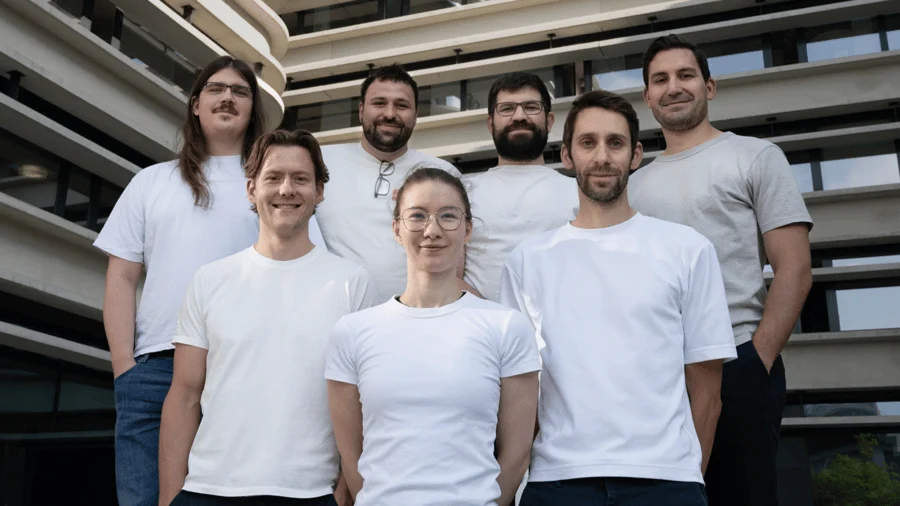
However, the industry is now witnessing a schism in philosophy. While firms like Neura and Agile continue to refine humanoid dexterity, a new player, Enact, has begun to challenge these core assumptions. By eschewing the traditional obsession with mimicking human morphology, Enact is proposing a fundamentally different architecture for Physical AI, suggesting that the future of industrial automation may not lie in "human-like" machines, but in machines that perceive and act with a superior, non-anthropomorphic logic.
Chronology: The Evolution of Physical AI
The trajectory of Physical AI has been characterized by three distinct phases of development:
1. The Era of Programmable Automation (1990s–2010)
Industrial robots were defined by rigid programming. These machines were fast and precise but lacked "intelligence." They required controlled environments and were incapable of adapting to environmental changes without human intervention.
2. The Rise of Perception-Based Robotics (2010–2020)
With the advent of deep learning, robots began to "see." Computer vision allowed for the first wave of autonomous mobile robots (AMRs) to navigate warehouses. However, the connection between "seeing" and "acting" remained brittle. The robot could identify an object, but it often struggled with the nuances of physical interaction in unstructured settings.
3. The Physical AI Explosion (2020–Present)
We are currently in the third wave. Physical AI fuses sensor data, neural network processing, and actuator control into a unified feedback loop. Modern robots are no longer just "executing code"; they are learning tasks through reinforcement learning, mimicking biological adaptation, and responding to real-time physical stimuli.
Supporting Data: The Economic Surge
The €430 billion projection by Strategy& serves as a bellwether for the massive capital expenditure currently flowing into the sector. Several factors contribute to this exponential growth:
- Labor Shortages: In developed economies, aging demographics have created a critical void in manufacturing and logistics. Physical AI is no longer a luxury; it is viewed as an existential necessity for maintaining industrial output.
- Decentralized Supply Chains: As global trade shifts toward regional production, the need for flexible, autonomous micro-factories has increased. Physical AI allows these factories to reconfigure themselves on the fly.
- The Cost-Performance Curve: The falling price of high-fidelity sensors (LiDAR, depth cameras) combined with specialized edge-computing hardware (NVIDIA Jetson, custom TPUs) has lowered the barrier to entry for integrating AI into hardware.
Industry Perspectives: The Humanoid Debate
The industry remains divided on the best path forward. Proponents of the humanoid approach argue that the world is built for humans, and therefore, machines must conform to that world.
"If a robot has to navigate a staircase, use a standard wrench, or walk through a door designed for a human, it makes logical sense for the robot to be humanoid," says a lead engineer at a prominent European robotics firm. "The human form is the ultimate template for versatility."
Conversely, the team at Enact and their supporters argue that human anatomy is actually an evolutionary compromise, not an ideal design. "Human bodies are fragile and inefficient in many industrial contexts," a spokesperson for a new-wave robotics venture noted. "Why limit a machine to two arms or two legs if it needs to perform a task that requires four arms or a 360-degree rotation? Physical AI should be about optimizing the physics of the task, not the physics of the human."
Implications for the Future of Work
The rise of Physical AI carries profound implications that go far beyond balance sheets and stock market projections.
1. The Displacement vs. Augmentation Narrative
The fear of "robots taking jobs" is shifting. In the context of Physical AI, the discussion is moving toward "collaborative intelligence." As robots become capable of handling dangerous or highly repetitive tasks with greater autonomy, the human worker is increasingly moving into roles defined by oversight, maintenance, and high-level strategy.
2. Regulatory and Safety Challenges
As machines move out of fenced-off cages and into shared workspaces, the legal frameworks governing AI liability are being tested. If an autonomous forklift operated by an AI model causes an accident, where does the responsibility lie? The software developer, the hardware manufacturer, or the end-user? Legislators are currently racing to keep pace with the technical reality.
3. Environmental Impact
Physical AI also offers significant sustainability benefits. By optimizing movement paths, reducing scrap material in manufacturing, and improving energy efficiency in logistics fleets, these AI models could drastically reduce the carbon footprint of global industry.
Conclusion: A New Industrial Revolution
The shift toward Physical AI represents the most significant technological leap in manufacturing since the assembly line. While the debate between humanoid mimicry and radical architectural innovation continues, the destination is clear: we are entering an age where the intelligence of the digital world is being fully integrated into the physical world.
As Enact and other innovators continue to push the boundaries of what is possible, the €430 billion market forecast may, in retrospect, prove to be a conservative estimate. The winners of this new era will not necessarily be those with the most advanced hardware, but those who can most effectively bridge the gap between abstract AI cognition and the stubborn, unpredictable laws of the physical environment.
The machine is no longer just a tool; it is becoming an intelligent agent, capable of navigating our world with an autonomy that was, until very recently, the stuff of science fiction. The challenge for the next decade will be to ensure that this rapid evolution serves to enhance human productivity and safety rather than merely replacing it. We are not just building better robots; we are building a new foundation for the global economy.