At its fiftieth anniversary, Cologne’s Museum Ludwig is undertaking a profound act of institutional self-reflection. Instead of merely celebrating its own history, the museum is utilizing its landmark jubilee to scrutinize the foundational gaps within its collection of Modernist art. Through the ambitious exhibition "Along the Color Line – Traces of a Transatlantic Modernism," curated by Eboa Itondo, the museum is asking a uncomfortable but necessary question: Does the "color line"—a concept famously defined by W.E.B. Du Bois—also run through the heart of the European art canon?
Main Facts: A Curatorial Intervention
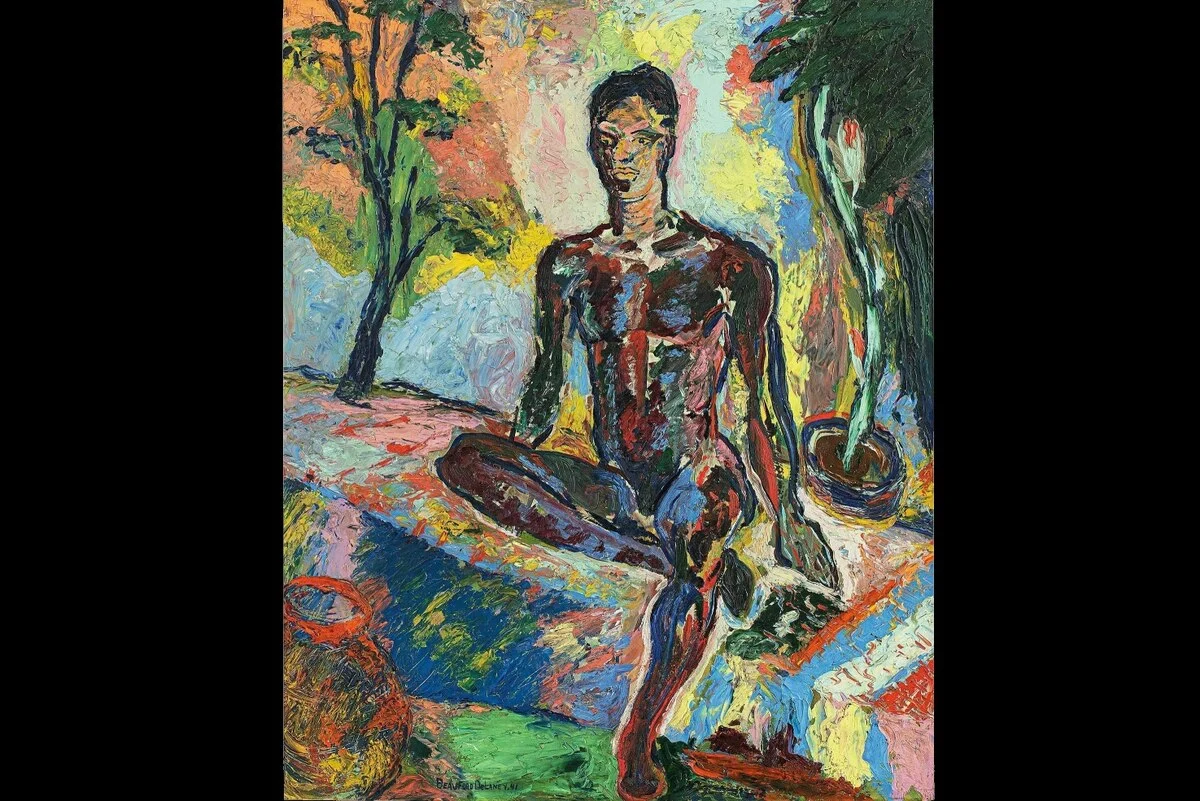
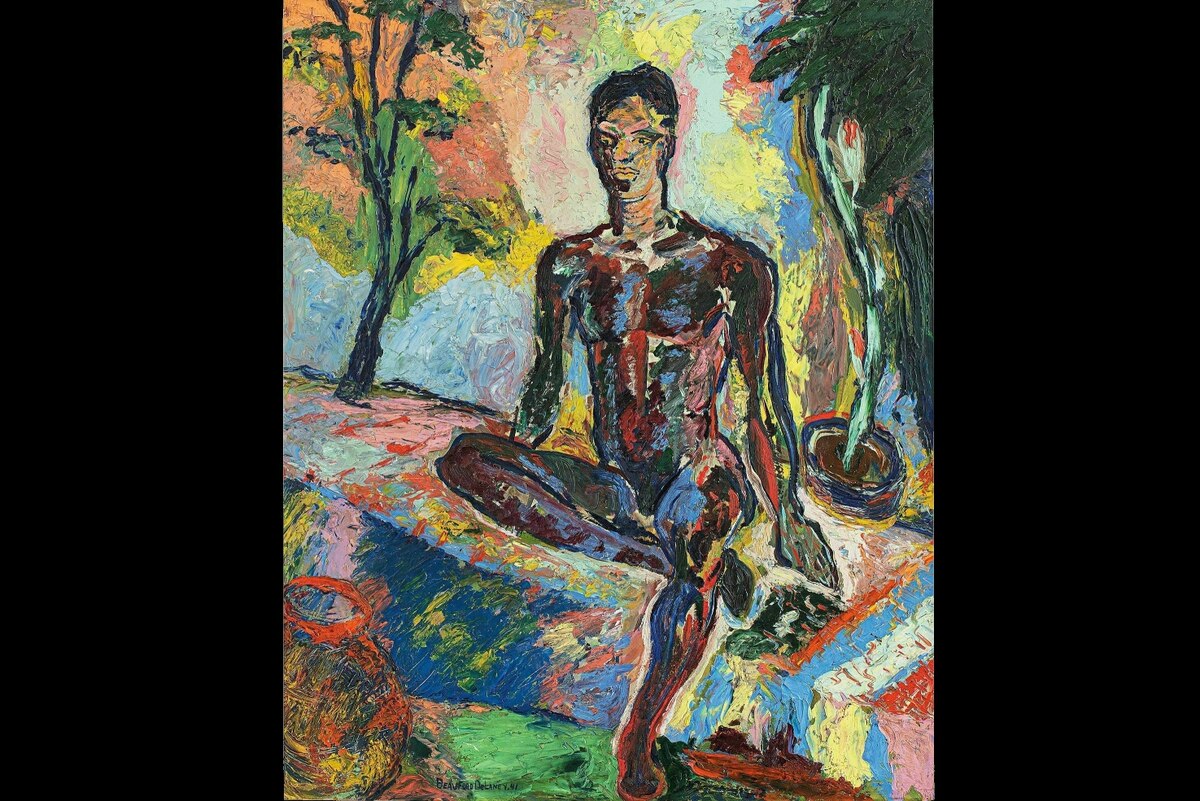
The exhibition does not merely present a sidebar of works by Black artists; it embeds them directly into the museum’s permanent collection. Beauford Delaney’s 1941 portrait, Dark Rapture (James Baldwin), is positioned as a critical satellite among the works of the Classical Modernists. It hangs in direct dialogue with Pablo Picasso’s Woman with an Artichoke and Max Beckmann’s Still Life with Green Glasses, painted during the artist’s exile from Nazi-occupied Europe.
Curator Eboa Itondo uses the exhibition to address the problematic origins of the museum’s holdings. The institution was built upon the 1946 donation by Josef Haubrich, whose collection focused on works labeled "degenerate" by the National Socialists. While this saved vital European Modernist works from destruction, it also cemented a Eurocentric narrative that effectively erased the contributions of Black artists. By integrating figures like Laura Wheeler Waring, Betye Saar, and Mildred Thompson into the existing galleries, Itondo effectively disrupts the established hierarchy between the "canonical" and the "peripheral."
Chronology: From the 1900 World’s Fair to the Present
The historical arc of the exhibition begins with W.E.B. Du Bois, who, at the 1900 Paris World’s Fair, utilized data visualization to challenge white supremacist narratives regarding Black economic and social progress in the United States. His work—geometrically reduced diagrams detailing Black education and land ownership—serves as the intellectual blueprint for the exhibition.

The narrative spans the mid-20th century, tracking the migration of Black American artists to Europe—a movement often overlooked by the traditional art history of the transatlantic exchange. We see the trajectory of Herbert Gentry, who moved to Paris in 1946, and Mildred Thompson, who lived and worked in Germany, specifically in the Rhineland, for years before being "discovered" by the institutional mainstream. The exhibition highlights that while the Ludwig family was busily importing Pop Art from Manhattan in the late 1960s, these artists were already shaping a Black Modernist discourse in the very landscape the museum now inhabits.
Supporting Data and Methodology
The exhibition’s methodology is rooted in transparency. Itondo does not hide the mechanics of her curatorial process. In the galleries, Du Bois’s reports from 1936 are presented as working documents rather than static authorities. Yellow highlights on the text panels reveal the curator’s own reading process, inviting visitors to engage with the text as a living, breathing subject.

Furthermore, the exhibition utilizes "display displays." Next to paintings, the museum has reconstructed the physical objects that served as the subjects for the artists—ceramic figurines, cups, and bowls. By placing the actual object next to the painting, the curators effectively collapse the distance between the artist’s reality and the museum’s exhibition space. A striking example is the inclusion of the work of contemporary artist James Gregory Atkinson. His installation, featuring artifacts from the U.S. military barracks in Friedberg, Germany, brings the reality of the Black experience in post-war West Germany into sharp focus, linking the military occupation to the cultural visibility (and invisibility) of Black life in the Bundesrepublik.
Official Responses and Institutional Responsibility
The museum’s leadership has acknowledged that the acquisition of works by artists such as Betye Saar—a central figure of the Black Arts Movement who passed away at 99—is not an act of absolution but a necessary step toward addressing institutional erasure. The exhibition serves as an admission that the "transatlantic" nature of the museum’s collection has historically been one-sided.

By purchasing a work by Mildred Thompson in 2025, the museum is finally acknowledging a local history that was physically proximate but institutionally ignored. The implication is clear: the museum’s responsibility is to look at its own backyard as much as it looks toward the galleries of New York or Paris. The exhibition moves beyond "diversity initiatives" and into the realm of structural correction. Itondo’s refusal to label these works with special "Black Modernism" tags is a bold, deliberate choice; she insists that these artists belong in the center of the room, not in a partitioned wing.
Implications: A New Grammar for the Museum
The implications of "Along the Color Line" are profound. The exhibition suggests that the canon is not a static set of historical truths, but a series of choices made by those in power. By adopting Du Bois’s method of visualization and data-based advocacy, Itondo provides a new "grammar" for the museum.

The success of this exhibition lies in its subtlety. There is no moralizing or grandstanding. Instead, there is an invitation to re-read the collection through a different lens. When we see Laura Wheeler Waring’s Still Life: Daffodils with Figurine placed alongside Maria Marc’s work, the "color line" becomes a bridge rather than a barrier.
For the Museum Ludwig, the next fifty years will be defined by whether this approach becomes the new standard. If the museum continues to interrogate its own acquisitions and its history of exclusion with the same rigor, it will transform from a repository of "Western" art into a truly global institution.

The exhibition is, in essence, a challenge to other museums: to look at their own walls, recognize the gaps, and realize that the histories they have ignored are, in fact, the very foundations upon which their collections rest. As James Gregory Atkinson’s work reminds us, Black life in Germany is not a new phenomenon to be "discovered," but an ongoing, layered history that has been here all along, waiting for the museum to finally turn its gaze in the right direction.
“Along the Color Line – Traces of a Transatlantic Modernism” remains on view at the Museum Ludwig, Cologne, until March 7, 2027. A comprehensive catalog published by Verlag der Buchhandlung Walther und Franz König is available for 38 euros.