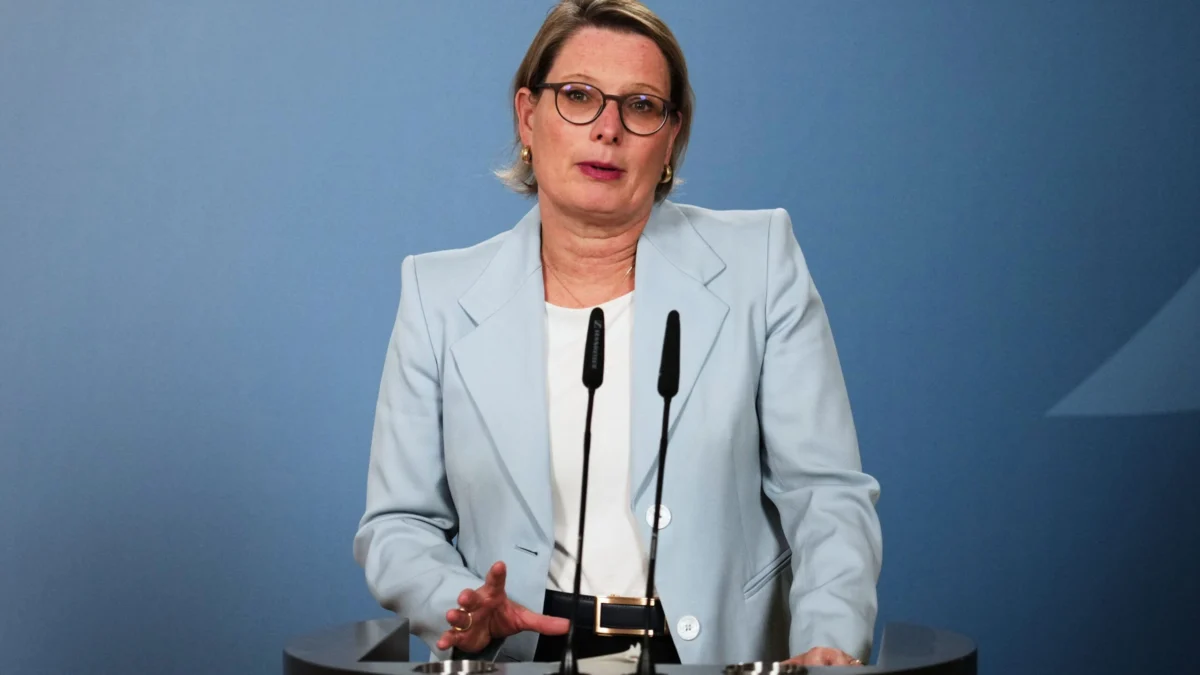
Berlin, Germany – The debate over housing affordability in Germany has reached a critical juncture, with Federal Justice Minister Stefanie Hubig (SPD) firmly rejecting the notion of socializing housing stocks, a contentious proposal gaining traction in some political circles. Speaking at a pivotal Housing Summit in Berlin, Hubig articulated the federal government’s unified opposition, emphasizing that such measures would be neither effective nor practical in addressing the nation’s severe housing shortage.
This stance places the government in direct contrast with more radical proposals from the left-wing, particularly in cities like Berlin, where the prospect of large-scale expropriation of private housing companies remains a significant political demand. The discussion unfolds against a backdrop of surging rents, dwindling affordable housing, and a growing public outcry, prompting calls for urgent, decisive action from all corners of the political spectrum.
Main Facts: Germany’s Housing Policy at a Crossroads
Germany is grappling with a profound housing crisis, characterized by soaring rents, a chronic shortage of affordable homes, and increasing social tension. In response, a spectrum of solutions is being debated, from robust construction initiatives to stringent market regulations and, most controversially, the socialization of housing.
Federal Government Unites Against Housing Expropriation
Federal Justice Minister Stefanie Hubig (SPD) delivered a clear message at the recent Housing Summit, co-hosted by the German Tenants’ Association (DMB) and the German Trade Union Confederation (DGB). "We, as the federal government, are united in the view that the socialization of housing would not be goal-oriented," Hubig stated unequivocally in Berlin. Her core argument is rooted in pragmatism: "Socialization costs a lot and brings little; above all, it doesn’t give anyone a new apartment." She further highlighted the immense difficulties surrounding the financing and implementation of such a complex undertaking.
This categorical rejection from a leading figure within the ruling coalition underscores a broader consensus within the federal government against large-scale expropriation. The minister’s comments also touched upon a parallel debate initiated by Chancellor Friedrich Merz (CDU), who had previously announced plans for a federal law explicitly prohibiting the expropriation of housing companies. While Hubig affirmed the government’s shared objective of addressing housing challenges, she cautioned against the legal feasibility of a blanket ban, referencing the nuanced provisions of Germany’s Basic Law (Grundgesetz).
The political urgency of this debate is particularly acute in Berlin. Following recent elections for the House of Representatives, the possibility of a red-green-red coalition, potentially led by the Left Party, looms large. The Left Party has made the socialization of apartments owned by major real estate corporations, such as Vonovia, a non-negotiable condition for entering a governing coalition. Their ambitious target is to transfer approximately 220,000 apartments into municipal ownership, fundamentally reshaping the city’s housing landscape.

The Push for New Construction and Regulatory Reforms
While rejecting expropriation, the federal government is simultaneously emphasizing the need for proactive measures to expand housing supply. Minister Hubig outlined the administration’s commitment to boosting new construction, identifying it as a cornerstone of their strategy. This includes fostering private sector engagement through various incentives and, significantly, the establishment of a federal construction company aimed at improving the financial viability of new building projects.
Furthermore, Hubig announced the imminent presentation of a draft law for "Building Type E," a proposed regulatory framework designed to simplify and accelerate construction processes. "I know the industry is waiting for this," she remarked, acknowledging the sector’s anticipation for reforms that could cut through bureaucratic red tape and reduce construction costs. This focus on supply-side solutions reflects a belief that increasing the housing stock is the most sustainable long-term answer to the affordability crisis.
These government initiatives stand in stark contrast to the demands from tenant associations and trade unions, who, at the same Housing Summit, called for immediate, far-reaching rent regulations. Their proposals include a nationwide rent freeze and a permanent reduction of the "Kappungsgrenze" (the cap on rent increases), signaling a deep divide in how different stakeholders believe the crisis should be tackled.
Chronology of a Contentious Debate
The current housing crisis and the accompanying policy debates are not sudden phenomena but rather the culmination of decades of evolving social, economic, and political factors. Understanding this timeline is crucial to grasping the complexity of the present situation.
Roots of the Housing Crisis
Germany’s housing market has undergone significant transformations since the post-war era. Following World War II, a massive reconstruction effort and a strong social housing sector provided relatively affordable accommodation. However, over the past three decades, a combination of factors has eroded this affordability. Rapid urbanization, particularly in major economic hubs, has led to intense demand in cities like Berlin, Munich, and Hamburg. Simultaneously, insufficient new construction, often hampered by complex regulations, rising land prices, and increasing construction costs, has failed to keep pace with population growth and changing household structures.
The "Vergesellschaftung" (socialization or expropriation) debate, while historically present in various forms, gained renewed prominence with the 2021 Berlin referendum. Initiated by the "Deutsche Wohnen & Co. enteignen" (Expropriate Deutsche Wohnen & Co.) campaign, the referendum saw a majority of Berliners vote in favor of initiating a process to socialize large housing companies. This non-binding but politically significant vote brought the radical measure to the forefront of national discourse, particularly as Berlin, a city with a significant rental population, struggled with some of the steepest rent increases in the country. The Left Party, in particular, has championed this cause, making it a cornerstone of their housing policy and a potential prerequisite for any coalition government in the capital.

Key Political Milestones
The federal government’s engagement with the expropriation debate escalated significantly in July when Chancellor Friedrich Merz (CDU), leader of the opposition, announced his intention to introduce a federal law aimed at prohibiting the expropriation of housing companies. Merz framed this as a critical measure to protect Germany’s reputation as an investment location, arguing that such a ban would provide legal certainty for investors and encourage much-needed private investment in housing construction. His announcement signaled a clear intention to counteract any regional moves towards socialization with federal legislation.
The recent Housing Summit in Berlin served as a crucial platform for various stakeholders to voice their perspectives. Justice Minister Hubig’s statements at this summit reiterated the federal government’s unified opposition to socialization while simultaneously highlighting the constitutional complexities of enacting a complete prohibition. Her remarks underscored the delicate balance the government must strike between addressing public concerns about affordability and upholding fundamental property rights enshrined in the Basic Law.
Concurrently, the legislative process for "Building Type E" is advancing, reflecting the government’s commitment to streamlining construction. This initiative, alongside the planned federal construction company, represents the supply-side approach favored by the ruling coalition. The interplay between these legislative efforts – one aimed at preventing expropriation and the other at boosting construction – illustrates the multi-pronged, albeit sometimes contradictory, strategy being pursued to alleviate the housing crisis.
Supporting Data and Public Sentiment
The housing crisis in Germany is not merely a political talking point but a lived reality for millions, reflected in compelling statistics and widespread public sentiment.
The Stark Reality of Housing Shortage and Affordability
Germany faces an acute housing shortage, particularly in its major urban centers. Estimates vary, but many experts suggest a deficit of several hundred thousand housing units nationwide, with some figures exceeding 700,000 units needed to meet demand, especially for affordable housing. This shortfall is exacerbated by a consistent failure to meet new construction targets. While the government initially aimed for 400,000 new units annually, actual completion rates have consistently fallen short, often by tens of thousands of units, particularly in recent years due to rising interest rates, material costs, and labor shortages.
The consequence is a relentless upward spiral in housing costs. Average rents in many German cities have risen significantly faster than inflation and wages, making it increasingly difficult for middle- and lower-income households to find suitable accommodation. In some desirable areas, rents have surged by double-digit percentages within a few years. This escalating cost of living places immense pressure on household budgets, contributing to the concerning statistic cited by Justice Minister Hubig: 17 million people in Germany are at risk of housing poverty. Housing poverty is typically defined as spending more than 40% of disposable income on housing costs, leaving insufficient funds for other necessities and leading to social exclusion. The problem is not confined to large cities but is increasingly affecting surrounding areas as people are pushed further out in search of affordable options.

Public Opinion: A Clear Mandate for Regulation
Amidst these challenging realities, public sentiment overwhelmingly favors stronger political intervention. A representative Forsa survey, commissioned by the DGB and DMB, revealed a broad consensus across party lines for more robust rent regulation. The survey found that a staggering majority of tenants in Germany’s largest cities, irrespective of their political affiliation, support stricter measures to control rent prices.
Specifically, approximately 70% of supporters of the CDU, SPD, and Greens — parties that collectively represent a significant portion of the electorate — expressed a desire for rent increases to be permitted but legally limited. This finding is particularly significant as it demonstrates that the demand for regulatory action extends beyond the traditional left-wing base, indicating a mainstream concern that politicians cannot afford to ignore.
Melanie Weber-Moritz, President of the German Tenants’ Association (DMB), emphasized this point at the Housing Summit, stating, "How housing becomes affordable again is now an election-deciding question." She argued that the issue of affordable rents must be elevated to the top of the federal government’s political agenda. The survey results provide a powerful mandate for tenant advocates, reinforcing their calls for urgent legislative changes to curb excessive rent hikes and ensure housing remains accessible. The widespread public support for regulation highlights the profound impact the housing crisis has on the daily lives of German citizens and the expectation for their political representatives to act decisively.
Official Responses and Divergent Strategies
The German political landscape is characterized by a complex interplay of differing ideologies and pragmatic considerations when it comes to housing policy. The official responses reflect this tension, particularly between market-oriented approaches and those advocating for stronger state intervention.
The Federal Government’s Position: A Pragmatic Approach
The federal government, currently a coalition of the SPD, Greens, and FDP, is attempting to navigate the housing crisis with a strategy that balances market mechanisms with social responsibility, while largely rejecting radical measures like expropriation.
Justice Minister Stefanie Hubig (SPD): As highlighted earlier, Minister Hubig has been a vocal opponent of housing socialization. Her arguments extend beyond mere practicality to the constitutional bedrock of the German state. She referred to the Basic Law (Grundgesetz), Germany’s constitution, explaining that while Article 14 protects property rights, it also obliges property owners to consider the common good. Crucially, Article 15 explicitly allows for the socialization of land, natural resources, and means of production through a law that determines the nature and extent of compensation. Hubig’s point is that while expropriation is legally possible, it is "not trivial" constitutionally. This legal complexity means that a simple federal law to ban expropriation, as proposed by some, would itself face significant constitutional hurdles. The Interior Ministry, being the lead on such legislation, is navigating this intricate legal terrain, which explains the delay in presenting any federal law on the matter. Her emphasis is on the financial burden and the lack of new housing creation through expropriation, positioning the government’s stance as fiscally responsible and focused on tangible solutions.

Chancellor Friedrich Merz (CDU): While Merz is not part of the current federal government, his pronouncements carry significant weight as leader of the largest opposition party. His July announcement of a proposed federal law to "prohibit the expropriation of housing construction companies" was a direct response to the Berlin referendum and the broader debate. Merz’s primary motivation is to safeguard Germany’s reputation as a reliable location for investment. He argued that the threat of expropriation creates immense uncertainty for investors, deterring the capital needed for new construction and renovation. For Merz, a ban on expropriation is essential for maintaining economic stability and encouraging the private sector to build more homes, which he views as the only sustainable long-term solution. His strong market-liberal stance positions him firmly against any measures that could be perceived as undermining property rights or free-market principles.
SPD-led government: The broader federal coalition, despite internal ideological differences (e.g., between the market-liberal FDP and the more interventionist Greens/SPD), has found common ground in rejecting large-scale housing expropriation. While the SPD and Greens are generally more open to social housing and regulation than the FDP, all three parties are cautious about the economic and legal implications of expropriation. Their shared approach prioritizes increasing housing supply through new construction, streamlining regulations, and providing targeted support, rather than engaging in potentially costly and legally complex state takeovers of existing properties.
Tenant Advocates Demand Urgent Intervention
In stark contrast to the federal government’s cautious approach, tenant associations and trade unions are calling for immediate and robust regulatory interventions to combat the escalating housing crisis. Their demands reflect the acute distress experienced by millions of renters across Germany.
Deutscher Mieterbund (DMB) and Deutscher Gewerkschaftsbund (DGB): These two powerful organizations are at the forefront of advocating for tenants’ rights. At the Housing Summit, they jointly presented a comprehensive set of demands, including:
- A nationwide rent freeze (Mietenstopp): This radical measure would temporarily halt all rent increases, providing immediate relief to tenants.
- Permanent limitation of rent increases by lowering the "Kappungsgrenze": Currently, rent increases in existing tenancy agreements are capped at a maximum of 20% over three years, or 15% in designated "strained housing areas." The DMB and DGB argue that this cap is insufficient and needs to be significantly lowered to prevent excessive rent hikes.
- Stricter penalties for violations of the "Mietpreisbremse" (rent control) and "Mietwucher" (rent gouging): They contend that existing laws are often unenforced or lack sufficient deterrents, allowing landlords to circumvent regulations.
- Increased limitations on the conversion of rental apartments into owner-occupied units: This practice, common in gentrifying areas, reduces the stock of rental housing and often leads to the displacement of existing tenants.
Melanie Weber-Moritz (DMB President): She delivered a scathing critique of the current legal framework, asserting that the existing Mietrecht (tenancy law) "literally invites abuse through loopholes and exceptions." She added that "unfortunately, more and more landlords shamelessly exploit this," painting a picture of systemic issues that allow for exploitative practices. Her impassioned plea underscores the urgency felt by tenant organizations, who view the current situation as a failure of policy to protect vulnerable renters.
Hanna Steinmüller (Greens, housing rapporteur): From within the government coalition, Steinmüller echoed the severity of the crisis, describing it as a "social breaking point." Her reference to events in Spain – where housing protests and social unrest have been prominent – serves as a stark warning. She implied that if German politics continues to "hesitate too long on the housing question," similar social tensions and consequences could materialize, highlighting the potential for widespread societal discontent if the issue is not adequately addressed. Her comments reflect a growing concern within even the more moderate political factions about the potential for social fragmentation due to housing unaffordability.

Implications: Economic Stability, Social Cohesion, and Future Urban Development
The ongoing debate over Germany’s housing policy carries profound implications that extend far beyond immediate rental costs, touching upon economic stability, social cohesion, and the very fabric of future urban development.
Economic Repercussions of Policy Choices
The real estate sector, a significant pillar of the German economy, views radical interventions with considerable alarm. Dirk Salewski, President of the Bundesverband Freier Immobilien- und Wohnungsunternehmen (BFW – Federal Association of Free Real Estate and Housing Companies), vehemently criticized both the Mietpreisbremse (rent control) and the idea of Vergesellschaftung (socialization). He dismissed these measures as "populism, pure symptomatic treatment, and an admission of failure for a failed housing policy."
Real Estate Industry’s Alarm: Salewski’s critique is rooted in the belief that market interventions, while potentially popular, ultimately exacerbate the problem by deterring investment. He argues that for years, too little has been built, and increasingly complex requirements have made construction prohibitively expensive. Measures like rent control, while intended to protect tenants, can disincentivize landlords from investing in maintenance, necessary renovations, or energy-efficient upgrades, thereby compromising climate protection goals for buildings. The threat of expropriation, in particular, could lead to a significant withdrawal of private capital from the housing market, as investors seek more predictable and secure environments.
Investor Confidence: Chancellor Merz’s concern about Germany’s investment standing is widely shared within business circles. Large-scale expropriation, even with compensation, sends a chilling signal to both domestic and international investors. It suggests a lack of respect for property rights and an unpredictable regulatory environment, which could divert much-needed capital away from Germany’s real estate and construction sectors. This, in turn, would further hinder the development of new housing units, directly contradicting the goal of increasing supply.
Cost to Taxpayers: The financial burden of expropriation cannot be overstated. Compensating owners for hundreds of thousands of apartments, as proposed in Berlin, would run into tens of billions of euros, potentially even exceeding 30 billion euros for Berlin alone. This massive expenditure would fall on taxpayers and divert public funds from other critical areas like infrastructure, education, or healthcare. The long-term management and maintenance of such a vast public housing stock would also entail ongoing costs and administrative challenges, potentially leading to inefficiencies and further financial strain.
Navigating the Constitutional and Political Minefield
The legal complexities surrounding Articles 14 and 15 of the Basic Law are central to this debate. While Article 14 guarantees property rights, Article 15 provides a constitutional basis for socialization "for the purpose of nationalization" with compensation. This means that expropriation is not inherently unconstitutional, but any such law must be carefully crafted, meet stringent public interest criteria, and ensure fair compensation. This legal tightrope makes it difficult for any federal government to simply ban expropriation outright, as Minister Hubig pointed out.

The political balancing act for the federal government is equally precarious. The ruling coalition comprises parties with diverse views on market intervention. The FDP, for instance, is staunchly against expropriation and heavy regulation, while elements within the SPD and Greens are more sympathetic to tenant demands. Maintaining coalition unity while addressing a highly emotional and visible crisis requires careful negotiation and a shared understanding of both the economic realities and the constitutional limitations. Furthermore, regional political developments, particularly in Berlin, can exert significant pressure on federal policy, creating a dynamic tension between local autonomy and national governance.
Towards a Sustainable Housing Future: The Path Ahead
The challenges facing Germany’s housing market demand a multi-faceted and sustainable approach. The government’s focus on promoting new construction through initiatives like "Building Type E" and a federal construction company represents a crucial supply-side strategy. Streamlining planning and approval processes, incentivizing modular construction, and making more public land available for development could significantly accelerate housing creation.
However, supply-side measures alone may not be sufficient to address the immediate affordability crisis. The strong public demand for rent regulation, as evidenced by the Forsa survey, suggests that some form of market intervention will remain politically necessary. This could involve refining existing rent control mechanisms, strengthening tenant protection laws, and cracking down on illegal rent gouging.
Ultimately, the long-term vision for urban development in Germany must balance market dynamics with social responsibility. This means fostering an environment where private investment is encouraged to build and maintain quality housing, while simultaneously ensuring that adequate, affordable housing options are available for all segments of society. The debate over expropriation and rent control is a symptom of a deeper systemic issue, requiring comprehensive reforms that tackle the root causes of the housing crisis rather than just its symptoms. The path ahead will require political courage, legal ingenuity, and a genuine commitment to ensuring that housing remains a fundamental right, not a luxury, for all residents of Germany.