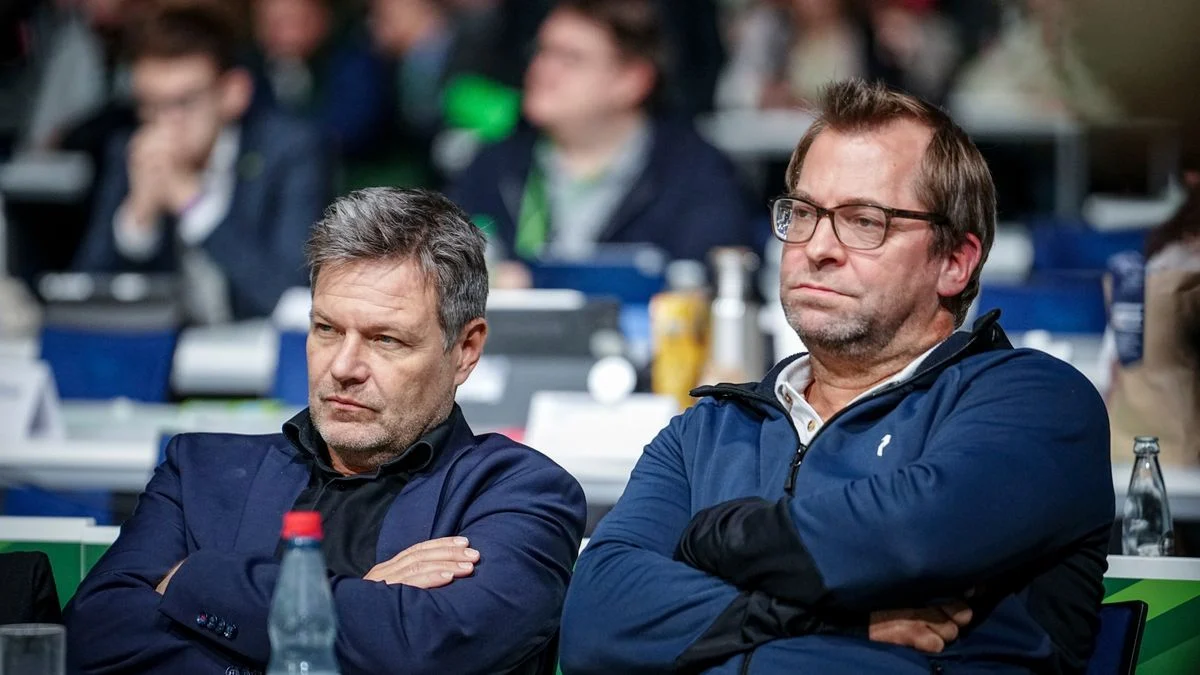
BERLIN, Germany – The Social Democratic Party (SPD), Germany’s leading coalition partner, is bracing for a pivotal moment as it convenes a special party congress in Bremen on January 16th and 17th. The unexpected gathering, initially planned as a routine party convention, has been dramatically upgraded to include comprehensive re-elections for the entire party executive board and all other leadership positions. This snap decision comes in the wake of Bärbel Bas’s surprise resignation as both Labor Minister and SPD Co-Chair, triggering a scramble for leadership amidst growing internal and external pressures on the ruling ‘traffic light’ coalition.
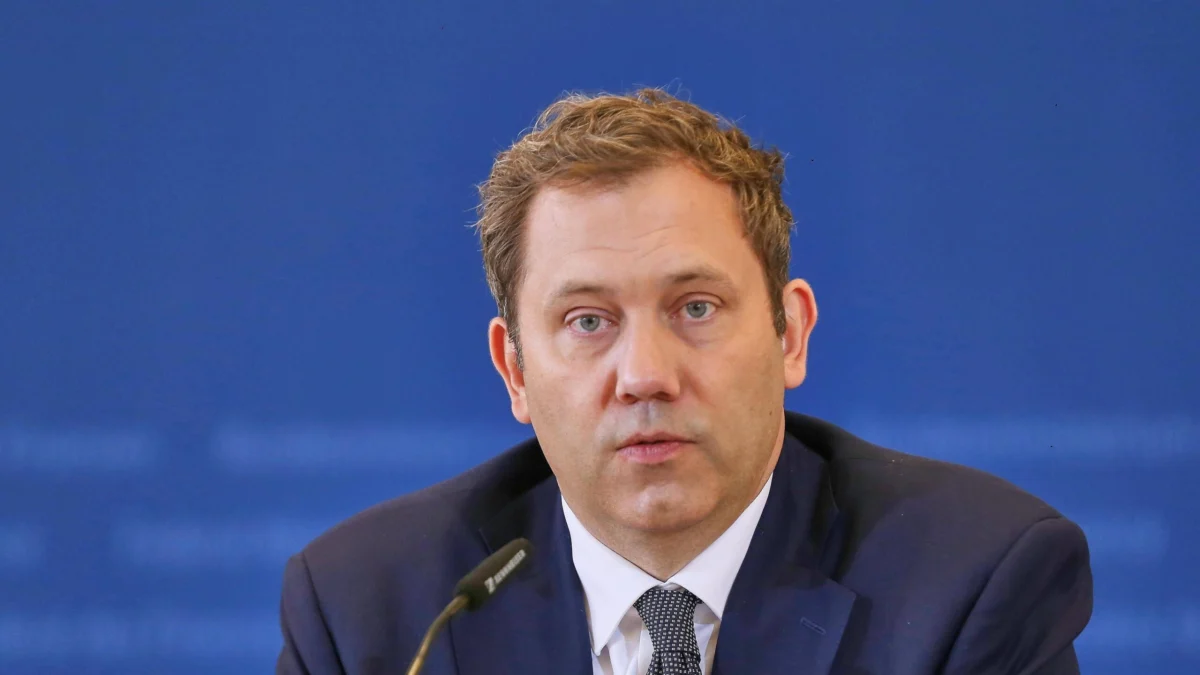
SPD leader Lars Klingbeil, who proposed the extraordinary congress, has confirmed his intention to seek re-election, staunchly advocating for the party’s characteristic dual leadership model. However, the identity of his future co-chair remains an open question, setting the stage for an intense internal debate and potentially shifting the party’s strategic direction. The sudden call for fresh elections underscores a period of significant uncertainty for the SPD, grappling with flagging poll numbers, an embattled federal government, and the looming challenges of European and state elections.
H2: Main Facts: A Party in Search of Stability
The German Social Democratic Party, a cornerstone of the ruling ‘Ampel’ (traffic light) coalition alongside the Greens and the Free Democratic Party (FDP), finds itself at a critical juncture. The announcement of a special party congress, scheduled for January 16th and 17th in the northern German city of Bremen, signals a deeper tremor within the party’s hierarchy and strategic outlook. This is no ordinary assembly; rather, it is a full-scale electoral event where every position on the party executive board will be contested and renewed.
The immediate catalyst for this accelerated leadership overhaul was the resignation of Bärbel Bas, who held the dual roles of Federal Labor Minister and SPD Co-Chair. Her departure created an immediate void, prompting SPD party leader Lars Klingbeil to move swiftly. On the Monday following Bas’s resignation, Klingbeil publicly announced his proposal for a special party congress, arguing for the necessity of a renewed mandate for the party’s leadership. This move effectively transformed what was slated to be a non-electoral party convention (Parteikonvent) around the New Year into a full-blown electoral congress (Parteitag).
Klingbeil, a prominent figure in the SPD and a key architect of the current coalition, has unequivocally stated his intention to stand for re-election as party leader. Crucially, he has also affirmed his commitment to the SPD’s established principle of a "Doppelspitze" – a dual leadership model, typically comprising one male and one female co-chair. This structure has been a hallmark of the SPD’s governance for several years, aimed at fostering shared responsibility and diverse representation at the highest level. However, Klingbeil has yet to name his preferred co-candidate, igniting speculation and opening the field for potential contenders.
The timing of this leadership shake-up could not be more sensitive. The SPD, like its coalition partners, is navigating a challenging political landscape marked by economic headwinds, a contentious national budget crisis, and significant geopolitical pressures. Public approval ratings for the ‘Ampel’ government have plummeted, and the SPD itself has seen its support dwindle in recent polls. Against this backdrop, the Bremen congress is not merely about filling a vacant position; it is about the SPD reasserting its direction, strengthening its internal cohesion, and projecting a renewed sense of purpose to the German electorate. The outcome of these elections will undoubtedly have profound implications not just for the SPD, but for the stability and future trajectory of the federal government.
H2: Chronology of a Shifting Political Landscape
The decision to hold an extraordinary party congress in Bremen, complete with full leadership re-elections, marks a significant deviation from the SPD’s initial plans and reflects a rapid response to unfolding political events. The timeline leading up to the January 16th and 17th gathering reveals a party in motion, reacting to internal pressures and external challenges.
H3: From Convention to Congress: The Bas Resignation
Originally, the SPD had envisioned a more subdued gathering around the New Year – a "Parteikonvent." Unlike a "Parteitag" (party congress), a "Parteikonvent" is typically a smaller assembly of delegates focused on policy discussions, strategic planning, and internal debates, but crucially, it does not involve leadership elections. This initial plan suggested a period of consolidation and reflection for the party, allowing it to fine-tune its agenda without the immediate pressure of electoral contests.
However, this trajectory was abruptly altered by the unexpected resignation of Bärbel Bas. While the precise date of her resignation as Labor Minister and SPD Co-Chair is crucial context, the original article indicates that Lars Klingbeil’s announcement for a special party congress came "on Monday after her resignation." This suggests a rapid sequence of events, likely occurring in late December or early January, forcing the party to recalibrate its internal schedule. Bas’s departure, though not explicitly detailed in its reasons within the provided text, created an immediate and undeniable leadership vacuum at the very top of the party. Her dual role meant her absence was felt across both the executive branch of government and the party’s internal steering mechanism.
H3: Klingbeil’s Swift Maneuver and the Dual Leadership Principle
In response to this vacancy, SPD leader Lars Klingbeil acted decisively. His proposal for an immediate special party congress, rather than simply appointing an interim co-chair or waiting for a regularly scheduled election cycle, underscores a desire for a swift and democratically legitimized renewal of leadership. By calling for comprehensive elections for the entire executive board, Klingbeil has effectively transformed a reactive situation into an opportunity for a broader mandate, not just for his co-chair, but for the party’s collective leadership as a whole.
Klingbeil’s announcement also prominently featured his unwavering commitment to the "Doppelspitze" – the dual leadership principle. This model, which sees the party led by two co-equal chairs, typically one male and one female, has been a defining characteristic of the SPD’s recent history. It was adopted with the aim of promoting gender equality, sharing the immense workload of party leadership, and reflecting a broader base of internal representation. The principle gained particular prominence following the tumultuous period after the 2017 federal election, when the SPD sought to democratize its internal structures and move away from singular, dominant leadership figures. Klingbeil’s insistence on maintaining this structure signals continuity in the party’s governance philosophy, even as the specific individuals occupying those roles are subject to change.
However, the lack of a named co-candidate by Klingbeil introduces an element of strategic ambiguity. While it leaves the field open for potential contenders, it also highlights the internal challenge of finding a figure who can complement Klingbeil’s leadership, command broad party support, and navigate the complex political landscape. This deliberate silence, whether tactical or reflective of ongoing internal consultations, ensures that the search for the next SPD co-chair will be a central and highly anticipated aspect of the Bremen congress. The events of the past weeks have thus set the stage for a critical internal reckoning for the SPD, forcing it to confront its leadership structure and future direction earlier than anticipated.
H2: Supporting Data: The SPD’s Precarious Position
The decision to hold a special party congress with full leadership elections is not merely a procedural response to a resignation; it is a profound reflection of the SPD’s current precarious position within the German political landscape. A deeper look at the party’s recent performance, the challenges facing the ‘Ampel’ coalition, and historical precedents reveals the high stakes involved in the upcoming Bremen gathering.
H3: Plummeting Poll Numbers and Coalition Woes
The SPD, despite leading the federal government, has been struggling significantly in public opinion polls. Recent surveys consistently place the party below its 2021 federal election result of 25.7%, often hovering in the low 20s or even high teens. This downward trend is not isolated to the SPD but reflects a broader dissatisfaction with the entire ‘Ampel’ coalition. The government, formed by the Social Democrats, Greens, and Free Democrats, has faced a relentless barrage of crises since taking office.
Economic headwinds, including high inflation and concerns about a potential recession, have eroded public confidence. The ongoing war in Ukraine and its reverberations across energy markets have placed immense pressure on German industry and households. Perhaps most damagingly, the coalition has been rocked by internal disagreements, particularly over the federal budget. A landmark ruling by the Federal Constitutional Court in November 2023, which declared the government’s reallocation of unused COVID-19 funds unconstitutional, threw the entire budget planning into disarray. This budget crisis, forcing significant cuts and contentious debates, exposed deep rifts between the fiscally conservative FDP and the spending-oriented SPD and Greens. The resulting uncertainty and perceived instability have severely damaged the coalition’s public image and fueled voter disillusionment. This difficult environment makes the leadership question for the SPD all the more critical, as the party needs strong, unified leadership to navigate these turbulent waters and project competence.
H3: Historical Precedents and Internal Dynamics
The SPD has a rich history of leadership changes, some smooth, others tumultuous. The party has, at various points, grappled with the tension between strong, charismatic leaders and collective, consensus-driven governance. The adoption of the dual leadership model, which Klingbeil champions, was itself a response to periods of internal strife and a desire for broader representation. Historically, swift leadership changes or special congresses often occur during periods of electoral defeat or significant political upheaval, indicating a party in search of a new direction or a stronger public face. The current situation, while triggered by a resignation, resonates with this pattern of seeking renewal amidst adversity.
Internally, the SPD is a broad church, encompassing various factions and ideological wings. There are traditional labor-oriented socialists, more centrist "Neue Mitte" adherents, and a growing environmentalist-leaning wing. Regional party organizations also hold significant sway, sometimes articulating positions that differ from the federal party line. The mention of Manuela Schwesig, the popular Minister-President of Mecklenburg-Vorpommern, campaigning with an "anti-federal government course" highlights these internal divergences. Such regional leaders, often more attuned to local sentiments, can sometimes distance themselves from unpopular federal policies to protect their own electoral bases. This dynamic means that any new leadership must not only unite the federal party but also bridge potential divides with powerful regional figures and their respective constituencies.
H3: The Significance of Bremen
While Bremen might appear as a logistical choice for the congress, the city holds symbolic significance for the SPD. Bremen, along with Hamburg, has historically been a staunch Social Democratic stronghold, representing a traditional base of working-class support and progressive politics. Hosting a critical leadership election in such a symbolic location can be seen as an attempt to reconnect with the party’s roots and galvanize its core supporters, signaling a return to fundamental values amidst the complexities of federal governance. This choice of venue, therefore, subtly underscores the party’s need to stabilize its base and re-energize its traditional electorate.
H2: Official Responses and Emerging Contenders
The call for a special party congress has naturally prompted various reactions from within the SPD, particularly concerning the leadership race. While Lars Klingbeil has laid out his intentions, the field for the co-chair position remains fluid, with some prominent figures ruling themselves out and others emerging as potential candidates.
H3: Klingbeil’s Stance and the Quest for a Co-Chair
Lars Klingbeil’s pronouncements have been clear and consistent: he will stand for re-election, and he remains committed to the dual leadership model. His decision to push for a comprehensive election for the entire executive board, rather than a more limited approach, suggests a desire to consolidate power and secure a strong, fresh mandate for his leadership team. By putting all positions up for grabs, he is implicitly challenging any potential internal dissenters to step forward or accept the new, democratically elected structure. This move aims to present a united front to the public and provide stability at a time when the federal government is facing immense pressure.
However, the most significant unanswered question revolves around who will join him as co-chair. Klingbeil’s deliberate silence on this matter opens the door for intense internal discussions and strategic maneuvering. The ideal co-chair would likely be a figure who can complement Klingbeil’s profile, perhaps bringing a different regional perspective, a strong policy focus (e.g., social policy or economics), or a proven track record in state-level governance. Critically, this individual would need to be able to work seamlessly within the ‘Ampel’ coalition while also clearly articulating the SPD’s distinct vision.
H3: Pistorius Rules Himself Out, Schwesig’s Ambiguous Position
One of the most popular politicians in Germany, irrespective of party affiliation, is Defense Minister Boris Pistorius. His clear and decisive leadership since taking office has earned him high approval ratings across the political spectrum. Consequently, his name frequently arises in discussions about future leadership roles. However, Pistorius has emphatically ruled out any ambition for the SPD party chairmanship. This declaration, while clarifying the immediate leadership race, also highlights a potential dilemma for the SPD: its most popular figure is not interested in leading the party. Pistorius’s focus remains squarely on his demanding role at the Ministry of Defense, a portfolio that has gained immense importance given the geopolitical situation in Eastern Europe. His absence from the leadership contest means the SPD cannot leverage his widespread popularity for the party’s top job, forcing them to look elsewhere for a unifying and appealing figure.
In contrast, the situation surrounding Manuela Schwesig is more complex. As the highly popular Minister-President of Mecklenburg-Vorpommern, she is widely considered a formidable political force and a potential candidate for the co-chair position. Her strong electoral performance in her home state, often outperforming the federal SPD, underscores her appeal. However, the article highlights a significant caveat: Schwesig has "campaigned with an anti-federal government course" in Mecklenburg-Vorpommern. This approach, where a state leader distances themselves from unpopular federal policies to protect their regional mandate, is not uncommon in German politics. Yet, for a potential federal party co-chair, it raises questions about her commitment to the ‘Ampel’ coalition’s agenda and her ability to effectively lead a party that is a central pillar of that government. Her willingness to openly criticize federal policies could be seen as a strength by some within the party who desire a more distinct SPD profile, but also as a liability by others who prioritize coalition cohesion and stability. Her candidacy, therefore, would introduce a fascinating dynamic, potentially signaling a more critical stance towards the federal government from within the SPD’s top ranks.
Other potential candidates, though not mentioned in the original text, would likely include prominent female figures from the SPD’s parliamentary group (Bundestagsfraktion), state party leaders, or established members of the executive board who might see this as an opportunity to step up. The coming weeks will undoubtedly see intense internal lobbying and public positioning as these individuals weigh their options and gauge their support base.
H2: Implications: A Critical Juncture for the SPD and German Politics
The upcoming special party congress in Bremen represents far more than a routine internal reshuffle for the SPD. Its outcomes will have profound implications, not only for the party’s internal health and strategic direction but also for the stability of Germany’s ‘Ampel’ coalition and the broader political landscape.
H3: Internal Renewal or Further Instability for the SPD?
For the SPD itself, the congress presents both a significant opportunity and a considerable risk. On the one hand, a successful congress that elects a strong, unified, and broadly supported leadership team could provide a much-needed jolt of energy and direction. A clear mandate for Lars Klingbeil and his new co-chair could help the party articulate a more coherent vision, particularly concerning the pressing economic and social challenges facing Germany. This could be framed as an act of democratic renewal, demonstrating the party’s ability to adapt and respond decisively to challenges. A refreshed leadership could also help bridge some of the internal divides, such as those highlighted by Manuela Schwesig’s ‘anti-federal government course,’ by forging a new consensus on the party’s position within the coalition.
On the other hand, the risks are substantial. A contentious leadership battle, a perceived lack of strong candidates, or an outcome that fails to unite the party could exacerbate existing tensions and lead to further instability. If the new leadership struggles to gain traction or if internal criticism continues to fester, it could further damage the SPD’s public image and its ability to govern effectively. The party is already grappling with historically low poll numbers; a protracted or messy leadership transition could deepen this crisis, making it harder to regain voter trust.
H3: Impact on the ‘Ampel’ Coalition and Federal Government Stability
The stability of the SPD’s leadership is directly intertwined with the stability of the ‘Ampel’ coalition. As the leading party, a strong and unified SPD is crucial for the coherence and effectiveness of the federal government. A new co-chair will inevitably bring their own perspectives and priorities to the table, potentially influencing the SPD’s negotiating stance within the coalition. If the new leadership takes a harder line on certain issues, or if the internal balance of power within the SPD shifts significantly, it could complicate decision-making and potentially strain relations with the Greens and the FDP.
Conversely, a clear mandate for Klingbeil and his co-chair could strengthen the SPD’s position within the coalition, allowing it to negotiate more effectively and push through its policy agenda with greater conviction. This could lead to a more stable and predictable governing dynamic, which is desperately needed given the current challenges. The other coalition partners will be watching the Bremen congress closely, as the outcome will directly impact the dynamics of their shared government.
H3: Broader Political Ramifications and Future Elections
Beyond the immediate impact on the SPD and the coalition, the outcome of the Bremen congress will resonate across the broader German political landscape. A revitalized SPD could pose a greater challenge to the opposition CDU/CSU, which has been benefiting from the government’s struggles. It could also help stem the tide of support flowing to the far-right AfD, which thrives on perceptions of political instability and government incompetence.
Looking ahead, the new SPD leadership will face immediate electoral tests. The European Parliament elections are slated for June 2024, and several state elections are on the horizon. These elections will serve as crucial barometers of public sentiment and the new leadership’s ability to mobilize voters. The ultimate challenge, however, remains the next federal election. A strong, credible, and unified leadership team will be essential for the SPD to mount a competitive campaign and potentially retain its position as the leading force in German politics. The Bremen congress, therefore, is not just about filling a vacancy; it is about setting the course for the SPD’s future and, by extension, playing a critical role in shaping the political direction of Germany for years to come. The stakes could hardly be higher.