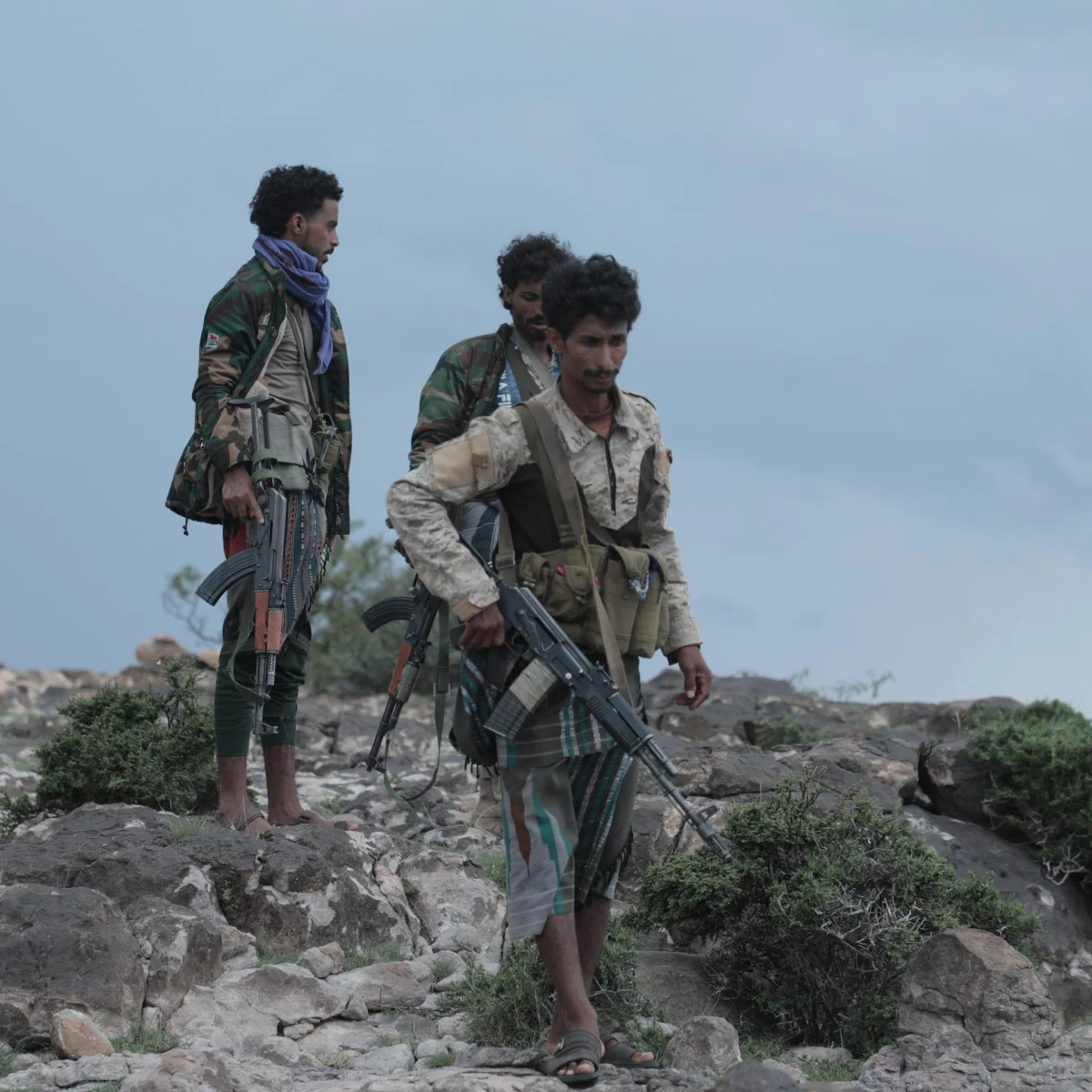
Sana’a, Yemen – October 15, 2026 – The already dire humanitarian situation in Yemen has reached a new, critical low, with international aid organizations issuing urgent warnings about an unprecedented collapse of vital services and a surge in human suffering. Persistent and intensifying conflict, particularly in key population centers, has severely hampered aid operations, leaving hundreds of thousands without access to life-saving assistance.
The United Nations World Food Programme (WFP) announced today that crucial aid deliveries for an estimated 800,000 people have been interrupted, exacerbating the specter of famine across the war-torn nation. The southwestern city of Taiz, long a flashpoint in the brutal conflict, is singled out as particularly affected, home to a vast population of internally displaced persons (IDPs) now cut off from essential support due to the escalating violence. Large swathes of the city and its surrounding areas have become unreachable, transforming an already desperate situation into an unimaginable catastrophe for its residents.
Concurrently, the International Committee of the Red Cross (ICRC) has sounded the alarm over a healthcare system teetering on the brink of total collapse. Reports indicate that some medical facilities across Yemen are now treating over 700 individuals injured by armed violence each week. These overwhelmed clinics face severe shortages of basic surgical materials, anesthetics, oxygen, and essential medicines, rendering them increasingly incapable of providing adequate care for the torrent of casualties. The lack of resources means that many preventable deaths and disabilities are becoming tragic realities.
The escalating crisis unfolds against the backdrop of a protracted civil war, where the Iran-backed Houthi militia continues its struggle against the internationally recognized government, supported by a Saudi Arabia-led coalition. Recent Houthi attacks on targets within Saudi Arabia, including the international airport in the capital Riyadh, have ignited fresh tensions, further dimming hopes for a de-escalation of hostilities and a much-needed political resolution. As the conflict grinds on, it is the Yemeni people who bear the brunt of an unending cycle of violence, displacement, and deprivation.
A Nation on the Brink: The Escalating Humanitarian Catastrophe
The pronouncements from the WFP and ICRC are not merely statistical updates; they represent a stark warning of a human catastrophe unfolding in real-time. Yemen, already recognized as one of the world’s worst humanitarian crises, is spiraling further into chaos, pushing its resilient but exhausted population to the very edge of survival.
Critical Aid Lifelines Severed
The WFP’s report underscores a critical failure in the humanitarian response: the inability to reach those most in need. The interruption of aid for 800,000 people is not an isolated incident but symptomatic of broader challenges. Road closures, active front lines, bureaucratic hurdles, and the deliberate targeting of aid convoys have made access increasingly perilous and unpredictable. For families already subsisting on a single meal a day, or often nothing at all, the cessation of food aid means an immediate plunge into acute hunger. Malnutrition rates, particularly among children and pregnant or lactating women, are projected to surge dramatically in the coming weeks and months, leading to irreversible health damage and an increase in child mortality.
The focus on Taiz highlights the particular vulnerability of besieged and contested urban areas. Taiz has endured years of siege-like conditions, with its population caught between warring factions. The presence of numerous internally displaced persons within the city, fleeing violence from other regions, further strains its already meager resources. These IDPs often live in overcrowded, unsanitary conditions, lacking proper shelter, clean water, and sanitation facilities, making them highly susceptible to disease outbreaks, even without the added pressure of active combat.
The Collapse of Healthcare
The ICRC’s grim assessment of the healthcare system paints a picture of systemic failure. A weekly casualty count exceeding 700 individuals injured by armed violence in some clinics is a staggering figure, indicative of intense fighting and the widespread use of explosive weapons in civilian areas. These injuries often include complex trauma, blast wounds, and severe burns, requiring specialized surgical expertise and extensive post-operative care, resources that are almost non-existent.
Hospitals and health centers across Yemen have been systematically targeted or damaged by the conflict. Many have ceased to function, while others operate with skeletal staff and woefully inadequate supplies. The lack of surgical materials means that critical operations are delayed or impossible; the absence of anesthetics means immense suffering during procedures; and the scarcity of oxygen, particularly vital for patients with respiratory complications or those on life support, condemns many to a slow, agonizing death. Beyond direct combat injuries, the healthcare collapse also means that routine medical care for chronic illnesses, maternal health services, and childhood vaccinations are severely disrupted, leading to a rise in preventable diseases and maternal and infant mortality. The psychological toll on healthcare workers, operating under such extreme pressure and witnessing unimaginable suffering daily, is also immense and often overlooked.
The Scars of Displacement
The crisis in Yemen is also a crisis of displacement. Millions of Yemenis have been forced to flee their homes, often multiple times, in search of safety. These internally displaced persons (IDPs) are among the most vulnerable, having lost their livelihoods, social networks, and access to basic services. They typically reside in informal settlements, overcrowded camps, or with host families who themselves have limited resources. The constant threat of violence, coupled with the lack of sanitation, clean water, and food, creates fertile ground for the spread of infectious diseases like cholera, diphtheria, and measles, which have repeatedly swept through the country. The interruption of aid to Taiz’s IDP population is a direct threat to their already precarious existence, pushing them further into destitution and despair.
A Decade of Despair: Chronology of the Yemeni Conflict
To fully grasp the current humanitarian catastrophe, it is essential to understand the complex and protracted nature of the Yemeni conflict, which has its roots in decades of political instability and socio-economic grievances.
Roots of the Crisis: The Houthi Ascendancy
The current conflict can be traced back to the Arab Spring uprisings of 2011, which led to the ousting of long-time President Ali Abdullah Saleh. A transition deal, brokered by the Gulf Cooperation Council, saw his vice president, Abdrabbuh Mansur Hadi, take power. However, Hadi’s government struggled to address the country’s deep-seated problems, including widespread corruption, unemployment, and regional grievances.
Amidst this instability, the Houthi movement, a Zaidi Shia group from northern Yemen that had fought several wars against Saleh’s government, capitalized on the power vacuum. Criticizing Hadi’s government and alleging corruption and a lack of representation, the Houthis launched a swift military offensive. In September 2014, they seized the capital, Sana’a, effectively overthrowing Hadi’s government and forcing him into exile.
International Intervention and Escalation
The Houthi takeover of Sana’a was perceived by Saudi Arabia and its allies as a significant threat, interpreted as an expansion of Iranian influence in the Arabian Peninsula. In March 2015, a Saudi-led coalition, comprising several Arab states and supported by the United States, United Kingdom, and France, launched a military intervention code-named "Operation Decisive Storm." Their stated aim was to restore Hadi’s government and roll back Houthi gains.
The intervention marked a dramatic escalation of the conflict, transforming it from a localized civil war into a regional proxy battle. The coalition imposed a naval and air blockade on Yemen, ostensibly to prevent weapons smuggling to the Houthis, but which also severely restricted the flow of essential goods, including food, fuel, and medicine, deepening the humanitarian crisis. Air strikes became a prominent feature of the conflict, often hitting civilian infrastructure and leading to heavy casualties.
Cycles of Violence and Failed Peace Efforts
Over the years, the conflict has been characterized by intense ground battles in various provinces like Marib, Hodeidah, and Taiz, as well as a relentless aerial campaign. Major flashpoints included the battle for the port city of Hodeidah, a crucial entry point for humanitarian aid, and the ongoing struggle for Marib, a strategic energy-rich province. Each offensive and counter-offensive has resulted in waves of displacement and immense civilian suffering.
Numerous attempts at brokering peace have largely failed. UN-led negotiations, such as those in Kuwait (2016) and Sweden (2018), yielded limited success, often collapsing over fundamental disagreements between the warring parties. The Stockholm Agreement in 2018, which aimed to establish a ceasefire in Hodeidah and facilitate prisoner exchanges, offered a glimmer of hope but was never fully implemented. A UN-brokered truce in April 2022, though initially observed, eventually expired in October 2022 without renewal, leading to renewed hostilities. The international community has consistently struggled to compel the warring factions to prioritize peace over military gains, often due to divergent regional and international interests.
Recent Flashpoints: Cross-Border Attacks
The mention of recent Houthi attacks on Saudi targets, including the international airport in Riyadh, is a significant detail. These cross-border attacks, often involving drones and ballistic missiles, represent a recurring pattern of escalation. While the Houthis claim these attacks are retaliatory strikes against the Saudi-led coalition’s aerial campaign and blockade, they inevitably lead to heightened tensions and further militarization of the conflict. Such incidents complicate diplomatic efforts and risk drawing other regional actors into a wider confrontation, further destabilizing an already volatile region. The timing of these recent attacks, just prior to the current aid crisis, underscores the direct link between military actions and humanitarian consequences.
Unprecedented Scale: Supporting Data and Statistics
The numbers emerging from Yemen are not just statistics; they represent lives shattered, futures lost, and a society on the brink. The immediate concerns raised by the WFP and ICRC are part of a much larger, harrowing picture of human suffering.
Food Insecurity and Famine Warnings
Even before the latest aid interruptions, Yemen faced the world’s largest food security crisis. An estimated 17 million people – more than half the population – are acutely food insecure, with 6 million of those facing emergency levels of hunger. These latest cuts in aid will push many more into the "catastrophe" phase of food insecurity, which is just one step away from famine. Children are particularly vulnerable, with over 2.2 million children under the age of five acutely malnourished, including over 540,000 suffering from severe acute malnutrition (SAM), a life-threatening condition that makes them 11 times more likely to die than well-nourished children. The WFP’s operations, even when fully funded and accessible, struggled to meet the vast needs; now, with crucial lifelines severed, the prospect of widespread famine becomes a terrifying reality.
The Health Crisis Beyond Taiz
The ICRC’s focus on Taiz is indicative of a nationwide healthcare collapse. Across Yemen, only about half of all health facilities are fully functional. Even those that are operating lack essential equipment, medicines, and qualified personnel, many of whom have not received salaries in years. Beyond the trauma cases from direct violence, the country faces a dire situation with preventable diseases. Cholera outbreaks have ravaged the population multiple times, with millions of suspected cases reported since 2016, largely due to destroyed water and sanitation infrastructure. Diphtheria, measles, and dengue fever are also rampant. The COVID-19 pandemic further exposed the fragility of the system, with limited testing, treatment, and vaccination capabilities, allowing the virus to spread unchecked with devastating consequences.
Children at the Forefront of Suffering
Children in Yemen are the silent victims of this conflict. Beyond malnutrition and disease, they face profound psychological trauma, having witnessed unspeakable violence and displacement. Education has been severely disrupted, with millions of children out of school, leaving them vulnerable to child labor, early marriage, and recruitment by armed groups. UNICEF estimates that thousands of children have been killed or maimed since the conflict began, and countless others bear the invisible scars of a childhood stolen by war. The long-term implications for an entire generation are catastrophic, threatening to perpetuate a cycle of poverty and instability.
Infrastructure Devastation
The war has systematically dismantled Yemen’s critical infrastructure. Roads, bridges, airports, seaports, hospitals, schools, and water treatment plants have been damaged or destroyed. This deliberate or incidental destruction has crippled the country’s ability to recover and has direct humanitarian consequences. Destroyed roads make aid delivery impossible; damaged ports delay essential imports; and compromised water infrastructure leads to disease. The economic impact is equally devastating, with the country’s economy in tatters, widespread unemployment, and a rapidly devaluing currency, making even what little food and medicine is available unaffordable for most.
Global Appeals and Stalled Diplomacy: Official Responses
The international community has repeatedly expressed alarm over Yemen, yet tangible progress towards peace remains elusive, and humanitarian funding consistently falls short of the immense needs.
The Urgent Pleas of Aid Agencies
The WFP and ICRC are not alone in their desperate appeals. Other major organizations, including the UN Office for the Coordination of Humanitarian Affairs (OCHA), UNICEF, and Doctors Without Borders (MSF), have consistently highlighted the catastrophic conditions. Their messages are unified: the humanitarian crisis in Yemen is man-made and requires a political solution. They call for an immediate, nationwide ceasefire, unhindered and unconditional humanitarian access to all areas of the country, and the protection of civilians and civilian infrastructure under international humanitarian law. Leaders of these organizations frequently visit Yemen to draw attention to the crisis, providing firsthand accounts of the suffering and advocating for increased international support and diplomatic engagement.
International Calls for Ceasefire and Access
UN Secretary-General António Guterres and his Special Envoy for Yemen have repeatedly urged all parties to the conflict to cease hostilities and engage meaningfully in peace talks. They emphasize that there is no military solution to the conflict and that only a comprehensive political settlement can bring lasting peace. International bodies, including the UN Security Council, have passed numerous resolutions calling for an end to the fighting and for humanitarian access. However, these resolutions have often been disregarded by the warring parties, highlighting the limitations of international diplomacy without sufficient leverage or enforcement mechanisms.
Donor Fatigue and Funding Gaps
Despite the severity of the crisis, humanitarian funding for Yemen has faced persistent shortfalls. Annual pledging conferences, while raising significant sums, rarely meet the full funding requirements outlined in the UN Humanitarian Response Plan. This "donor fatigue," exacerbated by other global crises and economic downturns, means that aid agencies are forced to make agonizing decisions about which critical programs to cut or scale back. The 2026 funding appeal, for instance, is likely to be significantly underfunded, directly impacting the ability of organizations like the WFP to sustain their operations, as evidenced by the current aid interruptions. The lack of sustained funding directly translates into more hunger, more disease, and more deaths.
Geopolitical Standoffs and Regional Dynamics
The Yemeni conflict is inextricably linked to broader regional geopolitical rivalries, particularly between Saudi Arabia and Iran. This proxy dimension complicates any efforts at de-escalation or peace. Each side views the conflict through the lens of regional power dynamics, making concessions difficult. International powers, while calling for peace, are also often aligned with different regional actors, further fragmenting efforts and making a unified, forceful diplomatic push challenging. The recent Houthi attacks on Saudi targets are a stark reminder of how these regional tensions continue to fuel the conflict within Yemen, making its people collateral damage in a larger power struggle.
The Enduring Legacy: Implications and Future Outlook
The humanitarian crisis in Yemen is not just a temporary emergency; it is forging a profound and lasting legacy that will shape the country and the region for decades to come, even if peace were to miraculously break out tomorrow.
Regional Instability and Proxy Warfare
Yemen’s protracted conflict has already had significant destabilizing effects on the Arabian Peninsula and the wider Middle East. It has become a crucial arena for proxy warfare, where regional powers vie for influence, drawing in external actors and prolonging the violence. The constant threat of cross-border attacks, the disruption of vital shipping lanes (like the Bab-el-Mandeb Strait, a chokepoint for global oil trade), and the potential for spillover conflicts pose significant risks to regional security. A failed or perpetually unstable Yemen could become a breeding ground for extremist groups, further complicating counter-terrorism efforts and threatening global security.
A Generation Lost to Conflict
One of the most tragic implications of the Yemeni war is the potential for a lost generation. Children born into conflict know nothing but war, displacement, and deprivation. Their education has been halted, their health compromised, and their psychological well-being shattered. Without education and opportunity, these young people face a bleak future, increasing the risk of radicalization, recruitment into armed groups, or becoming economic migrants. Rebuilding human capital will be an immense challenge, requiring decades of sustained investment in education, healthcare, and psychosocial support.
The Challenge of Reconstruction and Reconciliation
Even with a political settlement, the path to recovery for Yemen will be long and arduous. The country’s infrastructure is decimated, its economy in ruins, and its social fabric deeply fractured by years of sectarian and regional divisions. Reconstruction will require colossal international investment and a stable, inclusive governance structure. More profoundly, reconciliation will be necessary to heal the deep wounds of conflict, address grievances, and build a unified national identity. This process will be fraught with challenges, given the immense suffering and atrocities committed by all sides.
International Responsibility and the Path Forward
The Yemeni crisis is a stark reminder of the international community’s responsibility to protect civilians, uphold international humanitarian law, and prevent mass atrocities. The ongoing suffering underscores the failure of diplomatic efforts and the need for more concerted, unified, and decisive action. A sustainable path forward requires not only a political resolution but also long-term commitment to humanitarian aid, development, and peacebuilding. This includes pressuring all warring parties to adhere to international law, ensuring accountability for war crimes, and prioritizing the needs and voices of the Yemeni people in any future negotiations. Without a renewed and vigorous international push, Yemen risks becoming a forgotten tragedy, its people condemned to an endless cycle of despair.
The urgent warnings from the WFP and ICRC on this day, October 15, 2026, serve as a harrowing update on a crisis that shows no signs of abating. The world watches as Yemen continues its descent, clinging to the hope that a political solution might yet emerge to spare millions from an unimaginable fate.
This news article was originally broadcast by Deutschlandfunk on October 15, 2026.