Executive Summary: A Delicate Balancing Act
As Germany enters the height of the autumn school holiday season—a period traditionally characterized by bustling terminals and high-capacity flight schedules—Frankfurt Airport, the nation’s primary aviation hub, is navigating a complex logistical challenge. Recent reports indicate that the airport is experiencing constraints in its jet fuel (kerosene) supply chain.
While authorities and industry giants are quick to reassure the public that the airport remains fully operational, the measures taken by major carriers like Lufthansa reveal an underlying tension in the logistics of fuel delivery. The convergence of infrastructure maintenance, environmental factors, and seasonal demand has forced airlines to adopt "tankering"—a practice of carrying extra fuel from departure points—to insulate the Frankfurt hub from potential shortages.
The Chronology of the Supply Squeeze
The current situation did not emerge overnight; rather, it is the result of a series of overlapping logistical hurdles that have placed pressure on the airport’s fuel infrastructure.
- Initial Infrastructure Strains: Earlier this month, it became apparent that the pipeline infrastructure supplying Frankfurt Airport was operating under reduced capacity. Pipelines, which provide the most efficient and high-volume delivery of jet fuel, are the backbone of the airport’s operations.
- The Maintenance Factor: The airport operator, Fraport, confirmed that a scheduled, routine maintenance project on a key pipeline is currently underway. While this is a standard operational procedure, its timing has proven sensitive due to concurrent external factors.
- Environmental Complications: Reports from the Bild newspaper have highlighted that the low water levels of the Rhine River are exacerbating the situation. The Rhine is a critical artery for fuel barges; when water levels drop, these vessels cannot be fully loaded, drastically reducing the total volume of fuel that can be transported via inland waterways to the Frankfurt region.
- Airlines Respond: Recognizing the potential for a localized fuel deficit, Lufthansa began implementing internal directives to manage fuel intake. By instructing crews to carry excess fuel, the airline has effectively shifted the logistical burden from the ground supply in Frankfurt to the aircraft’s own capacity, ensuring that the hub’s daily operations are not interrupted.
Infrastructure and Logistics: The "Pipeline" Problem
To understand the gravity of the situation, one must look at the unique dependency of Frankfurt Airport on its supply network. Unlike smaller regional airports, Frankfurt requires a constant, massive influx of kerosene to facilitate hundreds of daily intercontinental and short-haul flights.
The Role of Pipelines and Barges
The fuel supply for Frankfurt is multi-modal, relying on a combination of deep-underground pipelines and barge transport via the Rhine and Main rivers. The pipeline maintenance currently being conducted by Fraport is a necessary evil; however, it removes a degree of redundancy from the system. When a primary supply route is throttled, the secondary routes—specifically, fuel barges—must compensate.
However, the Rhine’s water levels have become an unpredictable variable in modern logistics. Climate-induced drought cycles have increasingly restricted the capacity of these barges, forcing them to sail with lighter loads to navigate shallower drafts. This creates a "perfect storm" where the pipeline is under repair and the alternative transport route is physically hampered by nature.
Official Responses: Reassurance Amid Caution
The reaction from the aviation industry has been a study in crisis management: maintaining transparency while preventing passenger alarm.
Fraport’s Stance
Fraport, the operator of Frankfurt Airport, has been emphatic in its messaging. According to official statements, the maintenance work is routine and well-coordinated. The operator pointed to the airport’s significant onsite storage capacity, which acts as a buffer against temporary supply chain hiccups. "The operational capability of the airport is not compromised," a spokesperson for Fraport stated, emphasizing that alternative supply routes remain functional despite the reduced pipeline capacity.
Lufthansa’s Strategic Pivot
Lufthansa, the primary user of the Frankfurt hub, has adopted a more proactive stance. Recognizing that waiting for the fuel supply chain to stabilize could risk flight delays or cancellations, the airline initiated "tankering." This involves aircraft carrying more fuel than strictly required for the flight from their origin to Frankfurt.
In response to inquiries, Lufthansa confirmed that this measure is purely precautionary. "We have taken preventive measures to ensure the stability of our flight operations," a company representative noted. By effectively turning their aircraft into "flying fuel tanks," they reduce the immediate demand for local fuel reserves upon landing at Frankfurt.
The "Tankering" Strategy: Technical Implications
The practice of tankering is not uncommon in the industry, but its widespread application in this context is notable.
Operational Guidelines for Airbus A320s
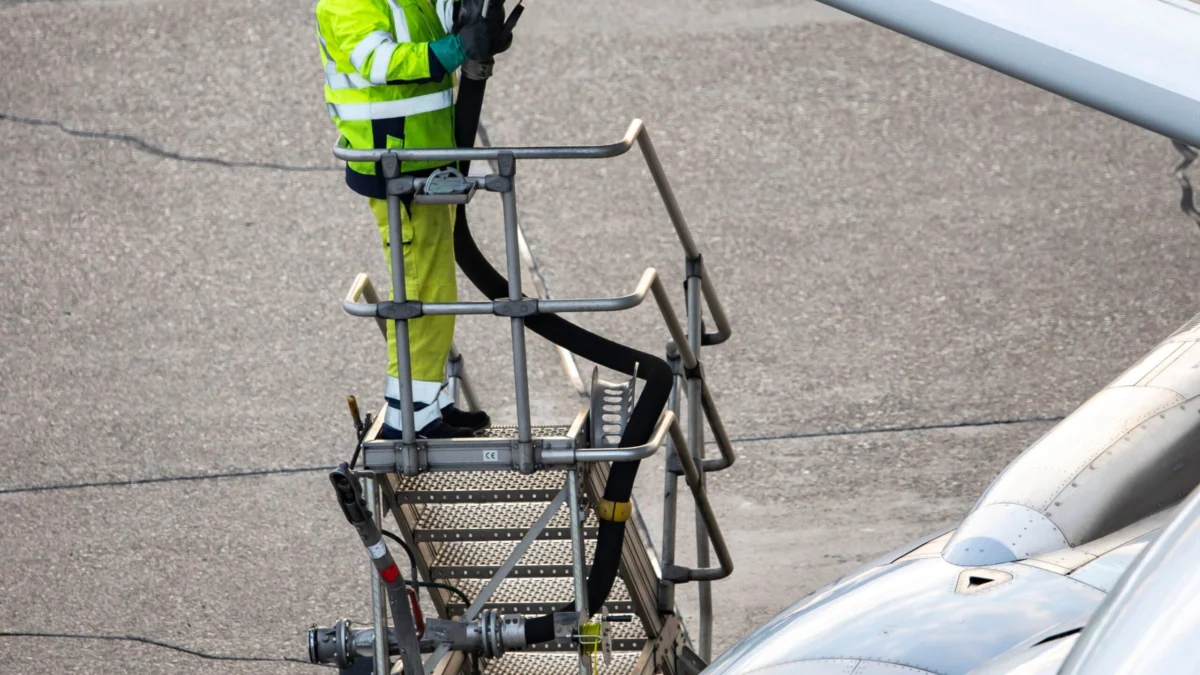
According to internal documents cited by media outlets, the directive for the Airbus A320 family—the workhorses of European short-to-medium-haul flights—is to carry up to eight additional tons of fuel. While this strategy secures the schedule, it introduces new variables for flight planning:
- Weight and Balance: Increased fuel weight naturally increases the aircraft’s take-off weight. Flight planners must ensure that this added weight does not necessitate the offloading of passengers or cargo, which would negatively impact revenue and customer satisfaction.
- Fuel Consumption: Carrying extra fuel increases the overall weight of the aircraft, which in turn increases the fuel burn rate for the flight. This creates a minor paradox: the aircraft burns more fuel in order to ensure it has enough fuel to depart on its next leg from Frankfurt.
- Scope of Impact: While initially focused on short- and medium-haul routes where turnaround times are tight and fuel demand is frequent, the strategy has expanded to include select long-haul flights, indicating that the supply concern is broad-based.
Implications for Travelers and the Future
As the autumn holiday travel peak continues, the situation in Frankfurt serves as a microcosm of the vulnerabilities inherent in global aviation infrastructure.
Will There Be Cancellations?
At this time, there is no evidence to suggest that passengers will face mass cancellations due to the fuel situation. Both the airport and the airline have communicated that their primary goal is to ensure a reliable flight schedule. The tankering measures are designed specifically to prevent the need for cancellations.
The Broader Economic Context
The reliance on the Rhine for logistics is a recurring issue for German industry. Whether it is industrial chemicals, coal, or aviation fuel, the dependence on river transport is increasingly viewed as a structural risk. This incident may prompt a re-evaluation of how Frankfurt secures its energy needs, potentially leading to increased investment in pipeline infrastructure or more robust on-site storage solutions that are less dependent on seasonal weather patterns.
Sustainability and Environmental Considerations
It is worth noting the environmental irony of the current situation. While aviation is under intense pressure to decarbonize, the logistical necessity of carrying extra fuel—and the resulting increase in CO2 emissions per flight due to the added weight—is a direct, if temporary, consequence of these infrastructure constraints.
Conclusion: A Test of Resilience
The current fuel supply situation at Frankfurt Airport is a testament to the intricate, interconnected nature of modern logistics. By leveraging large-scale storage and the adaptive capacity of airline operations, the system has demonstrated resilience.
For the passenger, the takeaway is one of cautious stability. While the "behind-the-scenes" logistics of keeping an airport fueled have become more complex and require extra coordination between pilots, dispatchers, and airport authorities, the fundamental promise of air travel—getting from A to B—remains intact. As maintenance work continues and the industry monitors the Rhine’s water levels, the aviation sector will remain in a state of high alert, ready to adjust its strategies to ensure that the autumn holidays proceed without disruption.
The incident serves as a reminder that even in an age of high-tech travel, we remain tethered to the physical realities of infrastructure and the environment, requiring constant vigilance to keep the world moving.