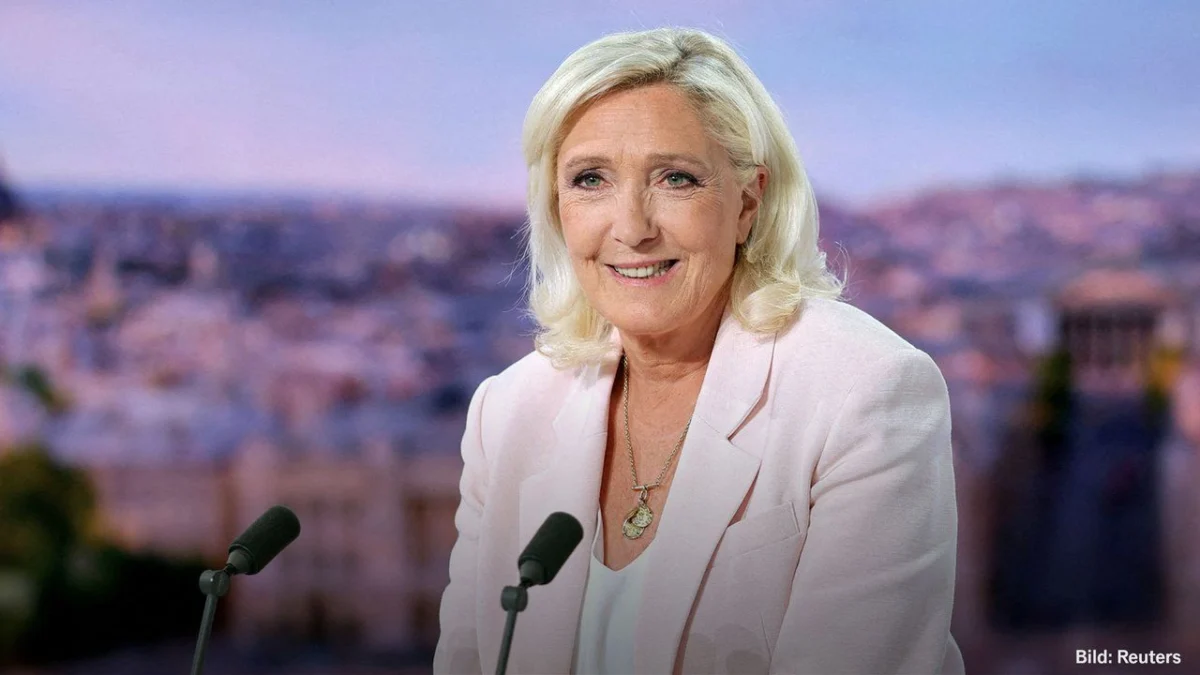
BRUSSELS — The European Union is currently navigating one of its most delicate political and financial minefields in recent history. As member states gather in Brussels to debate the bloc’s long-term fiscal future, the negotiations for the 2028–2034 multi-annual financial framework (MFF) have been thrust into the center of a high-stakes power struggle. At the heart of this confrontation is Marine Le Pen, France’s leading nationalist figure and presidential hopeful, who has launched a defiant challenge against the current negotiation timeline, labeling any deal reached before the upcoming French election a "democratic scandal."
The Core Conflict: A Fiscal Collision Course
The EU’s multi-annual budget is the cornerstone of its political agenda, dictating funding levels for everything from agricultural subsidies and regional development to defense initiatives and climate transition goals. For the 2028–2034 cycle, the stakes are higher than ever. The current proposal, championed by the Irish presidency of the Council of the EU, sets the total volume at a staggering €1.826 trillion.
However, this figure has met with immediate and stiff resistance from key member states, most notably Germany. Chancellor Friedrich Merz has firmly rejected the proposal, characterizing it as fiscally irresponsible and "unacceptable." Germany, alongside several other "frugal" member states, is pushing for deep spending cuts—potentially amounting to hundreds of billions of euros—to prioritize domestic economic stability and fiscal discipline.
Against this backdrop of inter-governmental friction, Marine Le Pen has entered the fray. Her intervention is not merely a critique of the budget’s size but a fundamental challenge to the legitimacy of the EU’s decision-making process. By demanding that negotiations be paused until after a series of critical national elections in France, Italy, Poland, and Spain, Le Pen is positioning herself as the defender of national sovereignty against what she views as a technocratic power grab in Brussels.
Chronology of the Budgetary Impasse
The path to the current stalemate has been marked by mounting pressure and shifting political sands across the continent.
- Initial Drafting (Early 2024): The European Commission and the rotating Council presidency began internal consultations on the 2028–2034 framework, aiming to align the budget with post-pandemic recovery goals and the ongoing security challenges posed by the war in Ukraine.
- The Irish Proposal (Late 2024): The Irish presidency unveiled its draft budget of €1.826 trillion. The proposal was designed to provide a comprehensive financial cushion for the EU’s expanded mandates.
- The German Rebuke: Shortly after the unveiling, Chancellor Merz signaled that the German government would not endorse the proposal, citing the need for greater fiscal rigor. This effectively froze the momentum that the Irish presidency had hoped to build.
- Le Pen’s Brussels Declaration: On the eve of a major summit of heads of state and government, Marine Le Pen held a press conference in Brussels. She declared that any deal signed before the French presidential election would be illegitimate, effectively attempting to force a delay that would grant her, should she win, a seat at the table to dictate the final terms.
Supporting Data: The Magnitude of the Disagreement
To understand the severity of the standoff, one must look at the fiscal realities. The €1.826 trillion figure represents an ambitious increase over previous cycles, justified by the EU as necessary to maintain global competitiveness. However, the "frugal" bloc argues that this level of expenditure is unsustainable.
The request for cuts of "several hundred billion euros" is not just a bargaining tactic; it reflects a genuine fear in Berlin and elsewhere that an expanded EU budget will necessitate higher national contributions at a time when domestic growth is sluggish and inflation remains a persistent concern.
Furthermore, the political timing is critical. Le Pen’s polling numbers are robust. In the latest surveys for the upcoming French presidential election in the spring, she leads the field in the first round. Her strategic pivot to include the EU budget in her campaign narrative is a calculated move to contrast her "sovereigntist" platform with the perceived globalist agenda of the incumbent political establishment. If she reaches the second-round runoff—a scenario that analysts consider increasingly likely—her rhetoric regarding the EU’s fiscal authority will undoubtedly dominate the final weeks of the campaign.
Official Responses and Diplomatic Friction
The reaction from Brussels and other European capitals to Le Pen’s ultimatum has been one of controlled frustration. While the EU is accustomed to populist rhetoric, the prospect of a major member state like France—the second-largest economy in the bloc—effectively threatening to veto or overturn a multi-year framework creates a significant risk of administrative paralysis.
"The budget process is a long-standing, treaty-based mechanism," a senior EU diplomat noted on the condition of anonymity. "Attempting to hold the entire architecture of the European project hostage for the sake of a national election cycle is, frankly, unprecedented and dangerous for the continuity of our policies."
Conversely, supporters of Le Pen argue that the EU has become disconnected from the democratic will of its citizens. They contend that if a significant portion of the French electorate supports a candidate who opposes the current budgetary trajectory, it is the height of irony for the EU to rush through a deal that would bind the next French administration to policies they fundamentally disagree with.
Implications: The Future of European Integration
The standoff raises profound questions about the future of the European Union. If the budget is not finalized by the end of this year—as originally intended—the EU will face a logistical nightmare, with departments and project managers unable to plan for the next cycle.
- Fiscal Uncertainty: A delay in the budget could lead to a downgrade in the EU’s credit outlook, as the bloc relies on long-term fiscal certainty to fund its borrowing programs.
- Political Polarization: Le Pen’s intervention highlights the widening gap between the federalist vision of "more Europe" and the nationalist vision of "more nation-state." This friction is expected to define the next European Parliament and Commission terms.
- The "Democratic" Dilemma: The debate over whether it is "undemocratic" to finalize a long-term budget shortly before a change in national leadership strikes at the heart of EU legitimacy. The EU operates on treaties that exist beyond election cycles, yet in a democratic system, the legitimacy of those treaties depends on the ongoing consent of the governed.
The Road Ahead
As the heads of state and government convene, the pressure to find a compromise is immense. The Irish presidency is expected to attempt a "bridge-building" exercise, perhaps proposing a stripped-back interim budget or delaying the final ratification in hopes of de-escalating the political tension.
However, the shadow of the French election will loom large. Marine Le Pen’s move has successfully shifted the discourse from mere numbers to a deeper ideological conflict. Whether the EU chooses to push forward with a deal, risking the ire of a potential future French president, or chooses to delay, risking fiscal instability, the coming months will be a test of the bloc’s resilience.
For now, the Brussels corridors are filled with nervous anticipation. The budget is no longer just a technical document of accounts and allocations; it has become a litmus test for the future direction of the European Union. As the deadline approaches, the question remains: will the EU prioritize the stability of its fiscal house, or will it be forced to bow to the rising tide of nationalism that threatens to reshape the continent’s political landscape?
The outcome will not only determine the funding for the next seven years but will also signal whether the EU can navigate the era of populism while maintaining the cohesion that has kept the union together for decades. As the negotiations proceed, all eyes will be on Paris, where the next chapter of this European saga is currently being written.