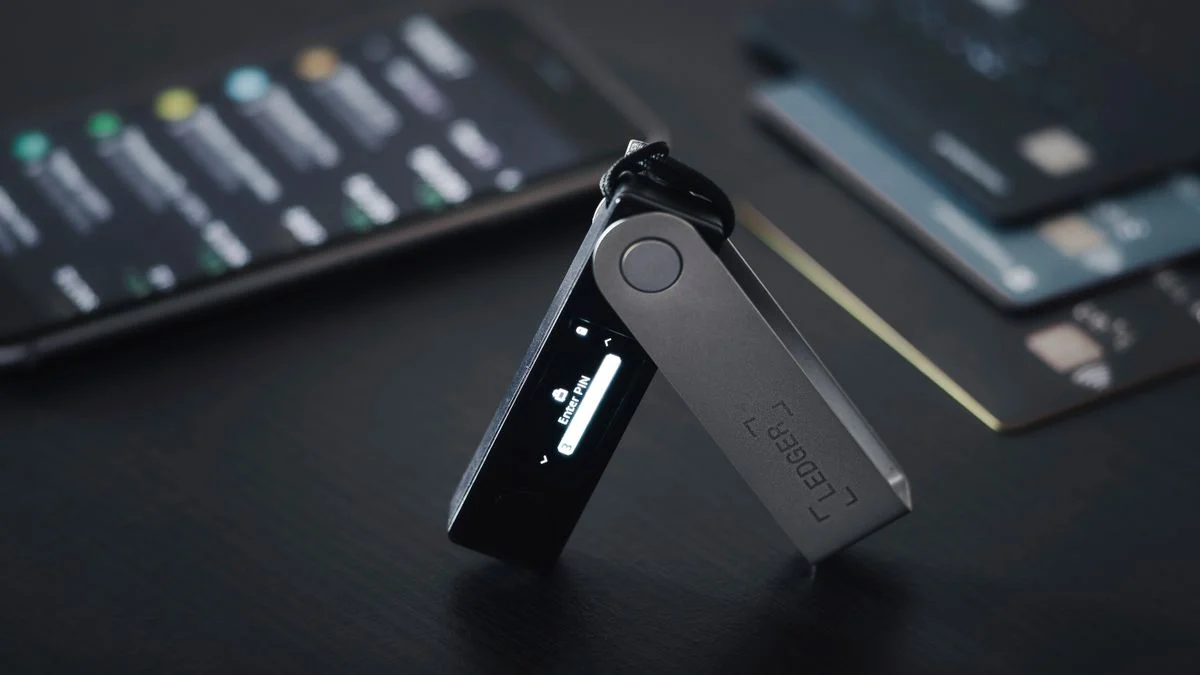
In the world of cryptocurrency, the mantra "not your keys, not your coins" has long served as the foundational commandment for security. For years, hardware wallets—physical devices designed to store private keys offline—were considered the "gold standard" of self-custody. However, a recent update from Ledger, the industry’s leading manufacturer of hardware wallets, has sent a shockwave through the crypto community, prompting a wave of existential dread, technical paranoia, and a series of viral videos showing users physically dismantling their devices to investigate the integrity of their hardware.
The Trigger: Ledger Recover and the Loss of "Cold" Certainty
The root of the current controversy lies in an optional service introduced by Ledger called "Ledger Recover." This subscription-based service allows users to back up their secret recovery phrase (the 24-word seed that grants total control over their assets) by sharding it into three encrypted pieces, which are then distributed to three independent security companies.
For the average user, this sounded like a helpful safety net against losing their seed phrase. For the security-conscious, it was a fundamental betrayal of the device’s core value proposition. The backlash centered on a single, terrifying realization: if a software update can allow a device to export a user’s seed phrase—even if encrypted and sharded—then the "air-gapped" nature of the device, which users were promised was impossible to breach, is not as absolute as previously claimed.
The Chronology of the Outrage
- May 2023: Ledger announces the "Recover" feature, sparking immediate and fierce backlash on social media platforms like X (formerly Twitter) and Reddit.
- Late May 2023: Independent security researchers and prominent crypto figures begin questioning the technical architecture of Ledger’s firmware. Critics argue that the firmware update process is not truly transparent, and that users are forced to "trust" Ledger not to push malicious code that could exfiltrate keys.
- June 2023: The "Ledger Dissection" phenomenon begins. Users, feeling betrayed and suspicious, begin posting videos and tutorials on how to pry open their Nano S and Nano X devices to inspect the internal components, looking for backdoors or unexpected hardware modifications.
- July–August 2023: Ledger attempts to quell the panic by open-sourcing more of their code and committing to a "roadmap" of decentralization, but for many, the damage to the brand’s reputation has already been cemented.
Technical Implications: The "Secure Element" Dilemma
To understand why investors are tearing their wallets apart, one must understand the technical architecture of a hardware wallet. Ledger devices rely on a "Secure Element" (SE)—a specialized, tamper-resistant chip designed to store sensitive information.
The crux of the debate is the distinction between open-source hardware and closed-source security. Ledger has long argued that their use of a proprietary, audited Secure Element provides a higher level of protection against physical attacks than a purely open-source chip. However, the Ledger Recover incident proved that while the hardware might be secure against physical intrusion, the firmware—which is controlled by Ledger—acts as the ultimate arbiter of the data.
Critics argue that by allowing a mechanism to exist where keys can be "exported," Ledger has effectively introduced a "God Mode" backdoor into the firmware. Even if the service is optional, the capability now exists. This realization has turned the hardware wallet from an impenetrable vault into a device that relies on the "good intentions" of a corporation.
The Rise of the "Open Source or Death" Movement
The reaction to the Ledger crisis has been a mass migration toward open-source alternatives. Companies like Trezor, BitBox, and Coldcard, which pride themselves on fully open-source hardware and software, have seen a surge in interest.
Supporting Data: The Cost of Trust
In the wake of the controversy, community sentiment analysis showed a sharp decline in Ledger’s net promoter score (NPS). Furthermore, secondary market activity for competing devices saw a temporary price spike, as users dumped their Ledger devices on eBay and Craigslist, seeking to "de-risk" their portfolios.
The psychological impact on the crypto ecosystem cannot be overstated. For a decade, hardware wallets were the one constant in an industry defined by volatility and exchange collapses (such as the fall of FTX). When the tool used to protect assets becomes the potential point of failure, the entire premise of self-custody enters a period of deep, introspective transition.
Official Responses and Ledger’s Defense
Ledger’s management, led by CEO Pascal Gauthier, has faced an uphill battle in defending the company’s pivot. Their primary argument remains that Ledger Recover is a necessary evolution for mass adoption. They contend that the "fear of losing one’s keys" is the single greatest barrier to entry for the next billion users, and that providing a recovery mechanism—even one that requires trusting a third party—is a net positive for the industry.
"We have always been a company that builds security products," Ledger stated in an official blog post. "The ability to recover your keys does not mean your device is suddenly vulnerable. The architecture remains secure, and the decision to enable this service is entirely in the hands of the user."
However, security researchers have countered this by pointing out that the technical ability to do something is different from the political reality of doing it. If a government were to serve Ledger with a subpoena to extract a specific user’s keys, the infrastructure for doing so now exists. This is a risk that many in the cypherpunk community find unacceptable.
Broader Implications for the Crypto Industry
The Ledger incident serves as a turning point for the hardware wallet industry, signaling the end of the "blind trust" era. Several key takeaways have emerged:
- Transparency is Mandatory: The industry is moving toward a standard where hardware and firmware must be fully verifiable. "Security through obscurity" is no longer a viable business model.
- The "Convenience vs. Security" Trade-off: The industry is bifurcating. One segment of the market wants "Apple-like" convenience (recovery, ease of use), while the other demands absolute, sovereign security. Ledger is attempting to cater to the former, alienating the latter.
- The Need for Auditable Hardware: The trend of users dissecting their devices is likely to continue. It has created a new class of "citizen auditors" who will hold hardware manufacturers accountable through physical inspection and reverse engineering.
Conclusion: The Future of Self-Custody
The "panic" surrounding Ledger is, in many ways, a sign of a maturing ecosystem. Users are no longer content to accept marketing promises; they are demanding proof. While Ledger remains the most popular hardware wallet brand, its monopoly on the market has been shaken.
For the average crypto holder, the lesson is clear: the hardware wallet is not a "set it and forget it" solution. It is a piece of technology that requires ongoing vigilance, research, and an understanding of the trade-offs between ease-of-use and absolute sovereignty. As the sector continues to evolve, the most successful companies will be those that can prove their security, rather than simply claiming it. The days of trusting a single manufacturer to hold the keys to one’s financial future are coming to an end; the era of verification has begun.