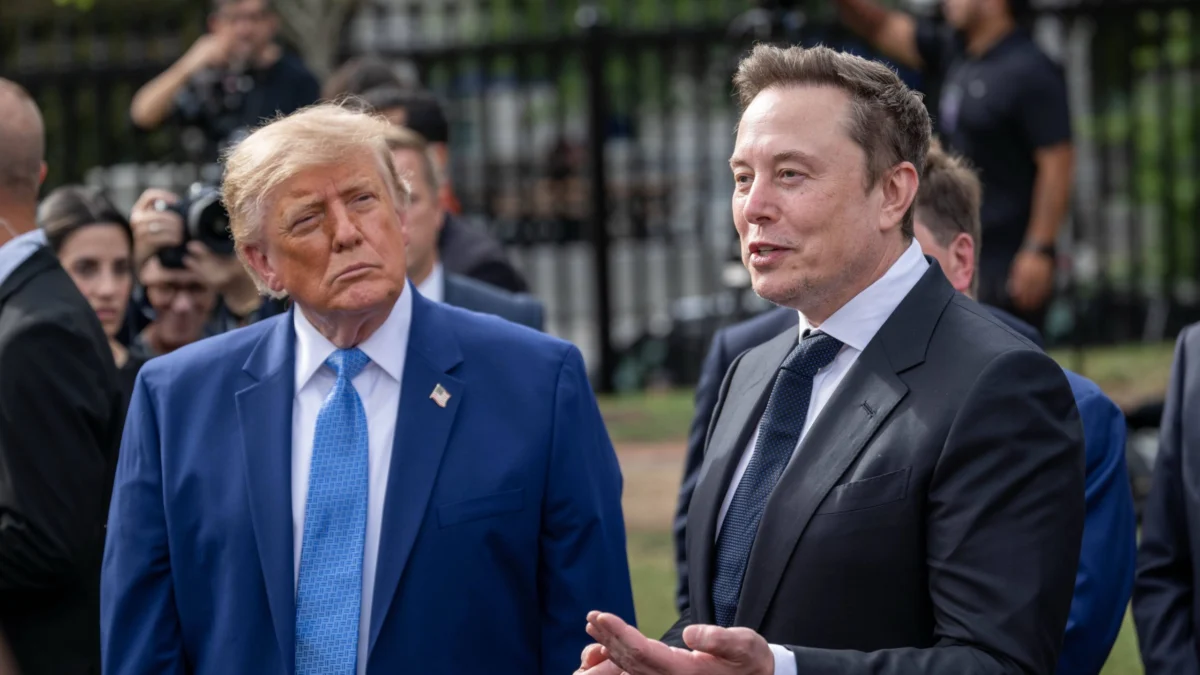
Washington, D.C. — In a move that signals both a dramatic financial commitment and a calculated recalibration of his political influence, tech mogul and Tesla CEO Elon Musk has funneled approximately $276 million into the coffers of the Republican Party ahead of the critical November midterm elections. This massive capital injection, confirmed by reports from the New York Times and CNN citing Musk’s representatives, establishes the world’s wealthiest individual as the single largest donor to the GOP this election cycle.
The decision to bankroll the Republican campaign apparatus marks a striking reversal for Musk, who had publicly declared as recently as mid-2025 that he intended to significantly scale back his political spending. As the U.S. prepares for a pivotal vote on November 3rd, the implications of this expenditure extend far beyond mere campaign finance; it is a declaration of intent to shape the trajectory of Donald Trump’s administration and the legislative power balance in Washington.
The Financial Mechanics: Where the Money Went
The sheer scale of Musk’s donation—totaling nearly $276 million—is distributed through complex political vehicles designed to maximize electoral impact. According to financial disclosures, the bulk of this funding, roughly $158 million, was directed to the Senate Leadership Fund. As a "Super PAC" (Political Action Committee), this organization is permitted to accept unlimited contributions, allowing it to pour massive resources into advertising, voter outreach, and opposition research to bolster Republican candidates in key Senate races.
Additionally, over $76 million has been funneled into the America PAC, a committee founded by Musk himself. This entity has become a focal point for his personal political agenda, focusing on grassroots mobilization and targeted digital outreach. By splitting his support between established party infrastructure and his own project, Musk is effectively hedging his bets—ensuring he holds influence over the broader party strategy while maintaining a direct, personal vehicle for his own political priorities.
A Tumultuous History: The Trump-Musk Dynamic
To understand the weight of this donation, one must examine the volatile history between the two men. During the 2024 presidential election, Musk was a primary financier for Donald Trump, contributing over $250 million. This support cemented his role as a central figure in the early days of Trump’s second term. Musk was frequently seen by the President’s side, functioning as an unofficial advisor with extraordinary access to the corridors of power.
The Rise and Fall of the "Doge" Mandate
Early in the second term, Trump tapped Musk to spearhead the Department of Government Efficiency (Doge). The mission was clear: identify and slash bloated government spending. However, the implementation was anything but subtle. Musk and his team operated with what many described as a "scorched earth" approach.
Musk famously remarked that he was throwing various government programs, including international development aid, into a metaphorical "woodchipper." The aggressive cutting of agencies and programs triggered widespread public protests and institutional backlash, which eventually bled into the commercial performance of Tesla. Investors grew wary of the political baggage attached to the brand, as the "Doge" project’s radical restructuring efforts alienated moderate voters and created friction within the executive branch.
The 2025 Schism
The honeymoon period ended abruptly in mid-2025. A policy dispute regarding a tax reform bill championed by the President became the breaking point. The public fallout was acrimonious; Musk went as far as to claim in interviews that Trump would not have secured his re-election victory without his crucial financial and platform-based support. The two entered a period of cold, distant relations, with Trump publicly dismissing the billionaire’s complaints as the tantrums of a man upset by the loss of EV subsidies.
Implications for the November Midterms
The upcoming November 3rd elections are not merely a referendum on the administration; they are a high-stakes battle for the operational viability of the Trump presidency. Currently, the Republican Party holds majorities in both the House of Representatives and the Senate. However, this control is fragile.
If the Democratic Party manages to capture even one of the two chambers, the legislative landscape will shift dramatically. A divided government would allow Democrats to:
- Block Legislative Priorities: Any new tax, trade, or regulatory agenda proposed by the White House could be effectively stalled.
- Aggressive Oversight: Control of committee chairmanships would allow for high-profile investigations into the executive branch, potentially unearthing damaging details regarding the administration’s internal decision-making processes.
- Budgetary Gridlock: Control of the "power of the purse" could lead to government shutdowns or threats thereof, as Democrats leverage spending bills to extract concessions.
Musk’s $276 million is a defensive shield against this outcome. By pouring resources into the Senate Leadership Fund, he is attempting to solidify the Republican grip on the upper chamber, which is essential for the confirmation of judicial and cabinet appointments.
Strategic Re-alignment: Why Now?
Political analysts are divided on why Musk has chosen this specific moment to resume his role as a "kingmaker." After his May 2025 announcement to cease large-scale political giving, many observers believed he was distancing himself from the toxicity of Washington.
However, the current financial commitment suggests that Musk has calculated that his business interests—ranging from SpaceX contracts to Tesla’s regulatory hurdles—are inextricably linked to the legislative environment in Washington. By becoming the largest donor, he re-establishes a seat at the table. Even if his relationship with Trump remains "distant," the power of his checkbook ensures that he remains a factor in every major Republican policy discussion.
Furthermore, there is a clear ideological component. Musk has increasingly aligned himself with anti-establishment, deregulation-focused factions within the GOP. By funding candidates who mirror these views, he is looking to build a legislative coalition that is more favorable to his specific vision of a streamlined, tech-driven American economy.
Official Responses and Public Sentiment
The reaction from the political establishment has been largely muted but deeply felt. While Republican leadership has welcomed the influx of capital, there is a palpable sense of unease regarding the influence of a private citizen on party policy. Democratic opponents have seized on the news to frame the election as a contest between "the people" and "the billionaire donor class," a narrative that has historically resonated with a significant segment of the American electorate.
Musk’s spokespeople have largely remained quiet, issuing only brief statements confirming the donations were made in the interest of supporting candidates who share his commitment to fiscal responsibility and free-market growth.
Looking Ahead: The Future of Political Influence
As the election date approaches, the "Musk Factor" will undoubtedly become a focal point of campaign discourse. The sheer volume of his donation raises fundamental questions about the role of extreme wealth in American democracy.
Whether this massive investment yields the desired outcome for the Republican Party—and for Musk personally—remains to be seen. If the GOP holds both chambers, Musk will likely be credited with securing their victory, potentially resetting his relationship with the White House. If the Democrats succeed, however, the fallout could be significant, leaving the billionaire in a precarious position with an administration that has already proven it can be openly hostile to his business interests.
In the final analysis, Musk’s pivot is a masterclass in the pragmatism of power. Regardless of personal grievances or past failures, he has recognized that in the current U.S. political landscape, influence is not just about influence; it is about the capacity to fund the infrastructure of governance itself. As the nation heads to the polls, the shadow of his $276 million contribution will loom large over every ballot cast.