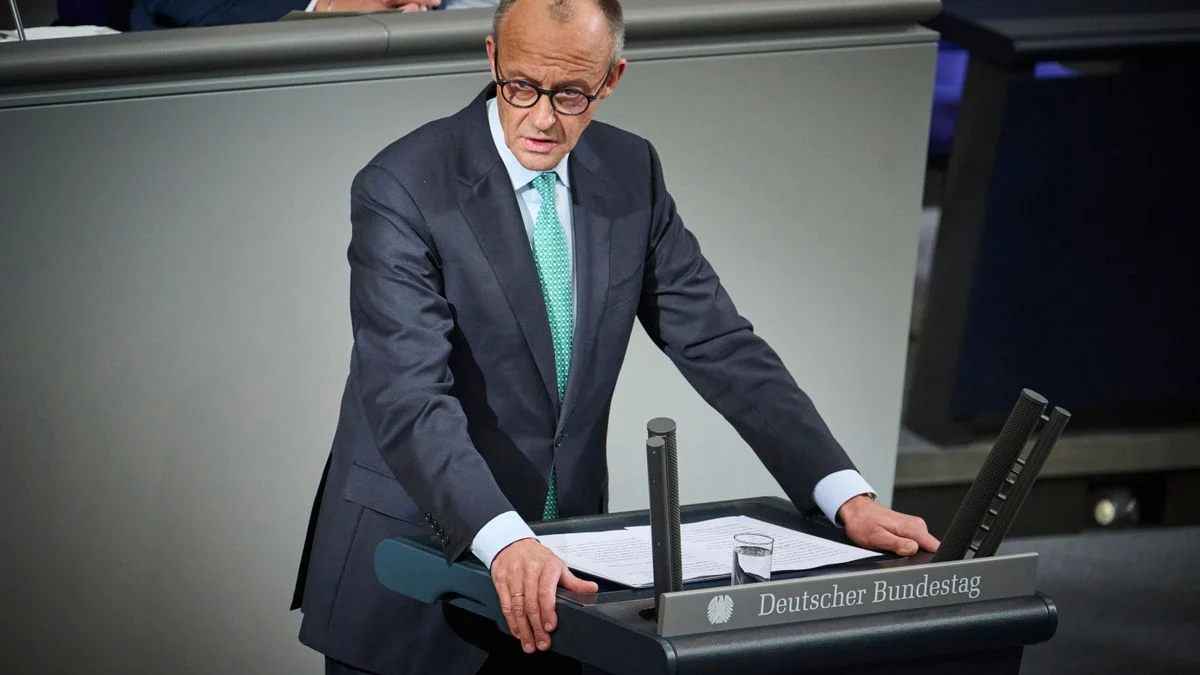
MAGDEBURG, SAXONY-ANHALT – A recent incident within the hallowed halls of the Saxony-Anhalt State Parliament has sparked a furious debate about parliamentary decorum, the seriousness of legislative duties, and the conduct of elected officials. Robert Farle, a prominent Member of Parliament (MP) and a leading figure within the Alternative for Germany (AfD) parliamentary group, was reportedly observed engrossed in his mobile phone during a crucial legislative session, allegedly "fiddling" or playing games. The incident, first brought to wider public attention by SPIEGEL, has drawn sharp criticism from across the political spectrum and reignited discussions about the appropriate use of technology in legislative assemblies.
The controversy comes at a sensitive time for German politics, particularly in eastern states like Saxony-Anhalt, where the AfD has gained significant electoral traction. The party, which often positions itself as a champion of traditional values and a critic of perceived political elites, now faces scrutiny over the conduct of one of its most visible representatives. The images or reports of Farle’s inattention during a parliamentary debate have been widely interpreted as a profound disrespect for the institution, the legislative process, and the electorate he represents.
Main Facts of the Incident
The core of the controversy revolves around Robert Farle, an AfD MP in the Landtag of Saxony-Anhalt, who was reportedly seen engaging with his mobile phone in a manner inconsistent with parliamentary proceedings. While the exact content displayed on his screen remains subject to speculation, the German term "daddelt" strongly implies casual gaming or frivolous interaction rather than official business. This alleged distraction occurred during a live session of the Saxony-Anhalt State Parliament, where matters of regional governance and public interest were being debated.
Farle is not just any backbencher; he has served as a member of the Bundestag and is a well-known figure within the AfD, often taking on a confrontational stance in political discourse. His position as a leader within the AfD parliamentary group in Saxony-Anhalt lends additional weight to the incident, making it more than a mere personal lapse. Critics quickly seized upon the perceived lack of seriousness, arguing that such behavior undermines the dignity of the parliament and sets a poor example for other representatives.
The incident was first highlighted by reports, including those from SPIEGEL, leading to a swift public outcry. For many, it symbolized a broader concern about the commitment and respect some politicians show towards their constitutional duties. In an era where public trust in political institutions is frequently tested, such displays of apparent indifference can have far-reaching consequences for the credibility of the entire political class. The immediate aftermath saw a flurry of reactions, ranging from condemnation by political opponents to calls for clearer guidelines on digital device usage within the legislative chamber.
Chronology of Events
The incident involving Robert Farle did not occur in a vacuum but rather within a specific parliamentary context that amplifies its significance.
Pre-Incident Political Climate
Saxony-Anhalt has long been a state grappling with various socio-economic challenges, and its political landscape has seen a significant shift with the rise of the AfD. The party has successfully tapped into voter dissatisfaction, establishing itself as a formidable force in the Landtag. Prior to this incident, the AfD parliamentary group, led by figures like Farle, often positioned itself as a vigilant opposition, critical of the established parties and advocating for a return to what they term "common sense" politics. This posture inherently demands a high degree of perceived seriousness and dedication from its representatives. Parliamentary sessions in Magdeburg are typically focused, often contentious, but generally adhere to established protocols of decorum and attention, reflecting the gravity of legislative work.
The Day of the Incident
The specific date of the incident, while not precisely detailed in the initial paywall information, refers to "a" parliamentary session. During this session, the Landtag was engaged in debates on critical issues affecting the citizens of Saxony-Anhalt. It was during these proceedings that Robert Farle was reportedly observed by fellow parliamentarians, journalists, or parliamentary staff, engaged with his mobile phone in a manner that was clearly not related to the ongoing debate. The term "daddelt" (fiddles/games) suggests a casual, recreational use rather than consulting notes or urgent communications. This observation quickly spread, potentially through whispers in the chamber or direct reporting by those present, eventually reaching media outlets like SPIEGEL. The fact that such an observation was deemed newsworthy enough to warrant a prominent article underscores the perceived breach of conduct. The incident was not a fleeting glance but seemingly a sustained period of inattention that drew notable concern.
Immediate Aftermath and Public Disclosure
The immediate reaction within the Landtag chamber would have likely been one of quiet disapproval or raised eyebrows among those who noticed. However, the true impact materialized once the reports hit the public domain. SPIEGEL, known for its investigative journalism and political commentary, brought the incident to national attention. This public disclosure transformed a potential private lapse into a full-blown political scandal. Social media platforms quickly became a hotbed of discussion, with citizens expressing outrage, disappointment, or cynical resignation. Political opponents of the AfD were quick to leverage the incident as an example of hypocrisy, contrasting the party’s claims of seriousness and respect for institutions with the alleged conduct of its own representative. The incident became a talking point across Germany, moving beyond the regional politics of Saxony-Anhalt to touch upon broader questions of political integrity and public service.
Supporting Data and Context
The controversy surrounding Robert Farle’s alleged mobile phone use is not isolated; it resonates with broader discussions about parliamentary rules, technological integration, and public expectations of political leaders.
Parliamentary Rules of Procedure
Most legislative bodies, including the Landtag of Saxony-Anhalt, operate under established rules of procedure designed to ensure orderly and productive debates. While these rules might not explicitly ban mobile phones outright – especially given their indispensability for modern communication and access to information – they invariably emphasize decorum, attentiveness, and respect for the speaker and fellow parliamentarians. MPs are generally expected to be present, engaged, and focused on the legislative business at hand. Disruptions, including those caused by electronic devices, are usually discouraged or, in more severe cases, can lead to formal reprimands. The spirit of these rules is to maintain the solemnity and efficiency of the democratic process. Using a phone for recreational purposes during a session clearly violates this spirit, if not the letter, of parliamentary conduct.
Precedents and Comparisons
Incidents of politicians being distracted by mobile phones are not unique to Saxony-Anhalt or even Germany. Around the world, lawmakers have been caught in similar situations, sometimes playing games, browsing social media, or even watching videos during official proceedings. In the UK Parliament, there have been instances where MPs were criticized for using phones excessively. The European Parliament has also seen debates on the appropriate use of devices. In some cases, such as in the US Congress, while laptops and tablets are common for note-taking and accessing legislative texts, recreational use is frowned upon and can draw public and media ire. The key distinction often lies between using a device for work-related purposes (accessing documents, researching points, urgent communications) and using it for personal entertainment. Farle’s alleged "fiddling" falls squarely into the latter, making it a more egregious breach of expected conduct.
AfD’s Public Image and Values
The AfD has built much of its political capital on a platform that often critiques the perceived laxity and disconnect of the "establishment." The party frequently champions order, discipline, and a return to what it considers traditional German values, including respect for institutions. It often portrays itself as the only serious alternative to mainstream parties, promising to restore integrity to politics. Against this backdrop, an incident involving a prominent AfD figure apparently disengaging from serious parliamentary work to play on a mobile phone presents a significant challenge to the party’s carefully curated image. It provides ammunition for critics who accuse the AfD of hypocrisy and undermines their claims of being a more responsible and dedicated political force.
Public Opinion and Trust
Public trust in political institutions and politicians is a perennial concern in democratic societies. Scandals, gaffes, and perceived dereliction of duty contribute to public cynicism and disengagement. An incident like Farle’s mobile phone use can deepen this distrust, making citizens question whether their elected representatives truly prioritize their duties and the interests of their constituents. In an age of instant communication and viral content, such visual or reported breaches of conduct spread rapidly, shaping public perception far more quickly and broadly than detailed policy debates. For many voters, it confirms a negative stereotype of politicians as out of touch or unserious.
Official Responses
The gravity of the incident prompted various reactions from the affected MP, his party, and other political actors within and outside the Saxony-Anhalt Landtag.
Robert Farle’s Stance
In the wake of the public outcry, Robert Farle’s immediate response was crucial. While specific details of his statement are not provided in the initial article snippet, typical reactions in such situations range from outright denial to partial admission, sometimes coupled with an apology or an attempt to contextualize the behavior. He might argue that he was consulting parliamentary documents, responding to an urgent constituent query, or that the incident was misinterpreted. However, the term "daddelt" (fiddles/games) would make such a defense difficult to sustain. A full, unequivocal apology and an assurance of future attentiveness would be the most politically prudent course of action, though some politicians choose a more defiant stance, dismissing criticism as politically motivated. Farle’s history suggests he is not one to shy away from controversy, and his response would likely be measured against his established public persona.
AfD Party’s Reaction
The AfD leadership faced the delicate task of managing the fallout from Farle’s conduct. On one hand, they could choose to defend their colleague, perhaps by downplaying the incident or accusing political opponents of exaggerating its importance. This approach aligns with the party’s narrative of being unfairly targeted by the "establishment." On the other hand, to maintain credibility and uphold the party’s self-proclaimed standards of seriousness, the AfD might distance itself from Farle’s actions, issuing a statement reaffirming its commitment to parliamentary decorum and potentially even signaling an internal reprimand. A failure to address the issue adequately could be seen as tacit approval, further damaging the party’s image. The challenge for the AfD is to balance internal loyalty with external expectations of responsible political conduct.
Landtag Presidium and President’s Statement
The Landtag Presidium, led by the President of the Parliament (currently Gunnar Schellenberger of the CDU), is the guardian of parliamentary rules and decorum. Following such an incident, it is customary for the Presidium to issue a statement reaffirming the importance of respectful conduct within the chamber. While direct public reprimands of individual MPs are rare for minor infractions, a general reminder to all members about their responsibilities and the need for attentiveness during debates would be expected. The President might emphasize the dignity of the institution and the public’s expectation of their representatives. This serves as a formal, institutional response, signaling that the Landtag takes such matters seriously without necessarily singling out one MP for a public dressing-down, unless the breach was particularly egregious or repeated.
Responses from Other Political Parties
Unsurprisingly, opposition parties, as well as the ruling coalition partners, seized upon the incident to criticize the AfD. Parties like the CDU, SPD, Greens, and FDP would likely issue statements condemning Farle’s behavior as disrespectful, unprofessional, and indicative of a broader lack of seriousness from the AfD. They would use the opportunity to highlight what they perceive as the AfD’s hypocrisy, contrasting its high-minded rhetoric with the alleged conduct of its members. These criticisms would be aimed not only at Farle but also at the AfD as a whole, seeking to undermine its credibility and appeal to voters. The incident provides a convenient narrative for opponents to portray the AfD as unfit for governance and lacking in fundamental respect for democratic institutions.
Implications and Future Outlook
The mobile phone incident involving Robert Farle, while seemingly minor in isolation, carries significant implications for political discourse, parliamentary conduct, and public trust in Germany.
Political Impact on the AfD
For the AfD, the incident is a public relations setback. In Saxony-Anhalt, where the party holds significant influence, such perceived missteps can erode voter confidence, especially among those who are drawn to the AfD for its promise of a more serious and disciplined approach to politics. While core supporters might dismiss the criticism as politically motivated, swing voters and those disillusioned with mainstream parties might reconsider their stance. The incident feeds into the narrative that the AfD, despite its rhetoric, is not immune to the failings it attributes to others. This could marginally impact future electoral performance or at least make it harder for the party to attract new voters who value parliamentary decorum.
Damage to Individual and Institutional Reputation
For Robert Farle personally, the incident adds another layer to his public image, potentially reinforcing perceptions of an individual who is not fully engaged with his legislative duties. While some might view it as a trivial matter, for many, it speaks to a fundamental disrespect for the parliamentary process. More broadly, such incidents can chip away at the reputation of the Landtag itself. When elected representatives appear disengaged, it can foster a sense of disillusionment among the populace, leading to a decline in trust in democratic institutions as a whole. Maintaining the dignity and seriousness of parliamentary proceedings is crucial for upholding public faith in the political system.
Broader Debate on Technology in Parliament
The incident invariably sparks a broader discussion about the role of technology in modern legislative bodies. While mobile phones and tablets are indispensable tools for accessing information, communication, and managing parliamentary work, their potential for distraction is undeniable. This raises questions about whether existing rules are sufficient or if new guidelines are needed. Should there be designated "phone-free" zones or times? Should recreational use be explicitly banned and enforced? The debate is not about banning technology but about finding a balance that allows parliamentarians to leverage digital tools for efficiency without compromising their focus on critical legislative tasks. This incident may prompt the Landtag to review and possibly update its internal guidelines on electronic device usage.
Setting a Precedent and Future Conduct
Every public incident involving an MP’s conduct sets a kind of precedent. While no formal legal precedent, it establishes a benchmark for what is considered acceptable or unacceptable behavior. If such conduct goes unaddressed or is dismissed lightly, it could potentially normalize similar behavior, leading to a decline in overall parliamentary decorum. Conversely, if the Landtag, the political parties, and the media united in condemning the act, it could serve as a deterrent for future distractions. The expectation is that parliamentarians, irrespective of their party affiliation, will learn from such incidents and ensure their conduct reflects the gravity of their roles.
Impact on Public Engagement and Political Culture
Ultimately, incidents like Farle’s mobile phone use contribute to the broader political culture. In an age where citizens are increasingly scrutinizing their leaders, such visible lapses in attention can further alienate them from the political process. It reinforces the perception that politicians are detached from the concerns of everyday people, potentially leading to lower voter turnout or increased support for protest parties. For democracy to thrive, it requires active, engaged, and respectful participation from its elected representatives. The controversy in Saxony-Anhalt serves as a stark reminder that even seemingly small acts of inattention can have significant repercussions for the health of democratic institutions and the public’s perception of their leaders.
The SPIEGEL report on Robert Farle’s mobile phone usage during a parliamentary session in Saxony-Anhalt is more than a mere anecdote; it is a symptom of ongoing challenges in political conduct, the integration of technology, and the maintenance of public trust. The incident demands reflection from the individual MP, his party, and the broader political establishment to reinforce the standards of decorum and dedication expected from those who serve in legislative capacities.