Berlin, Germany – October 14, 2026 – Exploratory talks to form Berlin’s next governing coalition between the Social Democratic Party (SPD), the Greens, and the Left Party are set to resume, bringing an end to a brief but intense interruption caused by disagreements over a joint anti-Semitism declaration. After a tense pause, all three parties have now publicly committed to incorporating their shared agreement on combating anti-Semitism into a potential future coalition agreement, clearing the path for further negotiations on the city’s pressing challenges.
The breakthrough came after a crucial meeting on Wednesday, aimed at resolving "misunderstandings" that had brought the nascent coalition discussions to a halt just days earlier. The consensus to embed the comprehensive anti-Semitism declaration, dubbed the "Berliner Erklärung," directly into any governing pact signals a renewed commitment to trust and reliability, which leaders from the SPD and Greens had deemed indispensable for a stable alliance.
Elif Eralp, co-chairwoman of the Left Party’s parliamentary faction, confirmed the agreement, stating, "We met today with the Greens and SPD and had a good and open discussion. We have reached an understanding, and the misunderstandings between us have been cleared up." She added that talks would continue from Thursday, focusing on the "central challenges of our wonderful city." This development follows a period of uncertainty that threatened to derail the formation of a prospective Red-Green-Red alliance, a configuration widely expected after the recent elections.
A Contentious Pause and Resumption
The delicate process of forming Berlin’s next government faced an unexpected setback on Tuesday evening when the SPD and Greens abruptly suspended their exploratory talks with the Left Party. This dramatic decision came in the immediate aftermath of the Left Party’s constituent parliamentary group meeting, during which the party adopted its own declaration on combating anti-Semitism. This unilateral move, rather than a direct affirmation of the joint agreement previously negotiated by all three parties, triggered concerns among the SPD and Greens regarding reliability and a shared understanding of fundamental principles.
Steffen Krach, the SPD parliamentary group leader and chief negotiator, defended the interruption as a necessary step to establish clarity. Speaking on rbb24 Abendschau, Krach emphasized that the pause was "not a disaster, but necessary to create clarity about the agreements made." He underscored the importance of ensuring that the Left Party fully embraced the jointly negotiated "Berliner Erklärung" against anti-Semitism, not merely an internal variant. The SPD’s position was clear: the foundation of any future government hinged on an unequivocal, shared stance on this sensitive issue.
The Greens echoed this sentiment, with their state chairwoman, Nina Stahr, stating earlier on Wednesday that the talks were "interrupted, not broken off." She conveyed the Greens’ readiness to continue, provided the Left Party returned to the negotiating table "on the basis of our common agreement." The message was a clear demand for the Left Party to affirm its commitment to the pre-agreed terms, rather than substituting them with an internal document.
The Anti-Semitism Declaration: A Central Pillar
At the heart of the dispute was the "Berliner Erklärung," a carefully crafted document designed to guide the prospective coalition’s approach to anti-Semitism. In a country acutely aware of its historical responsibility, and a city with a vibrant Jewish community that has seen a rise in anti-Semitic incidents, an unambiguous commitment to combating anti-Semitism and protecting Jewish life is paramount. The declaration also explicitly affirms Israel’s right to exist, a point of particular contention for some within the Left Party.
The SPD and Greens had made it unequivocally clear that this joint declaration was a prerequisite for even entering exploratory talks. The expectation was that all three parties would adhere to its tenets without reservation. However, the Left Party’s decision to draft and sign an internal declaration during its constituent meeting, which, according to SPD and Green leaders, "took no reference to the common agreement and did not consider essential components from it," caused immediate alarm.
Bettina König and Steffen Krach, co-chairpersons of the Berlin SPD, articulated their disappointment: "It was clear to everyone that the common agreements on the topic of anti-Semitism and organized crime were the basic prerequisite for entering into the exploratory talks and apply to all three sides. The Left Party left this path yesterday and made its own paper that takes no reference to the common agreement and does not consider essential components from it. This is simply about reliability and trust, and both are indispensable for the ongoing exploratory talks."
SPD’s Perspective: Necessity of the Pause
For the SPD, the pause served as a critical trust-building exercise. Steffen Krach elaborated that the Left Party had now "assured that the jointly negotiated Berlin Declaration against anti-Semitism will apply bindingly in the future." He confirmed that it would become part of both the exploratory paper and any potential coalition agreement. Krach emphasized that the coming days would reveal whether the Left Party could truly be a trustworthy partner for a stable and resilient government, highlighting that the initial interruption, though inconvenient, was a necessary step towards solidifying foundational agreements.
Greens Call it a "Healing Jolt"
Bettina Jarasch, the Greens’ parliamentary group leader, described the interruption as a "good, a healing jolt for all of us," which forced a clearer dialogue. She explained that the pause was vital "to gain clarity – and that includes dealing with anti-Semitism in this city." Jarasch confirmed that after separate discussions with the SPD, a tripartite meeting with the Left Party on Wednesday evening led to the "clear agreement that our understanding on the topic of anti-Semitism, which we had already reached, applies, and that all three future partners stand 100 percent behind it." While acknowledging that the pause had "irritated many people in the city," she maintained its importance for fostering the necessary trust to govern effectively in challenging times. Jarasch announced that the exploratory talks would officially resume on Thursday.
Left Party’s Initial Reaction and Commitment
Initially, the Left Party expressed surprise at the suspension of talks. Tobias Schulze, co-chair of the Left Party’s parliamentary group, stated on rbb24 Abendschau that "from our point of view, the agreement from last week still applies." He conceded that the immediate task was to re-establish trust, emphasizing the Left Party’s shared interest with the Greens and SPD "that Jewish people in Berlin can live safely, that we are truly working towards a common goal." However, Schulze also asserted the Left Party’s autonomy in internal personnel decisions, a point that indirectly alluded to another contentious element: the role of specific members within its new parliamentary group.
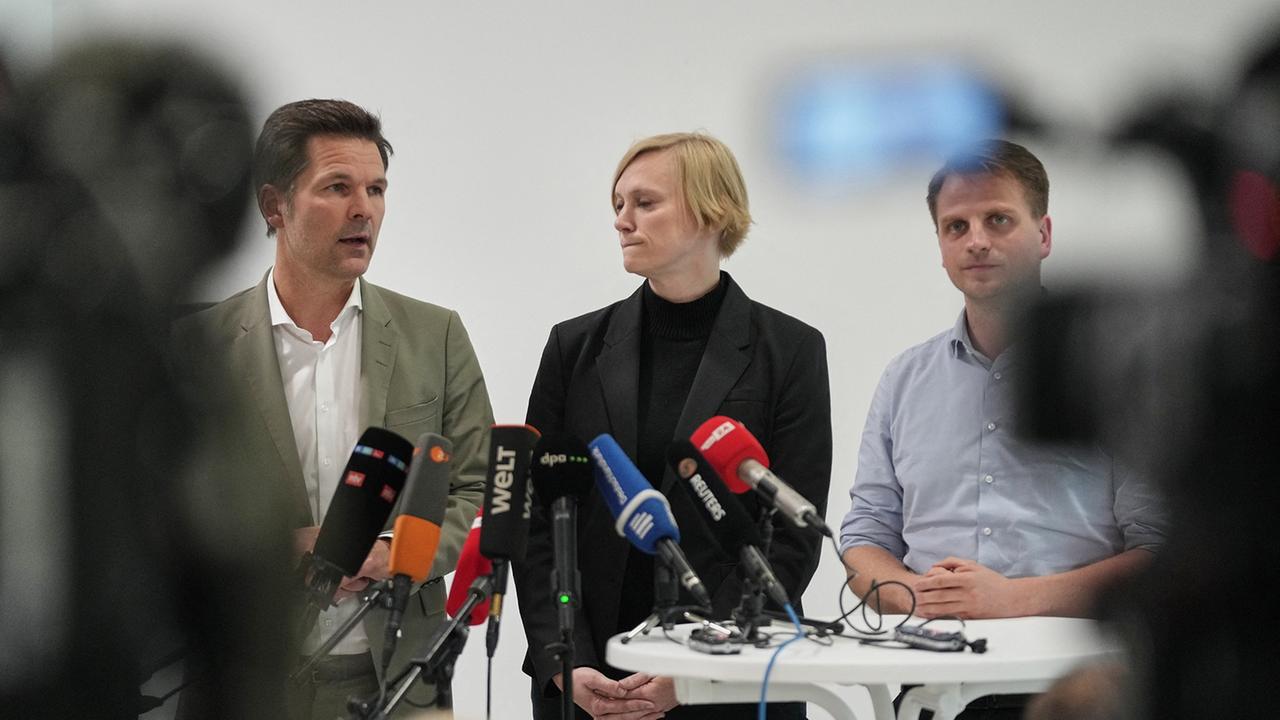
Despite the initial confusion, the Left Party’s eventual commitment to integrating the "Berliner Erklärung" into the coalition agreement demonstrates a willingness to address the concerns raised by its potential partners. This shift was crucial in reigniting the stalled negotiations and rebuilding a common ground for future cooperation.
The Vanessa Emde Controversy
Adding another layer of complexity to the already sensitive discussions was the figure of Vanessa Emde, a newly elected Left Party MP from Neukölln. Emde’s political stance, particularly her vocal pro-Palestinian activism and perceived criticism of Israel, had drawn significant scrutiny and sparked debate even before the coalition talks began. Critics questioned her commitment to Israel’s right to exist, a fundamental tenet of the "Berliner Erklärung" and a non-negotiable point for the SPD and Greens.
During her election campaign, Emde heavily emphasized Palestine solidarity, leading to several controversial incidents. One notable event involved the presence of a contentious pro-Palestinian activist, allegedly linked to the Popular Front for the Liberation of Palestine (PFLP) – classified as a terrorist organization by the EU – at a Left Party election celebration in Neukölln. This incident, among others, fueled speculation about her alignment with the broader party’s commitment to combating anti-Semitism.
Divergent Expectations on Emde’s Role
The controversy surrounding Emde intertwined directly with the coalition talks. There was widespread speculation, and indeed an apparent expectation among the SPD and Greens, that Emde might not become a formal member of the Left Party’s parliamentary group. This expectation was explicitly articulated by Felix Banaszak, the federal co-chairman of the Green Party, who stated on ZDF’s "Morgenmagazin" that his "information" was that Emde would not join the parliamentary group. He added, "It was the basis for us giving our blessing to this agreement on Thursday," implying that Emde’s non-inclusion was a tacit understanding that had facilitated the initial progress of the talks.
However, Emde did join the Left Party’s parliamentary group during its constituent meeting, and critically, she was among the 44 deputies who signed the Left Party’s internal declaration affirming the fight against anti-Semitism, the protection of Jewish life, and Israel’s right to exist. This disparity between the Greens’ federal leadership’s "information" and the actual outcome likely contributed significantly to the "misunderstandings" that led to the suspension of talks.
Nina Stahr, the state chairwoman of the Greens, acknowledged the criticism surrounding Emde but emphasized that the joint declaration on anti-Semitism must form the "basis of our cooperation." While the federal Greens leadership reportedly gave the Berlin state branch a free hand in the negotiations, the discrepancy regarding Emde’s role highlights the intricate and sometimes contradictory dynamics at play within multi-party negotiations, especially when sensitive political issues and individual personalities are involved. The resolution to include the joint declaration in the coalition agreement appears to be the mechanism by which the parties hope to bridge such internal differences and ensure a unified stance moving forward.
The Broader Political Landscape
The interruption of the exploratory talks naturally prompted speculation about alternative coalition possibilities. The Christian Democratic Union (CDU), which emerged as the strongest single force in the recent election but faces a challenging path to forming a government, promptly reiterated its availability. Stefan Evers, the CDU’s top candidate and parliamentary group leader in Berlin, stated on Welt TV, "I speak very regularly with the leaders of the Greens, of the SPD. I make it clear, our hand is extended, our door is open."
Evers, however, also acknowledged the democratic mandate: "I take the election result seriously. The Left Party is clearly the strongest force [in the preferred coalition]." He recognized that the Greens were determined to form a coalition with the Left Party. "If that remains the case, I will not be the one to say, let’s talk in parallel about something that leads to no result at all." This pragmatic approach suggests that while the CDU stands ready, it respects the current trajectory towards a Red-Green-Red alliance and will not actively disrupt the ongoing negotiations unless explicitly invited to do so.
The stakes for Berlin are high. The city faces a multitude of urgent challenges, including a severe housing crisis, rising cost of living, issues with public services, and the need for climate action. A stable and functional government is essential to address these complex problems. The political maneuvering around the anti-Semitism declaration underscored that beyond policy agreements, the foundation of trust and shared values is crucial for a durable coalition.
Looking Ahead: Building Trust and Governance
With the core issue of the anti-Semitism declaration seemingly resolved, the focus of the exploratory talks will now shift back to substantive policy discussions. According to Elif Eralp, initial conversations had already revealed "many commonalities," indicating a potential for convergence on key policy areas. However, as the article noted, there are still "difficult points" to navigate.
The experience of the past few days serves as a stark reminder of the fragile nature of coalition building, especially in a politically diverse and historically sensitive environment like Berlin. The "healing jolt," as Jarasch termed it, may ultimately strengthen the foundation of the prospective Red-Green-Red alliance by forcing an early, explicit commitment to shared values and mutual reliability.
The success of the ongoing talks will hinge not only on finding common ground on policy but also on continuously nurturing the trust that was momentarily fractured. As the SPD’s Krach articulated, the coming days and weeks will be crucial in determining whether the Left Party can indeed prove to be a "trustworthy partner for a stable, resilient government." If these negotiations succeed, Berlin will likely see a continuation of progressive governance, albeit one forged through a challenging, yet ultimately clarifying, period of political introspection and recommitment to fundamental principles.