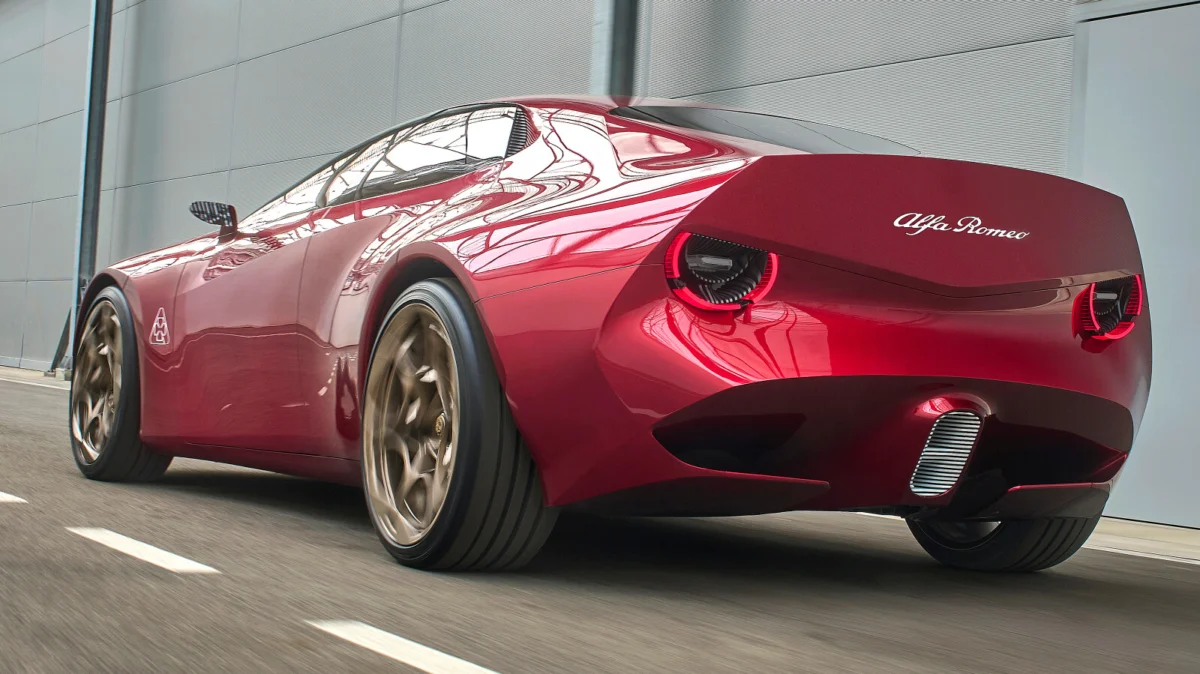
At the 2026 Paris Motor Show, Alfa Romeo unveiled a vehicle that seeks to redefine the brand’s identity for the coming decade. Dubbed the "Cuorerosso"—literally "Red Heart"—this concept car is more than just a design study; it is a profound declaration of intent. As the automotive industry navigates the turbulent waters of electrification and shifting consumer demands, Alfa Romeo is positioning itself to bridge the gap between historic Italian flair and the high-tech, multi-energy requirements of the future.
The Essence of "Bellezza Necessaria"
The Cuorerosso is a 2+2 coupé that masterfully blends the classic silhouette of a Gran Turismo with the aggressive, low-slung stance of a modern supercar. Measuring 4.70 meters in length, 1.98 meters in width, and standing just 1.33 meters tall, the concept commands a presence that is both elegant and intimidating. Its wheelbase of 2.93 meters hints at a cabin designed for driver engagement, while the stated weight of 1,750 kilograms suggests a focused approach to mass management—though the company has yet to clarify the specific measurement standards for this figure.
Designed by the brand’s iconic Centro Stile in Turin, the Cuorerosso embodies the philosophy of Bellezza Necessaria (Necessary Beauty). This design language prioritizes the elimination of superfluous elements, ensuring that every curve and crease serves a distinct mechanical or aerodynamic function. A standout feature is the "Coda Tronca" (truncated tail), a nod to Alfa Romeo’s racing heritage, which works in tandem with an integrated rear diffuser to achieve a drag coefficient (Cx) of 0.28.
Chronology of Strategy: From Concept to Production
The unveiling of the Cuorerosso comes at a pivotal moment for the Stellantis-owned marque. Under the leadership of CEO Santo Ficili, Alfa Romeo is attempting to pivot from a purely transitional phase to a more concrete long-term strategy.

- Pre-2026: Alfa Romeo struggled with the transition of its core D-segment models, the Giulia and Stelvio. Initial plans for a strictly battery-electric successor were eventually scrapped in favor of a more flexible "multi-energy" approach.
- October 2026 (Paris Motor Show): The official unveiling of the Cuorerosso serves as the foundation for a new design language that will trickle down into future series-production vehicles.
- 2027: The current Giulia and Stelvio models will reach the end of their production cycle, with no immediate direct successors announced yet.
- Early 2028: The first production vehicle derived from the Cuorerosso’s design DNA is scheduled to arrive. This will not be a sports coupe, but a high-end SUV situated in the upper C-segment, effectively serving as a spiritual successor to the Tonale, albeit with a completely different architectural approach.
- Post-2028: The company plans to introduce a model internally codenamed "Giulietta," which will carry forward the design elements of the Cuorerosso in a non-SUV form factor.
Supporting Data: The Multi-Energy Architecture
While the Cuorerosso is a show car, the technology it highlights is deeply rooted in the brand’s "Multi-Energy" strategy. Alfa Romeo has confirmed that future models will be built upon flexible architectures capable of supporting full battery-electric (BEV), plug-in hybrid (PHEV), mild-hybrid, and full-hybrid powertrains.
Product chief Daniele Chiari confirmed that the concept currently sits on the existing "Giorgio" platform used by the current Giulia and Stelvio. However, the production cars will likely utilize an evolved, more versatile platform. The most striking technical prospect mentioned is a high-performance variant featuring a 2.9-liter V6 engine paired with a full-hybrid system and Q4 all-wheel drive. The inclusion of a carbon-fiber driveshaft suggests that Alfa Romeo is exploring a Transaxle configuration to maintain optimal weight distribution.
Technical Highlights:
- Aerodynamics: Cx of 0.28, achieved through the Coda Tronca and a wind-tunnel-optimized underbody.
- Chassis: Development focus on air suspension and high-performance ceramic brakes by Brembo to reduce unsprung mass.
- Connectivity: The "Magma Display" central console, which integrates touch interfaces with physical rotary controllers and toggle switches, providing a tactile bridge between digital convenience and mechanical feedback.
- Steering: A steer-by-wire system, calibrated to provide synthetic but realistic haptic feedback to the driver.
Official Responses and Strategic Pivot
In a recent interview with Quattroruote, Santo Ficili emphasized that the future of Alfa Romeo is not a binary choice between combustion and electricity. Instead, the brand is prioritizing the emotional output of the driving experience. "Technology, function, and quality must always be at the service of emotion and driving pleasure," Ficili noted.
The company is clearly distancing itself from the "all-electric or nothing" mandate that characterized many European manufacturers just a few years ago. By keeping the V6 hybrid option on the table, Alfa Romeo is signaling that it intends to cater to the purist demographic—those who value the sound and response of an internal combustion engine—while simultaneously embracing the electrification required to meet global emissions standards.

The interior interface, dubbed Cannocchiale Vivente (Living Binoculars), represents a unique take on digital instrumentation. It features two modes: "Immersivo," which displays comprehensive telemetry, and "Concentrato," which strips back the information to the bare essentials, allowing the driver to focus exclusively on the road. This minimalist, driver-centric approach is intended to be the hallmark of the brand’s future cabins.
Implications for the Brand and the Market
The Cuorerosso is, by Alfa Romeo’s own admission, not a preview of a specific upcoming model. It is a "design manifesto." Its implications for the market are significant:
- Refined Brand Identity: Alfa Romeo is doubling down on its "sporty" heritage. By moving away from the purely electric Giulia/Stelvio successor project, the brand is admitting that its customer base values character over raw technological transition.
- Platform Flexibility: The "Multi-Energy" strategy allows Alfa Romeo to hedge its bets against fluctuating EV demand. If charging infrastructure lags or consumer sentiment shifts, the brand has the internal capacity to pivot between powertrain types without redesigning its core vehicle architectures.
- The SUV Conundrum: The announcement that the first production car following the Cuorerosso will be an SUV may disappoint some traditionalists. However, the brand’s insistence that this vehicle will be "significantly different" from the current Tonale suggests a move toward a more "crossover-coupé" aesthetic that better aligns with the Cuorerosso’s sleek, low-profile design.
- Technological Integration: The use of STLA SmartCockpit architecture indicates that while the design will be distinctly Italian and emotive, the underlying software will leverage the massive scale and investment of the Stellantis group, ensuring the brand remains competitive in the realm of over-the-air updates and autonomous driving aids.
Conclusion
The Alfa Romeo Cuorerosso is a bold, beautiful, and strategically complex response to the uncertainties of the modern automotive era. It suggests a future where Italian style is not sacrificed on the altar of efficiency, but rather elevated by it. By focusing on "Necessary Beauty," the brand is attempting to recapture the magic that made its mid-century classics so desirable, while simultaneously arming itself with the flexible, high-tech weaponry needed to survive the 2030s.
Whether this vision will successfully translate into the sales volumes required by the Stellantis conglomerate remains to be seen. However, as a statement of intent, the Cuorerosso proves that Alfa Romeo’s heart—its Cuore—is still beating with a passion for driving that refuses to be sidelined by the pragmatism of the age. For enthusiasts and industry analysts alike, the next few years of transition will be essential to watch, as the Italian icon attempts to harmonize its storied past with a very different, electric-leaning future.