As the climate crisis forces a radical rethink of national energy infrastructure, German municipalities are looking toward a massive, untapped source of renewable heat flowing right through their city centers: their rivers. With the traditional "heating season" remaining a cold reality despite record-breaking summers, the German energy sector is pivoting toward "Aquathermie"—the extraction of thermal energy from rivers like the Elbe, Rhine, and Danube to power district heating networks.
In cities such as Cologne, Hamburg, and Dresden, gargantuan heat pump projects are moving from the drawing board to the construction site. These systems, which function like reverse refrigerators on a municipal scale, represent a cornerstone of the "Wärmewende" (heat transition)—a strategic effort to decouple urban heating from fossil fuels.
The Engineering Behind the Current: How Aquathermie Works
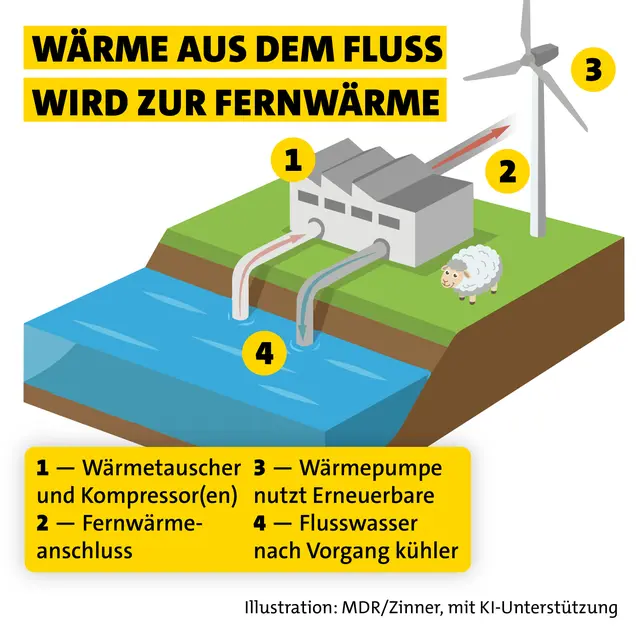
The principle of Aquathermie is deceptively simple, relying on the laws of thermodynamics and the high thermal capacity of water. Much like a residential heat pump extracts heat from ambient air or the ground, an industrial-scale river heat pump uses a heat exchanger to harvest thermal energy from flowing water.

Even in winter, river water remains significantly warmer than the surrounding air. By pulling this water through a system of heat exchangers, the facility extracts energy that is then upgraded—via electricity from renewable sources—to temperatures suitable for district heating grids. The water is then returned to the river, typically only a few degrees cooler than when it was extracted.
The physical advantage is clear: water is significantly denser than air. "If you cool one kilogram of water by one degree, four times more heat is released than with air," explains Jessika Gappisch, an expert in Aquathermie at the Technical University of Darmstadt. This makes the process not only more efficient than traditional air-source heat pumps but also highly reliable for large-scale urban energy supply.
Cologne’s Massive Bet on the Rhine
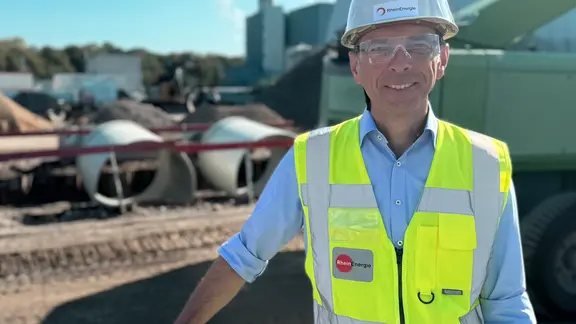
At the Rheinhafen in Cologne’s Niehl district, a massive construction site signals the future of German heating. Armin Ehret, head of power plants at Rheinenergie, oversees a project designed to supply 50,000 households—the equivalent of a small city—with climate-neutral heat by 2028.
The Cologne project is a 280-million-euro investment, heavily subsidized by the federal government. Without these grants, the project would currently struggle to reach economic viability. However, the scale is intentional. "It has shown that, in terms of energy economics and the context of decarbonization, a larger unit is more sensible," Ehret says.
The system utilizes three massive compressors designed to deliver 150 megawatts of thermal power. To put that in perspective, this output matches the capacity of 15,000 to 30,000 standard residential heat pumps. The facility is strategically located to tap into the Rhine, with intake systems built deep into the riverbed to ensure operations can continue even during the extreme low-water periods that have plagued German rivers in recent years.
Chronology of the Heat Transition
The push for Aquathermie is not entirely new, but it has gained significant momentum in the 2020s.

- 2020–2022: Initial feasibility studies were conducted across the Rhine-Ruhr region as gas prices spiked and the urgency of the "Wärmewende" became a national political priority.
- 2023: Major municipalities, including Cologne and Mannheim, finalized designs for large-scale river heat pumps. Mannheim, notably, began developing a project even larger than Cologne’s.
- 2024–2025: Construction phases commenced. Federal funding programs were expanded to support the high initial capital expenditure required for these "green giants."
- 2026: Current landscape. Germany faces a paradox: while river levels are historically low due to climate change, the necessity of these heat pumps has never been greater. Projects are now being stress-tested against climate projections for the next 30 years.
Supporting Data: Efficiency and Potential
The potential for Aquathermie in Germany is vast. Beyond the major rivers, smaller lakes and coastal waters offer similar opportunities. According to research from the Technical University of Darmstadt, the efficiency of these systems remains stable as long as the water temperature stays above 4 degrees Celsius. In Cologne, engineers have set a safety cutoff at 5 degrees to protect the machinery, though they note that the Rhine rarely dips below this temperature even in the harshest winters.
Comparative Efficiency
| Source | Density (kg/m³) | Thermal Capacity | Efficiency Rating |
|---|---|---|---|
| Ambient Air | ~1.2 | Low | Moderate |
| River Water | ~1,000 | High | Excellent |
The shift is also a boon for local manufacturing. Much of the technology, including the massive compressors and heat exchangers, is being produced in Germany, specifically in the Ruhr region, providing a much-needed boost to local industrial sectors.
Official Responses and Ecological Concerns
The introduction of large-scale water extraction has raised questions regarding aquatic ecosystems. Environmentalists and fishery experts are watching closely. The primary concern is the discharge of cooled water back into the river.
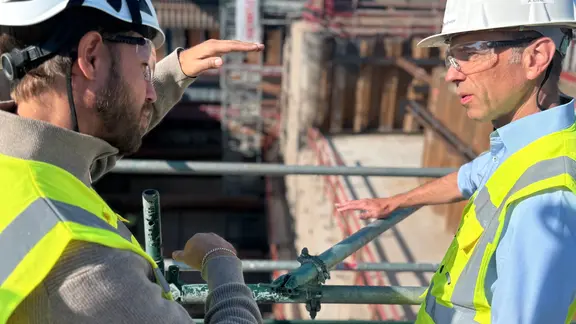
"We are currently in a phase where there is more speculation about environmental risks than concrete experience," says Gappisch. However, the consensus among experts is that, when managed correctly, the impact is minimal. At the Cologne site, the water volume extracted—even at low levels—represents less than one percent of the river’s total flow.
Furthermore, some biologists argue that the slight cooling effect could actually be a benefit. With global warming driving up river temperatures to levels that endanger fish species like salmon and trout, the discharge of cooler water from a heat pump could act as a local "climate buffer," providing a refuge for aquatic life during scorching summer months.
Strategic Implications: A New Era for German Cities
The integration of Aquathermie into urban planning represents a shift from "city as a consumer" to "city as a resource manager."
1. Energy Sovereignty
By utilizing local water, cities reduce their reliance on imported fossil fuels, effectively turning a natural feature of their geography into a strategic energy asset. This aligns with Germany’s broader goals to reduce CO2 emissions by 100,000 to 150,000 tons annually per large-scale installation.
2. Infrastructure Synergies
In many cities, these plants are being built in direct proximity to existing fossil-fuel-powered district heating plants. This allows for a "hybrid" approach where the heat pump serves as the primary base-load provider, while the older gas plants remain available as a backup for peak demand periods, ensuring energy security during the transition.
3. The "Nordic" Lesson
Germany has often been criticized for being slow to adopt heat pump technology compared to neighbors like Norway or Finland. However, the current surge in Aquathermie projects suggests that Germany is now applying lessons learned from Nordic district heating systems, albeit at a scale suited for its own large, industrial urban centers.
Conclusion: The Path Forward
The "Wärmewende" is a massive, multi-decade undertaking. While Aquathermie is not a silver-bullet solution for every German town, it is an essential pillar for cities situated on major waterways. The success of the Cologne and Mannheim projects will likely serve as the blueprint for other municipalities from Zittau to Flensburg.
As Germany navigates the difficult balance between climate protection, economic stability, and energy security, the humble river—once seen primarily as a transport route for barges—is being reimagined as the beating heart of a new, sustainable urban metabolism. The transition is complex, costly, and technically demanding, but as the climate warms, the necessity to "mine" the thermal energy of our rivers has become an unavoidable imperative. By leveraging the physical properties of water, Germany is taking a significant step toward a future where the heating of our homes no longer comes at the cost of the atmosphere.