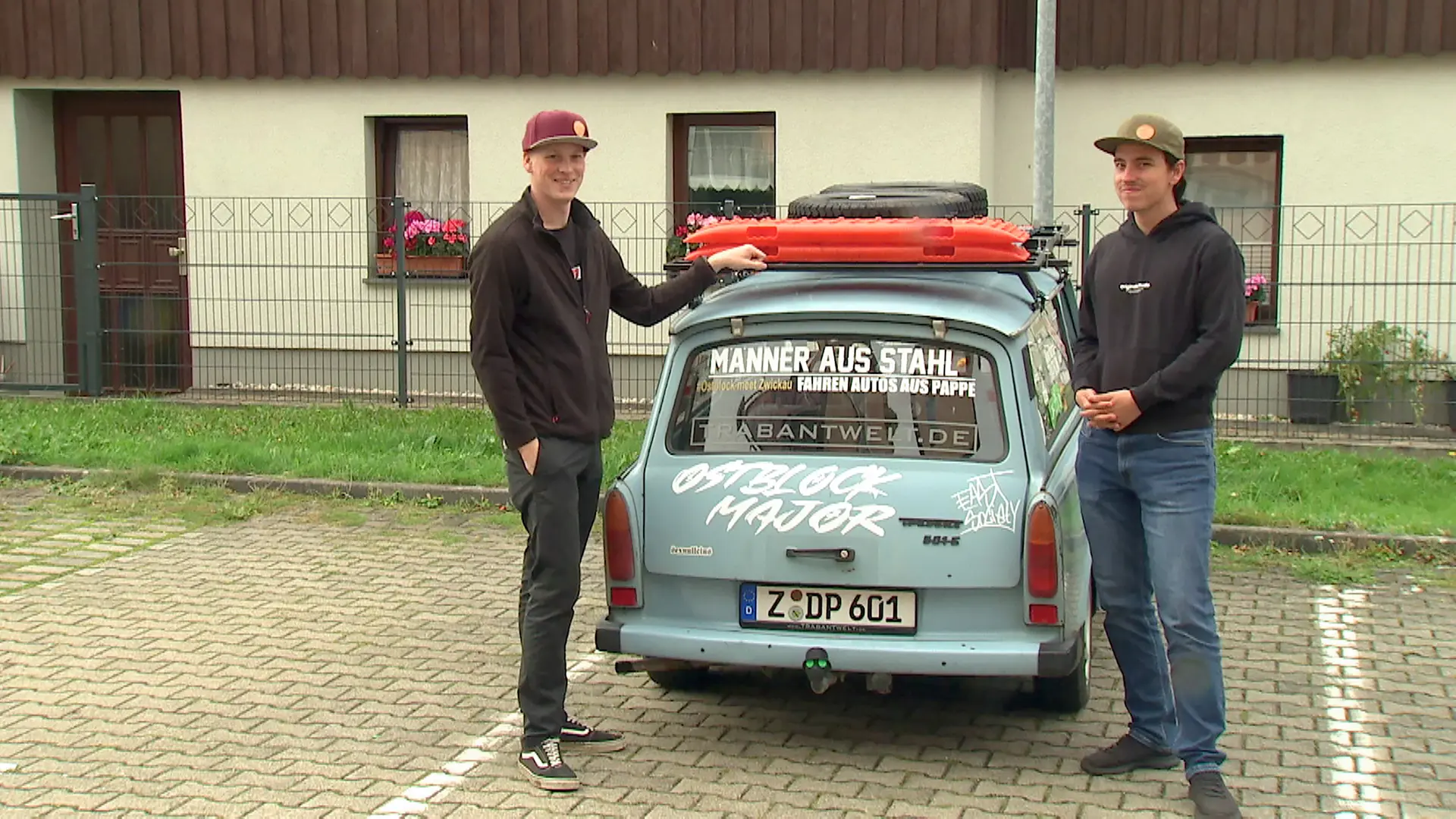
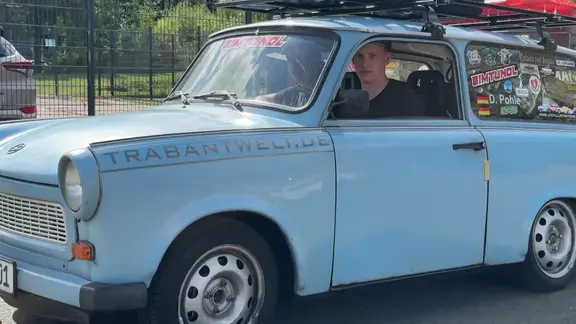
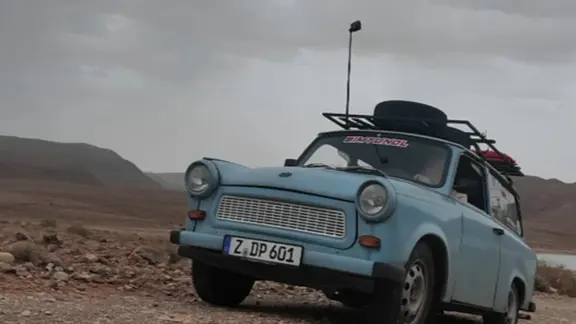
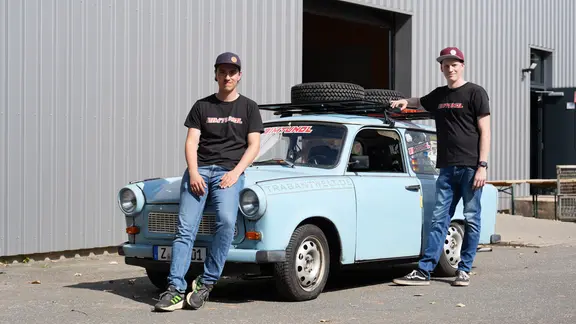
Zwickau, Germany – In an era defined by high-tech electric vehicles and autonomous driving assistance, two young men from Zwickau have opted for a different kind of progress: the rhythmic, smoky hum of a two-stroke engine. Darius Pohle and Eric Gärtner recently returned from a 24-day, 9,000-kilometer odyssey that took them from the heart of Saxony all the way to the rugged landscapes of Morocco. Their vehicle of choice? A classic, gletscherblau (glacier blue) Trabant, the iconic "Pappe" (cardboard) car of the former GDR.
The journey, which served as the pair’s fourth major expedition, was more than just a test of mechanical endurance; it was a mission to prove that vintage engineering, when paired with youthful audacity and a bit of spare parts, can still conquer continents.
The Core Facts: A Test of Resilience
The sheer scale of the trip is difficult to grasp for the average commuter. Over the course of 24 days, the duo navigated the Trabant across diverse European climates and the challenging terrain of North Africa. The vehicle, despite its age and modest specifications, performed with surprising reliability.
"We can’t complain, he held out," says Eric Gärtner, reflecting on the trip. "What else would you expect? It’s just 9,000 kilometers."

While the car was largely reliable, the journey was not without its moments of tension. The only notable mechanical issue, according to Darius Pohle, was a "loose nut"—a minor complication that highlights the simplicity and repairability of the Trabant’s design. In the vast, shifting sands of the Moroccan desert, however, the car faced its greatest challenge. After successfully navigating two large dunes, the vehicle became bogged down in the deep sand. The team relied on their own resourcefulness, utilizing tire changes and specialized recovery boards to break free from the desert’s grasp.
A Chronology of the Expedition
The trip was meticulously planned, yet designed to allow for the spontaneity that defines a true road trip.
Phase 1: Through Europe
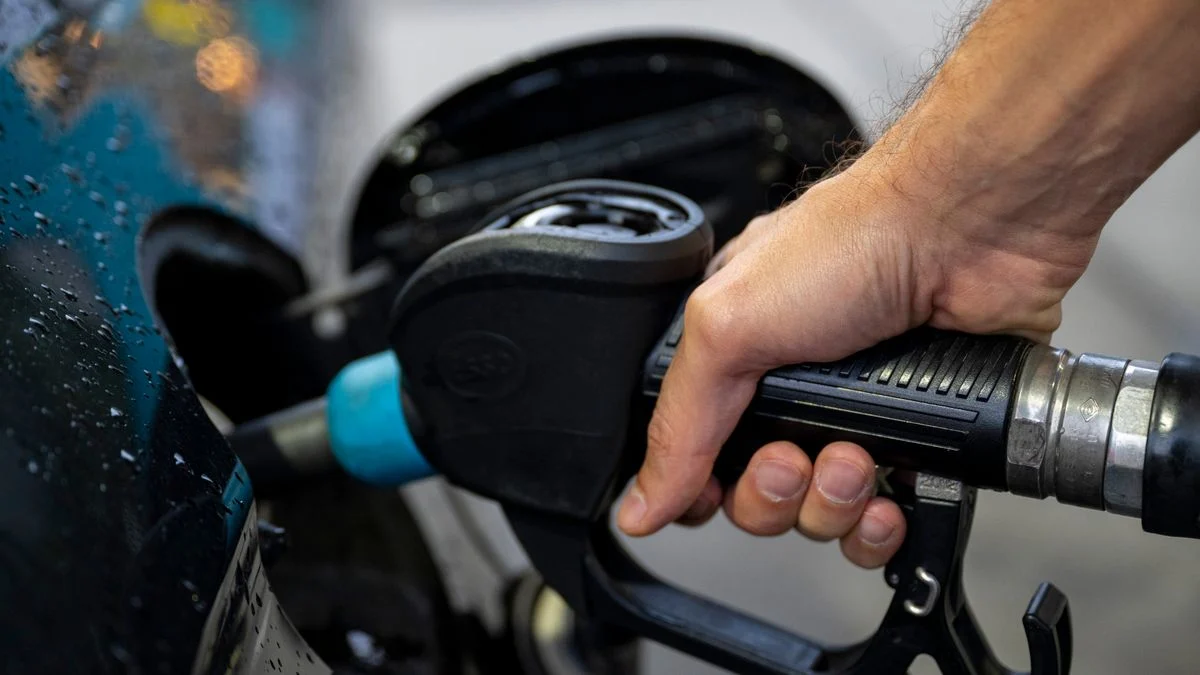
The initial legs of the journey saw the Zwickau team crossing Germany, France, and Spain. This portion of the trip served as a shakedown for both the driver and the machine. With a fuel tank that required a stop roughly every three hours, the duo established a rhythmic pace. Due to the heavy load—supplies, spare parts, and camping equipment—the Trabant consumed an average of nine liters of fuel per 100 kilometers, a testament to the strain placed on the small two-stroke engine.
Phase 2: The Moroccan Frontier
Crossing the Strait of Gibraltar marked the transition into the most demanding phase of the journey. In Morocco, the landscape transformed from the familiar highways of Europe to the surreal, mountainous passes leading into the Sahara. Contrary to the assumption that such a car would struggle, the duo reported that the infrastructure was surprisingly well-developed in many areas, allowing the Trabant to hold its own against more modern vehicles.
Phase 3: The Return
The return leg was a testament to the endurance of both the vehicle and the drivers. By October 5th, the team arrived back in Zwickau, having successfully completed the loop. The "Pappe" was parked, the gear unloaded, and the duo returned to the quiet reality of everyday life, forever changed by the thousands of kilometers etched into their tires.
Supporting Data and Mechanical Realities
The Trabant is famously known as the "car made of cardboard," a nickname derived from its Duroplast body panels. While the body is light, the mechanical heart of the car is what truly concerns long-distance travelers.
- Fuel Consumption: Under normal conditions, a Trabant is relatively efficient. However, the added weight of expedition gear increased the consumption to approximately 9 liters per 100km.
- The Three-Hour Rule: The limited range of the fuel tank meant the travelers were forced to stop every three hours. While this sounds like a burden, the team viewed these intervals as necessary breaks, allowing them to stretch their legs and absorb the changing scenery.
- Mechanical Simplicity: The "loose nut" mentioned by the team is a common anecdote among classic car enthusiasts. Because the Trabant was designed to be easily repaired by the owner, a basic tool kit is often enough to keep the car running, a distinct advantage over modern cars that require diagnostic computers for even minor faults.
The Public Reception: "Men of Steel in Cars of Paper"
The duo’s choice of vehicle sparked a variety of reactions across the continent. In major metropolitan areas, the blue Trabant was a magnet for attention.
"In the big cities, there were a lot of thumbs up, a lot of positive feedback," Darius Pohle recalls. "About 90 percent of the people reacted positively. The others just thought we were pretty crazy for driving such a long distance in this car."
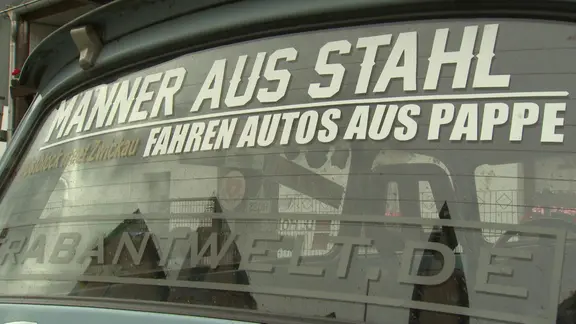
The back window of their Trabant bore the defiant slogan: "Männer aus Stahl fahren Autos aus Pappe" (Men of steel drive cars of paper). This ethos resonated with locals and fellow travelers alike, turning the vehicle into a conversation starter and a symbol of mechanical nostalgia.
Implications: A Call to the Next Generation
Beyond the personal thrill of the adventure, the expedition was driven by a deeper, ideological motive. Through social media, the team documented their progress, hoping to inspire a younger generation of car enthusiasts to look beyond the modern, sanitized driving experience.
"It is actually our goal to show young people: ‘Hey, look, you can do something with a Trabi,’" says Eric Gärtner. "We want to inspire them to go on bigger tours, to simply see the world."
The team’s journey serves as a commentary on the "disposable" nature of modern consumption. By taking a vehicle that many would have relegated to a museum or a scrap heap, the Zwickau pair demonstrated that value is not inherent in the price of a vehicle, but in the experiences it facilitates.

Future Horizons: The Quest for Iceland
With four major tours under their belts, the question arises: what comes next? For Darius and Eric, the answer lies in the North.
"It would be nice to drive to Iceland," says Pohle. However, the scale of such an undertaking is significantly higher than a trip to Morocco. The travel time alone, including ferry crossings, would consume days, and the logistical requirements for such a harsh climate would necessitate a much larger budget.

The duo is currently in the process of seeking sponsors to help turn this dream into a reality. They believe that if they can make it through the heat of the Moroccan desert, the winds and glaciers of Iceland are the natural next frontier.
Concluding Thoughts
The success of this 9,000-kilometer trek is a victory for perseverance. It reminds us that travel is not about the horsepower under the hood or the sophistication of the dashboard electronics. It is about the connection between the driver and the road, the willingness to face mechanical uncertainty, and the drive to explore.

As the gletscherblau Trabant rests in its garage in Zwickau, it stands as a quiet hero of a grand adventure. It has crossed borders, braved the desert, and returned home, proving that even a car made of "cardboard" can carry the weight of a thousand dreams. For two young men from Saxony, the world is no longer a collection of dots on a map, but a series of roads to be conquered, one two-stroke cylinder at a time.