After the sensory overload of a major book fair, the prospect of tackling another dense, text-heavy novel can feel daunting. Yet, for those who love stories but crave a visual rhythm, there is an alternative that has been quietly flourishing in the heart of Germany: the Hessian comic scene. Far from the simplistic caricatures of the past, contemporary comics in Hesse are proving to be a sophisticated, diverse, and deeply artistic medium that tackles everything from 19th-century literature to modern social critique and the complexities of human identity.
A recent five-part series, "Kunst und Kult" (Art and Culture), produced by the hessenschau, has embarked on a journey through this creative landscape, mapping the talent from Kassel to Gießen, and Frankfurt to Darmstadt. The series highlights that whether you are a devotee of the classics, a fan of dark musical biopics, or someone looking for a narrative that reflects the realities of everyday life, Hesse’s comic creators have something for you.
The Intersection of Classic Literature and Visual Storytelling
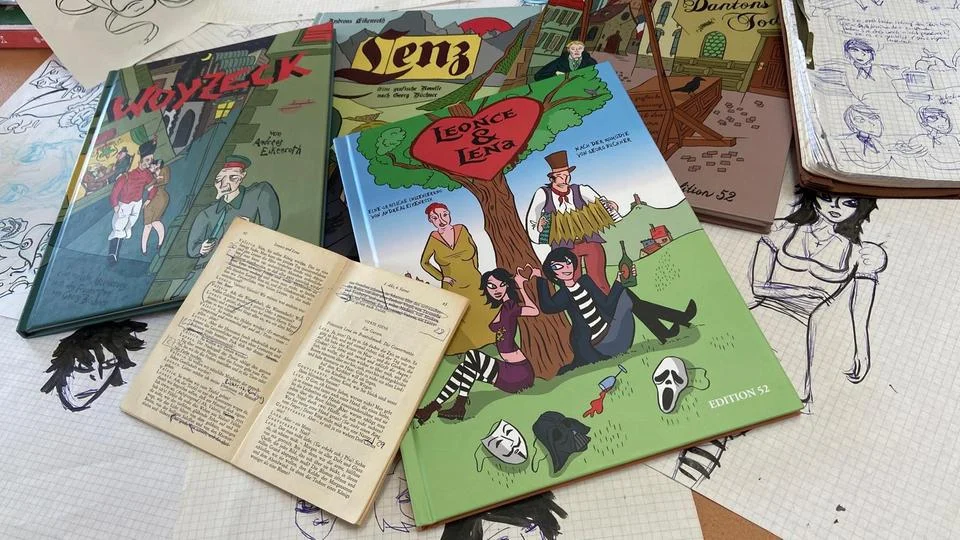
When one mentions the name Georg Büchner, the immediate association for many is a weathered, yellow-covered Reclam edition—a staple of the German school curriculum. Yet, Andreas Eikenroth, a stage technician from Gießen, has spent the better part of eight years reimagining these heavy literary pillars. By transforming Büchner’s dramas into graphic novels, Eikenroth has invited readers to experience the plays not just through text, but as a series of meticulously crafted stage sets.

Eikenroth’s approach treats every page as a theatrical performance. His journey began with the harrowing soldier drama Woyzeck and has since expanded to include Lenz, Dantons Tod (Danton’s Death), and Leonce und Lena. These are not merely illustrations; they are "graphic stagings" that capture the raw, existential energy of Büchner’s original works. By synthesizing the visual and the literary, Eikenroth makes canonical works accessible to a new generation, proving that even the most dense 19th-century texts can find a vibrant new life in the medium of ink and paper.
The Darker Side of Melody: "Chet Noir"
If Eikenroth brings theater to the page, Frankfurt-based artist Holger Klein uses the medium to explore the shadows of jazz history. Klein, who describes himself as a "music junkie," chose to chronicle the life of jazz trumpeter Chet Baker. However, this is no hagiography. Klein argues that for a biopic to be compelling, the subject must be more than just a talented musician; they must have lived a life of profound turbulence.
In his graphic novel Chet Noir, Klein focuses on the tragic arc of Baker’s life, specifically his struggle with drug addiction. The narrative is framed as a dark, atmospheric crime story, with the musician’s eventual death serving as the starting point for the narrative’s exploration of fame, fragility, and decline. The result is a moody, purple-and-red-drenched exploration of a life defined by both immense creative genius and crushing personal demons.

Social Critique in the Everyday: "Hackenporsche"
Comics have long served as a mirror to society, and Kassel-based artist Melanie Lüdtke is a master of this craft. Her debut work, Hackenporsche, is an autofictional exploration of social origins and class identity. The title itself—referring to a colloquial German term for a shopping trolley—serves as a potent symbol for the economic lower class, those who lack the luxury of a car and must carry their life’s necessities on foot.
Lüdtke’s work resonated so deeply with the industry that she was nominated for the prestigious Max and Moritz Prize at the Comicsalon Erlangen. For the 29-year-old artist, the nomination was validation enough, but the true impact was seen during her signing sessions, where long queues of readers gathered to meet her. Hackenporsche succeeds because it takes the mundane objects of daily survival and imbues them with a poignant, political, and deeply personal meaning.
Bridging the Gap for Younger Readers
The Hessian comic scene is also deeply invested in the next generation of readers. Moni Port (Frankfurt) and Claudia Weikert (Wiesbaden) were also nominated for the Max and Moritz Prize, specifically in the "Best Comic for Children" category, for their collaborative work Shrimpie und ich. The book addresses the anxiety surrounding the first day of school, a universal childhood experience.

By representing the first-graders as animal characters, Port and Weikert create a safe, relatable space for children to process their fears. Port, who incorporated her own memories of childhood confusion into the story, highlights that even something as simple as forgetting one’s birthday can be a source of monumental stress for a child. Through Shrimpie und ich, the authors provide a gentle, visually engaging resource for families to navigate the emotional milestones of growing up.
The "Comic Cosmos" and the Future of the Medium
Perhaps the most significant pillar of the local scene is not a creator, but a hub: the "Comic Cosmos" shop in Darmstadt. Owned by Naaman Wakim, who has been running the store for 25 years, the shop is more than a retail space—it is a community center. Wakim, who developed a passion for the medium as a child browsing flea markets, has turned his store into a place where customers come not just to buy books, but to share their lives.
This unique social dynamic caught the eye of filmmaker Benjamin Weber, who documented the life of the shop and its owner in the film Worst Super Hero. The documentary captures the intimacy of the shop, following Wakim through his daily life—from his interaction with regulars to his pursuit of his personal idol, the legendary comic author Alan Moore. The film, which premiered at the 60th Hofer Filmtagen, acts as a testament to the fact that comics are not just a solitary hobby, but a communal experience that builds lasting human connections.

Chronology of the Hessian Comic Surge
- 1999: Naaman Wakim establishes "Comic Cosmos" in Darmstadt, planting the seeds for a dedicated local comic culture.
- 2016–2024: Andreas Eikenroth undergoes an intensive multi-year period of adapting the complete works of Georg Büchner, standardizing the "graphic staging" technique.
- 2023: Melanie Lüdtke releases Hackenporsche, gaining critical acclaim and a nomination for the Max and Moritz Prize.
- 2024 (October): The hessenschau launches the "Kunst und Kult" series, highlighting the geographic and thematic breadth of the Hessian scene.
- 2024 (November): Benjamin Weber’s documentary Worst Super Hero receives its public screenings, bringing the story of local comic culture to a broader cinematic audience.
Supporting Data: A Thriving Market
The success of these artists is mirrored in the publishing landscape. The works mentioned—ranging from Eikenroth’s 64-to-96-page adaptations to Lüdtke’s substantial 240-page debut—demonstrate that publishers are increasingly willing to invest in high-quality, long-form graphic literature. The nomination of three separate Hessian projects for the Max and Moritz Prize in a single year is a clear indicator of the region’s growing influence in the German-speaking comic market.
Implications for the Future of Literature
The rise of the "graphic novel" in Hesse signals a shift in how we perceive storytelling. No longer confined to the realms of pulp fiction or children’s entertainment, the medium is increasingly being recognized for its ability to convey complex, nuanced, and socially relevant narratives.
By integrating audio, film, and visual art, the Hessian scene is successfully attracting an audience that might otherwise be drifting away from traditional print media. As libraries, bookstores, and educational institutions continue to integrate these works into their collections, the barrier between "high literature" and "comic art" continues to dissolve.

Ultimately, the Hessian comic scene demonstrates that in an age of rapid digital consumption, there is still an enduring hunger for the tactile, the visual, and the deeply human stories that only a well-crafted comic can provide. Whether you are navigating the anxieties of the first grade or the existential crises of the 19th-century intelligentsia, these artists remind us that every story deserves a frame—and every frame is an invitation to look closer.