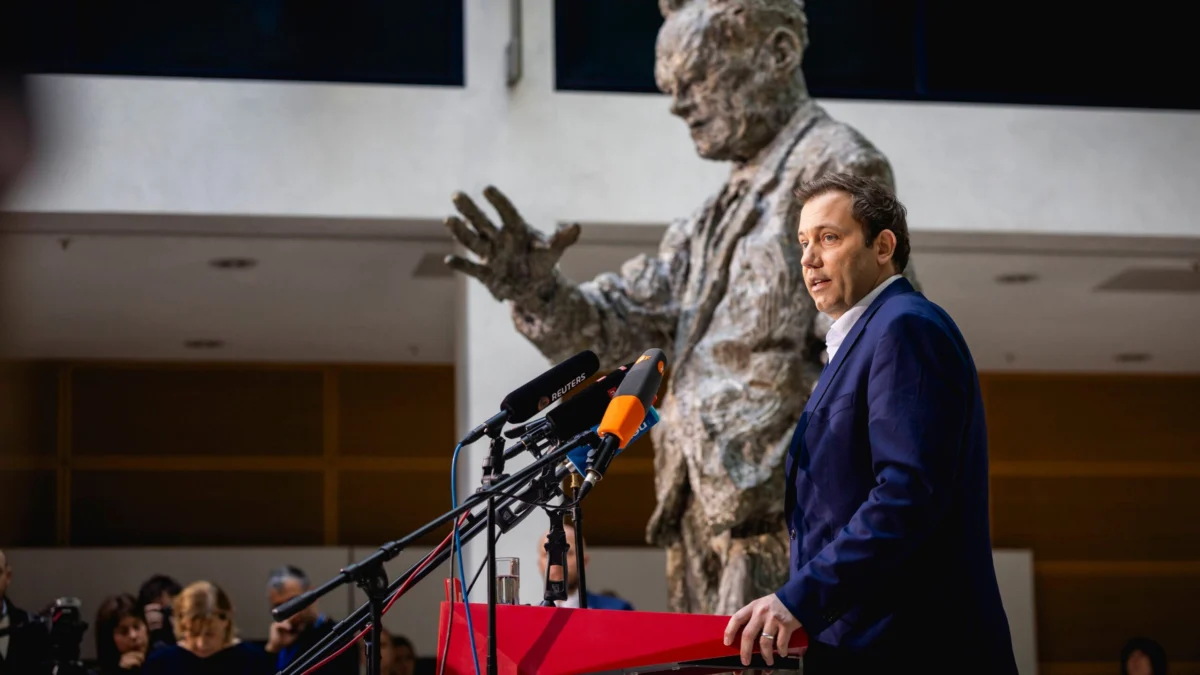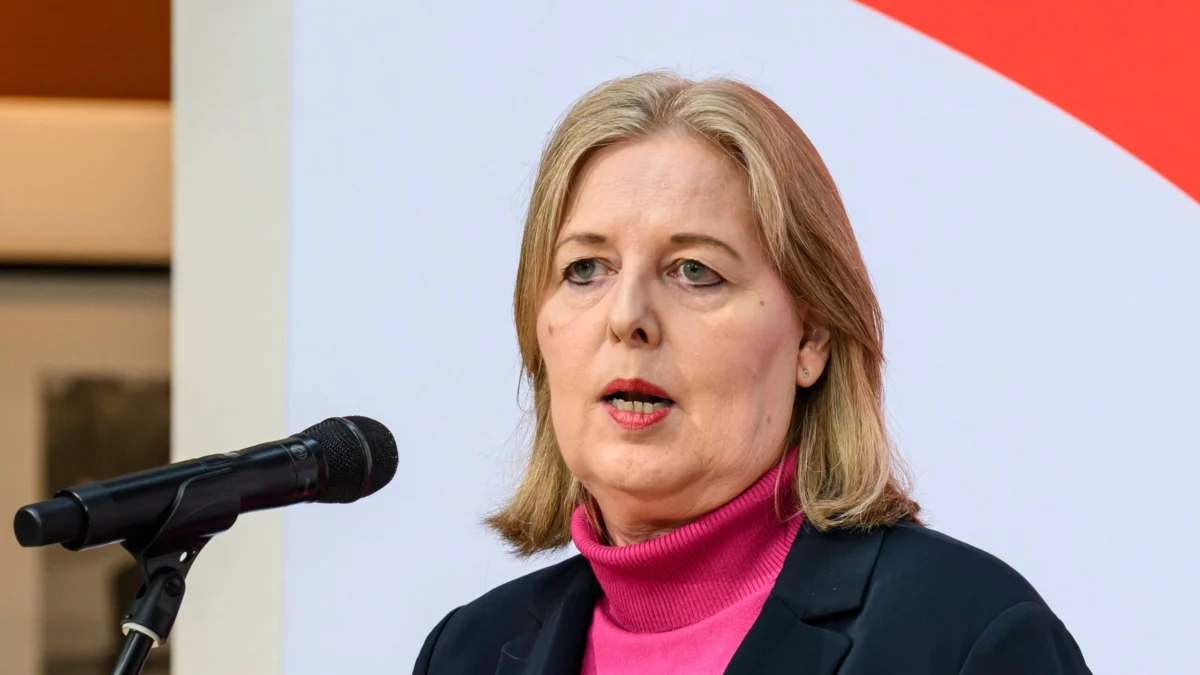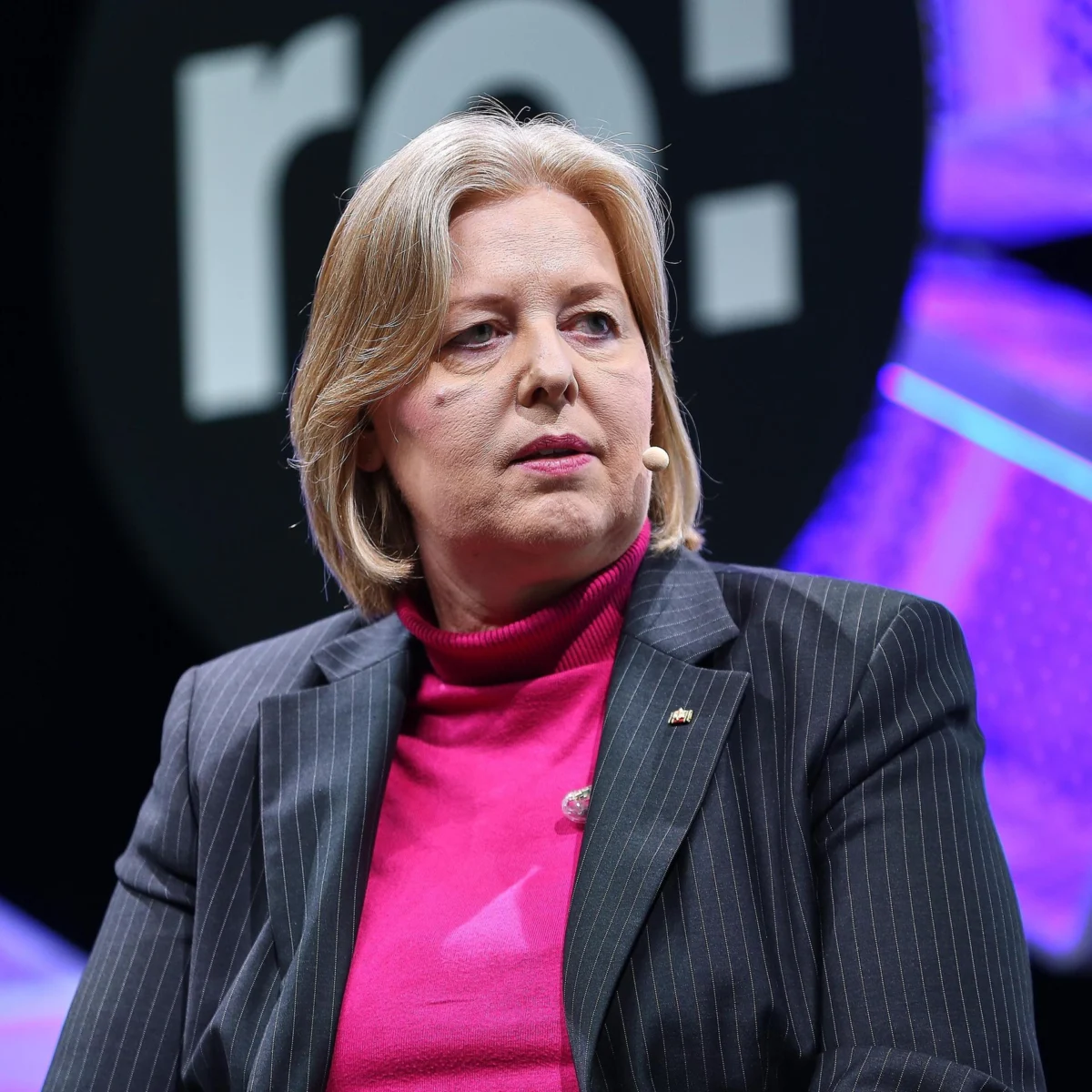
Berlin, October 12, 2026 – In a move that sent immediate shockwaves through Germany’s political landscape, Bärbel Bas (SPD), Federal Minister of Labour and Social Affairs and co-chairperson of the Social Democratic Party (SPD), today announced her immediate resignation from both pivotal roles. Citing profound personal reasons, specifically the recent death of her stepdaughter, and an inability to fully withstand what she described as intensified public and coalition attacks during her period of grief, Bas’s departure marks a significant turning point for the ruling "Ampel" coalition and the SPD.
Her emotional statement, delivered internally to party members before being released to the public, detailed the immense personal toll of her stepdaughter’s passing and the compounding pressure of political life. Bas, a long-serving politician known for her pragmatic approach and dedication to social justice, conveyed her decision to co-chairman and Vice Chancellor Lars Klingbeil and requested Chancellor Olaf Scholz to release her from her ministerial duties. While stepping down from these high-profile positions, Bas confirmed her intention to continue serving as a Member of the Bundestag for her Duisburg constituency, expressing hope to return to full strength in her parliamentary work soon.
The twin resignations plunge the SPD into an unexpected leadership crisis and necessitate a swift reshuffle within the federal cabinet, raising questions about the stability and future direction of the coalition government already grappling with complex economic and social challenges.
Main Facts: A Dual Resignation Shakes German Politics
Bärbel Bas, a prominent figure in German politics, has stepped down from her positions as Federal Minister of Labour and Social Affairs and as co-chair of the Social Democratic Party (SPD). The announcement, made on October 12, 2026, cited deeply personal reasons stemming from the recent death of her stepdaughter. In her poignant statement, Bas explained that the period of intense grief had been exacerbated by persistent public criticism and what she described as "attacks, unfortunately also from the ranks of the coalition partner," making it impossible for her to fully dedicate herself to the demanding responsibilities of her offices.
Bas informed her co-chairman and Vice Chancellor Lars Klingbeil of her decision to relinquish the party leadership role with immediate effect. Simultaneously, she requested Chancellor Olaf Scholz to relieve her of her duties as Federal Minister. This dual resignation leaves a significant void at the helm of both the SPD and a crucial federal ministry, necessitating urgent replacements and potentially triggering broader political realignments.
Despite her departure from these executive roles, Bas affirmed her commitment to public service by confirming she would retain her mandate as a Member of the Bundestag (MdB) for her home constituency of Duisburg. She expressed a desire to continue representing her constituents and to return to full capacity in parliamentary work once she has processed her personal grief. The news has sent ripples across the German political landscape, prompting immediate speculation about potential successors and the implications for the fragile "Ampel" coalition, composed of the SPD, the Greens, and the Free Democratic Party (FDP). The timing of her resignation, amidst ongoing debates over social policy, economic reforms, and the SPD’s broader electoral strategy, amplifies its political significance.
Chronology of Events: The Path to Resignation
Bärbel Bas’s political career has been characterized by a steady ascent through the ranks of the SPD, marked by a reputation for diligence and a strong commitment to social policy. Her journey to becoming Federal Minister of Labour and Social Affairs and co-chair of the SPD was the culmination of years of dedicated service.
Early Career and Rise (Pre-2021): Bas first entered the Bundestag in 2009, representing Duisburg. Over more than a decade, she built a profile as a formidable voice on social and health policy, serving in various parliamentary committees and gaining respect across party lines for her expertise and consensus-building efforts. Her background in social insurance and healthcare before entering politics provided a solid foundation for her policy work.
Assuming Key Roles (2021-2025): Following the 2021 federal election, which saw the SPD emerge as the strongest party and form the "Ampel" coalition, Bas was appointed Federal Minister of Labour and Social Affairs. This ministry is central to the SPD’s core agenda, responsible for crucial policies such as minimum wage, unemployment benefits, and pension reform. Her appointment was widely seen as a reflection of her deep understanding of social issues and her ability to navigate complex legislative challenges. Concurrently, or at a later point in the coalition’s term, she assumed the demanding role of co-chair of the SPD alongside Lars Klingbeil, tasked with revitalizing the party’s image and electoral fortunes. This dual responsibility placed her at the very heart of both government and party leadership.
Mounting Pressures and Personal Tragedy (2025-2026): The period leading up to her resignation was reportedly fraught with increasing challenges. The "Ampel" coalition, a novel three-party alliance, faced inherent tensions and policy disagreements, particularly between the SPD’s social spending priorities, the Greens’ environmental agenda, and the FDP’s fiscal conservatism. Public scrutiny intensified as Germany navigated economic headwinds, inflation, and the ongoing need for structural reforms. Bas, as Labour Minister, was at the forefront of debates concerning labor market flexibility, social security reforms, and the future of work in a rapidly changing economy. These policy discussions often turned into heated public and intra-coalition disputes, with "attacks" from coalition partners potentially stemming from differing views on budgetary allocations or the pace of reforms.
Crucially, Bas’s statement reveals a profound personal tragedy: the death of her stepdaughter. While the exact timing of this event is not specified, it is clear that it occurred recently enough to significantly impact her ability to perform her duties. Grief, a deeply personal and consuming experience, would undoubtedly diminish one’s capacity for the relentless demands of high-level political office.
The Breaking Point (Early October 2026): As the personal toll mounted, exacerbated by what Bas described as the "forc[ing] further" of public and coalition attacks during her period of vulnerability, the situation became untenable. Her declaration explicitly states she "cannot currently muster the strength to fully perform my government and party work in the short term." This indicates a critical point where the demands of office became incompatible with her personal well-being.
The Announcement (October 12, 2026): On this day, Bas formally communicated her decision to Lars Klingbeil and Chancellor Olaf Scholz. The announcement, first shared with "dear comrades and dear colleagues," was then made public, signaling the end of her tenure in two of Germany’s most influential political roles. The carefully worded statement, while direct, also expressed gratitude and hope for the future of the SPD and the Ministry of Labour, underlining her continued commitment to the ideals she championed.
Supporting Data and Context: A Coalition Under Strain
Bärbel Bas’s resignation cannot be viewed in isolation; it is deeply intertwined with the broader political and socio-economic context of Germany in 2026. The "Ampel" coalition has been navigating a turbulent period, marked by significant domestic and international challenges, which have naturally led to increased internal friction and public discontent.
The SPD’s Electoral Standing and Internal Dynamics: Bas’s statement alludes to the need for the SPD to "draw the right conclusions from the past elections." This strongly suggests a period of electoral underperformance for the Social Democrats. While the 2021 federal election saw them emerge as the strongest force, subsequent state or European elections likely witnessed a decline in support, putting pressure on the party leadership to redefine its narrative and reconnect with voters. The SPD’s traditional base has been eroding due to shifts in the labor market and demographic changes, making the task of party co-chair particularly challenging. The "Konvent" (party convention) and "Grundsatzprogrammprozess" (fundamental program process) mentioned by Bas are critical internal initiatives aimed at revitalizing the party’s core ideology and strategic direction, efforts now complicated by a leadership vacuum. Matthias Miersch, whom Bas thanked, is a prominent figure in the SPD, often associated with the party’s environmental and progressive wing, suggesting a close working relationship within the party’s executive.
Coalition Tensions and Policy Battles: The "Ampel" coalition (SPD, Greens, FDP) is inherently a diverse alliance, with distinct ideological approaches to economic and social policy. By 2026, it is plausible that disagreements over the federal budget, social spending, and economic reforms had become particularly acute. The FDP, championing fiscal discipline and market-liberal policies, often clashed with the SPD’s emphasis on social welfare expansion and the Greens’ investment in climate protection. As Federal Minister of Labour and Social Affairs, Bas would have been at the epicenter of many of these debates. Policies such as the "Bürgergeld" (citizen’s income, replacing unemployment benefit II), pension reforms, and initiatives to address the skilled worker shortage would have been subjects of intense negotiation and potential public criticism from all sides, including, as Bas indicated, from within the coalition itself. These "attacks" could have manifested as public disagreements over funding, implementation details, or the overall direction of labor market policies.
The Federal Ministry of Labour and Social Affairs: This ministry is one of the most powerful and socially relevant portfolios in the German government. Under Bas, it likely pursued a range of initiatives aimed at strengthening social security nets, promoting fair wages, and adapting the labor market to digitalization and green transition. Key policy areas would have included:
- Minimum Wage Adjustments: Ensuring a living wage and regular increases.
- Pension Reform: Addressing the long-term sustainability of the pension system in the face of demographic change.
- Bürgergeld Implementation: Fine-tuning the new system for basic income support.
- Skilled Worker Immigration: Developing strategies to attract and integrate foreign skilled labor.
- Work-Life Balance and Digitalization: Adapting labor laws to new forms of work.
The demanding nature of these responsibilities, coupled with the need to constantly negotiate with stakeholders (unions, employer associations, other ministries), creates an environment of relentless pressure.
The Personal Toll of Public Office: Bas’s resignation highlights a growing concern in modern politics: the immense personal toll public service can exact, especially when intertwined with personal tragedy. Politicians, often under constant scrutiny and subject to relentless criticism, frequently struggle to balance the demands of office with their private lives. The digital age, with its 24/7 news cycle and social media pressures, amplifies this intensity. Bas’s decision underscores the human cost of leadership, particularly for women in politics who often face additional layers of scrutiny and expectation. Her courage in articulating her need for time to grieve and acknowledging her limits resonates with broader discussions about mental health and well-being in high-pressure professions.
Official Responses: A Mix of Sympathy and Strategic Silence
The immediate aftermath of Bärbel Bas’s resignation saw a flurry of official statements, each carefully crafted to convey empathy while also addressing the political implications.
Chancellor Olaf Scholz (SPD): As the head of government, Chancellor Scholz would have swiftly accepted Bas’s resignation, expressing profound regret at her departure. His statement would likely praise her dedication, competence, and significant contributions to the government’s social and labor agenda. He would emphasize understanding for her personal reasons, highlighting the immense pressure of public office. A typical statement might read: "I accept Bärbel Bas’s resignation with deep regret. She has served our country with distinction as Federal Minister of Labour and Social Affairs and has been a vital force within the SPD. While her departure is a significant loss, I have full understanding for the personal circumstances that have led to this difficult decision. I thank her for her unwavering commitment and wish her strength and peace during this challenging time. We will ensure a seamless transition for the Ministry and the government’s work."
Lars Klingbeil (SPD Co-Chairman and Vice Chancellor): As her direct party colleague and co-chairman, Klingbeil’s response would be more personal, reflecting their close working relationship. He would express sadness at losing a partner in party leadership but also solidarity and respect for her decision. His statement would likely focus on Bas’s impact on the SPD and her personal integrity. "Losing Bärbel as my co-chair is incredibly painful, both personally and for our party," Klingbeil might state. "Her strength, her clarity, and her unwavering commitment to social justice have been an inspiration. I deeply respect her decision to prioritize her well-being during this period of immense personal grief. The SPD owes her a tremendous debt of gratitude for her tireless work, and we will continue the path she helped chart. We stand united with her in friendship and wish her all the best." He would also likely reassure party members of the SPD’s continued stability.
Coalition Partners (Greens and FDP): Statements from the Greens and FDP would likely be polite and empathetic, acknowledging Bas’s personal situation while perhaps maintaining a degree of strategic distance regarding past policy disagreements.
- Robert Habeck (Greens, Vice Chancellor and Minister for Economic Affairs and Climate Action): "We are saddened to learn of Minister Bas’s resignation and extend our deepest sympathies to her during this difficult personal time. Her commitment to social cohesion and a just labor market has been undeniable. We respect her decision and wish her strength for the future."
- Christian Lindner (FDP, Minister of Finance): "My thoughts are with Bärbel Bas and her family. The demands of high office are immense, and we must all respect when personal circumstances necessitate such difficult choices. We thank her for her service in the federal government and look forward to working with her successor to advance the coalition’s agenda."
While these statements would be outwardly sympathetic, they would carefully avoid any admission of contributing to the "attacks" Bas cited, preserving coalition unity, at least publicly.
Opposition Parties (e.g., CDU/CSU, AfD, Left Party): Opposition reactions would be a mix of formal empathy for Bas’s personal situation and sharp political criticism directed at the government.
- Friedrich Merz (CDU/CSU Leader): "We wish Bärbel Bas all the best and strength in overcoming her personal grief. Her resignation, however, is another stark indicator of the instability and internal strife within the ‘Ampel’ coalition. It’s clear this government is struggling to lead, and the German people deserve clarity and stability, not constant reshuffles."
- AfD Spokesperson: "While we acknowledge the personal aspect of Ms. Bas’s decision, her resignation underscores the failure of the government’s social policies. The ‘Ampel’ coalition is crumbling under its own weight, and this is a clear sign that new elections are needed to restore competence and order."
Opposition parties would use the opportunity to highlight government weaknesses, call for fresh elections, or criticize the SPD’s handling of the situation.
Trade Unions and Employer Associations: These key social partners, who regularly interact with the Ministry of Labour, would also issue statements.
- DGB (German Trade Union Confederation): "We are deeply saddened by the news of Minister Bas’s resignation. She has been a strong advocate for workers’ rights and social justice. We wish her immense strength and recovery, and we hope her successor will continue her commitment to a fair and strong social market economy."
- BDA (Confederation of German Employers’ Associations): "We respect Minister Bas’s personal decision and thank her for her work at the Ministry of Labour and Social Affairs. We look forward to a constructive dialogue with her successor to address the pressing challenges facing the German labor market and economy."
Implications: Reshaping the Political Landscape
Bärbel Bas’s dual resignation carries profound implications for the SPD, the "Ampel" coalition, and the broader political climate in Germany. It introduces an element of instability at a critical juncture and necessitates immediate strategic responses.
For the Social Democratic Party (SPD):
- Leadership Vacuum: The immediate and most pressing implication is the leadership vacuum at the top of the SPD. Finding a successor for the co-chair position will be a crucial and potentially contentious process. While Lars Klingbeil remains, the party constitution likely requires a second co-chair, preferably a woman, to maintain gender balance. Potential candidates from within the party’s executive or parliamentary group will now be scrutinized. This process could expose existing fault lines within the party, particularly between its more centrist and left-leaning wings, and divert attention from the "Konvent" and "Grundsatzprogrammprozess" aimed at renewal.
- Electoral Impact: Losing a prominent figure like Bas, especially under these circumstances, could further dampen party morale and public confidence. If the "past elections" she referred to were indeed disappointing, this resignation could complicate efforts to regain electoral traction, potentially impacting future state or federal elections. The party will need to present a united front and a clear vision for its future.
- Policy Continuity: Bas’s influence on the party’s social and labor policy direction was significant. Her successor will need to quickly establish their own vision while maintaining a degree of continuity with the party’s core principles.
For the German Government (Ampel Coalition):
- Cabinet Reshuffle: Chancellor Scholz faces the immediate task of appointing a new Federal Minister of Labour and Social Affairs. This is a critical portfolio, and the choice of successor will be closely watched. The replacement will almost certainly come from within the SPD, but the selection process could be complex, involving internal party negotiations. A smooth and quick appointment will be essential to demonstrate the coalition’s stability.
- Coalition Stability: While a single resignation might not immediately threaten the coalition’s existence, Bas’s mention of "attacks… also from the ranks of the coalition partner" hints at deeper tensions. This public airing of grievances could exacerbate existing rifts between the SPD, Greens, and FDP, making consensus-building even harder on future legislative initiatives, particularly those involving social spending or labor market reforms. It could be interpreted as a symptom of a coalition struggling to find common ground.
- Legislative Agenda: The Ministry of Labour and Social Affairs has a packed legislative agenda. A change in leadership, even if seamless, can cause delays or shifts in emphasis. Important reforms, such as those concerning pensions, social welfare, or the integration of foreign workers, will now fall to a new minister, potentially affecting their timeline and final shape.
For Bärbel Bas’s Legacy and Future:
- Legacy as Minister and Co-Chair: Bas will be remembered for her commitment to social justice and her pragmatic approach to policy. Her tenure as Labour Minister likely saw significant efforts to strengthen social safety nets and adapt labor laws to modern challenges. Her co-chairmanship, though ending prematurely, was part of the SPD’s effort to stabilize and renew itself post-Angela Merkel era. Her resignation on such personal grounds will add a layer of human vulnerability to her public image.
- Future Role as MP: Her decision to remain an MP for Duisburg signifies her enduring commitment to public service, albeit in a less executive role. This allows her to recover and potentially contribute to parliamentary debates from a different vantage point, free from the daily grind of ministerial and party leadership. Her voice, informed by her recent experiences, could become an important one in discussions about political culture and the pressures on public figures.
Broader Political Culture:
- Human Cost of Politics: Bas’s candid explanation brings into sharp focus the immense human cost of high-level political office. It serves as a stark reminder that politicians are individuals with personal lives, tragedies, and vulnerabilities. This could spark renewed debate about the intensity of political discourse, the role of public scrutiny, and the support systems available for public figures grappling with personal crises.
- The Nature of "Attacks": Her specific reference to "attacks… also from the ranks of the coalition partner" highlights the often brutal nature of intra-coalition politics, where policy disagreements can morph into personal critiques, especially during periods of stress. This may lead to calls for a more respectful and constructive political culture, even amidst inevitable policy disputes.
In conclusion, Bärbel Bas’s resignation is more than just a personnel change; it is a significant political event that underscores the fragility of coalition governance, the intense pressures on modern politicians, and the ongoing challenges facing Germany’s Social Democrats as they navigate a complex and rapidly evolving political landscape. The coming weeks will be critical as the SPD and the "Ampel" coalition seek to manage the fallout and plot their course forward.