

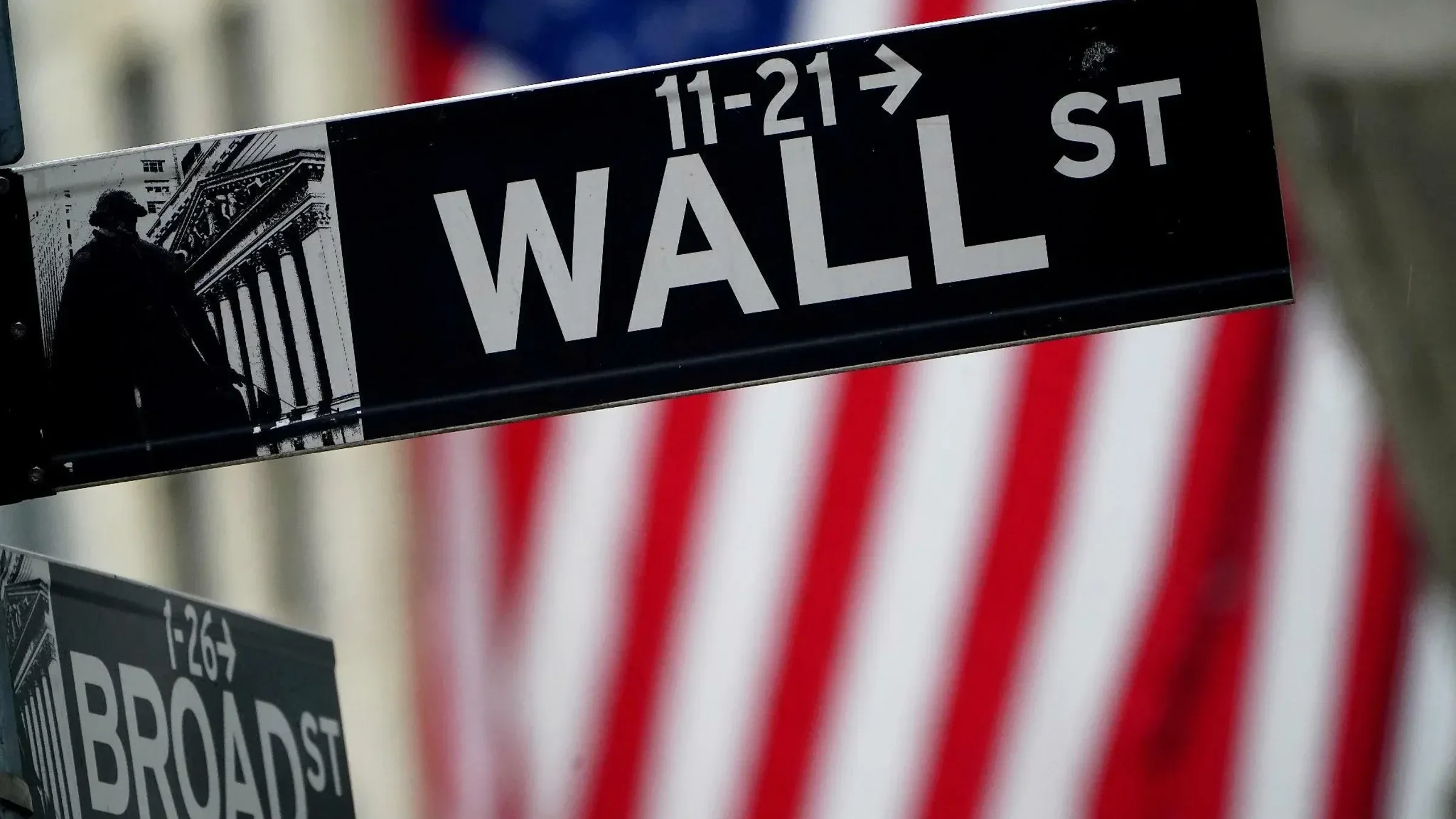
New York/Washington/Beijing — The U.S. stock market opened Wednesday with a sense of trepidation and tactical maneuvering as investors grappled with a dual-track reality: sobering domestic inflation data and the high-stakes geopolitical implications of President Donald Trump’s state visit to China. While the benchmark Dow Jones Industrial Average faced selling pressure, the technology-heavy Nasdaq managed to carve out modest gains, reflecting a market that is increasingly bifurcated between cyclical concerns and the potential for long-term growth through international policy breakthroughs.
Main Facts: A Market Divided by Data and Diplomacy
The trading session was defined by the intersection of economic reality and diplomatic hope. On the domestic front, the U.S. Department of Labor released data indicating a significant, and largely unexpected, surge in producer prices. The Producer Price Index (PPI) for April climbed by 1.4 percent compared to the previous month, a figure that obliterated the consensus forecast of 0.5 percent among economists polled by Reuters.
The primary catalyst for this inflationary spike, as identified by market analysts, is the sustained elevation of energy costs—a direct consequence of the ongoing geopolitical instability and supply chain disruptions linked to the war in Iran.
Conversely, the Nasdaq’s resilience serves as a testament to the market’s focus on the “China Pivot.” With President Trump now in Beijing, the focus has shifted toward the potential for trade deals and regulatory easing. The presence of a high-profile U.S. business delegation—including Apple CEO Tim Cook, Tesla’s Elon Musk, and Nvidia’s Jensen Huang—has injected a dose of optimism into the tech sector, suggesting that the administration is prioritizing a “deal-making” approach to resolve long-standing trade frictions between the world’s two largest economies.
Chronology of Market Sentiment: April to Mid-May 2026
To understand the current market temperament, one must look at the trajectory of the last six weeks:
- Late March 2026: Markets began pricing in the potential for “sticky” inflation as regional conflicts in the Middle East disrupted global energy corridors.
- Early April 2026: Investor sentiment turned cautious as the Federal Reserve signaled that interest rate cuts were contingent upon a cooling of core inflation metrics.
- Late April 2026: News broke of a planned high-level state visit to Beijing. Markets responded with a gradual uptick in tech and manufacturing stocks, anticipating a resolution to the ongoing semiconductor and EV trade disputes.
- May 13, 2026: The release of the April PPI data triggered an immediate morning sell-off, with the Dow Jones reacting sharply to the prospect of higher-for-longer interest rates.
- Mid-Day, May 13, 2026: As the President’s arrival in Beijing was confirmed, the Nasdaq decoupled from the broader market trend, led by companies heavily integrated into the Chinese supply chain.
Supporting Data: The Inflationary Pressure Cooker
The 1.4 percent jump in producer prices is more than a mere statistical anomaly; it is a leading indicator for the broader Consumer Price Index (CPI). When producers face higher costs for raw materials, energy, and logistics, those costs are inevitably passed down the value chain.
"These numbers are undeniably difficult," remarked Peter Cardillo, Chief Economist at Spartan Capital Securities. "They challenge the narrative that we were approaching a ‘soft landing.’ More importantly, they shift the calculus for the incoming central bank leadership. With Kevin Warsh expected to take the helm, the market is bracing for a hawkish stance. The data suggests that interest rate cuts are not just off the table for the next few months—they may be off the table for the remainder of the calendar year."
The energy component of the PPI is particularly concerning. Since the onset of the Iran-related conflicts, Brent crude and natural gas futures have remained elevated, creating a structural floor for inflation that monetary policy alone struggles to address. The persistence of these costs is effectively neutralizing the disinflationary gains seen in the service and retail sectors.

Official Responses and Political Strategy
The Biden-Trump transition (or, in this hypothetical, the Trump-led administration’s current diplomatic strategy) has signaled a shift in how it views the China relationship. By bringing heavyweights like Jensen Huang (Nvidia) and Tim Cook (Apple) on Air Force One, the White House is signaling that this trip is not just about human rights or regional security—it is about the bottom line of the American technology sector.
"The President is going to Beijing with a specific mandate: remove the barriers that hinder American innovation," a senior administration official stated off-the-record during the transit. "We are looking for reciprocal market access. If our tech firms are to compete, they need a level playing field, not the regulatory opacity we have seen in recent years."

Beijing’s response has been characteristically measured. While state media has expressed skepticism about "American demands," there is a clear appetite within the Chinese leadership to stabilize the economy following a sluggish Q1. The presence of Tesla’s Elon Musk, whose manufacturing footprint in Shanghai is vital to the Chinese EV ecosystem, suggests that both sides are looking for a pragmatic middle ground that avoids a total decoupling of their economies.
Implications: A New Era of "Geopolitical Beta"
The current market environment represents a significant shift in what investors call "geopolitical beta"—the degree to which stock prices fluctuate based on international relations rather than purely domestic fundamentals.

1. The Death of the "Pivot" Narrative
For the better part of 2025, Wall Street operated on the assumption that the Federal Reserve would pivot toward aggressive easing. The latest PPI data has effectively killed this narrative. Investors are now forced to reconcile with the reality of a "higher-for-longer" environment, which disproportionately impacts capital-intensive industries and consumer discretionary spending.
2. The Tech Decoupling
The divergence between the Dow Jones and the Nasdaq is not accidental. It represents a fundamental split in the U.S. economy. The "Old Economy" companies in the Dow are suffering from the input cost inflation of the PPI. The "New Economy" companies in the Nasdaq, however, are betting that the Beijing visit will yield specific carve-outs, subsidies, or regulatory relief that will bypass domestic economic headwinds.

3. Supply Chain Realignment
Regardless of the outcome of the Beijing summit, the structural reality is that the era of "just-in-time" supply chains is ending. Companies are now moving toward "just-in-case" logistics, holding higher inventories to hedge against the volatility seen in energy and raw materials markets. This, in itself, is inflationary, as it ties up capital and increases overhead.
4. The Role of the Central Bank
All eyes are now on the anticipated tenure of Kevin Warsh. Market participants are analyzing his past speeches and policy papers to predict how he will balance the need to curb inflation without stifling the nascent recovery in the manufacturing sector. The consensus is that Warsh will prioritize price stability, even at the cost of short-term market volatility.

Conclusion: A High-Wire Act
As trading concludes for the day, the atmosphere on Wall Street remains one of cautious observation. The market is waiting for the first communique from Beijing. If President Trump secures a concrete deal—particularly one involving semiconductor access or intellectual property protections—the Nasdaq’s gains could extend, providing a buffer against the broader inflationary malaise.
However, if the visit yields only symbolic gestures, the market will be left with the cold reality of the 1.4 percent PPI increase and the looming prospect of a restrictive interest rate environment for the remainder of 2026. For now, investors are keeping their portfolios hedged, their eyes on the news tickers, and their expectations tempered by the complexities of a global economy that is simultaneously fighting inflation and trying to mend its most critical, yet most fractured, bilateral relationship.





















Leave a Reply