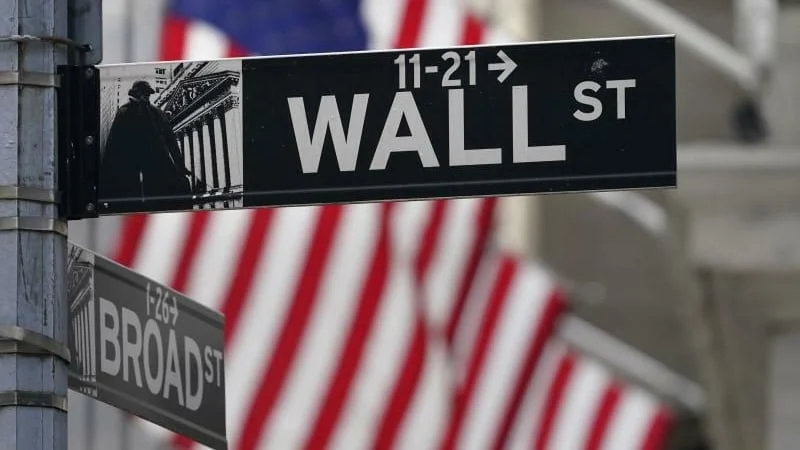
NEW YORK/DÜSSELDORF – The financial landscape at the New York Stock Exchange turned decidedly bearish this Thursday as a confluence of geopolitical instability and renewed economic anxieties forced investors to flee high-growth equities. Wall Street’s major indices experienced a sharp correction, fueled by a dramatic spike in global oil prices and a widespread liquidation of technology assets. As market participants recalibrated their risk exposure, the long-standing rally in the tech sector faced a significant reality check, leading to a volatile trading session that saw trillions in market capitalization fluctuate in a matter of hours.
Main Facts: The Anatomy of the Thursday Sell-Off
The primary driver of the day’s volatility was a sudden and aggressive rise in crude oil prices, which stoked fears of a sustained inflationary environment. The benchmark Brent crude, the primary gauge for European markets, surged by approximately 3.8%, pushing prices toward the $113 per barrel mark. This jump, driven by the worsening situation in the Middle East, has sent shockwaves through energy-dependent sectors and raised concerns regarding supply chain disruptions.
Simultaneously, the technology sector, which has been the primary engine of growth for the S&P 500 and the Nasdaq throughout the year, bore the brunt of the selling pressure. Large-cap tech stocks, sensitive to interest rate fluctuations and general economic sentiment, saw their valuations contract as institutional investors moved capital into defensive assets. This rotation out of "growth" and into "safety" defined the character of the trading day, highlighting the fragility of investor confidence in the current macroeconomic climate.
Chronology: A Day of Shifting Sentiment
The morning session began with cautious optimism, but the atmosphere shifted rapidly following the release of updated intelligence regarding the Middle East conflict.
- Early Morning (Pre-Market): Futures indicated a shaky start as traders digested overnight reports of regional escalation.
- Market Open: As the opening bell rang, indices dipped immediately. The tech-heavy Nasdaq Composite led the decline, dropping sharply within the first 30 minutes of trading.
- Mid-Day (The Flight to Safety): By noon, the narrative had shifted to fixed income. Investors began aggressive buying of US Treasury bonds, driving prices upward and forcing yields down. This marked a departure from the trend seen over the previous weeks, where bond sell-offs had pushed yields to multi-decade highs.
- Late Afternoon: The yield on the benchmark 10-year US Treasury note fell below the psychologically significant 5.0% threshold, settling at 4.947%. This movement confirmed that the "flight to safety" was the dominant theme of the day, as investors prioritized capital preservation over aggressive equity exposure.
Supporting Data: The Treasury Market Pivot
The dynamics of the US Treasury market offer the clearest insight into the current investor mindset. For several weeks, the narrative on Wall Street was dominated by the "higher for longer" interest rate outlook, which pushed 10-year yields to levels not seen in decades. This trend had created a difficult environment for stocks, as higher yields typically increase the cost of capital for corporations and make fixed-income instruments more attractive compared to stocks.
However, Thursday’s action signaled a change. When market volatility spikes, the standard response is to buy US government debt. As investors flooded into Treasuries, the price of these bonds rose. Because bond prices and yields move inversely, the surge in demand forced yields downward. Dropping below 5% was a crucial psychological milestone, suggesting that while the market remains fearful, there is a renewed belief in the utility of bonds as a hedge against equity market instability.
Geopolitical Implications: The Oil Price Shock
The surge in oil prices is not merely a headline concern; it is a fundamental threat to the economic recovery. The escalation in the Middle East has brought the "risk premium" back to the forefront of global commodity trading.
When oil prices rise, the cost of production and transportation increases, effectively acting as a tax on consumers and businesses. This "cost-push" inflation can force central banks, such as the Federal Reserve, to maintain restrictive monetary policies for longer than originally anticipated.
The increase in Brent crude to nearly $113 per barrel complicates the inflation picture significantly. If energy prices remain elevated, the cooling trend in the Consumer Price Index (CPI)—which the Fed has been tracking closely—could stall or reverse. This creates a "double-whammy" for investors: lower corporate earnings due to high operating costs and continued high-interest rates, which further compress valuation multiples for tech companies.
Official Responses and Expert Outlooks
While official statements from the Federal Reserve remain sparse during the ongoing period of uncertainty, regional bank presidents have echoed the sentiment that the economy remains in a "data-dependent" phase. Analysts at major investment banks, however, have been more vocal.
"The market is currently wrestling with two monsters," noted one senior strategist at a leading New York firm. "The first is the supply-side shock coming from the energy sector. The second is the realization that the high-interest-rate environment has effectively ended the era of ‘easy money’ for tech firms."
Investment analysts are advising clients to brace for continued volatility. The consensus is that until the geopolitical situation stabilizes, equity markets will remain highly sensitive to any news regarding oil supply logistics. Furthermore, the 10-year Treasury yield is being watched as the definitive "canary in the coal mine"—should it rebound above 5% quickly, equity markets are likely to face another leg down.
Economic Implications: The Path Forward
The implications of this market shift are profound. For the average investor, the message is one of extreme caution. The diversification of portfolios—previously ignored during the tech boom—is now being touted as the only effective defense against the current market regime.
1. The Tech Sector Re-Rating
The tech sell-off is not just a temporary dip; it is a structural reassessment of value. Companies that were trading at high multiples based on future growth projections are finding those projections harder to justify in an environment where the "risk-free" rate of return (via bonds) is hovering near 5%.
2. The Inflationary Feedback Loop
If oil prices continue to rise, the "soft landing" scenario—where inflation cools without a recession—becomes increasingly difficult to achieve. The Fed will have to balance the risk of suppressing growth too hard against the risk of letting inflation become embedded in the economy through energy costs.
3. Corporate Margins
Expectations for Q4 earnings are being revised downward. Analysts are focusing on how much of the increased energy costs corporations will be able to pass on to consumers versus how much they will absorb, which directly impacts bottom-line profitability.
Conclusion: A New Era of Volatility
As the trading week draws to a close, Wall Street remains on edge. The events of this Thursday serve as a stark reminder of the interconnectivity of global politics and financial markets. The "safe haven" status of US Treasuries has been reaffirmed, but the cost of that safety is a broader contraction in the equity markets.
The coming days will be critical. Market participants will be monitoring diplomatic efforts in the Middle East, production updates from major oil-exporting nations, and the next set of macroeconomic data from the Department of Labor. For now, the market is in a state of digestion, waiting to see if the recent lows will hold or if a deeper correction is on the horizon. Investors are advised to maintain a defensive posture, keep a close watch on bond yields, and prepare for a period where uncertainty remains the only certainty.