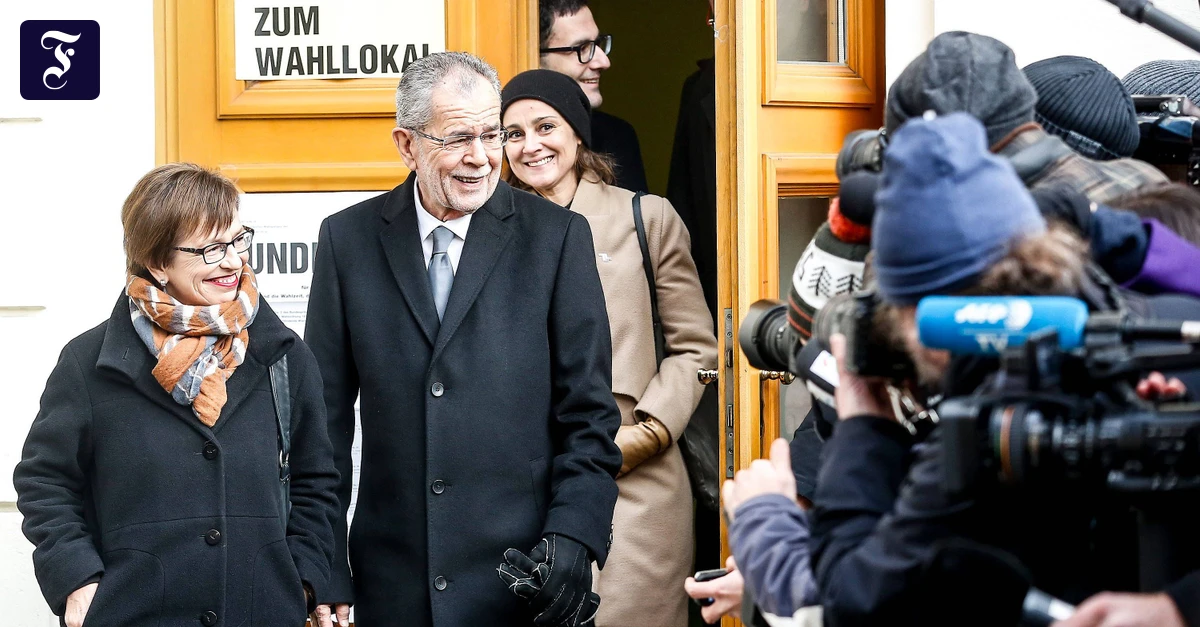
Vienna, Austria – In a resounding affirmation of Austria’s political trajectory, Alexander Van der Bellen, the independent candidate backed by the Green Party, has decisively won the presidential election, securing a mandate that definitively halted the anticipated surge of the far-right Freedom Party (FPÖ). Contrary to earlier predictions of a nail-biting contest, Van der Bellen’s lead, evident from the earliest projections, proved insurmountable. Norbert Hofer, the FPÖ candidate, conceded his defeat with graciousness, acknowledging the clear will of the electorate. The Green camp, meanwhile, erupted in jubilant celebration, with party leader Eva Glawischnig heralding the outcome as a “historic day, a historic turning point.”
This victory marks a significant moment not only for Austria but also for the broader European political landscape, which has been grappling with a rising tide of populism and nationalism. Van der Bellen’s triumph is being interpreted as a powerful rejection of anti-immigrant sentiment and a vote of confidence in a more inclusive and pro-European future for the Alpine nation. The election’s outcome serves as a crucial counterpoint to recent populist successes in other European countries, offering a beacon of hope for those who advocate for liberal democratic values.
The Unfolding of a Decisive Electoral Mandate
The presidential election in Austria, initially perceived as a tightly contested battle between two vastly different visions for the nation, ultimately saw a clear and decisive outcome. The initial projections, released shortly after the polls closed, painted a picture of a significant lead for Alexander Van der Bellen, the former leader of the Green Party, running as an independent. This early indication of a comfortable margin proved to be a reliable predictor of the final results, dispelling fears of a protracted and anxious wait for the official tally.
Norbert Hofer, representing the right-wing Freedom Party (FPÖ), a party with a history of controversial rhetoric and a strong anti-immigration platform, was quick to acknowledge his defeat. His concession speech, delivered with a degree of magnanimity, underscored the clear mandate given to his opponent. This swift acceptance of the results was a stark contrast to the anticipated scenario of a prolonged and potentially acrimonious electoral battle.
The mood within the Green Party and among Van der Bellen’s supporters was one of unbridled joy and profound relief. The party’s leader, Eva Glawischnig, articulated the significance of the moment in her post-election address, declaring it a “historic day, a historic turning point.” Her words captured the sentiment of many who viewed this election as a pivotal juncture for Austria, a moment to reaffirm its democratic principles and its place within the European Union.
The contrast between the two camps’ reactions highlighted the stark ideological divide that the election had exposed. While Hofer’s supporters may have been disappointed, the decisive nature of Van der Bellen’s victory prevented the kind of deep societal fissures that a much closer result might have engendered. The election, therefore, not only determined the next head of state but also provided a clear signal about the direction in which a significant portion of the Austrian electorate wished to steer their country.
A Chronology of the Presidential Race: From Close Contest to Clear Victory
The path to this decisive electoral outcome was far from a straight line, marked by shifts in momentum and intense public debate. The initial stages of the presidential campaign saw a relatively even distribution of support between the two main contenders. Norbert Hofer, leveraging the FPÖ’s strong base and tapping into prevalent anxieties regarding immigration and economic security, consistently polled well. His populist message resonated with a segment of the electorate feeling left behind by globalization and increasingly concerned about the integration of refugees and migrants.
Alexander Van der Bellen, on the other hand, positioned himself as a unifier and a staunch defender of Austria’s democratic institutions and its European identity. While officially running as an independent, his candidacy was widely supported by the Green Party, which mobilized its grassroots network and appealed to voters concerned about environmental issues, social justice, and the rise of far-right extremism. His campaign emphasized tolerance, openness, and a commitment to international cooperation.
The election’s initial round, held earlier in the year, had already demonstrated the close nature of the race, with Van der Bellen narrowly edging out Hofer. This result set the stage for a highly anticipated runoff, with many analysts predicting another incredibly tight contest. The subsequent months were characterized by intense campaigning, with both candidates engaging in a series of televised debates and public appearances.
Hofer’s campaign often focused on national sovereignty, border control, and a critique of what he termed "political correctness." He sought to present himself as a strong leader capable of protecting Austria’s interests in a rapidly changing world. Van der Bellen, conversely, emphasized the importance of European solidarity, human rights, and a progressive social agenda. He sought to counter the narrative of fear and division by highlighting Austria’s historical ties to Europe and its commitment to democratic values.
The runoff campaign was further influenced by a series of external events and domestic issues, including ongoing debates about immigration policy, economic challenges, and the broader political climate in Europe. Van der Bellen’s supporters, in particular, were galvanized by the success of Donald Trump in the United States and the rise of nationalist movements across the continent, seeing the Austrian election as a crucial opportunity to push back against these trends.
As election day approached, polls continued to suggest a tight race. However, the early results on election night began to tell a different story. The speed at which Van der Bellen’s lead grew, and its sustained nature throughout the counting process, indicated that the anticipated neck-and-neck battle had not materialized. This divergence from pre-election predictions was a significant development, suggesting a late surge in support for Van der Bellen or a consolidation of voters who had previously been undecided or had supported other candidates in the first round.
The concession from Norbert Hofer, delivered well before the final ballots were counted, was a testament to the clarity of the emerging results. This acknowledgment of defeat from the FPÖ candidate was crucial in preventing any prolonged uncertainty or potential challenges to the outcome. The swiftness of his concession, therefore, played a vital role in ensuring a smooth and accepted transition of power.
The jubilation within the Green camp, therefore, was not merely a reaction to victory but also a release of pent-up anxiety and a profound sense of accomplishment. The tireless efforts of volunteers, the strategic campaigning, and the successful mobilization of a broad coalition of voters had culminated in a result that exceeded many expectations, firmly establishing Alexander Van der Bellen as Austria’s next Federal President.
Supporting Data: Electoral Trends and Voter Demographics
While the precise breakdown of voter demographics will emerge with detailed post-election analysis, preliminary data and observed trends provide crucial insights into Alexander Van der Bellen’s decisive victory. The outcome suggests a significant shift in voter allegiances compared to previous elections and a successful coalition-building effort by the Van der Bellen campaign.
One of the most significant factors contributing to Van der Bellen’s success appears to be the consolidation of the centrist and liberal vote. Voters who may have previously supported more traditional centrist parties, such as the Social Democrats (SPÖ) and the Austrian People’s Party (ÖVP), but were wary of the FPÖ’s agenda, appear to have coalesced behind Van der Bellen as the most viable alternative to prevent Hofer’s rise. This cross-party appeal was crucial in overcoming the FPÖ’s strong core support.
Furthermore, urban centers and younger demographics likely played a pivotal role. Historically, cities tend to lean more liberal and are more receptive to progressive policies and international cooperation. Van der Bellen’s campaign, with its emphasis on environmentalism, human rights, and a pro-European stance, would have resonated strongly with these voter segments. The youth vote, often characterized by greater engagement with social and environmental issues, is also believed to have significantly favored Van der Bellen.
The FPÖ’s traditional base, often found in more rural areas and among working-class voters, likely remained largely loyal to Norbert Hofer. However, the scale of Van der Bellen’s victory suggests that he was able to peel off enough voters from this demographic, or more importantly, to significantly increase turnout among his supporters, thereby creating a wider margin.
The issue of immigration and integration, a central theme of the campaign, appears to have been a double-edged sword for the FPÖ. While it mobilized their base, it also served to galvanize opposition from a broader spectrum of the electorate who were concerned about the potential consequences of an FPÖ presidency on Austria’s international standing and its social fabric. Van der Bellen’s campaign effectively framed the election as a choice between openness and isolationism, a narrative that evidently found favor with a majority.
The preliminary results also indicate a potential weakening of the FPÖ’s ability to consistently attract protest votes. While the party has benefited from dissatisfaction with the established political order, Van der Bellen’s appeal as an independent with a broad platform may have absorbed some of this protest sentiment, offering an alternative to the more radical message of the FPÖ.
The Green Party’s organizational strength and its ability to mobilize volunteers were undoubtedly critical in ensuring high turnout among their supporters and in reaching out to undecided voters. Their network of activists likely played a significant role in door-to-door campaigning and in disseminating Van der Bellen’s message effectively across the country.
While detailed exit polls and demographic analyses will provide a more granular understanding of the electoral map, the overarching narrative points to a successful broad-based coalition united by a desire to steer Austria away from the far-right and towards a more progressive and European future. The decisive nature of the victory suggests that the fears of a close contest were ultimately unfounded, and that a significant majority of Austrians opted for a different path than the one advocated by Norbert Hofer and the FPÖ.
Official Responses and International Reactions
The immediate aftermath of Alexander Van der Bellen’s victory was met with a wave of official statements and international reactions, largely underscoring the significance of the outcome for Austria and for Europe as a whole.
Within Austria:
- Alexander Van der Bellen: In his victory speech, Van der Bellen expressed his gratitude to the voters and pledged to serve as a president for all Austrians, regardless of their political affiliation. He emphasized his commitment to upholding democratic values, strengthening Austria’s position within the European Union, and fostering a spirit of unity and understanding. He explicitly stated his intention to be a unifying figure, bridging divides and working towards a common future.
- Eva Glawischnig (Green Party Leader): As quoted earlier, Glawischnig hailed the election as a "historic day, a historic turning point." She articulated that the result was a clear rejection of intolerance and a strong endorsement of a progressive and inclusive Austria. Her remarks reflected the immense satisfaction of the Green movement, which had invested considerable effort in supporting Van der Bellen’s candidacy.
- Norbert Hofer (FPÖ Candidate): Hofer’s gracious concession speech was widely acknowledged. While expressing his disappointment, he recognized the democratic process and the will of the people. He stated his intention to continue his political work within the FPÖ and to remain a voice for his supporters. His swift acceptance of the results was crucial in ensuring a peaceful and undisputed conclusion to the electoral process.
- Other Political Parties: Leaders from the Social Democrats (SPÖ) and the Austrian People’s Party (ÖVP), while not formally part of Van der Bellen’s campaign, expressed their relief and satisfaction with the outcome. They recognized the importance of preventing the far-right from assuming the presidency and pledged to work constructively with the new head of state.
International Reactions:
The victory of Alexander Van der Bellen resonated far beyond Austria’s borders, with many European leaders and international observers expressing their approval and relief.
- European Union Leaders: High-ranking officials within the European Union were quick to welcome the news. Many saw Van der Bellen’s win as a vital reaffirmation of Austria’s commitment to the EU and a significant blow to the burgeoning wave of Euroscepticism and nationalism that has been challenging the bloc. Figures like Jean-Claude Juncker, then President of the European Commission, and Donald Tusk, then President of the European Council, likely conveyed messages of congratulations and emphasized the importance of continued cooperation.
- Leaders of Other EU Member States: Heads of state and government from various EU nations, particularly those with liberal or progressive governments, expressed their support. The outcome was seen as a positive signal for the future of European integration and a counterweight to populist movements gaining traction elsewhere.
- International Media and Analysts: The international press largely portrayed Van der Bellen’s victory as a significant moment for European democracy. Headlines often highlighted the rejection of the far-right and the triumph of liberal values. Analysts widely interpreted the result as a crucial setback for nationalist and anti-immigrant forces across the continent, suggesting that it could inspire similar resistance in other national elections.
- Concerns and Cautions: While the overall reaction was positive, some analyses also cautioned against complacency. The fact that the FPÖ candidate garnered a substantial percentage of the vote served as a reminder of the persistent appeal of populist narratives and the ongoing challenges facing mainstream political parties in addressing voter concerns. The underlying issues that fueled Hofer’s support remained and would need to be addressed by the new government.
In essence, the official responses and international reactions painted a picture of a widely welcomed outcome. Van der Bellen’s victory was not just an Austrian affair; it was perceived as a European moment, a demonstration that democratic resilience and a commitment to inclusive values could effectively counter the forces of populism and nationalism.
Implications: A Shift in Austria’s Trajectory and European Politics
Alexander Van der Bellen’s decisive presidential victory carries profound implications, not only for Austria’s domestic political landscape but also for the broader trajectory of European politics. This outcome represents a significant pivot, signaling a rejection of the nationalist and anti-immigrant rhetoric that had propelled the far-right to unprecedented levels of support in recent years.
For Austria:
- Reaffirmation of Democratic Values: The election result serves as a powerful affirmation of Austria’s commitment to democratic principles, human rights, and an inclusive society. Van der Bellen’s presidency is expected to champion these values, fostering a more tolerant and open political discourse. This stands in contrast to the more divisive and nationalistic platform of the FPÖ.
- Strengthened European Identity: Van der Bellen has consistently advocated for Austria’s strong engagement within the European Union. His presidency is likely to bolster this commitment, promoting closer cooperation with EU partners and reinforcing Austria’s pro-European stance. This is a crucial counterpoint to the Eurosceptic sentiments that have been gaining traction.
- Stabilization of Political Discourse: The decisive nature of Van der Bellen’s victory, in contrast to the highly polarized and closely contested initial round, offers an opportunity for a more stable and unifying political climate. His role as a non-partisan figure, albeit with Green Party backing, can help to bridge divides and foster a sense of national unity.
- Policy Continuity and Focus: While the President’s role in Austria is largely ceremonial and focused on representation, Van der Bellen’s influence can guide the government’s policy direction. His emphasis on environmental protection, social justice, and international cooperation may encourage a more progressive policy agenda from the government.
- Impact on Coalition Politics: The FPÖ, despite its defeat, remains a significant political force. Van der Bellen’s presidency may lead to a period of introspection and strategic realignment within the party. The established parties, such as the SPÖ and ÖVP, may also see this as an opportunity to re-evaluate their own strategies and to reconnect with voters who were drawn to the FPÖ’s message.
For European Politics:
- A Counter-Narrative to Populism: Van der Bellen’s victory provides a much-needed counter-narrative to the prevailing wave of populism and nationalism sweeping across Europe. It demonstrates that a robust defense of liberal democratic values and an inclusive vision for society can resonate with a significant portion of the electorate. This outcome could embolden similar movements and candidates in other European countries.
- Reinforcement of the European Project: The election is a clear signal of support for the European Union and its core principles. It strengthens the resolve of those who advocate for deeper integration and cooperation among member states, offering a bulwark against further fragmentation and the rise of nationalistic isolationism.
- Influence on Future Elections: The Austrian experience will undoubtedly be closely studied by political strategists across Europe. The success of Van der Bellen’s campaign in building a broad coalition and effectively countering the FPÖ’s narrative could offer a blueprint for other parties seeking to resist the advance of the far-right.
- Potential for Shifting Political Dynamics: This victory may encourage a more unified response from centrist and progressive forces within Europe. It could foster greater collaboration and a shared strategy to address the underlying socio-economic factors that contribute to the appeal of populist movements.
- A Morale Boost for Pro-European Sentiment: For those who champion a united and progressive Europe, Van der Bellen’s win is a significant morale boost. It suggests that the forces of reason, tolerance, and international cooperation can prevail, even in the face of significant challenges.
In conclusion, Alexander Van der Bellen’s victory is far more than just a change in Austria’s head of state. It represents a crucial moment of reaffirmation for democratic values, a decisive step away from the siren song of nationalism, and a potent symbol of hope for a more inclusive and united Europe. The implications of this election will undoubtedly reverberate across the continent for years to come, shaping political discourse and influencing the direction of European integration.