Stuttgart, Germany — October 23, 2026. After a display of tactical brilliance in the UEFA Champions League that left the European football community buzzing, VfB Stuttgart finds itself at a critical juncture. Having pushed Spanish powerhouse Atlético Madrid to a 1-1 stalemate in a performance defined by grit and technical flair, the Swabian side is now bracing for a vital domestic clash. This Friday, Sebastian Hoeneß’s men host Borussia Mönchengladbach at 20:30, a match that represents more than just three points—it is a litmus test for a team striving to translate European form into Bundesliga consistency. At the heart of this resurgence is winger Jamie Leweling, whose recent breakthrough has provided a much-needed injection of confidence into the Stuttgart camp.
The Core Narrative: A Catalyst for Change
VfB Stuttgart’s start to the 2026/2027 Bundesliga season has been, by their own admission, underwhelming. Following a stellar campaign last year that saw them finish fourth, expectations were high. However, the current reality has been a grind, with only six points collected from their opening six league fixtures. The upcoming match against Borussia Mönchengladbach—a side currently struggling for form and yet to secure a win—has been circled as the "must-win" moment for the club.
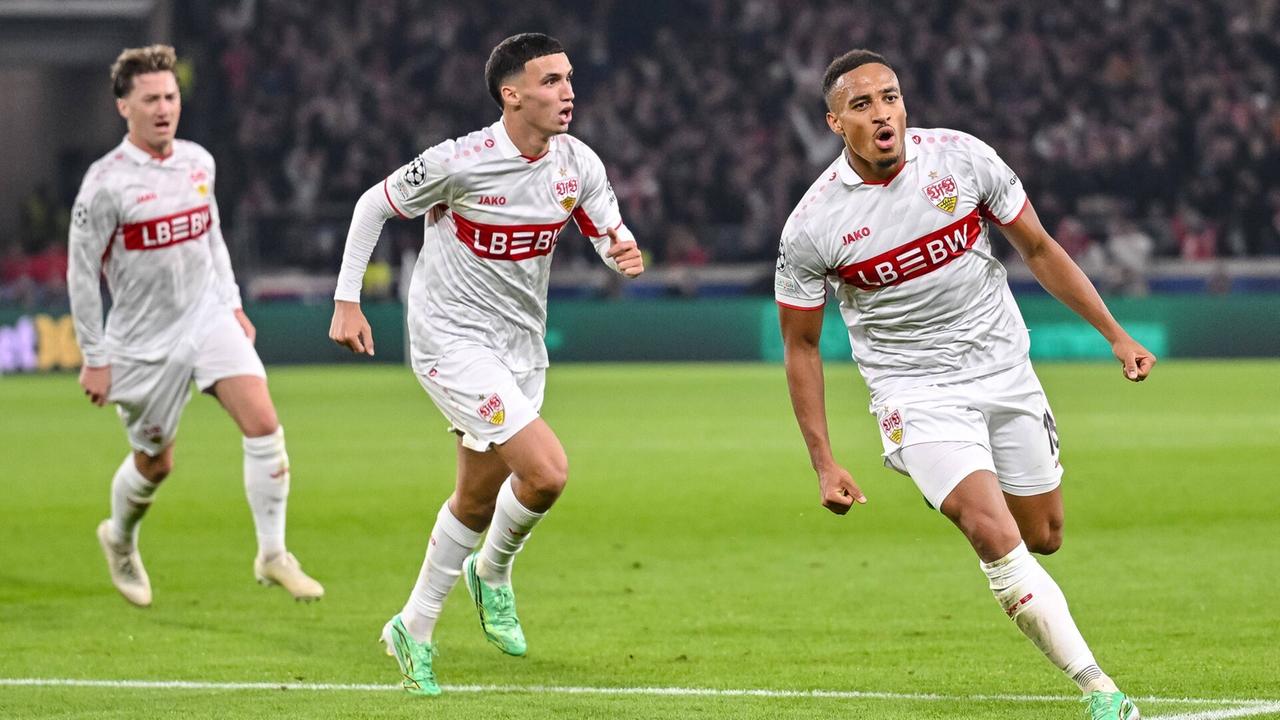
Jamie Leweling, the 25-year-old dynamic winger, has emerged as the primary protagonist in this recovery narrative. His performance against Atlético Madrid was not merely about the goal—a clever, deflected strike in the 36th minute—but about the technical maturity he displayed throughout the match. For a player who had struggled to find the back of the net in his previous nine competitive appearances this season, the goal was a watershed moment.
Chronology: From Summer Uncertainty to European Impact
The path to Leweling’s current form has been anything but linear. The summer of 2026 was a period of significant professional turbulence for the Nuremberg-born attacker. Having joined from Union Berlin in 2023, Leweling was expected to be a cornerstone of the Stuttgart attack this season. However, a delayed return to training following the World Cup, coupled with persistent physical ailments, stalled his momentum.
Behind the scenes, the situation was compounded by intense transfer speculation. As the summer window reached its climax, reports emerged linking Leweling to European heavyweights, including AS Roma and Everton. While a move never materialized, the psychological toll of such uncertainty is widely believed to have stifled his early-season output.
"There were things in his mind during the summer break and the transfer window that likely influenced his form," noted VfB Stuttgart’s Sporting Director, Fabian Wohlgemuth. This dip in performance did not go unnoticed; it ultimately led to his exclusion from the national team squad under manager Jürgen Klopp for the start of the Nations League.
Against Atlético Madrid, however, the "old" Leweling reappeared. Beyond his goal, his ability to execute complex technical maneuvers—specifically a deft back-heel touch to create space for his own shot—showcased a player who has regained his composure. He was a constant thorn in the side of the Madrid defense, utilizing his trademark blistering speed to stretch the pitch and create transitions that have been largely missing from Stuttgart’s game.
Supporting Data and Tactical Context
Stuttgart’s tactical profile under Sebastian Hoeneß relies heavily on high-intensity pressing and verticality. While the team has often dominated possession, they have suffered from a chronic lack of efficiency in the final third. The 0-1 defeat against Hamburger SV earlier this season served as a painful reminder of this lack of clinical edge.
Key Performance Indicators:
- Efficiency: Stuttgart’s conversion rate has been significantly lower than their expected goals (xG) would suggest.
- The Leweling Factor: In the Champions League fixture, Leweling’s heat map showed increased activity in the half-spaces, providing a reliable outlet for midfielders to bypass high-pressing opponents.
- Squad Depth Crisis: The tactical setup for Friday’s match is hampered by a growing injury list. The loss of Josha Vagnoman—the 25-year-old right-back suffered a thigh strain during the Madrid clash—leaves a significant void. With other key players like Nikolas Nartey (muscular issues), Tiago Tomas, Justin Diehl, and Dan-Axel Zagadou (all undergoing rehabilitation) sidelined, Hoeneß will have to rely on the depth of his squad to maintain the momentum generated in midweek.
Official Responses: The Management Perspective
The sentiment from the Stuttgart leadership is one of cautious optimism. Sporting Director Fabian Wohlgemuth emphasized that the goal against Atlético was more than just a statistic; it was a psychological turning point.
"He is a player who puts in the hard yards—the long, taxing sprints that create space for others," Wohlgemuth said during Thursday’s press briefing. "When a player like that gets a goal, it’s a moment that provides a massive boost in confidence. We expect him to carry this into the next game, to be more aggressive in the box, and to take the initiative."
Manager Sebastian Hoeneß, known for his analytical approach, is expected to stick with the core of the team that faced Madrid. There is a firm belief within the club that if the intensity shown in the Champions League can be replicated against a vulnerable Mönchengladbach side, the results will follow.
Implications: The Road Ahead
The match against Borussia Mönchengladbach is not just another Friday night fixture; it is a crossroads.
1. The Bundesliga Table
Stuttgart currently sits in 13th place. A win could potentially vault them toward the mid-table pack, providing the necessary breathing room to refocus on their European aspirations. Conversely, another slip-up would place immense pressure on the coaching staff and could lead to a prolonged crisis of confidence.
2. The Personal Stakes for Leweling
For Jamie Leweling, this is an audition. With his contract running until June 2029, the club has invested heavily in his potential. By performing consistently against the lower-ranked teams, he can silence the remaining critics and prove that his performance against Atlético was the new standard, not an anomaly.
3. The "Gladbach" Factor
Borussia Mönchengladbach, coached by Stuttgart-native Alexander Blessin, arrives in a state of flux. They are currently winless and desperately seeking a result to stabilize their campaign. This desperation makes them dangerous, but it also provides Stuttgart with the perfect opportunity to exploit defensive vulnerabilities.
As the squad prepares for the kickoff, the atmosphere in Stuttgart is one of quiet determination. The team has shown they can go toe-to-toe with the giants of Europe; now, the challenge is to prove that they have the mental fortitude to navigate the domestic trenches. With a rejuvenated Leweling leading the charge, the fans at the Neckar are hopeful that the turnaround begins this Friday.
The stage is set. Whether this performance serves as the definitive turning point of the season remains to be seen, but for now, VfB Stuttgart has found the spark they so desperately needed.