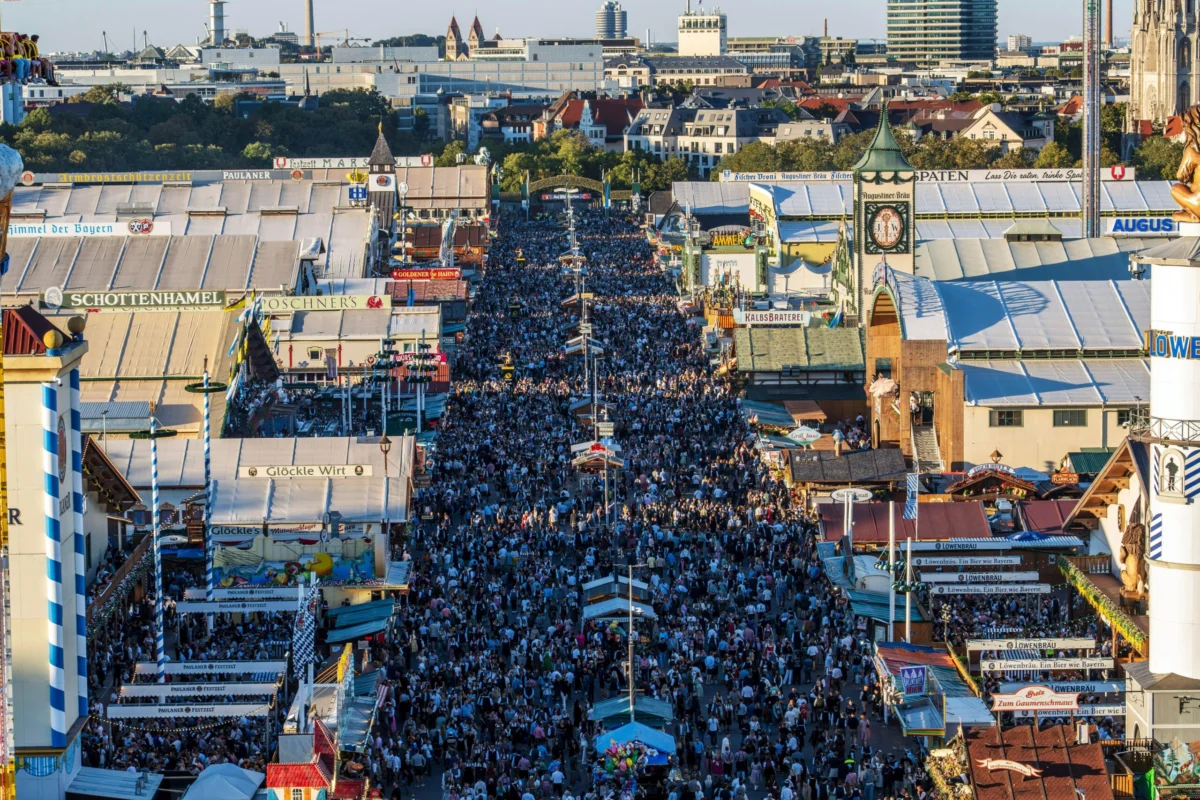
In a decision that preserves the soul of the world’s largest folk festival, the Bavarian Supreme Court has delivered a definitive ruling regarding the allocation of the prestigious Oktoberfest "Großzelte" (large tents). The verdict, handed down on Friday, provides legal clarity that the city of Munich may continue its long-standing, tradition-based system for awarding tent operating rights, effectively shielding the Wiesn from the requirement of open, EU-wide competitive tendering for the 2026 festival.
For Munich’s city administration, the 70-page ruling represents a resounding victory, affirming that the unique cultural fabric of the Oktoberfest does not fall under the strictures of European public procurement law.
The Legal Core: Why the Wiesn is Not a "Service Concession"
At the heart of the dispute was the legal classification of the contracts between the city and the tent operators. The plaintiff, Munich-based restaurateur Alexander Egger, had challenged the allocation process for the iconic Paulaner and Schottenhamel tents, arguing that these contracts constituted "service concessions." Under European Union law, if a contract is deemed a service concession, it must be subject to an open, transparent, and EU-wide public tender process to ensure fair competition.
However, the presiding senate of the Bavarian Supreme Court rejected this interpretation decisively. In its detailed reasoning, the court emphasized that the agreements between the city and the tent hosts do not impose a legally enforceable "duty to operate."
The court clarified that the hosts essentially participate in the Oktoberfest voluntarily. They are not under a contractual obligation to run the tents; rather, the city provides the "space and the possibilities"—the essential infrastructure and the framework for the event. Because the city does not exercise a degree of control that would imply a direct economic interest in the day-to-day operations of the tents, the court ruled that these arrangements do not meet the criteria for a public service concession.
Crucially, the court also declined the plaintiff’s request to refer the matter to the European Court of Justice (ECJ). By issuing a final ruling at the state level, the Bavarian Supreme Court has signaled that the matter is sufficiently settled under existing legal principles, providing the city with immediate legal certainty.
Chronology of a High-Stakes Dispute
The legal challenge represents the culmination of mounting pressure on the city’s traditional "Old Boy" style of tent allocation. For decades, Munich has awarded tent concessions based on a complex point system that heavily favors legacy, experience, and the preservation of traditional Bavarian hospitality.
- The Catalyst: Alexander Egger, a restaurateur seeking to enter the elite circle of Oktoberfest tent operators, initiated the challenge, arguing that the city’s opaque and entrenched system acted as a barrier to market entry for new, qualified candidates.
- Initial Filings: Egger specifically targeted the Paulaner and Schottenhamel tents, seeking to force an open, EU-wide tender for the 2026 festival, which he argued would be more equitable and compliant with modern European competition standards.
- Lower Court Proceedings: The case worked its way through the lower Bavarian courts, with the city of Munich consistently defending its right to curate the festival to maintain its "unique character."
- The Friday Ruling: The Bavarian Supreme Court’s verdict serves as the final arbiter of this specific challenge. By upholding the city’s process, the court has effectively reset the status quo, allowing the city to proceed with its established allocation rules for the foreseeable future.
Implications: A Victory for "Gemütlichkeit" Over Bureaucracy
The implications of this ruling extend far beyond the legal nuances of procurement law. Had the court ruled in favor of the plaintiff, the Oktoberfest would have faced an existential shift. An EU-wide tender process would have likely prioritized the highest bidder or the operator with the most efficient logistical plan, potentially displacing families who have run their tents for generations.
The Preservation of Cultural Identity
Munich’s city government has long argued that the Oktoberfest is not merely a commercial event, but a cultural institution. By keeping the selection process in the hands of the city, officials can ensure that operators remain committed to specific quality standards, traditional attire, regional beer providers, and the specific "Wiesn-style" atmosphere that draws millions of visitors annually.
Future Legal Hurdles
While the ruling is a major victory, it is not necessarily the end of the road. The plaintiff still retains the theoretical option of filing a constitutional complaint with the Federal Constitutional Court (Bundesverfassungsgericht). To succeed there, however, Egger would face a significantly higher bar: he would need to prove that his fundamental rights were violated during the Munich proceedings. Given that neither he nor his legal counsel—nor, notably, the city’s legal team—were present for the verdict, many observers suggest that this might mark the end of the litigation phase of this dispute.
Official Responses: A "Good Day for the Wiesn"
The reaction from municipal leadership was one of immediate relief and vindication. Munich’s Mayor, Dominik Krause (Green Party), issued a statement shortly after the ruling that underscored the emotional significance of the decision for the city.
"Today is a good day for the Wiesn and for Munich," Krause declared. "The court has confirmed our admission process as legally compliant. This fundamental decision permanently secures the unique character of the Wiesn as a Munich-Bavarian folk festival with over 200 years of tradition. The Wiesn remains the Wiesn—just as the people of Munich and guests from all over the world love it."
For the city administration, the ruling serves as a mandate to continue acting as the curator of the festival, ensuring that the commercial aspects of the event remain subservient to its cultural mission.
The Perspective of the Tent Hosts
Michael Schottenhamel, one of the most prominent figures in the industry, was present in the courtroom to hear the verdict. His reaction was pragmatic and composed.
"I expected this decision," Schottenhamel remarked, noting that the judgment was "brief, concise, and clearly reasoned." He expressed a sense of professional satisfaction, noting that it is "not a bad thing" that the matter was finally settled in court. "We now have the security of knowing that the city is doing it right," he added.
Crucially, the decision allows the Schottenhamel family—and others like them—to look toward the future with stability. Michael Schottenhamel immediately confirmed his family’s intention to apply for the 2027 festival, viewing the court’s decision as a green light for business as usual.
Economic and Structural Context
The Oktoberfest is an economic powerhouse, contributing hundreds of millions of euros to the Munich economy annually. The tent operators are at the core of this engine. While the city has maintained its traditional selection process, the internal requirements for these operators have become increasingly rigorous over the years.
Operators must adhere to strict price caps on beer, satisfy complex hygiene and safety regulations, and prove their dedication to the "Bavarian way of life." The city argues that this "non-commercial" selection criteria is precisely why the festival remains so popular. If the tent operators were chosen primarily by a tender process focused on economic output, critics fear the festival could lose the authentic, community-oriented spirit that differentiates it from other large-scale events globally.
What Comes Next?
With the legal uncertainty now largely removed, the city of Munich can focus on the operational preparations for the 2026 Oktoberfest. The decision provides a blueprint for how the city can continue to defend its unique regulatory model in the face of modern, standardized European procurement laws.
As for the plaintiff and those who seek to modernize the selection process, the path forward remains narrow. The court has effectively drawn a line in the sand, separating the administrative nature of public procurement from the cultural heritage of folk festivals. For now, the "Wiesn" is safe from the threat of broad, market-driven privatization, ensuring that the traditions of the past remain the foundation for the festivals of the future.
In a world where globalization often homogenizes local culture, the Bavarian Supreme Court’s decision is a rare instance of a legal system explicitly protecting the "traditional character" of an event against the encroachment of standardized market competition. For the millions of visitors who flock to the Theresienwiese every autumn, the verdict means that when they return in 2026, the Oktoberfest will look, feel, and taste exactly as it always has.