
In an era where the smartphone has become the primary gateway to personal finance, healthcare, and private communication, the threat landscape has shifted dramatically. Digital criminals are no longer relying solely on clumsy "Nigerian Prince" emails or obvious spam. Instead, they are deploying sophisticated, AI-enhanced tactics that blur the line between legitimate contact and malicious intrusion. With millions of users worldwide falling victim to increasingly complex scams, Google has announced a significant expansion of its security infrastructure for Android, aiming to turn the tide against cybercriminals.
Main Facts: The New Frontier of Android Protection
Google’s latest security initiative is a direct response to the weaponization of artificial intelligence by bad actors. According to the company’s recent disclosures, its AI-driven fraud detection systems are already successfully identifying and flagging over five million suspicious calls and messages every month.
To combat the evolving nature of these threats, Google is deploying a multi-layered defense strategy:
- Enhanced Fraud Detection in Google Messages: By leveraging Gemini models in the cloud, Android will now analyze complex text patterns from unknown senders in real-time.
- On-Device Security: Gemini Nano, Google’s smaller, privacy-focused AI model, will scan URLs directly on the device, providing instant protection against phishing links that have not yet been logged in global threat databases.
- Screen-Sharing and Call-Forwarding Safeguards: New restrictions prevent malicious apps from hijacking call-forwarding settings and automatically mask sensitive information during screen-sharing sessions across Chrome and Android Webview.
- Real-Time Bank Verification: Android will soon feature a system that verifies the authenticity of incoming calls claiming to be from financial institutions, cross-referencing them with data from partner banks to prevent Caller-ID spoofing.
The Chronology of Escalating Cyber Threats
The evolution of mobile fraud has been a steady march toward greater psychological manipulation. Historically, mobile security focused on malware—malicious apps designed to harvest data or lock devices. However, the rise of "Social Engineering" has changed the game.
- The Era of Spam (2010–2015): Fraud was largely volume-based. Attackers sent thousands of generic, poorly written emails and SMS messages hoping for a small percentage of users to click a link.
- The Rise of Phishing and Smishing (2016–2020): Attackers began to tailor messages, using leaked data to make communication appear more personal. This period saw the birth of "smishing" (SMS phishing), which exploited the high open rates of text messages compared to emails.
- The AI and Deepfake Era (2021–Present): With the democratization of generative AI, scammers can now clone voices, generate perfect human-sounding dialogue, and create highly convincing phishing sites in seconds. The current trend involves building "long-game" trust, where scammers interact with victims over days or weeks before making their move.
Google’s decision to integrate Gemini models into the Android ecosystem reflects a realization that traditional, database-driven security—which only blocks "known bad" entities—is no longer sufficient to stop "zero-day" social engineering attacks.
Supporting Data: The Scale of the Problem
The anxiety surrounding digital security is not merely anecdotal; it is backed by significant empirical evidence. A joint study conducted by Google and YouGov across the United States, Canada, and Australia reveals a paradox in modern digital life: while a majority of users report that they have never personally been a victim of a major mobile scam, 40 percent of respondents expressed deep, ongoing concern about the possibility.
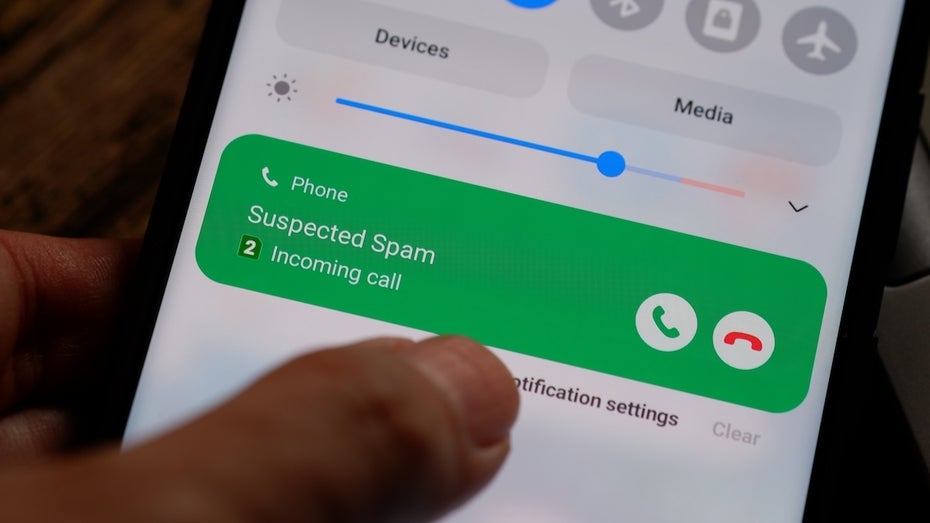
This "fear factor" is justified by the data. The financial consequences of falling for a sophisticated phishing attack can be catastrophic, leading to identity theft and drained bank accounts.
The effectiveness of Google’s current measures is best illustrated by its pilot programs. Since June, Android’s collaboration with major financial institutions, specifically Banco do Brasil and Itaú Unibanco, has resulted in the interception and blocking of over three million fraudulent calls. These calls were not simple spam; they were sophisticated "vishing" (voice phishing) attempts where attackers used Caller-ID spoofing to impersonate bank employees. By validating the call’s origin directly with the bank’s internal systems, Android was able to cut the connection before the victim could be manipulated into revealing sensitive credentials.
Official Responses and Technical Implementation
Google’s approach to privacy is a central component of this rollout. As the company integrates Gemini into its security stack, it has faced inevitable scrutiny regarding user data.
"We are committed to a privacy-first approach," Google stated in its security briefing. The company emphasizes that when the cloud-based fraud detection system analyzes a suspicious text, the processing occurs within a secure environment known as "Private AI Compute." This ensures that the contents of the messages are encrypted and remain inaccessible to human reviewers or unauthorized systems.
For the on-device component, Gemini Nano acts as a local gatekeeper. By checking web links locally, the phone can provide protection without sending user data to the cloud at all, effectively creating a "zero-knowledge" security layer for the user.
Furthermore, the expansion of protection for screen-sharing is a critical update. Many scams involve the victim being coerced into sharing their screen under the guise of "technical support." Once the screen is shared, the scammer can see banking apps, login codes, and personal messages. By automatically hiding sensitive data fields within Chrome and Webview during these sessions, Android creates a "failsafe" that works even if the user has been manipulated into opening the screen-sharing link.
Implications for the Future of Mobile Security
The implications of this move by Google are far-reaching for both the industry and the end-user.
For the Industry
Google is essentially setting a new standard for smartphone operating systems. By treating AI-driven fraud detection as a core OS feature rather than a third-party app requirement, they are pressuring other players—including Apple and alternative Android OEMs—to accelerate their own security roadmaps. The success of the bank-partner integration suggests that the future of fraud prevention lies in the "inter-connectivity" between service providers (banks) and the operating system.
For the Consumer
The "human element" remains the weakest link in any security chain. No amount of AI can fully prevent a user from voluntarily handing over their password if they are sufficiently frightened or misled. However, by providing real-time warnings and automated blocking, Google is effectively adding a "cooling-off" period to scams. When a user receives a pop-up alert warning that a link is suspicious or that an incoming call hasn’t been verified by their bank, it provides a crucial moment of friction that can disrupt the attacker’s psychological control.
The Long-Term Vision
As we look toward the future, the integration of Large Language Models (LLMs) into the background of our devices will likely become the norm for security. We are moving toward a "context-aware" security model where the device understands not just the source of a message, but the intent. If a message sounds like a threat, contains a sense of artificial urgency, or mimics the patterns of known phishing campaigns, the device will be able to quarantine it before the user even sees the notification.
Conclusion
The battle against digital fraud is an arms race. As protective measures become more sophisticated, the tools used by criminals evolve in parallel. Google’s expansion of its Android security suite is a bold admission that the mobile environment has become a primary target for sophisticated, AI-driven crime.
By leveraging the power of Gemini, protecting sensitive data during screen-sharing, and partnering directly with financial institutions to verify caller identities, Google is providing users with a robust digital shield. While no system can guarantee 100% protection, these advancements represent a major leap forward in ensuring that our smartphones remain tools for empowerment rather than vulnerabilities for exploitation. The focus now shifts to how quickly these features can be rolled out to the broader ecosystem of devices, ensuring that every Android user, regardless of their hardware, has access to these critical, life-protecting tools.