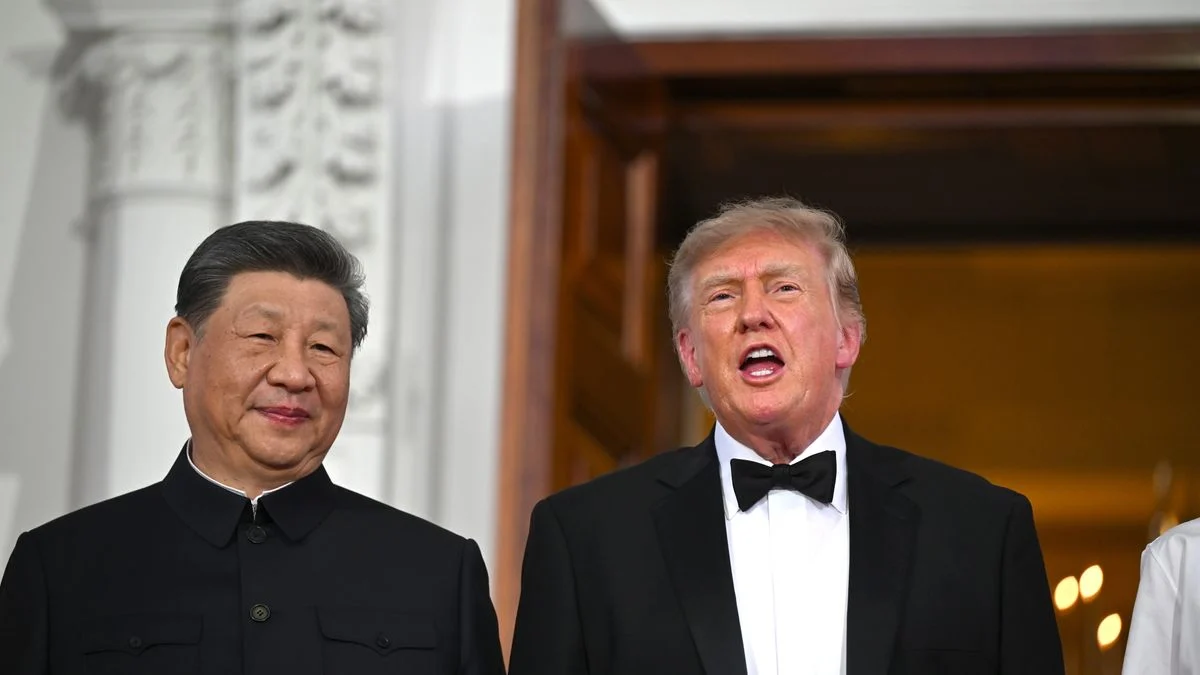
In a move that signals a significant shift in the geopolitical landscape of technology, the United States and China have formally agreed to establish a dedicated, direct communication channel aimed at managing the risks and opportunities associated with advanced artificial intelligence. The agreement, announced by the White House following a three-day state visit by Chinese President Xi Jinping, marks a pivotal moment in the global race for technological supremacy.
Both nations have committed to a bilateral framework officially designated as the "US-Chinese Dialogue on Superintelligence." This initiative represents an unprecedented attempt by the world’s two leading AI powers to prevent technical or strategic misunderstandings that could lead to unintended escalation.
The Main Facts: A Shift in Terminology and Strategy
The core of the agreement centers on the creation of a crisis-management hotline and a regular forum for high-level officials to discuss the trajectory of machine learning and autonomous systems. Notably, the Biden-Trump administration has moved to adopt the term "Superintelligence" as the official nomenclature for advanced AI, a branding shift pushed heavily by President Donald Trump.
During the UN General Assembly earlier this week, President Trump argued that the term "artificial intelligence" is insufficient to capture the gravity of the technology. "Superintelligence sounds much better, and it is far more accurate," Trump remarked. While this rebranding may seem cosmetic, it reflects a broader policy shift within the White House: a move away from the heavy-handed regulatory frameworks proposed by international bodies, favoring instead a more laissez-faire approach that prioritizes American innovation.
Despite the collaborative tone of the new dialogue, the two nations remain at odds regarding the necessity of a global regulatory regime. President Trump has explicitly stated his opposition to international constraints, suggesting that he wants the current landscape to remain largely untouched by external oversight—a stance he claims is mirrored by Beijing’s current domestic priorities.
A Chronology of the Diplomatic Breakthrough
The path to this agreement was not immediate; it followed months of escalating rhetoric and international pressure.
- Early 2024: UN Secretary-General António Guterres publicly urged the U.S. and China to initiate a formal dialogue. Drawing parallels to the "hotline" established between Washington and Moscow during the height of the Cold War, Guterres emphasized that the absence of communication between the two tech giants posed an existential risk to global stability.
- September 2024 (UN General Assembly): President Trump signals a preference for the term "Superintelligence," dismissing calls for global AI governance and insisting that the U.S. would lead on its own terms.
- October 2024 (The State Visit): President Xi Jinping arrives in Washington for a three-day summit. Throughout the discussions, the focus shifts from trade friction to the "responsible development" of AI.
- Friday, October 2024: The White House confirms the establishment of the dialogue, alongside a series of secondary economic agreements, including coal export contracts and trade facilitation for "non-sensitive" goods.
Supporting Data and Economic Context
The dialogue on Superintelligence did not occur in a vacuum; it was part of a broader "package deal" designed to stabilize the volatile economic relationship between the two superpowers. As part of the broader diplomatic thaw, the White House announced several key economic benchmarks:
- Energy Exports: China has agreed to import at least ten million tons of coal from the United States during the 2027 and 2028 fiscal years. This move is viewed as a strategic win for the U.S. energy sector and a signal of Beijing’s desire to maintain a balanced trade relationship.
- Customs and Trade: Both nations have pledged to streamline customs procedures for "non-sensitive" goods, effectively loosening some of the friction that had hampered trade throughout the previous year.
- Diplomatic Soft Power: In a symbolic gesture reminiscent of "Panda Diplomacy," the administration confirmed that a U.S. zoo is slated to receive two giant pandas from China, a traditional sign of improving diplomatic relations.
While Beijing has yet to issue a formal response confirming the specifics of the trade agreements, the White House characterized the summit as "very positive for both countries."
Divergent Philosophies: The "Human Control" Debate
While the two nations have agreed to talk, the fundamental philosophies governing their AI development remain distinct. President Xi Jinping, in recent statements, has emphasized that while the U.S. and China must lead the world in development, they share a joint "responsibility to develop and manage AI for the benefit of all humanity." Crucially, Xi stressed that the development of such systems must remain under firm human control.
President Trump’s position remains more fluid. While he has agreed to the dialogue, his skepticism toward international regulation suggests that the U.S. intends to maintain a competitive advantage, fearing that restrictive global rules would allow adversaries to leapfrog American progress. This creates a fascinating tension: both sides agree that communication is necessary to prevent a disaster, but they differ significantly on whether that communication should eventually lead to a binding international treaty or simply serve as a mechanism to manage competitive friction.
Implications for the Future of Technology
The establishment of this communication channel is likely to have profound implications for the global tech sector.
1. Market Certainty
For Silicon Valley and the Chinese tech hubs of Shenzhen and Beijing, this agreement provides a necessary floor for stability. By creating a mechanism to discuss "Superintelligence," the two governments are signaling that they intend to avoid a total decoupling of their technological ecosystems.
2. The Global Regulatory Vacuum
With the U.S. and China seemingly aligned on a preference for flexible, national-level regulation rather than a strict UN-led treaty, smaller nations may find themselves in an increasingly difficult position. Countries in the European Union, which have pushed for the "AI Act," may find their influence waning as the two dominant powers pursue a bilateral framework that suits their specific industrial ambitions.
3. The Cold War Parallel
The comparison to the Washington-Moscow hotline is apt. During the Cold War, the primary threat was nuclear miscalculation. Today, the threat is algorithmic. The risk of an autonomous system triggering a conflict—whether in a financial market or a military theater—is the primary concern driving this diplomatic effort. By agreeing to a "Superintelligence" dialogue, both nations are admitting that the technology has moved beyond the point where it can be treated as a purely domestic commodity.
Conclusion: A Delicate Balancing Act
As the world looks toward the upcoming APEC summit in Shenzhen and the G20 meeting in Miami, the focus will remain on whether this newly minted dialogue can endure the inevitable pressures of domestic politics and ongoing strategic competition.
President Trump and President Xi have set the stage for a new kind of "Great Power" management. Whether this framework results in meaningful safety protocols or merely serves as a high-level diplomatic theater remains to be seen. However, by formalizing the conversation around "Superintelligence," Washington and Beijing have acknowledged the most important reality of the 21st century: the future of global security is now inextricably linked to the code written in their respective labs. For now, the world watches as the two most powerful nations on Earth attempt to steer the most transformative technology in history without crashing the system.