As the global geopolitical landscape shifts beneath the weight of rapid technological disruption, the United States and China have initiated a critical series of high-level discussions aimed at establishing guardrails for the most transformative technology of the 21st century: Artificial Intelligence.
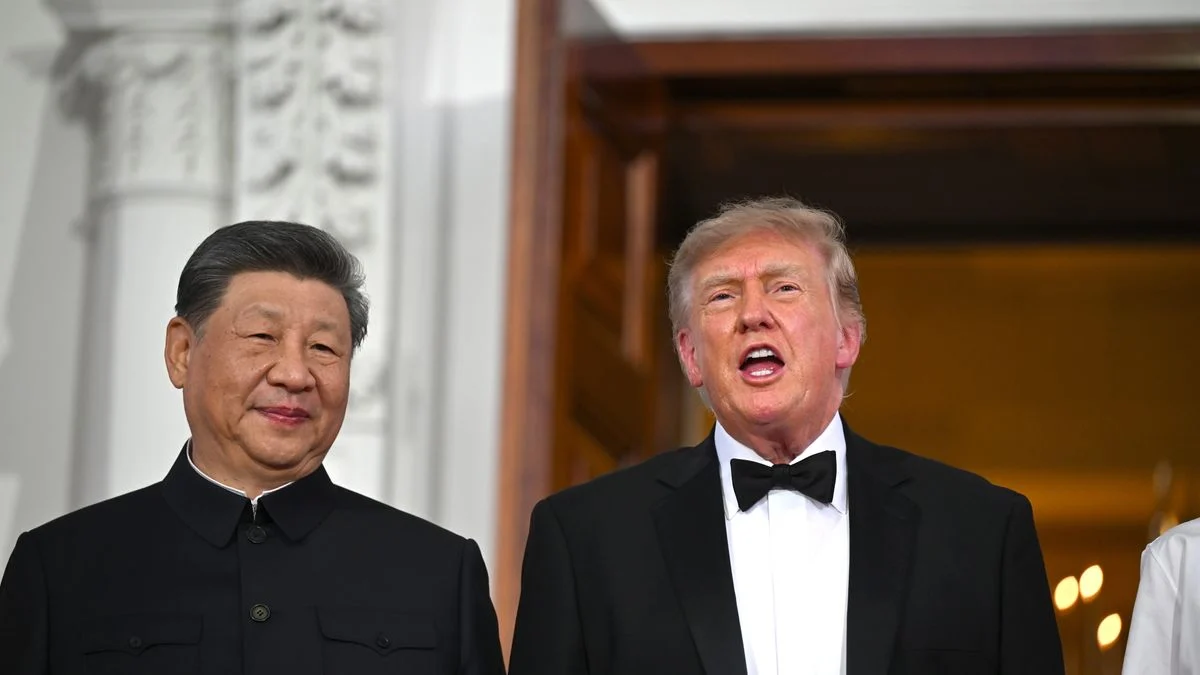
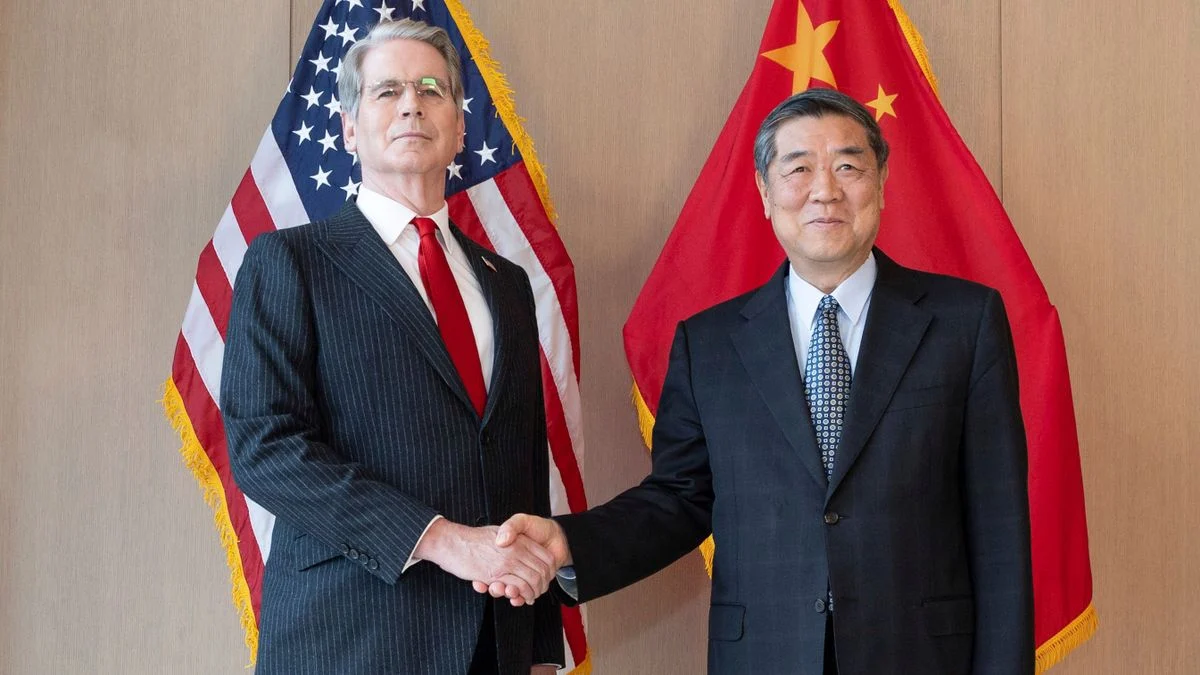
With a landmark summit between U.S. President Donald Trump and Chinese President Xi Jinping scheduled for this Thursday in Washington, top-tier delegations from both nations convened in New York this past Sunday. The preparatory talks, which included U.S. Treasury Secretary Scott Bessent, U.S. Trade Representative Jamieson Greer, and Chinese Vice Premier He Lifeng, signify a tentative, yet momentous, pivot toward managing the systemic risks posed by the ongoing AI arms race.
The Core Objectives: Transcending the Competitive Divide
The primary mandate of the New York meeting was to lay the groundwork for formal agreements to be signed by the heads of state. Discussions centered on three pillars of friction: the regulation and safety of artificial intelligence, the stabilization of trade tariffs, and the management of critical mineral supply chains essential for high-end hardware production.
Treasury Secretary Scott Bessent, speaking after the meetings, characterized the dialogue as a shift from opacity to transparency. "It is vital that the relationship between the world’s number one and number two AI powers moves away from ambiguity," Bessent remarked. He confirmed that the U.S. has formally proposed a new reporting mechanism for AI-related incidents that could threaten national security. The goal, according to the administration, is to develop a "shared vision" regarding the potential threats posed by autonomous systems, ensuring that both nations have a baseline understanding of how to prevent catastrophic failures or unintended escalations.
Chronology of the Diplomatic Detente
The road to the current dialogue has been paved with years of escalating restrictions and rhetorical posturing. However, the current momentum suggests a recognition that the stakes of "unregulated competition" have become too high for either side to ignore.
- Mid-2024 to Early 2025: Tensions reached a boiling point as the U.S. tightened export controls on advanced AI-capable chips, prompting accusations from Beijing that Washington was attempting to cement a permanent technological monopoly.
- Summer 2025: Increased internal focus in both capitals on the existential risks of "Frontier AI." Experts from both sides began quiet, back-channel discussions regarding the risks of autonomous weapons and the potential for AI to disrupt financial market stability.
- September 21, 2026 (Sunday): High-level delegation meeting in New York. Treasury Secretary Bessent and Vice Premier He Lifeng lead negotiations to finalize an agenda for the upcoming presidential summit.
- September 24, 2026 (Upcoming Thursday): Scheduled Presidential Summit in Washington, D.C., expected to feature a high-profile state banquet attended by the titans of the tech industry.
The View from Beijing: A Constructive Path Forward
The Chinese state-run news agency Xinhua provided a characteristically measured account of the New York proceedings. While withholding specific details regarding the proposed reporting mechanisms, the agency described the talks as "candid, detailed, and constructive."
By acknowledging the "constructive" nature of the dialogue, Beijing is signaling a willingness to engage in a formal security framework, provided that the U.S. does not use such frameworks as a Trojan horse for further economic containment. For China, the priority remains protecting its domestic industrial growth, which has been hampered by restricted access to the global semiconductor supply chain.
Expert Analysis: A Necessary Evolution of Power
George Chen, a digital policy expert at The Asia Group, views the continuation of this dialogue as a milestone of significant importance. "The fact that both sides have agreed to sustain this channel is the most critical takeaway," Chen observed. He anticipates that future rounds of negotiation will expand into more sensitive domains, including the integration of AI into military command-and-control structures, the establishment of global safety standards, and the joint defense of critical infrastructure against cross-border cyberattacks.
However, the path forward is fraught with systemic contradictions. Sun Chenghao, a Senior Fellow at the Center for International Security and Strategy (CISS) at Tsinghua University, argues that the security debate should not be conflated entirely with geopolitical competition. "China is increasingly attentive to the dangers of losing control over AI, the potential for malicious use, and the threats posed by autonomous agents," Sun notes. He suggests that there is a "significant space for cooperation" that exists independent of the broader struggle for technological hegemony.
The Silicon Banquet: Tech Leaders at the Table
The stakes of this summit are underscored by the guest list for the accompanying state banquet in Washington. Reports from Bloomberg confirm that the dinner will serve as a de facto summit for the leaders of the global AI ecosystem. Attendees are expected to include:
- Satya Nadella (Microsoft): Representing the integration of AI into enterprise and cloud infrastructure.
- Tim Cook (Apple): Focusing on the consumer-facing security and privacy implications of edge-AI.
- Jensen Huang (Nvidia): The architect of the hardware infrastructure that makes current AI progress possible.
- Sam Altman (OpenAI): A central figure in the debate over "Alignment" and the long-term safety of Large Language Models.
The presence of these individuals highlights the reality that, while governments negotiate the policy, it is the private sector that holds the keys to the implementation of the technology. The input of these CEOs will be essential in determining the feasibility of any "reporting mechanism" proposed by the U.S. government.
The Paradox of Competition
Despite the diplomatic warmth of the recent meetings, the fundamental competitive logic of the two nations remains unchanged. President Donald Trump has made the pursuit of AI dominance a centerpiece of his administration’s economic policy, frequently stating, "Whoever wins in AI, wins."
This creates a structural paradox: both countries fear that excessive regulation could stifle their own innovation, yet both recognize that a lack of cooperation could lead to a digital "tragedy of the commons," where the unchecked advancement of AI results in collective instability.
Washington fears that Beijing’s state-led approach to AI development could yield rapid, non-transparent breakthroughs that bypass safety guardrails. Conversely, Beijing fears that Washington’s export controls and "security partnerships" are designed to create a walled garden that permanently stunts Chinese progress.
Implications: The Search for a "Coexistence" Framework
As the Thursday summit approaches, the international community is watching to see if these high-level discussions will produce anything beyond platitudes. The real test will be whether the two nations can agree on a "red line" for AI development.
If a formal agreement is reached, it could lead to:
- Transparency Protocols: Standardized procedures for disclosing vulnerabilities in foundational AI models.
- Hardware Guardrails: An agreement on the flow of chips that, while restricting military-grade silicon, allows for the continued growth of civilian AI infrastructure.
- Cyber-Norms: A non-aggression pact regarding the use of AI-driven tools to attack the other nation’s critical infrastructure, such as power grids, financial exchanges, and communication networks.
Conclusion
The dialogue between Washington and Beijing represents a fragile but essential experiment in "Silicon Diplomacy." In an era where technological capability is the ultimate arbiter of power, the ability to negotiate the terms of that power is a skill that both nations are currently forced to learn.
While the competitive drive for supremacy remains the dominant force in the U.S.-China relationship, the recognition that AI poses risks—ranging from accidental nuclear escalation to the collapse of information integrity—has forced both sides to the table. Whether this leads to a new era of stable cooperation or merely a more managed version of conflict will depend on the decisions made by President Trump and President Xi in the coming days. The world is waiting, not just for the outcome of the summit, but for the realization that in the age of intelligent machines, the most sophisticated strategy is the one that avoids total systemic failure.