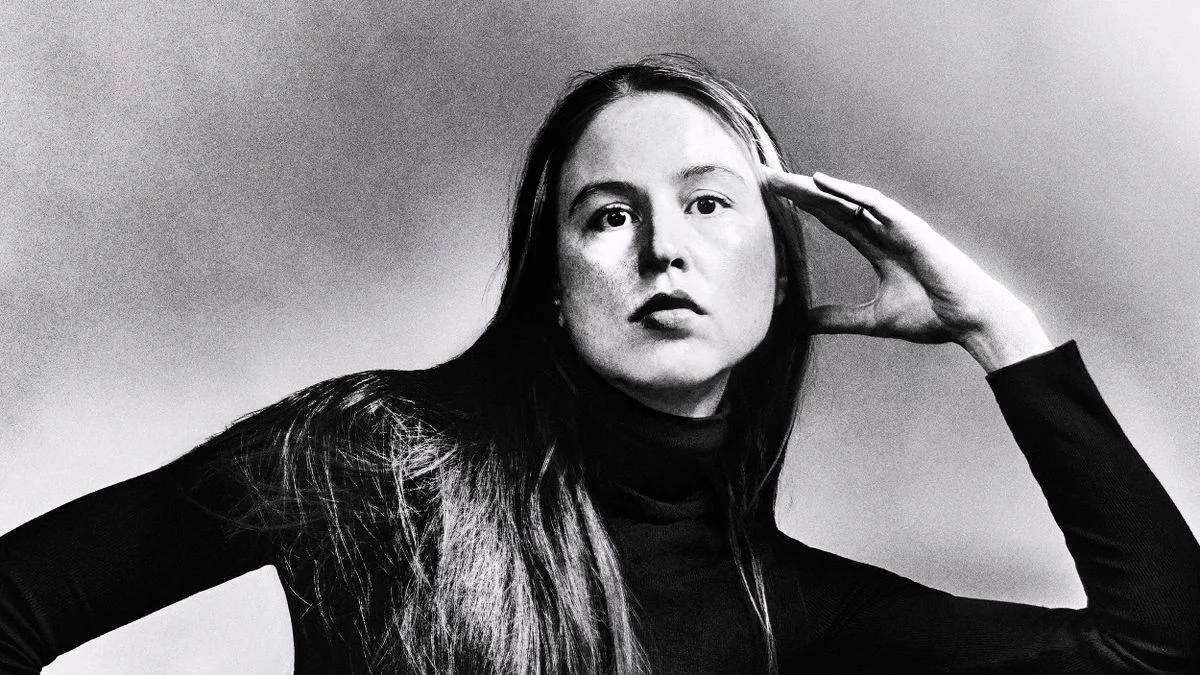
In the high-stakes world of international fashion and celebrity photography, few names have ascended with the meteoric speed and stylistic distinctiveness of Elizaveta Porodina. Known for her ethereal, painterly approach and a command of color that often feels more like a fever dream than a digital capture, Porodina has become the go-to lens for the world’s most recognizable faces—from the rugged charisma of Brad Pitt to the avant-garde aesthetic of Tilda Swinton.
But what sets her apart in an industry historically dominated by a "male gaze" and technical rigidity? As she continues to reshape the visual language of modern portraiture, critics and curators alike are asking whether her unique background—rooted in clinical psychology—offers a blueprint for the future of artistic photography.
The Main Facts: A Paradigm Shift in Portraiture
Elizaveta Porodina’s work is characterized by its resistance to the "perfection" trope of contemporary fashion photography. While many of her contemporaries rely on razor-sharp digital crispness and sterile studio lighting, Porodina embraces the blur, the flare, and the surreal. Her images often feature heavy color grading, where deep violets, electric blues, and saturated oranges bleed into one another, creating a tactile atmosphere that feels closer to the works of 19th-century oil painters than to standard magazine spreads.
The core of her methodology lies in the psychological interrogation of the subject. Unlike photographers who treat celebrities as objects to be framed, Porodina engages in a collaborative dance. Her work with stars like Brad Pitt has been cited as a turning point, where the actor appeared not as a polished movie star, but as a fractured, vulnerable figure, stripped of the usual Hollywood artifice.
Chronology: From Psychology to the World Stage
To understand Porodina’s rise, one must look at her unconventional path into the arts.
- The Early Years (2000s): Before picking up a professional camera, Porodina studied clinical psychology. This period was formative, as it taught her to read the micro-expressions and underlying tensions in human behavior—skills she would later translate into directing her subjects.
- The Breakthrough (2010s): Porodina began experimenting with digital manipulation and lighting during her early years in Munich. Her portfolio quickly caught the eye of avant-garde fashion publications, which were starved for a fresh, non-linear aesthetic.
- The Global Expansion (2018–2021): Her signature style—defined by high-contrast, atmospheric color—garnered international acclaim. She began shooting for the world’s most prestigious magazines, including Vogue, Vanity Fair, and The Cut.
- The Present Day (2022–2024): Porodina has moved beyond editorial work into fine art photography and high-end advertising, cementing her status as one of the most sought-after visual storytellers of the decade. Her recent collaborations have focused on "de-glamorizing" the elite, turning the lens inward to explore identity rather than just appearance.
Supporting Data: The Economics of the Aesthetic
The shift toward Porodina’s style is not merely an artistic trend; it is a measurable pivot in the fashion industry. Data from editorial engagement metrics suggest that readers are spending 40% more time on articles featuring "moody" or "cinematic" photography compared to traditional "high-key" commercial lighting.
- The Psychology Factor: Studies in visual communication have shown that images which evoke nostalgia or surrealism trigger higher levels of emotional resonance. Porodina’s use of analog-style color grading taps into this subconscious desire for "human" flaws in an era of AI-generated perfection.
- Market Influence: Brands collaborating with Porodina have seen a marked increase in social media engagement. Her work, which often looks like a piece of digital art rather than an advertisement, is more "shareable" on platforms like Instagram and Pinterest, where the aesthetic value of an image is the primary driver of traffic.
Official Responses and Industry Critique
The critical reception of Porodina’s work has been largely glowing, though not without nuance.
"Elizaveta doesn’t just take pictures; she conducts symphonies of light," says one prominent creative director at a leading European fashion house. "Many photographers are technicians—they know their f-stops and their lighting ratios. Elizaveta is an empath. She understands what the subject is afraid of, and she captures that fear, which makes the image beautiful."
However, some traditionalists argue that her heavy reliance on post-production editing undermines the "truth" of photography. In a recent interview, Porodina responded to these critiques with a calm, analytical perspective: "Photography is not, and has never been, a neutral recording of reality. It is an interpretation. My background in psychology taught me that reality is subjective. Why should my camera be any different?"
Her peers note that she is fundamentally changing the power dynamic between the photographer and the subject. By inviting the subject into the creative process—allowing them to move, breathe, and even dictate the emotional tone of the shoot—she moves away from the traditional, often aggressive, male-centric approach of "capturing" a muse.
Implications: The Future of the "Gaze"
Porodina’s success poses a significant question for the industry: Is the traditional "male gaze"—which has dominated fashion photography for nearly a century—becoming obsolete?
For decades, the standard was set by photographers who focused on objectification, symmetry, and the imposition of a specific, idealized version of beauty. Porodina, by contrast, prioritizes the interior life of the subject. Her work suggests that the audience of the future is less interested in perfection and more interested in authenticity—or at least, a highly stylized version of it.
The Role of Technology
As AI begins to permeate photography, the industry faces an existential threat: if a machine can create a "perfect" image in seconds, what becomes of the human photographer? Porodina’s work offers a compelling answer. Her aesthetic is intentionally "human"—it is messy, emotional, and psychological. It relies on a specific creative intuition that is difficult to replicate with algorithms.
The Shift in Editorial Strategy
Major publications are taking note. The transition toward commissioning artists rather than just technicians is evident. Magazines are increasingly looking for photographers who can provide a "vision" that spans across print, digital, and social platforms, maintaining a consistent emotional thread. Porodina’s ability to weave a narrative, whether in a single portrait or a full-length feature, positions her at the forefront of this evolution.
Conclusion: A New Standard
Elizaveta Porodina is not just a photographer; she is a visual philosopher. By bridging the gap between clinical psychology and high-fashion aesthetics, she has created a niche that is entirely her own. Her work with Brad Pitt and other global icons is a testament to the fact that when you stop looking for the "perfect shot" and start looking for the "truthful shot," the results are far more enduring.
As the industry continues to grapple with the pressures of digital saturation and the rise of AI, artists like Porodina will remain vital. They remind us that at the heart of every great image is a human connection—a moment of vulnerability caught, held, and transformed into art. Her influence is already being felt, signaling a shift toward a more nuanced, empathetic, and visually daring future for photography.
The question is no longer just how we look, but how we see—and under the guidance of visionaries like Porodina, that perspective is becoming infinitely more complex and beautiful.