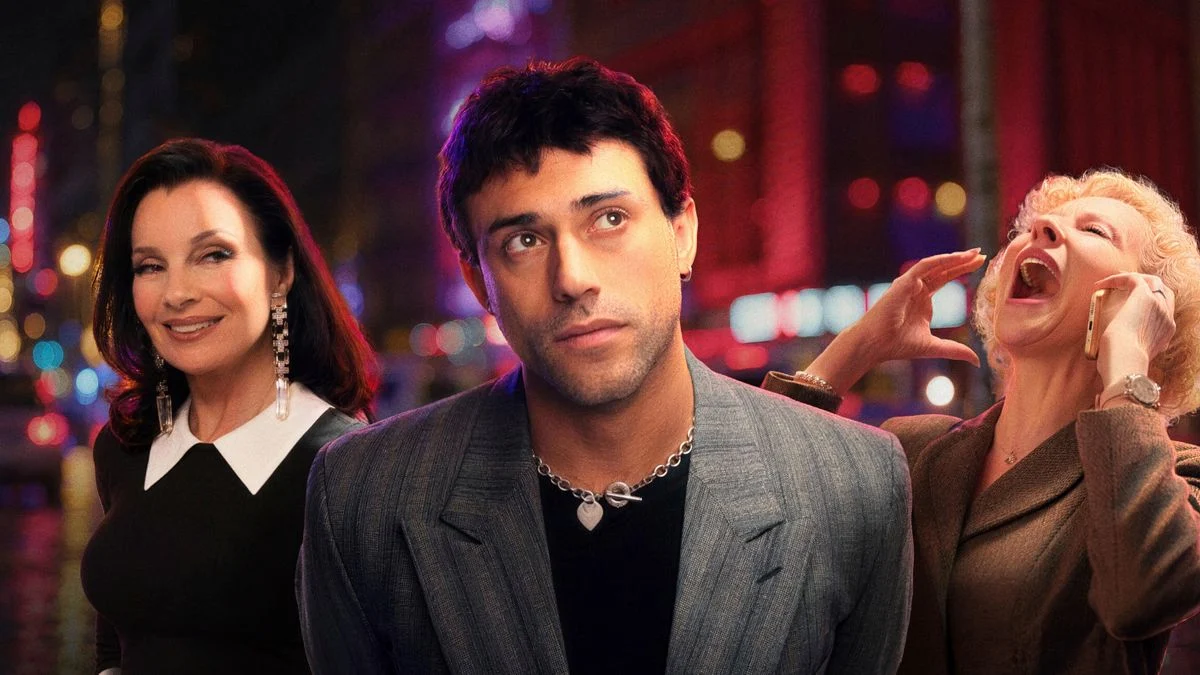
By International News Desk
Updated: September 15, 2026
The 2026 Emmy Awards, held in the heart of Los Angeles, served as a resounding testament to the shifting landscape of prestige television. In a ceremony marked by record-breaking triumphs and poignant farewells, the horror-comedy sensation Widow’s Bay and the perennial medical powerhouse The Pitt emerged as the undisputed titans of the industry. As the television academy celebrated the best of the past year, the results highlighted a clear preference for both high-concept genre storytelling and deeply grounded, humanistic dramas.
A Night of Records: The Phenomenon of "Widow’s Bay"
The headline of the evening was undeniably the sweeping success of the Apple TV+ horror-comedy Widow’s Bay. Entering the gala with an ambitious 19 nominations, the series converted its momentum into an unprecedented 14 Emmy wins—a figure that shatters all previous records for the Comedy category in the history of the awards.
Set on a fictional, fog-drenched island off the Atlantic coast of the United States, Widow’s Bay has captivated audiences and critics alike. The series follows the desperate attempts of the island’s mayor to revitalize the local economy and improve the image of his declining, salt-worn home. However, the narrative takes a dark, satirical turn as the community finds itself divided between modernization and the deep-seated, often terrifying superstitions of the long-term residents, many of whom are convinced that the island is cursed.
Industry analysts suggest that the show’s success lies in its ability to balance sharp, biting social satire with genuine supernatural dread. By securing the top prize in the Comedy category, Widow’s Bay managed to topple heavyweights such as Abbott Elementary, The Bear: King of the Kitchen, Hacks, and Only Murders in the Building. Its victory signifies a shift in what voters consider "comedy," moving away from traditional sitcom structures toward darker, more atmospheric storytelling.
The Resilience of "The Pitt": A Masterclass in Drama
While the comedy category saw a historic takeover, the drama field remained under the steady command of The Pitt. For the second consecutive year, the visceral, real-time hospital drama took home the top honor for Best Drama Series.
Set within the high-stakes, claustrophobic environment of an emergency room in Pittsburgh, The Pitt has been widely lauded for its technical precision and its unflinching look at the human condition. Unlike many modern dramas that rely on sprawling narrative arcs, The Pitt utilizes a "real-time" format, mirroring the frantic, unrelenting pace of medical professionals. The series, which streams on HBO Max, has earned acclaim for its commitment to humanistic storytelling, focusing on the intimate relationships between staff and patients rather than mere medical spectacle.
In securing the win, The Pitt fended off fierce competition from high-budget contenders like Pluribus – Happiness is Contagious and Diplomatic Relations. The back-to-back win solidifies the show’s legacy as one of the most significant medical dramas of the decade.
Matthew Rhys and the Night of Individual Triumphs
The individual acting categories provided some of the most memorable moments of the evening, led by the historic performance of Welsh actor Matthew Rhys. Rhys achieved an industry first, becoming the first actor in Emmy history to receive two major lead acting awards in a single night.
He was honored as Best Male Lead in a Comedy for his work in Widow’s Bay, and simultaneously claimed the trophy for his haunting performance in the Netflix miniseries The Beast in Me. The dual win highlights the incredible range of the actor, who transitioned seamlessly from the comedic, offbeat tone of the island horror series to the dark, psychological intensity of the miniseries.
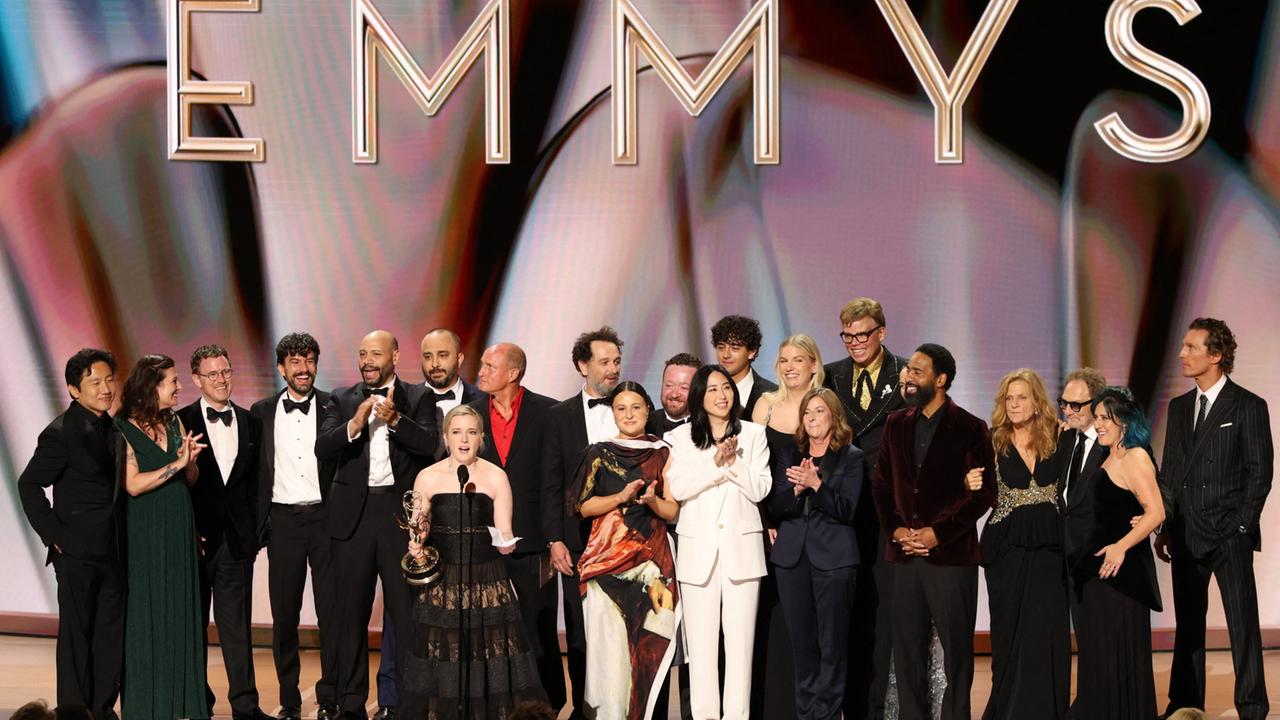
In the realm of limited series, DTF St. Louis took home the coveted prize for Best Miniseries, capping off a competitive field and proving that unconventional, character-driven projects continue to thrive on streaming platforms.
A Changing Guard: Rhea Seehorn and Jean Smart
The evening also saw long-overdue recognition for industry veterans. Rhea Seehorn, a perennial favorite among critics and fans, finally secured her first Emmy for her lead role in the science-fiction series Pluribus. Having been overlooked for her iconic work in Better Call Saul in previous years, Seehorn’s victory was met with one of the most enthusiastic standing ovations of the night, marking a pivotal moment in her storied career.
Meanwhile, Jean Smart continued her reign as the queen of television comedy. For the fifth and final season of Hacks, Smart was awarded the Emmy for Best Lead Actress in a Comedy Series. This victory marks her fifth consecutive win for the role of the legendary stand-up comic Deborah Vance. With this achievement, Smart has etched her name in the record books as the first actress to be honored for every single season of a series that ran for more than three installments. Her performance is widely cited as the anchor that allowed Hacks to maintain its creative integrity and relevance over its long run.
Political Undertones: The "Colbert" Factor
Perhaps the most culturally charged moment of the evening occurred when the Emmy for Best Variety Series was awarded to The Late Show with Stephen Colbert. The win carried significant weight, as the show had been unceremoniously canceled by CBS earlier this year.
The network cited "economic factors" for the cancellation, a justification that many in the industry and the public met with skepticism. Given the show’s consistent ratings and critical acclaim, speculation remains rampant that the cancellation was a result of the program’s frequent and pointed criticism of President Donald Trump’s administration. By awarding the show its final Emmy, the Academy of Television Arts and Sciences effectively issued a statement regarding the importance of political satire and the value of voices that challenge institutional power.
Implications for the Streaming Era
The 2026 Emmy results provide a clear snapshot of the current "Streaming Wars." With platforms like Apple TV+, Netflix, and HBO Max dominating the major categories, the traditional broadcast model finds itself increasingly relegated to the periphery. The sheer volume of content produced for these services has forced the Academy to adopt a more selective approach, often favoring shows that define the cultural conversation through bold, stylistic choices rather than broad, mass-market appeal.
Moreover, the success of Widow’s Bay and The Pitt suggests a fatigue with "safe" television. Audiences are signaling a desire for shows that take risks—whether that means a comedy that incorporates horror elements or a drama that commits to the technical difficulty of real-time production.
Looking Ahead: The Future of Prestige TV
As the dust settles on the 2026 ceremony, the industry now looks toward the next cycle of production. The dominance of established shows like The Pitt and Hacks indicates a trend of "long-tail" success, where series are given the space to grow and refine their voice over several seasons. Conversely, the massive win for the freshman series Widow’s Bay proves that there is still room for new, disruptive voices to enter the fray and immediately capture the zeitgeist.
In the final analysis, the 2026 Emmys were not just about rewarding excellence; they were a reflection of a medium in transition. From the political friction surrounding late-night talk shows to the technical mastery of modern medical drama, the awards captured the tensions and the triumphs of an era defined by rapid change. As the industry prepares for the coming year, the standards have been set high—not just for the quality of the acting, but for the audacity of the stories being told.
The awards ceremony concluded with a celebratory mood, but with a subtle reminder that in the world of modern television, success is fleeting, and the race to capture the next great narrative begins again tomorrow.