In the 1980s, the cinematic landscape was dominated by the visceral, often claustrophobic visions of David Cronenberg and David Lynch. Films like The Fly and Eraserhead became the gold standard for "Body Horror," a genre defined by the grotesque, the physical manifestation of psychological decay, and the uncontrollable mutation of human anatomy. However, as the industry evolves, a new, provocative wave has emerged: "Female Body Horror."
Moving beyond the traditional male-centric anxieties of biological contamination, this contemporary movement reclaims the female form from the objectifying "male gaze." Through works like Coralie Fargeat’s The Substance (2025), Rose Glass’s Love Lies Bleeding (2024), and Verena Keßler’s novel Gym, creators are utilizing the grotesque to dismantle societal expectations of youth, strength, and perfection.
The Genesis of the Grotesque: From Cronenberg to Modernity
To understand the current surge in female-focused body horror, one must first look at the foundations laid by its predecessors. Classic body horror was often an expression of fear regarding technological advancement or the loss of masculine control. In The Fly, the disintegration of Seth Brundle’s body served as a metaphor for the terrifying vulnerability of the human condition when confronted with science gone wrong.
However, the "feminine turn" in the genre serves a different purpose. It is not merely about fear of the unknown, but about the violent rejection of the "Male Gaze"—a term coined by film theorist Laura Mulvey in the 1970s. The Male Gaze describes a narrative perspective that sexualizes and objectifies women, forcing the audience to view female characters as static, decorative entities. By subjecting the female body to extreme, surreal, and often disgusting transformations, directors are forcing the viewer to confront the very objectification they usually take for granted.
Chronology of a Cultural Shift
The current trend is not an overnight phenomenon but a culmination of shifting social discourse.
- The 1980s-90s: The era of the "muscled woman" begins to emerge in media, but with strict caveats. Women were encouraged to be strong, but only within the bounds of "feminine beauty." Musculature was acceptable only if it remained "aesthetic" and non-threatening to patriarchal norms.
- The 2010s: As social media platforms like Instagram and TikTok popularized filters and body-contouring trends, the gap between reality and digital representation widened. This created a new kind of anxiety: the "Uncanny Valley" of the human face and form.
- 2024-2025: The release of Love Lies Bleeding and The Substance marks a tipping point. These works do not merely show body changes; they turn the female body into a site of rebellion, rebellion that often culminates in total structural collapse or, conversely, a radical, grotesque self-acceptance.
The Anatomy of Ambition: Case Studies
Love Lies Bleeding and the Muscle Myth
Rose Glass’s Love Lies Bleeding introduces us to Jackie (Katy M. O’Brian), a drifter and bodybuilder. Her pursuit of competitive excellence is inextricably linked to steroid abuse and violent, criminal undercurrents. Here, the muscle becomes a weapon. In a climactic sequence that defies physical logic, Jackie grows to a giant-like stature, literally tearing apart the patriarchal figures that attempt to contain her. It is a literalization of the threat that female power poses to the status quo.
The Substance and the Mirror of Youth
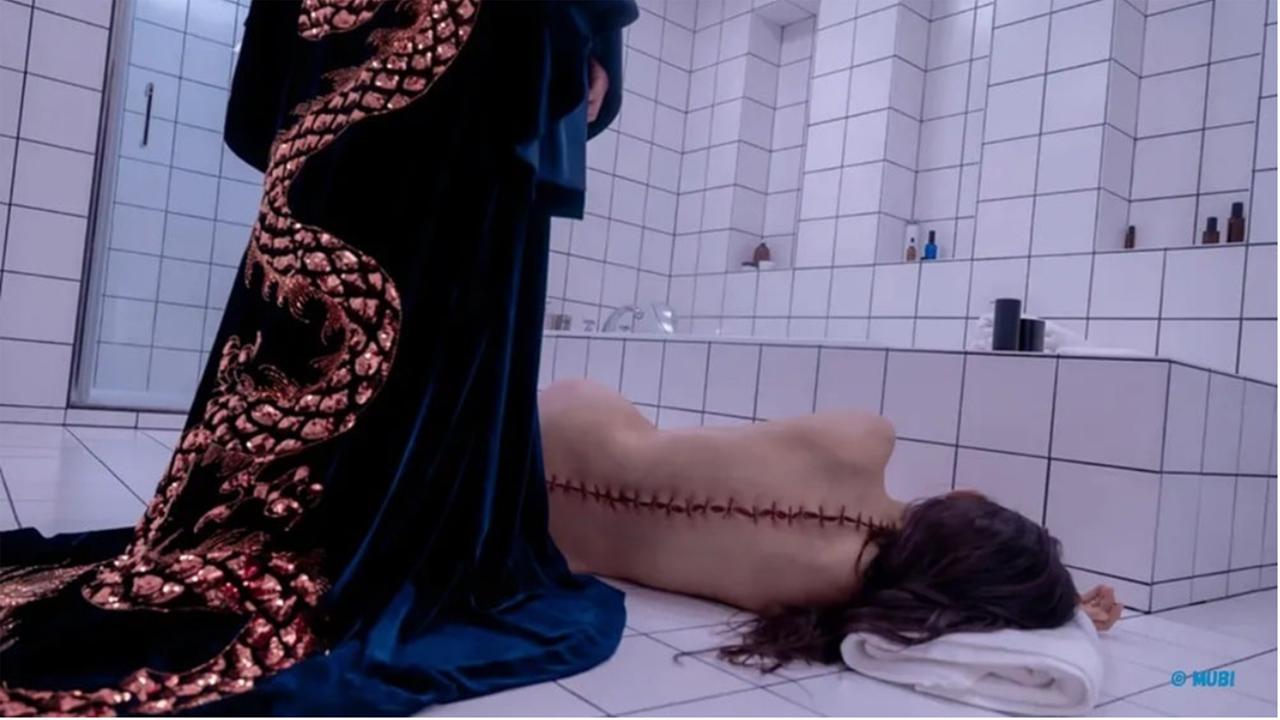
Coralie Fargeat’s The Substance explores the terminal anxiety of aging in a youth-obsessed industry. Demi Moore’s character, Elisabeth Sparkle, turns to a black-market serum to split her consciousness and body into a "better," younger version of herself (Margaret Qualley). The process is cyclical, gruesome, and ultimately destructive. The film serves as a brutal critique of the impossible beauty standards imposed upon women, where the "ideal" body is one that is perpetually fresh, pliable, and ultimately disposable.
Gym and the Limits of Performance
Verena Keßler’s novel Gym offers a literary perspective on this trend. Her protagonist drinks raw egg whites and injects steroids, pushing her body past the point of recognition. Keßler’s work highlights the "not-so-subtle" pressure to perform femininity while simultaneously performing peak athletic strength. The character’s trajectory—from a woman lying about motherhood to get a job, to a shredded, steroid-fueled powerhouse—is a study in the loss of agency in the name of conformity.
Supporting Data: Why Now?
Cultural and literary scholars, such as Patricia Gwozdz, point to the current societal climate as the catalyst for this trend. The rise of "Body Positivity" as a movement has ironically highlighted how far we remain from genuine self-acceptance.
Data from recent sociological studies on body dysmorphia suggests that women are under unprecedented pressure to modify their physical form through surgery, exercise, and digital manipulation. When these real-world pressures are distilled into film, they manifest as horror.
"The female body is a site of constant negotiation," Gwozdz notes. "Whether it is through the cycles of menstruation, the trauma of childbirth, or the inevitable shift of menopause, the female body is fundamentally a body that is always ‘in process’ or being acted upon by external forces. Female body horror is simply making those hidden processes visible and, by extension, terrifyingly uncontrollable."
Implications: The Politics of the Monster
The "Monster" at the end of these films is rarely a villain in the traditional sense. In The Substance, the grotesque final form of the protagonist is a creature that—for the first time—actually accepts its own existence. It is not seeking the approval of the camera or the audience.
This leads to a profound implication for the genre: the "monster" is a symbol of the rejected self. When women refuse to adhere to the grooming and behavioral standards dictated by the Male Gaze, society often labels that independence as monstrous or "grotesque."
The Rejection of the "Male Gaze"
By forcing the audience to stare at bodies that are distended, bruised, or mutated, directors are actively stripping away the "sexy" veneer that typically accompanies female characters in cinema. The viewer is no longer permitted to view the character as a passive object of desire. Instead, they are forced to witness the body as a vessel of pain, power, and autonomy.
The Future of the Genre
As we look toward the future, it is clear that this trend is not merely a passing phase. As long as societal standards for female beauty remain rigid, restrictive, and tied to patriarchal approval, the art form will continue to react with visceral, physical rebellion.
The movement toward Female Body Horror represents a reclaiming of the flesh. It is an argument that if the world insists on treating the female body as a project to be sculpted, managed, and consumed, then the only honest response is to show what happens when that project breaks, mutates, and refuses to be controlled.
In conclusion, these films and novels are doing more than just providing scares; they are documenting a profound cultural shift. They are the artifacts of a generation of women who are tired of being the silent subjects of the camera, choosing instead to become the architects of their own, albeit terrifying, liberation. The "Body Horror" of today is, in many ways, the "Body Liberation" of tomorrow—even if that liberation comes at the cost of blood, sweat, and a total disregard for the conventional definition of beauty.