By [Your Name/Journalistic Desk]
The rhythmic thud of hooves against dirt, the sharp crack of the driver’s whip, and the roar of a crowd gathered at the historic Bahrenfeld track are sounds destined to become echoes. In Hamburg’s Volkspark, the 130-year-old tradition of horse racing is approaching its final furlong. By the dawn of 2027, the grand, glass-fronted tribune—a silent witness to over a century of sporting history—will be one of the few remaining relics of an era that is rapidly being eclipsed by the relentless march of urban progress.
The End of an Era: From Racetrack to Research Hub
For over a century, the Bahrenfeld trotting track has been more than a venue; it has been a cornerstone of Hamburg’s social and recreational identity. From the legendary Rolling Stones and Robbie Williams to the punk-rock anthems of Die Toten Hosen, the track has served as a sprawling open-air stage for global icons. Yet, beneath the glamour of major concerts and the grit of horse racing, the landscape is shifting.
The City of Hamburg has finalized its ambitious master plan for the “Science City Hamburg Bahrenfeld.” By early 2027, the track will cease operations, marking the definitive end of a 130-year legacy. In its place, the city will embark on a massive construction project that aims to transform this historic site into a cornerstone of European innovation.
Chronology of Transformation: A Timeline for Change
The evolution of Bahrenfeld is not a sudden disruption but a meticulously planned transition. The trajectory of this site is defined by the following milestones:
- 1894–2026: The Legacy Period: For over 130 years, the Bahrenfeld facility has served as the heartbeat of North German equestrian sport.
- 2023–2025: Planning and Public Consultation: The City of Hamburg engaged in extensive urban planning phases, balancing heritage preservation with the urgent need for housing and scientific expansion.
- Early 2027: The Final Bell: The track will officially close its gates to racing, and the site will be handed over to development authorities for extensive land reclamation and site preparation.
- 2027–2030: Infrastructure Development: The focus will shift to “Erschließungsarbeiten”—the complex process of laying down the technical infrastructure, roads, and utilities required for a modern urban quarter.
- 2030–2040: The Rise of Science City: Construction of the residential blocks and the integration of the research campus will proceed in phases, with full completion targeted for 2040.
Supporting Data: Why Science City Matters
The rationale behind the dissolution of the racetrack lies in the pressing socio-economic pressures facing Hamburg. As one of Germany’s most desirable cities, Hamburg faces a chronic housing shortage. The Bahrenfeld development is not merely an aesthetic upgrade; it is a strategic economic necessity.
The Residential Expansion
The project plans to introduce approximately 3,800 new residential units to the district. These homes are designed to cater to the influx of researchers, students, and professionals associated with the adjacent Science City. By creating a high-density, mixed-use environment, the city hopes to alleviate the pressure on the local housing market, where purchase prices have reached historic highs.
The Research Ecosystem
The “Campus West” serves as the anchor for this development. It brings together world-class institutions, including:
- DESY (Deutsches Elektronen-Synchrotron): One of the world’s leading accelerator centers.
- University of Hamburg: Integrating academic faculties directly into the research hub.
- Max Planck Institute for the Structure and Dynamics of Matter: A titan in the field of fundamental physics and material science.
The proximity of these institutions to new residential zones is intended to foster a "living-working-researching" environment that mirrors the successful models of Cambridge or Palo Alto.
Market Dynamics: Hamburg’s Changing Real Estate Landscape
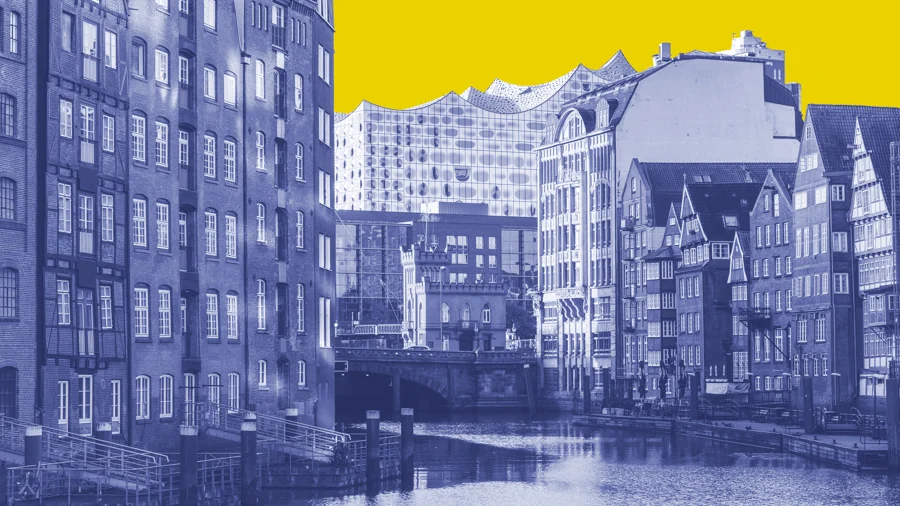
The transformation of Bahrenfeld occurs against a backdrop of intense volatility in the German real estate market. According to recent data from vdp Research, compiled exclusively for Handelsblatt, the appetite for urban property in Hamburg remains insatiable.
The report highlights a growing trend in the city: "Trendviertel" (trending neighborhoods) are witnessing double-digit growth in purchase prices. Bahrenfeld, previously known for its leisure and sports facilities, is rapidly transitioning into a high-value residential zone. The influx of capital into the Science City project acts as a catalyst, pulling up property values in the surrounding areas. For investors and prospective homeowners, the message is clear: the integration of high-tech research centers and modern residential infrastructure is the new gold standard for urban desirability.
Official Responses and Public Sentiment
The city’s planning department, led by the Senate of Hamburg, has emphasized that while the racetrack will vanish, the architectural soul of the site will be partially preserved. The iconic glass-fronted main tribune is slated to be integrated into the new urban landscape as a heritage landmark, serving as a reminder of the site’s former life.
However, the transition has not been without criticism. Equestrian enthusiasts and long-time residents have voiced concerns over the loss of the city’s “green lung” and the dilution of its cultural heritage. Local community groups have called for transparency in the development process, demanding that the new housing remains affordable and that the green spaces—which currently make the Volkspark area so attractive—are not sacrificed for high-density concrete blocks.
"We are building a city of the future," a spokesperson for the Science City project stated during a recent town hall. "But we are doing so with an eye on the past. The preservation of the tribune is not just symbolic; it is an acknowledgement that the spirit of this place will continue to inspire the researchers of tomorrow."
The Implications: A Blueprint for the Future?
The Bahrenfeld project is being watched closely by urban planners across Europe. It represents a daring experiment in "urban densification" where historical leisure sites are repurposed for high-tech economic growth.
Economic Implications
By clustering research institutions with residential infrastructure, Hamburg aims to retain top-tier talent. The "brain drain" that often plagues cities with high costs of living is mitigated when workers can live within walking distance of their research facilities.
Social Implications
The success of this project hinges on the 3,800 units being accessible to a diverse range of income levels. If the development succeeds in creating a vibrant, inclusive community, it could serve as a model for other German cities looking to modernize their aging infrastructure. If it fails to provide sufficient affordable housing, it risks becoming an "ivory tower" enclave, accessible only to the scientific elite.
Environmental Implications
The transition from a horse track to a high-density campus also raises questions regarding sustainability. The city has committed to green building standards, with the goal of creating a carbon-neutral district. The integration of the Volkspark’s natural beauty with modern, energy-efficient architecture is the central challenge for the architects involved.
Conclusion: The Final Gallop
As the 2027 deadline approaches, the mood in Bahrenfeld is one of bittersweet anticipation. The horse racing community is preparing for their final season, acknowledging that the track has served its purpose in a bygone age. Meanwhile, the city planners and researchers are busy drafting the blueprints for a neighborhood that will house the discoveries of the 21st century.
Hamburg is a city that has always looked toward the horizon—whether across the Atlantic via its port or into the microscopic world of subatomic particles at DESY. The Bahrenfeld development is the latest chapter in this tradition of reinvention. When the last horse crosses the finish line in 2027, the gate will close on the history of the track, but it will open a new, ambitious door for the future of the city. The transformation of this site is not merely a change in land use; it is a fundamental shift in what the city of Hamburg values, proving that even in a place with 130 years of history, the most exciting race is the one that has yet to begin.