

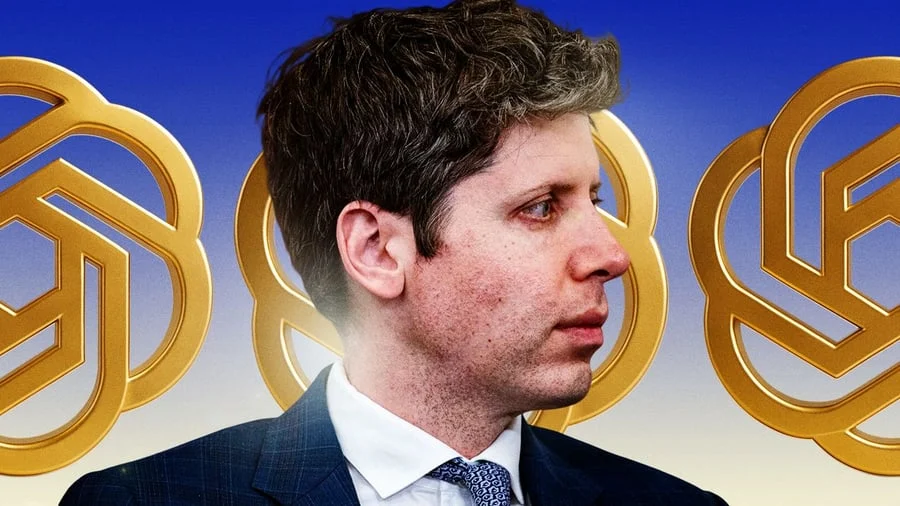
In a high-stakes courtroom in Oakland, California, a battle is unfolding that transcends a mere legal dispute. It is a fundamental collision of philosophies, egos, and the future of artificial intelligence. At the center of the storm are two of the most influential figures in modern technology: Elon Musk, the visionary billionaire behind Tesla and SpaceX, and Sam Altman, the CEO of OpenAI, the company that catapulted generative AI into the mainstream with ChatGPT.
The lawsuit, initiated by Musk, represents more than a request for legal intervention; it is a public indictment of how a mission-driven, non-profit entity evolved into a multi-billion-dollar, profit-oriented powerhouse. As Altman took the stand on Tuesday, the courtroom became a stage for a broader debate: Who owns the future of artificial intelligence, and how should it be governed?
Main Facts: The Core of the Dispute
The legal proceedings center on a fundamental disagreement regarding the original purpose of OpenAI. Musk, one of the co-founders of the organization in 2015, alleges that Altman and his leadership team have effectively abandoned the company’s original charter. That charter explicitly prioritized the development of "safe and beneficial" artificial general intelligence (AGI) for the benefit of humanity, rather than for the pursuit of corporate profit.
Musk’s legal team argues that the transition to a "capped-profit" model in 2019 was a betrayal of the initial agreement. They contend that OpenAI’s deep integration with Microsoft—a partnership that has provided the company with massive computing resources and capital—has compromised its independence and its commitment to the public good.
Conversely, Sam Altman has remained steadfast. From the witness stand, he has defended his business record and the strategic pivots taken by the company. He characterizes the transition not as a betrayal, but as a necessary evolution to ensure the company could survive and scale the immense computing power required to build sophisticated AI models.
Chronology of a Fractured Partnership
To understand the current hostility, one must look back at the origins of the venture.

- 2015: OpenAI is founded as a non-profit research laboratory. Elon Musk, Sam Altman, Ilya Sutskever, and others pledge significant funding to ensure that AI development is transparent and safe.
- 2018: Musk departs from the board of directors, citing potential conflicts of interest with his work at Tesla in the field of autonomous driving.
- 2019: The company announces the creation of "OpenAI LP," a for-profit subsidiary, to attract the massive capital needed for high-end research.
- 2023 (November): In a shocking corporate coup, the OpenAI board of directors briefly fires Sam Altman, citing a lack of transparency. The move triggers a massive employee revolt and pressure from investors.
- 2023 (November, days later): Altman is reinstated as CEO, and the board is largely reshuffled, cementing his control over the company.
- 2026 (May): The legal battle reaches the witness stand in Oakland, as Musk seeks to hold the current leadership accountable for what he views as a breach of their fiduciary and moral duty.
The Philosophical Divide: Profit vs. Principle
At the heart of the testimony is the question of what it means to be an "honest and trustworthy businessman" in the era of AI. When asked about criticisms regarding his leadership style and the perceived shift in the company’s ethics, Altman was defiant. "I believe I am an honest and trustworthy businessman," he stated under oath, directly countering the narrative pushed by Musk’s legal counsel.
Musk’s narrative, however, resonates with a segment of the tech community that fears the "commercialization" of intelligence. The argument is that once a company is beholden to shareholders and cloud-computing giants like Microsoft, the pressure to release products quickly outweighs the imperative to implement rigorous safety protocols.
Altman’s defense is rooted in pragmatism. He argues that the world of AI research is incredibly capital-intensive. Without the shift to a for-profit entity, he maintains, OpenAI would have been unable to compete with the likes of Google or Meta, effectively leaving the development of the most powerful technology in human history to corporations with far less stated commitment to safety.
Supporting Data: The Scale of OpenAI’s Evolution
The transformation of OpenAI from a humble laboratory to a global titan is underscored by the sheer scale of its operations.
In its early years, OpenAI’s budget was measured in the hundreds of millions. Today, the company is at the center of a multi-billion-dollar ecosystem. The deal with Microsoft alone involves investments and computing credits estimated at $13 billion. This scale is necessary because the training of Large Language Models (LLMs) like GPT-4 requires thousands of high-performance H100 GPUs—an infrastructure that would be impossible to maintain under a strictly non-profit, donation-based model.
However, critics point to the "opacity" that has replaced the "open" in OpenAI. While early versions of their models were accompanied by detailed research papers and code, recent releases have become increasingly proprietary. The data shows a shift: from an organization that published findings to advance the field, to a company that guards its "secret sauce" to maintain a competitive moat.

Official Responses and Courtroom Dynamics
The trial has been characterized by sharp exchanges. Musk’s lawyers have attempted to paint Altman as a Machiavellian operator who manipulated the board and the public to consolidate power. They have highlighted internal communications from the period surrounding Altman’s 2023 ouster to suggest that the leadership was more focused on PR and market dominance than on the "safety" mandate.
Altman, while acknowledging the chaotic nature of the 2023 board revolt, has maintained that his decisions were made in the best interest of the company’s mission. He has presented himself as a steward of a complex, rapidly evolving technology that requires careful navigation between commercial success and ethical responsibility.
Legal experts observing the trial note that while Musk’s suit faces significant hurdles in terms of contract law, the trial is doing immense damage to the public perception of the AI industry. Regardless of the legal outcome, the "trust deficit" between the two camps is now wider than ever.

Implications for the Future of Artificial Intelligence
The outcome of this trial will likely set a precedent for how future "mission-driven" tech companies are structured. If Musk succeeds, it could force a radical restructuring of OpenAI or a significant payout, potentially setting a standard for how non-profits can pivot to profit-seeking entities.
However, the broader implication is the chilling effect this has on AI development. If leaders like Altman must spend their time in court defending their business models, the pace of innovation could slow. Alternatively, if the courts rule that a "non-profit" promise is legally binding in perpetuity, it may become nearly impossible for future founders to attract the venture capital necessary to build the next generation of transformative technologies.
Furthermore, the trial highlights the lack of regulatory clarity. As the government struggles to keep pace with AI, the courts have become the de facto regulators. This "trial by combat" between two billionaires is a suboptimal way to govern a technology that will define the 21st century.

Conclusion: A Lingering Shadow
As the trial continues in Oakland, the tech world watches with bated breath. The clash between Musk and Altman is not just about a contract signed in 2015; it is about the soul of the AI revolution.
Whether the jury finds Altman to be an honest steward of a necessary evolution or a man who lost sight of his original purpose, the damage is already done to the image of "Big AI." The industry is now forced to grapple with the reality that, in the pursuit of building a super-intelligence, the humans involved are subject to the same old-fashioned human flaws: pride, greed, and a fundamental inability to agree on the nature of the future they are creating.
Regardless of the verdict, the relationship between these two men is permanently fractured. What remains is a cautionary tale about the perils of mixing high-minded idealism with the brutal, profit-driven realities of Silicon Valley. For now, the courtroom serves as a reminder that when it comes to the most powerful technology in human history, the question of "who decides" is just as important as the technology itself.




















Leave a Reply