As Europe grapples with the dual challenges of the climate crisis and an aging energy infrastructure, a quiet revolution is taking place along the banks of its most iconic waterways. From the Rhine and the Danube to the Elbe, engineers are tapping into an abundant, overlooked resource: the rivers themselves. Through the process of "aquathermie"—a sophisticated form of heat extraction—cities like Cologne, Hamburg, and Dresden are turning their rivers into massive, natural thermal batteries. This shift marks a pivotal moment in the "Wärmewende" (heat transition), offering a blueprint for how urban centers can decarbonize their heating sectors without relying on volatile fossil fuel markets.
The Core Concept: How Aquathermie Works
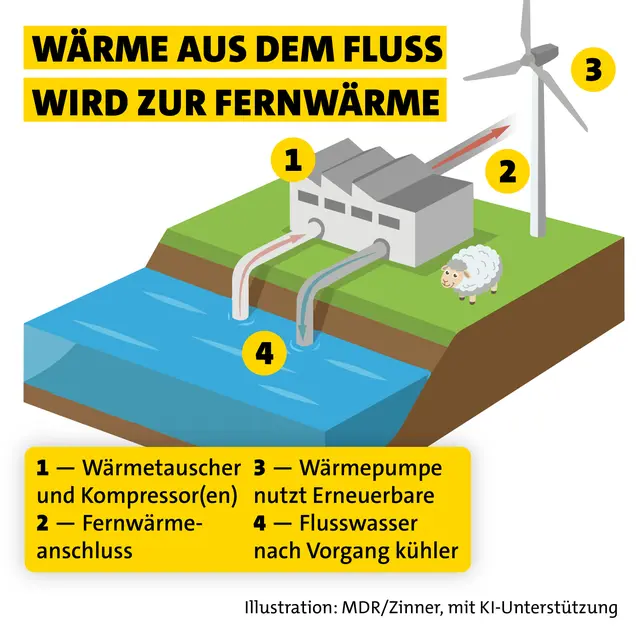
At its simplest, aquathermie functions much like the household heat pump familiar to many homeowners. However, instead of drawing heat from the ambient air, these industrial-scale systems extract thermal energy directly from river water. By utilizing heat exchangers, the system captures the latent warmth of the water—even in winter—and uses electricity to boost that heat to the temperatures required for district heating networks.
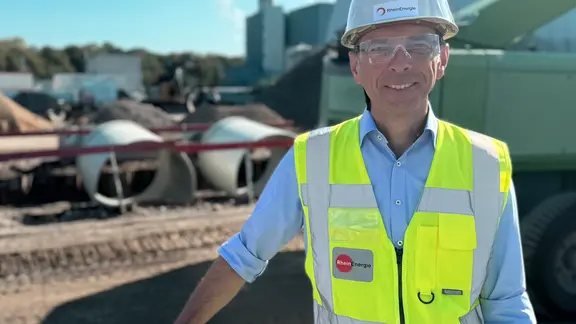
"Hinter diesen Stahlplatten ist das Hafenbecken," explains Armin Ehret, head of power plants at Rheinenergie, as he stands over a massive excavation site in Cologne-Niehl. The site is part of a 280-million-euro project, one of the most ambitious of its kind in Europe. When completed, this gargantuan heat pump will draw thermal energy from the Rhine, providing heating for roughly 50,000 households. The principle is elegant in its physics: because water is significantly denser than air, it holds and releases heat far more efficiently. Even when the water is cold, it remains a potent thermal reservoir.
Chronology of a Green Transformation
The journey toward river-based heating has not been overnight. It is the result of years of planning and the urgent necessity to move away from gas-reliant district heating.
- Initial Feasibility (2020–2022): Following the German government’s renewed focus on the Building Energy Act (GEG), municipal utilities began scouting for sustainable, local heat sources. The focus shifted to urban rivers, which were previously ignored due to technological limitations and environmental concerns.
- The Pilot Phase (2023): Smaller-scale projects in cities like Zittau and Flensburg demonstrated that the technology was not only viable but scalable.
- The Cologne Expansion (2024–2026): Rheinenergie broke ground on their massive Niehl project. Originally conceived as a smaller facility, engineers realized that for true decarbonization, a larger, more powerful unit was essential to meet the needs of a major metropolitan area.
- Current Status (October 2026): Construction is in full swing. Despite record-low water levels in the Rhine, the project remains on track, with engineers designing specialized intake systems that function even when river levels drop to historic lows.
Supporting Data: Why Water Outperforms Air
The transition from air-source heat pumps to water-source systems is backed by compelling thermodynamic data. Jessika Gappisch, an expert in aquathermie at the Technical University of Darmstadt, emphasizes the physical advantages. "If you cool one kilogram of water by one degree, you release four times more heat energy than you would from air," Gappisch notes.
Furthermore, river temperatures are more stable than air temperatures. While air can fluctuate wildly during a cold snap, river water temperatures change slowly, providing a consistent "base load" for heat pumps. In Cologne, the system is designed to operate down to a water temperature of five degrees Celsius. If the river drops below this, the system enters a safe mode to prevent icing or mechanical stress—a threshold that, historically, the Rhine rarely hits.

The Economic and Environmental Balance Sheet
The shift toward aquathermie is not just a technological feat; it is a financial one. With an investment of 280 million euros, the Cologne project is substantial, relying on federal subsidies to ensure economic viability. The long-term goal is to save between 100,000 and 150,000 tons of CO2 annually.
Critics often point to the potential impact on aquatic life. When heat is extracted, the water returned to the river is cooler—typically by two to four degrees Celsius. However, scientific consensus is shifting toward the view that this cooling effect might actually be beneficial. As climate change drives river temperatures to record highs, the slight cooling provided by heat extraction could offer a necessary thermal refuge for certain fish species, acting as a "counter-measure" to rising environmental temperatures.
Official Responses and Regulatory Hurdles
The regulatory landscape for aquathermie remains in a state of flux. Because this is a relatively new application, local authorities are still drafting guidelines for water usage and discharge. The primary concern for regulators is the "mixing zone"—the area where the cooled water re-enters the river.
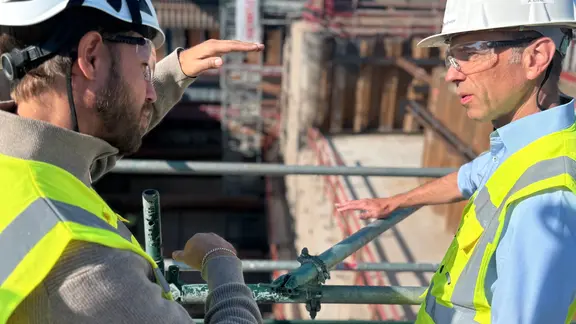
"We are speculating more about environmental risks than we are experiencing them," Gappisch admits. "The data shows that if managed correctly, the impact on river ecology is negligible." Rheinenergie’s Armin Ehret agrees, noting that their intake systems draw less than one percent of the river’s total volume, even during drought conditions. This ensures that the impact on the Rhine’s flow is minimal, while the benefit to the city’s heat grid is massive.
Implications for the Future of Cities
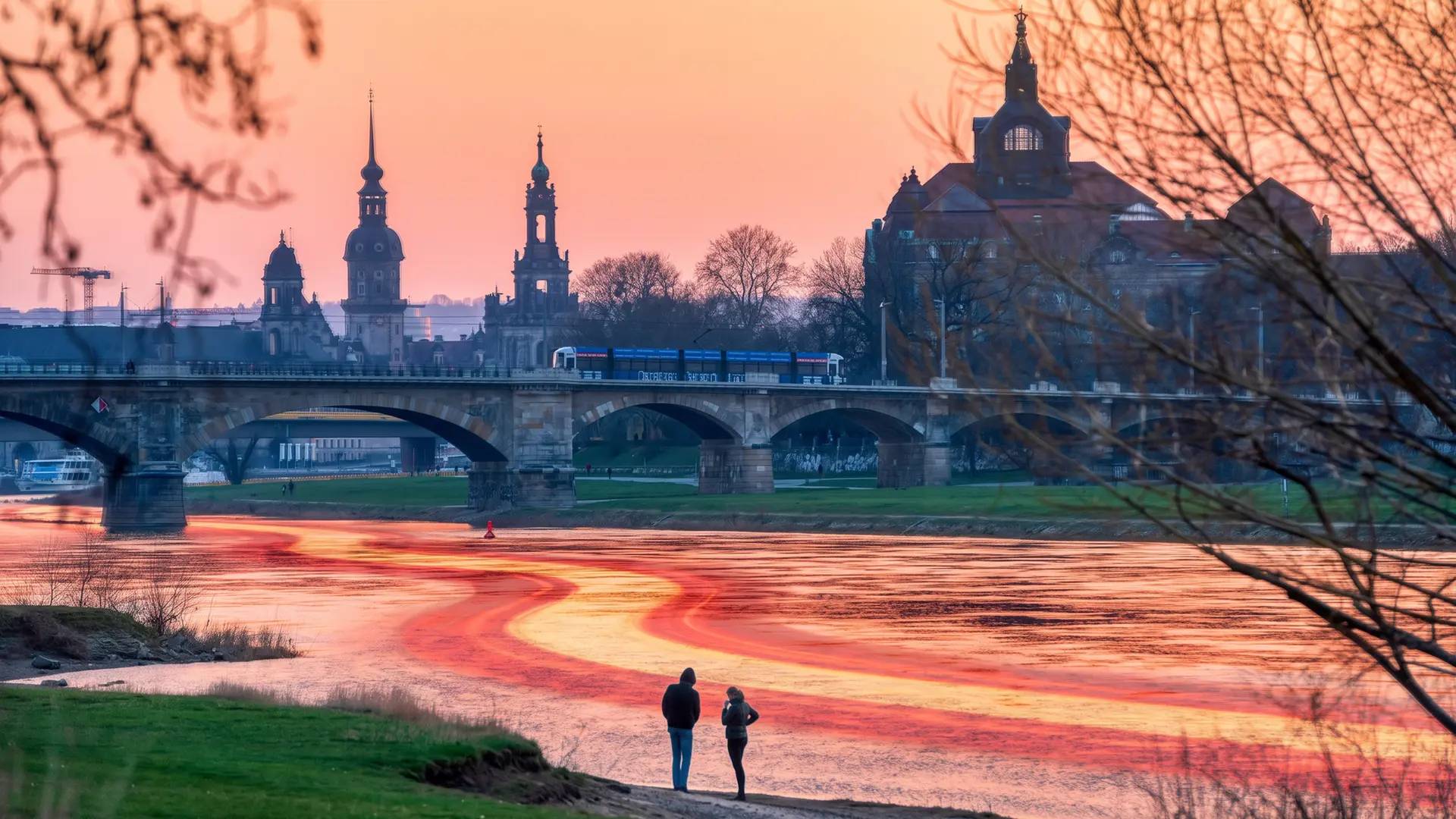
The success of these projects has profound implications for urban planning across Europe. Cities like Hamburg, Dresden, Frankfurt, and Bonn are ideally positioned to follow this path. The model transforms a city’s river from a scenic landmark into an essential piece of public utility infrastructure.
1. Urban Resilience
By decoupling heating from imported natural gas, cities gain a level of energy sovereignty. This protects residents from global price shocks and enhances the overall stability of the municipal power grid.
2. The "Natural District Heating" Network
The research team at TU Darmstadt suggests that rivers act as natural, pre-installed heat pipelines. If cities can harness this, they effectively lower the barrier to entry for green heating. As Gappisch points out, this principle isn’t limited to rivers; lakes and coastal waters offer similar, often untapped, potential.
3. Cross-Border Cooperation
An interesting development is the collaboration between neighboring cities. For instance, the relationship between Cologne and Düsseldorf—traditionally characterized by a playful rivalry—has shifted toward a cooperative model. Because the Rhine flows from one to the other, both cities are coordinating their extraction and discharge efforts to ensure that neither city’s heat pump system negatively impacts the other. It is a testament to the fact that the climate crisis is fostering a new spirit of pragmatic regionalism.
Conclusion: The Path Forward
As we look toward the winter of 2026 and beyond, the "thermal harvest" from Germany’s rivers stands as a beacon of what is possible when engineering meets environmental stewardship. While aquathermie is not a "silver bullet"—it must be implemented with careful consideration of local geology and ecology—it is undeniably a cornerstone of the future energy mix.
The heat is beneath our feet, and it is flowing through our cities. By learning to harness the quiet, consistent warmth of our rivers, Europe is proving that the solutions to the climate crisis are often hidden in plain sight, waiting for the technology and the will to extract them. The transition to a greener, more resilient urban future is no longer a distant ambition; it is currently being built, pipe by pipe, into the beds of our great rivers.