Main Facts: A Race Against Time
The international health community is on high alert as a virulent and rapidly spreading outbreak of the Ebola virus has breached new geographic boundaries. Following the identification of a fatal case, authorities have placed the region under a state of heightened emergency. Health officials, led by the Ministry of Health, have confirmed the tracking of 28 primary contacts, including family members and healthcare professionals who came into direct contact with the deceased.
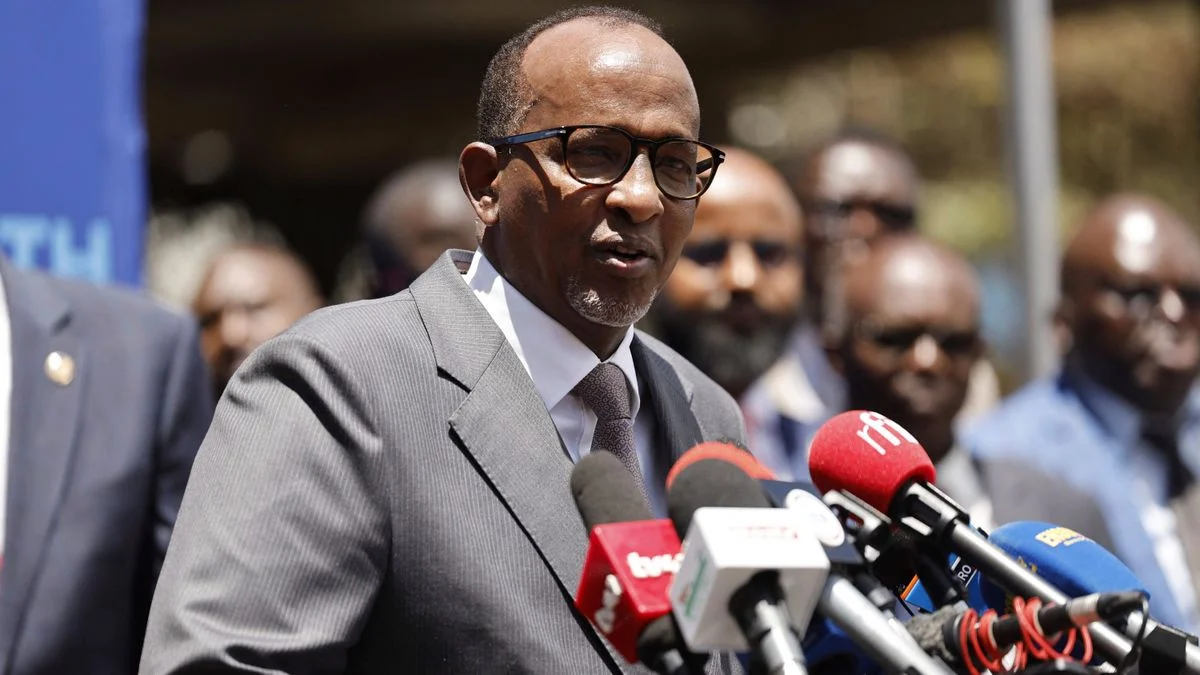
Furthermore, a comprehensive contact tracing operation is underway for 23 additional passengers who traveled on the same flight from Uganda. These individuals are currently being tracked as part of a mandatory containment strategy. According to Patrick Amoth, Director General of the Ministry of Health, all identified contacts are required to undergo a strict 21-day isolation period. Their release is contingent upon testing negative for the virus, a protocol designed to act as a definitive safeguard against community transmission.
In accordance with stringent international biosafety protocols, the remains of the deceased patient are slated for burial within 24 hours. The burial process is being conducted under strict supervision to ensure all recommended protective measures are followed, mitigating any risk of post-mortem transmission.
Chronology: The Evolution of a Global Threat
The current outbreak, which originated in the eastern provinces of the Democratic Republic of the Congo (DRC) in mid-May, has followed a troubling trajectory. What began as a localized concern has evolved into a multi-national epidemiological challenge.
- Mid-May: Initial reports of the Ebola outbreak emerge from the eastern regions of the DRC.
- Late Summer: The virus begins to leapfrog across borders. Uganda reports an initial cluster of 20 cases, signaling the start of the regional spread.
- August: France reports a confirmed case, marking the first time in this cycle the virus has breached the African continent, highlighting the interconnectedness of modern travel.
- Late August to Present: For a brief period, the international community experienced a lull as no new active cases were reported outside of the DRC. However, the recent confirmation of a case in Kenya has effectively ended that period of containment, confirming that the virus remains active and mobile.
The WHO Warning: A Potential Pandemic Benchmark
The World Health Organization (WHO) has issued a sobering assessment, labeling this current outbreak as the fastest-spreading instance of Ebola in recorded history. Epidemiologists working on the ground warn that if the current rate of transmission continues, this could become the deadliest Ebola outbreak ever documented.
The primary concern among global health experts is the "velocity gap"—a phenomenon where the virus propagates through mobile populations faster than local health authorities can identify, isolate, and treat new cases. "The virus is currently outpacing our ability to contain it," a WHO spokesperson noted. The structural difficulty lies in the incubation period and the ease of international transit, which allows carriers to move across borders before the onset of severe, recognizable symptoms.
Supporting Data: Mapping the Transmission
The complexity of this outbreak is underscored by the logistics of contact tracing. By analyzing flight manifests and local movement patterns, health ministries are attempting to build a "firewall" around the infection.
The 28 identified contacts in the current epicenter represent a critical bottleneck in the containment effort. Because these individuals include medical staff, the risk of nosocomial (hospital-acquired) transmission is exceptionally high. Medical facilities have been placed under "red zone" status, with reinforced personal protective equipment (PPE) requirements and restricted access protocols.
The inclusion of the 23 passengers from the Uganda-linked flight adds a layer of complexity to the aviation safety protocols. Airline carriers, in coordination with the International Air Transport Association (IATA), are reviewing passenger health questionnaires and in-flight hygiene protocols. Data indicates that the risk of transmission during air travel is low but not zero, particularly when the index case displays symptoms during transit.
Official Responses and Strategic Containment
Governments in the affected regions have mobilized rapidly, shifting from standard health surveillance to emergency crisis management. The focus is threefold:
- Isolation and Monitoring: The 21-day quarantine window remains the gold standard. By requiring a negative test result post-isolation, health authorities are prioritizing public safety over the convenience of the individuals involved.
- Clinical Oversight: Patrick Amoth’s directive emphasizes the role of the Ministry of Health in providing direct, centralized oversight. This ensures that testing accuracy is maintained and that medical protocols are uniform across all containment centers.
- Public Communication: Governments are launching awareness campaigns to combat misinformation, which often thrives during viral outbreaks. By providing transparent data on the number of cases and the location of treatment centers, authorities hope to prevent public panic.
Implications: The Future of Global Health Security
The emergence of this outbreak in multiple countries—spanning from the DRC to Kenya and as far as Europe—raises profound questions regarding the adequacy of current global health infrastructure.
The Weakness of Border Surveillance
While many nations have robust screening at international airports, the fluidity of land borders remains a significant vulnerability. In East Africa, where cross-border trade and migration are daily occurrences, enforcing strict health checks requires a level of coordination that many nations struggle to maintain under normal circumstances, let alone during a crisis.
The Economic and Social Toll
Beyond the immediate loss of life, the economic implications are mounting. Regional trade routes are being disrupted, and there is growing apprehension regarding the potential for travel bans. Historically, such bans can exacerbate the crisis by pushing travel underground, making contact tracing even more difficult.
The Call for Global Solidarity
The WHO has called for an infusion of resources to assist the affected nations. This includes not only financial aid but also the deployment of specialized medical teams, rapid diagnostic kits, and experimental vaccines that have shown promise in previous outbreaks.
The situation is a stark reminder that in an era of globalization, the health of one nation is inextricably linked to the health of all. The speed at which this outbreak has spread serves as a litmus test for international health regulations. As the 21-day countdown begins for the latest cohort of contacts, the world watches with bated breath. The goal is no longer just to treat the infected, but to arrest a pattern of transmission that threatens to undermine regional stability and global health security.
In conclusion, the situation remains fluid and precarious. While the immediate focus is on the 51 individuals currently under watch, the broader effort involves a systemic overhaul of how countries detect, report, and respond to hemorrhagic fever outbreaks. The coming weeks will be decisive; if the current containment strategies succeed, the virus may be cornered. If not, the world may be facing a protracted and tragic chapter in the history of infectious disease management.