Introduction: A Nobel-Worthy Contribution to Physics
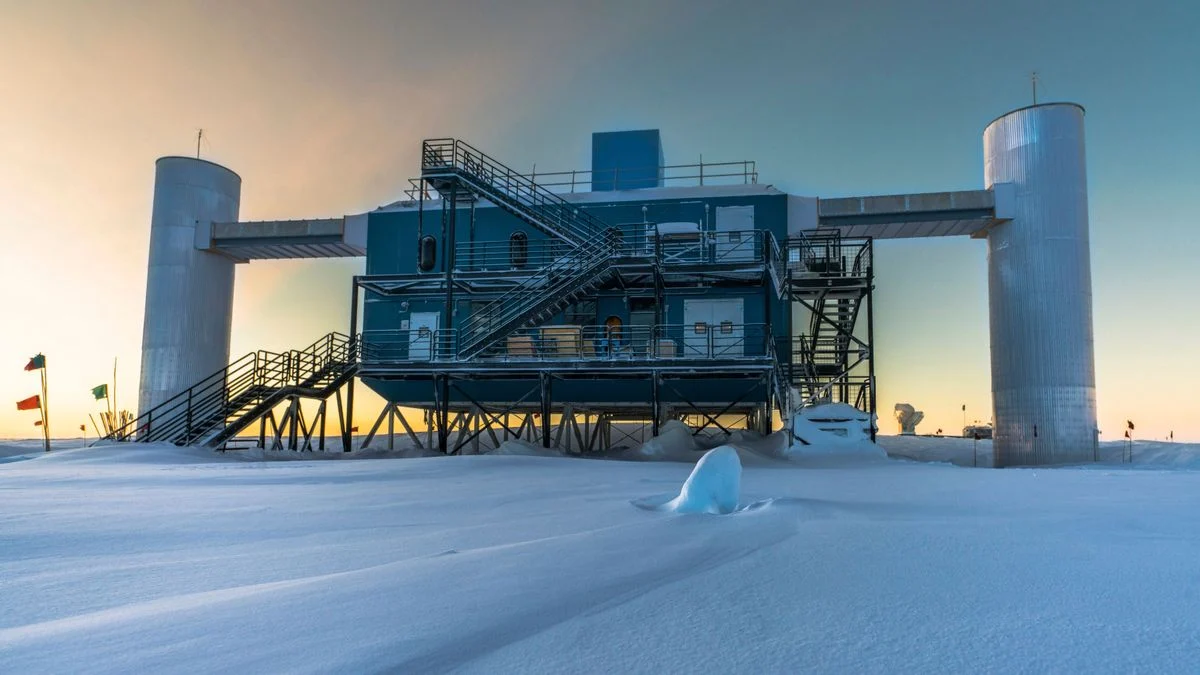
In the silent, frozen expanse of the South Pole, deep beneath the Antarctic ice, lies the IceCube Neutrino Observatory—a testament to human ingenuity and the relentless pursuit of the fundamental building blocks of the universe. At the heart of this monumental project is physicist Francis Halzen, a man whose visionary leadership and groundbreaking research into neutrinos have fundamentally altered our understanding of the cosmos. For his pioneering role in the discovery and study of high-energy cosmic neutrinos, the scientific community recognizes Halzen as one of the most influential figures in modern astrophysics.
Neutrinos—often called "ghost particles" due to their near-zero mass and elusive nature—have long presented an enigma to scientists. Traveling through space at near the speed of light, they pass through stars, planets, and human bodies without leaving a trace. Detecting them requires a unique blend of patience, technological precision, and environmental extremity. Francis Halzen’s career, defined by his decades-long dedication to the IceCube project, represents a triumph of experimental physics that has turned the South Pole into the world’s largest telescope.
Chronology: From Theoretical Physics to the Antarctic Ice
The journey to the discovery of cosmic neutrinos was not a singular moment of serendipity, but a multi-decade endeavor characterized by immense technical challenges.
1980s: The Theoretical Foundations
In the early 1980s, the potential for using the Earth’s natural ice as a particle detector was merely a theoretical spark. Francis Halzen, working at the University of Wisconsin-Madison, began exploring the physics of high-energy neutrinos. While traditional telescopes rely on light, these particles required a medium that was transparent and massive enough to capture their rare interactions.
1990s: The AMANDA Precursor
The Antarctic Muon and Neutrino Detector Array (AMANDA) was the proof-of-concept. Scientists drilled deep holes into the ice, lowering strings of optical sensors. This period was crucial for proving that the deep ice was remarkably clear—a fundamental requirement for detecting the faint flashes of light (Cherenkov radiation) produced when a neutrino interacts with an atom.
2005–2010: Constructing the IceCube
With the success of AMANDA, the IceCube project was launched. Construction was a logistical masterpiece. Over the course of several austral summers, a team of researchers and engineers deployed 5,160 digital optical modules (DOMs) across a cubic kilometer of ice. By 2010, the array was completed, ready to scan the heavens for high-energy signals originating from outside our solar system.
2013–2017: The Breakthrough
In 2013, IceCube reported the first detection of high-energy cosmic neutrinos. However, the true turning point arrived in September 2017. When IceCube detected a high-energy neutrino, the observatory sent an automated alert to global telescopes. Minutes later, the Fermi Gamma-ray Space Telescope confirmed the source: a blazar—a supermassive black hole at the center of a distant galaxy—located 4 billion light-years away. This was the first time in history that a source of high-energy neutrinos had been pinpointed.
Supporting Data: Unlocking the High-Energy Universe
The scientific implications of Halzen’s work are quantified by the sheer scale of the data processed by the IceCube Observatory.
- The Medium: The detector covers one cubic kilometer of ice, buried between 1,450 and 2,450 meters below the surface.
- The Signal: Neutrinos interact with the nuclei of atoms in the ice, producing secondary particles that move faster than light in the medium, creating a cone of blue light.
- The Rate: While the detector observes thousands of neutrinos per day, the vast majority are "atmospheric" (created by cosmic rays hitting our own atmosphere). The challenge—and the achievement—lies in isolating the rare "cosmic" neutrinos, which arrive at a rate of only a few per month.
- The Energy Spectrum: IceCube detects neutrinos with energies ranging from tera-electronvolts (TeV) to peta-electronvolts (PeV). For context, a single PeV neutrino carries as much energy as a professional baseball pitcher’s fastball, concentrated into a single subatomic particle.
The statistical significance of the 2017 observation reached the "five-sigma" threshold, the gold standard in physics, confirming that the origin of these particles was indeed a cataclysmic astrophysical event.
Official Responses and Academic Reception
The scientific community has lauded Halzen not only for the experimental success of IceCube but for the collaborative model he championed.
"Francis Halzen’s persistence transformed a seemingly impossible idea into a cornerstone of modern astronomy," noted Dr. Elena Rossi, a theoretical astrophysicist. "He did not just build a detector; he built a new way of seeing the universe."
In various academic forums, peers have noted that Halzen’s work has bridged the gap between particle physics and traditional astronomy. By proving that neutrinos could be traced back to their sources, he effectively inaugurated the era of "multi-messenger astronomy." This approach, which combines data from electromagnetic waves (light), gravitational waves, and neutrinos, provides a holistic view of the most violent events in the universe.
The Nobel committee and various international scientific bodies have frequently cited the IceCube project as a primary example of how basic research—pursued with the primary goal of answering fundamental questions—leads to technological breakthroughs that could not have been anticipated at the outset.
Implications: Why the Neutrino Matters
The study of high-energy neutrinos is more than a footnote in physics textbooks; it is a fundamental shift in our cosmic perspective.
1. The Death of the "Dark" Universe
For centuries, astronomy was restricted to the visible spectrum. We could only see objects that emitted light. However, many of the most energetic phenomena in the universe—such as the environments surrounding black holes or the cores of active galaxies—are shrouded in dust and gas that block visible light. Neutrinos, which travel through matter unimpeded, act as a probe that can pierce through these opaque regions, revealing the inner workings of the universe’s most extreme engines.
2. Solving the Mystery of Cosmic Rays
For over a century, scientists have been puzzled by the origin of high-energy cosmic rays. We know they bombard Earth constantly, but because they are charged particles, their paths are bent by magnetic fields in space, making it impossible to trace them back to their origin. Because neutrinos are electrically neutral, they travel in straight lines. By finding the source of the neutrinos, Halzen and his team have effectively found the "accelerators" of the universe.
3. New Physics
The high energies detected by IceCube are far beyond what can be replicated in man-made particle accelerators like the Large Hadron Collider. By studying how these particles behave at these extreme energy levels, physicists are looking for signs of "New Physics"—phenomena that could challenge the Standard Model and offer insights into dark matter, quantum gravity, and the early stages of the Big Bang.
Conclusion: A Legacy of Curiosity
Francis Halzen’s work stands as a testament to the idea that the greatest discoveries often require looking where no one else is willing to look. By turning the South Pole into a window to the cosmos, he has ensured that the "ghost particle" will no longer be a source of confusion, but a vital tool for exploration.
As humanity looks toward the future, the IceCube detector continues to expand. Plans for "IceCube-Gen2" are already underway, promising a larger array that will increase the rate of neutrino detection by an order of magnitude. This expansion ensures that the research pioneered by Halzen will remain at the forefront of human knowledge for decades to come.
The story of the neutrino is one of patience—of waiting for the right signal in the right place at the right time. Through the lens of the Antarctic ice, we are finally beginning to understand the whispers of the universe, deciphering the high-energy language that has been traveling across the void since the dawn of time. Francis Halzen’s contribution is not just a scientific achievement; it is a gift to our collective understanding of where we come from and what the universe is truly made of.