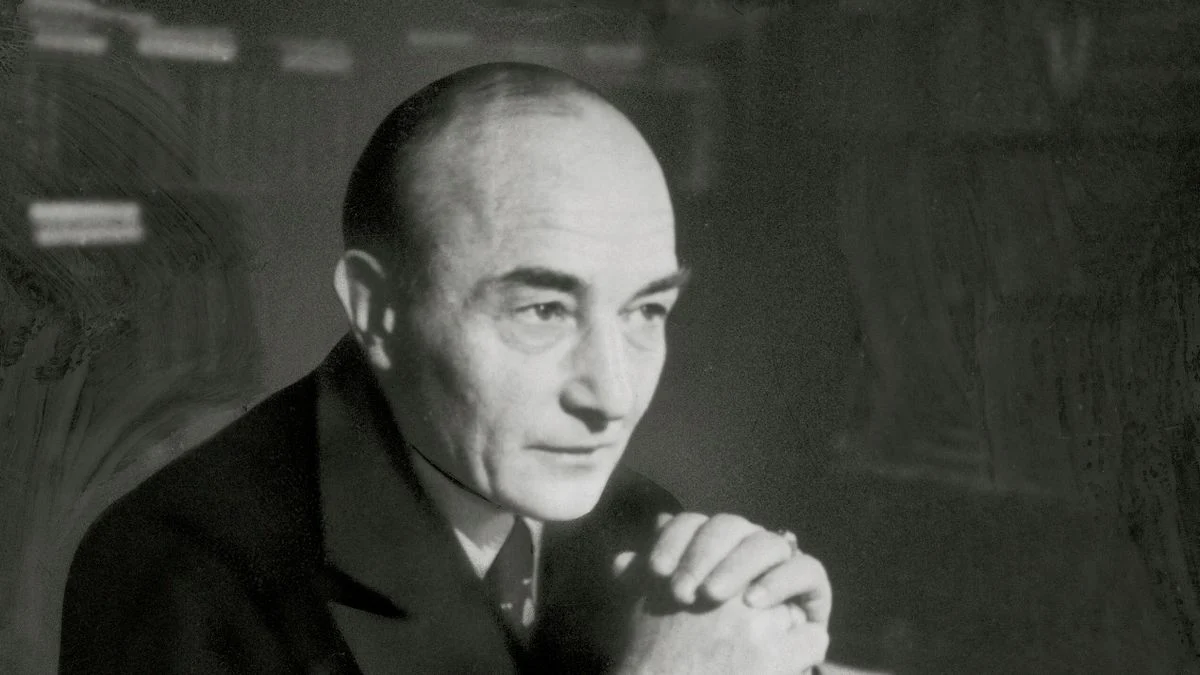
In the quiet corners of literary salons and the bustling hubs of Silicon Valley, a singular, provocative question has begun to echo with increasing intensity: Is the artificial intelligence of today—capable of drafting legal briefs, coding software, and generating photorealistic imagery—actually capable of producing art that rivals the intellectual and emotional depth of 20th-century masters like Robert Musil?
For decades, the "Turing Test" served as the benchmark for machine intelligence. Today, however, the bar has moved. We are no longer asking if a machine can fool us into thinking it is human; we are asking if it can move us, challenge our ontological assumptions, and capture the "ineffable" quality that defines the literary canon. As we stand at the precipice of a generative revolution, we must confront the uncomfortable possibility that the human monopoly on high art is under siege.
The Evolution of the Digital Quill: Main Facts
Generative AI, specifically Large Language Models (LLMs) like GPT-4, Claude 3, and Gemini, operates on the principles of probabilistic token prediction. By ingesting vast swathes of human literature—from the dense, modernist prose of Robert Musil’s The Man Without Qualities to the minimalist precision of Hemingway—these systems have developed an uncanny ability to mimic style, structure, and thematic density.
The core of the debate lies in the distinction between "pattern recognition" and "creative consciousness." Proponents argue that creativity is, at its base, a synthesis of existing influences—a process humans perform constantly. Detractors, however, point to the "Musilian" standard: the capacity for deep irony, the philosophical inquiry into the nature of society, and the lived experience of human frailty. Can an entity that has never felt the sting of regret or the weight of existential dread truly write a novel that resonates with the human condition?
A Chronological Perspective: From ELIZA to LLMs
To understand where we are, we must look at the trajectory of machine creativity:
- 1966: The ELIZA Era. Joseph Weizenbaum’s chatbot created the illusion of empathy, but it was merely a script reflecting user input back as questions. It was a mirror, not a mind.
- 1990s-2000s: The Statistical Turn. As computational power grew, algorithms began to predict the next word in a sequence based on massive datasets. The results were syntactically correct but semantically shallow.
- 2017: The Transformer Breakthrough. The publication of the "Attention Is All You Need" paper by Google researchers changed everything. The "Transformer" architecture allowed models to weigh the importance of different words in a sentence regardless of their distance, enabling a new level of narrative coherence.
- 2022-Present: The Generative Explosion. The public release of ChatGPT transformed the discourse. Suddenly, the machine could write poetry, screenplays, and essays. The focus shifted from "can it write?" to "is it any good?"
Supporting Data: The Quantitative Gap
When analyzing AI-generated prose, researchers often use the "Perplexity" metric—a measure of how well a probability model predicts a sample. While AI excels at low-perplexity tasks (standard journalism, technical reports), it struggles with the high-variance, metaphorical complexity found in the works of Robert Musil or Thomas Mann.
A study conducted at the intersection of computational linguistics and literary theory suggests that while AI can replicate the cadence of a classic author, it fails at thematic consistency over long-form narratives. Musil’s work is characterized by "essayism"—the interweaving of philosophical digression with narrative action. Current AI models often treat these as separate modules, struggling to maintain the tension between the two over a 500-page manuscript.
Official Responses and Expert Consensus
The literary community is deeply divided.
The Techno-Optimists: Figures like Marc Andreessen argue that AI is a "bicycle for the mind," an augmentative tool that will usher in a new era of human creativity. They believe that by offloading the mechanical aspects of writing, authors can focus on higher-level conceptual architecture.
The Humanist Guard: Traditionalists, including several prominent contemporary novelists, argue that the "Musilian" standard remains untouched. They contend that literature is a form of communication between two human consciousnesses. If you remove the "other" (the author), you are left with a hollow exercise in linguistic statistics.
"AI can tell you what a metaphor is," says Dr. Elena Vance, a scholar of digital humanities, "but it cannot tell you why a metaphor matters. It lacks the ‘skin in the game’ that defines the human experience of suffering and joy."
Implications: The Future of the Written Word
If we accept that AI can reach a level of competency that rivals mid-tier human literature, the implications are profound.
1. The Devaluation of "Competent" Prose
If an AI can generate a passable mystery novel in seconds, the market for "genre fiction" will undergo a massive deflation. We may see a flight to quality, where human-authored work commands a premium precisely because it bears the "scar" of human effort.
2. The Musilian Challenge
Robert Musil’s work remains the gold standard because it is difficult. It requires the reader to participate in the act of creation. AI is currently optimized for "user satisfaction," which is the antithesis of the challenging, uncomfortable, and often obscure nature of high art. The risk is not that AI will replace the masters, but that it will "flatten" culture by creating an endless stream of frictionless, easily digestible, and ultimately forgettable content.
3. The New Synthesis
We are likely entering an age of "Hybrid Authorship." The most interesting works of the next decade may not be purely human or purely machine-made, but a synthesis where the AI acts as a sounding board, an editor, or an architect of complexity, while the human provides the moral and emotional anchor.
Conclusion: The Ghost in the Machine
Is the AI of today better than Robert Musil? In terms of raw processing power, syntactic fluency, and the ability to synthesize the sum total of human knowledge, the answer is a resounding "yes." But in terms of the "essayistic" spirit—the ability to look at a society in flux and find the precise, painful, and beautiful words to diagnose it—the machine remains a spectator.
The machine can mimic the shape of a thought, but it cannot yet conceive of a soul. As we move forward, the question should not be whether the machine can replace the master, but whether the machine can push us to become masters of our own creativity again. The challenge for the modern writer is to be more human, more precise, and more deeply engaged with the complexities of existence than any algorithm could ever hope to be.
The digital age offers us a mirror. Whether we see a reflection of our own genius or a portrait of our obsolescence depends entirely on how we choose to hold the pen.