By Henrik Diekert and Michael Eiden
Updated: October 14, 2026
The German federal government has officially inaugurated a new specialized commission tasked with drafting a comprehensive overhaul of the nation’s nursing and long-term care system. As the population ages and the fiscal stability of the Pflegeversicherung (long-term care insurance) faces unprecedented strain, millions of families are watching the legislative process with a mix of hope and deep skepticism. For the families directly affected, the debate is not merely a matter of macroeconomic policy—it is a daily struggle for dignity, resources, and survival.
A Life Transformed: The Reality Behind the Statistics
For Jutta and Ulf Umsonst, a couple from Jugenheim in Rhineland-Palatinate, the abstract political debate over healthcare reform is measured in the minutes it takes to navigate a morning routine.
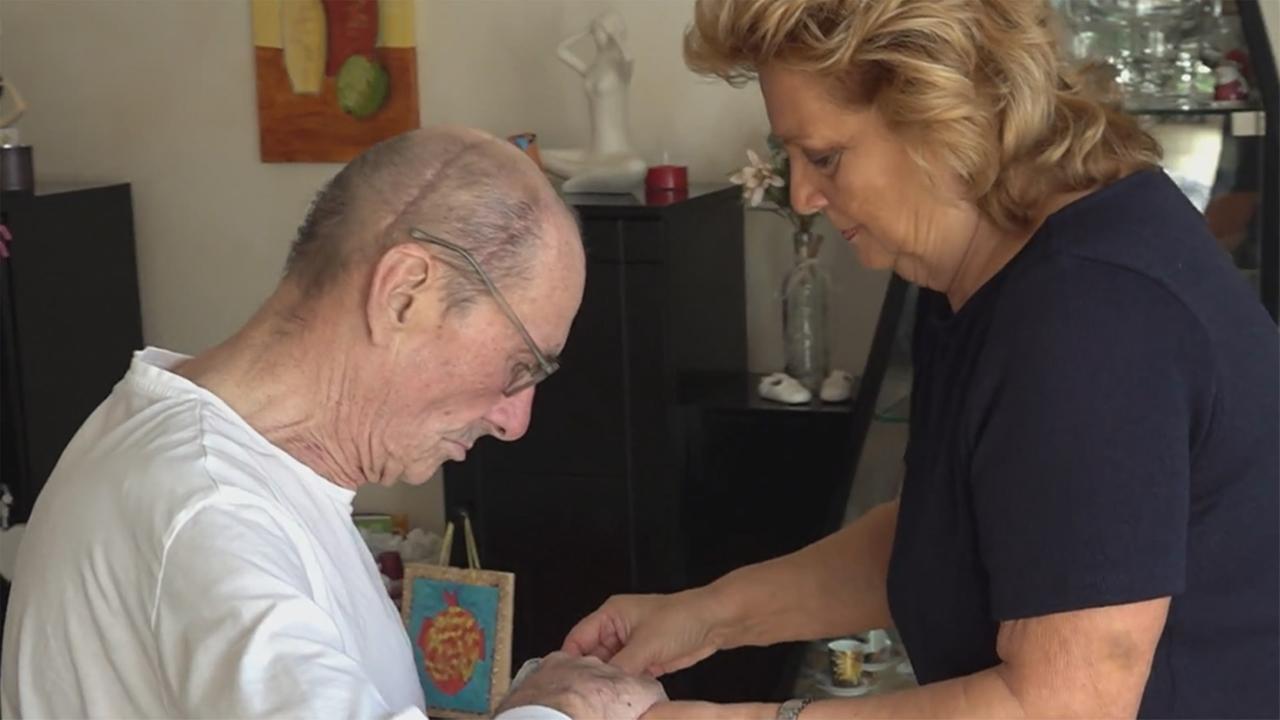
"Look at this," Jutta says, tapping her tablet screen. The image shows the couple standing arm-in-arm atop the Empire State Building in New York, a relic of a vacation taken just last year. Today, that vibrant, globetrotting couple exists in a starkly different reality. Since the spring of 2026, the 71-year-old Ulf has become a full-time care recipient, and his 66-year-old wife, Jutta, has transitioned into the role of his primary, full-time caregiver.
The Umsonsts’ story is a microcosm of the "care gap" currently threatening to destabilize the German social fabric. It is a story of sudden, life-altering health crises and the subsequent bureaucratic labyrinth that families must navigate when the state’s safety net proves insufficient.
Chronology of a Crisis: From Vitality to Vulnerability
The Umsonsts’ life shifted irrevocably during the 2026 Easter holidays. Following a sudden collapse in the bathroom, doctors discovered that Ulf was suffering from renal cancer, with metastatic tumors affecting his brain. These lesions had begun to hemorrhage, triggering symptoms that mimicked a severe stroke.
"The psychological toll was as heavy as the physical one," Jutta recalls. "On Thursday, we were cycling 80 kilometers together. By Saturday, he was critically ill."
Following two major surgeries and extended hospitalizations, Ulf returned home as a high-need patient. The transition was brutal. The family home, once a sanctuary of independence, had to be rapidly adapted. Because Ulf can no longer navigate stairs, the living room has been converted into a makeshift hospital suite. Simple tasks—getting out of bed, basic hygiene, eating—now require constant supervision and specialized assistance.
For the caregiver, the strain is constant. Jutta notes that even brief absences, such as a grocery run, are sources of immense anxiety for both parties. "He is terrified that I won’t come back," she explains. "He stays in constant contact via mobile phone. The reality is that if I were incapacitated, he would be completely helpless."
The Financial and Structural Labyrinth
The Umsonsts’ experience with the healthcare system highlights the systemic failures that the newly formed commission aims to address. Even obtaining basic equipment, such as a specialized care bed, proved to be an ordeal. The initial request was denied by the insurance provider, forcing the family to undergo multiple assessments by the Medical Review Board (MDK).
Only after months of bureaucratic wrangling was Ulf granted "Care Grade 4" (Pflegegrad 4). While this entitles them to a monthly care allowance, the family faces a cruel paradox: if they were to hire professional ambulatory nursing services, the allowance would be significantly reduced. As a result, they are forced to choose between professional help—which would offer Jutta a much-needed respite—and maintaining their financial independence.
Official Responses and the Legislative Landscape
The federal government, currently led by a coalition under pressure, has identified the nursing sector as a primary target for reform. On September 30, the Federal Cabinet approved a draft for a new "Nursing Reorganization Act." The legislation seeks to bridge a projected financing gap of approximately eight billion euros for the year 2027.
Key components of the legislative proposal include:
- Increased Contributions: A proposed increase in the surcharge for childless individuals by 0.3 percentage points, bringing it to 0.9%.
- Contribution Ceilings: An adjustment to the assessment threshold for long-term care insurance by 300 euros per month.
- Protecting Caregivers: Despite early speculation that support might be cut, Health Minister Carsten Linnemann (CDU) has confirmed that the state will continue to cover the full pension insurance contributions for family caregivers.
"These people support the entire system," Linnemann stated in an interview with the ARD network. "They are the silent heroes of our everyday life. At the point where it concerns family caregivers, I will make no compromises."
However, the government’s approach has been criticized for being reactive rather than structural. The newly formed Expert Commission is tasked with providing recommendations by the end of January to ensure the system is "future-proof" for the 2030s.
Structural Implications and Expert Criticism
Waltraud Klein, a member of the executive board of the Wir pflegen Rheinland-Pfalz e.V. association and a long-time advocate for the elderly, argues that the government is focusing on the wrong metrics.
"The financing issue is critical, but it must not be confused with true reform," Klein asserts. "We are currently using the most convenient lever—finances—rather than addressing the root causes. Our family structures have fundamentally changed; children often live hundreds of kilometers from their aging parents. The care system has failed to adapt to this mobility."
Klein’s critique is sharp: "We continue to pour time, energy, and money into a broken, fragmented system. We invent new informational apps instead of consolidating or dismantling the inefficient structures that make caregiving a full-time administrative burden."
A Proposal for Integrated Care
Klein advocates for the creation of "Integrated Care Centers." These would be community hubs where day-care, short-term inpatient care, night monitoring, and professional nursing services exist under one roof. Such centers, she argues, would drastically reduce the logistics burden on families, shorten travel times for professionals, and provide a sustainable model for the future.
Conclusion: The Human Cost of Policy
For the Umsonsts, the political maneuvering in Berlin feels far removed from their daily reality, yet it determines their future. While they are fortunate to have a daughter living nearby and a supportive extended family, they know they are the exception rather than the rule.
Jutta, herself a veteran of 32 years of volunteer local politics, offers a sobering perspective to lawmakers: "There is a feeling that politicians are losing their connection to the base. They look at spreadsheets, but they need to look behind the scenes."
As the new commission begins its work, the challenge remains clear. The German care system is currently sustained by the "invisible labor" of millions of family members. If the state continues to rely on this labor without providing robust, structural, and accessible support, the system will not merely buckle—it will collapse. For families like the Umsonsts, the demand is simple: recognize the human cost of care, simplify the bureaucracy, and build a system that supports the caregiver as much as the patient.