The autumn of 1989 remains etched in the collective memory of the German nation as a watershed moment—a period defined by the dramatic, non-violent dismantling of a dictatorship that had held East Germany in its grip for four decades. While the imagery of the Berlin Wall falling is globally recognized, the true impetus for this systemic collapse began in the quiet, industrial corners of the German Democratic Republic (GDR). Among the unsung architects of this transformation is Siegmar Wolf, a resident of Plauen whose singular act of defiance serves as a profound symbol of the courage required to challenge an immovable regime.
The Catalyst of Change: A Single Transparent
In the early days of October 1989, the atmosphere in the GDR was thick with tension. Citizens were increasingly emboldened by the changing political climate in the Soviet Union and the opening of borders in neighboring Hungary. In Plauen, a city in the Vogtland region of Saxony, the momentum of dissent was reaching a boiling point. It was here that Siegmar Wolf made a decision that would ripple through the streets.
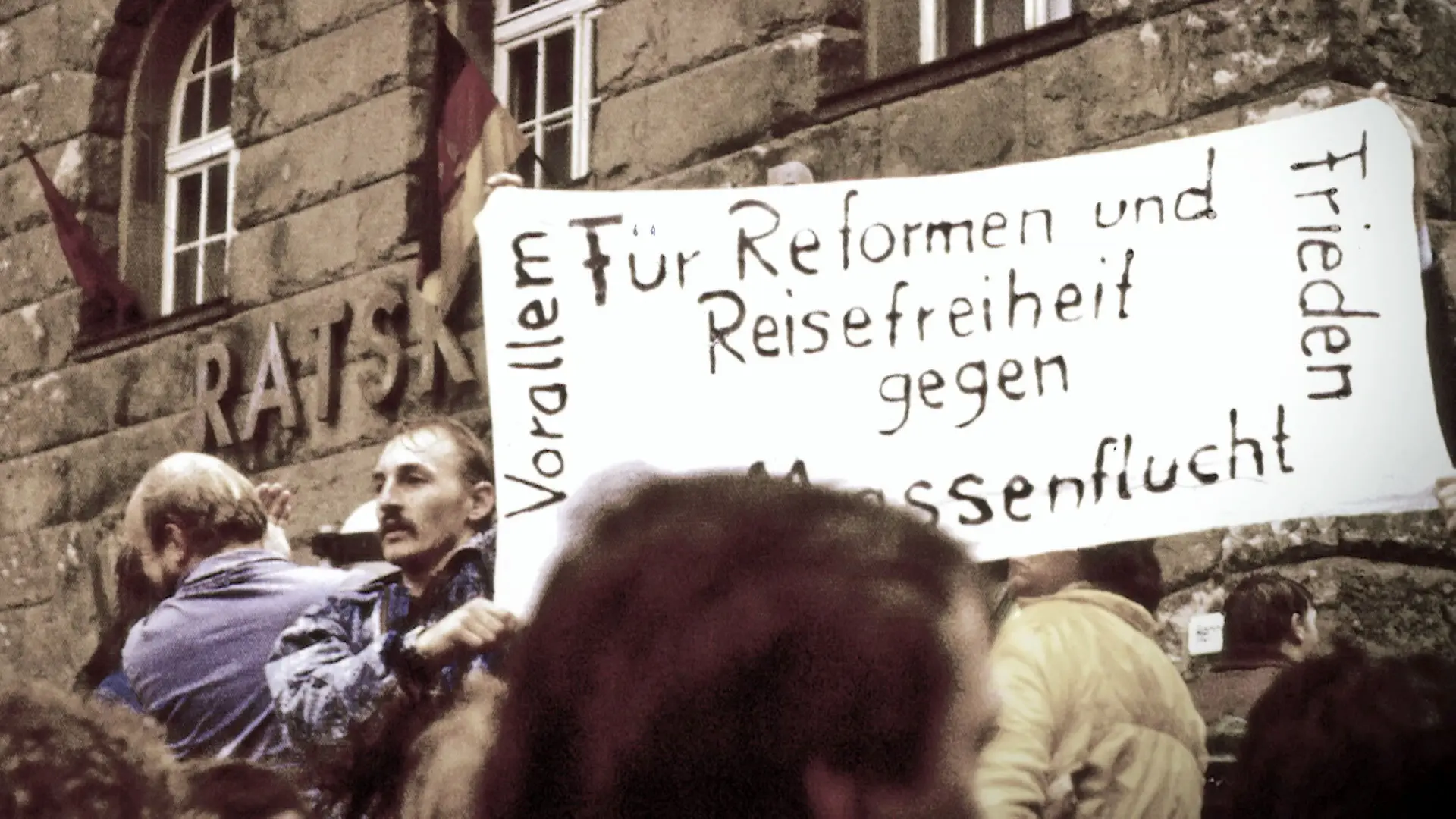
Wolf is widely recognized as one of the first demonstrators in the city to actively brandish a homemade banner. This was not merely a piece of fabric; it was an act of existential rebellion. Under the watchful eyes of the Stasi (the Ministry for State Security) and local police units, carrying a message of dissent was an invitation to imprisonment, surveillance, or worse. By holding that transparent aloft, Wolf transformed a collection of frustrated individuals into a cohesive protest movement. His actions provided a focal point for the gathering crowds, giving voice to the silent majority who had grown weary of the Socialist Unity Party’s (SED) stagnation.
Chronology of the Plauen Uprising
To understand the significance of Wolf’s contribution, one must place it within the specific timeline of the autumn of 1989.
- September 1989: The exodus of East Germans via the Hungarian border and the Prague embassy reaches a crescendo. The legitimacy of the SED government is visibly fraying.
- Early October 1989: Local protests begin to organize across the GDR. While Leipzig’s Monday demonstrations would later capture international headlines, cities like Plauen acted as critical pressure valves.
- October 7, 1989: The 40th anniversary of the founding of the GDR. The state attempts to project an image of stability and socialist pride. However, in Plauen, the defiance is palpable.
- The Days of Decision: As the security apparatus struggled to suppress local gatherings, demonstrators like Wolf challenged the state’s monopoly on public space. The fear factor—the primary tool of the regime—began to evaporate as the sheer number of people overwhelmed the ability of the police to make mass arrests.
- Late October/November 1989: The sustained pressure from these local protests culminates in the broader nationwide demand for travel freedom and democratic reforms, leading to the events of November 9 in Berlin.
The Anatomy of the Peaceful Revolution
The "Peaceful Revolution" was not an accidental occurrence; it was a socio-political phenomenon driven by local actors who were willing to risk their livelihoods. Historians often emphasize the role of the churches, which provided a sanctuary for dissenters, but it was the individual courage of citizens like Wolf that moved the protest from the pews to the pavement.
Supporting data from local archives indicates that in the weeks leading up to the fall of the Berlin Wall, the frequency of demonstrations in Saxony increased by over 400%. The state, previously reliant on the Stasi’s ability to identify and neutralize "ringleaders," found itself incapable of managing thousands of participants who lacked a central command structure. This decentralized nature of the protests made them nearly impossible to crush through traditional state violence.
Official Responses and the Illusion of Stability
In the days surrounding October 7, 1989, the official rhetoric of the GDR remained defiant. State media outlets, such as the Aktuelle Kamera, broadcast images of parades and celebrations, attempting to paint a picture of a nation united behind the party leadership.
Behind closed doors, however, the response was one of panic. Official reports from the district leadership in the Vogtland region reveal a frantic obsession with "subversive elements." The security apparatus documented every instance of "provocative behavior"—a label they applied to the use of banners, slogans, or even the act of gathering in large groups. Documents released after the reunification show that the local authorities in Plauen had prepared contingency plans for "cleansing" the streets, but the sheer volume of peaceful protesters created a scenario where the use of lethal force would have necessitated a massacre, a move the leadership—sensing their imminent collapse—ultimately feared would trigger a total loss of control.
Implications: The Legacy of Local Dissent
The story of Siegmar Wolf and the Plauen protests carries several profound implications for the study of modern democracy and civil resistance.
1. The Power of "Ordinary" Individuals
The revolution was not started by politicians or celebrity dissidents. It was sustained by people like Wolf—factory workers, teachers, and students. This demonstrates that historical change is rarely top-down; it requires the mobilization of the grassroots.
2. The Fragility of Authoritarianism
The events of 1989 exposed the "brittle" nature of authoritarian regimes. Because the GDR relied on a performative adherence to state ideology, the moment that performance ceased, the state’s foundation cracked. When a critical mass of people stops believing in the state’s narrative, the state’s power evaporates, regardless of how many police officers are stationed on the street corners.
3. The Importance of Memory
Today, the role of Plauen and the efforts of its citizens are integrated into the broader narrative of German reunification. It serves as a reminder that the democratic freedoms enjoyed by modern Germany were not merely granted from above; they were claimed by individuals who were prepared to lose everything for the possibility of a free society.
Connecting the Generations
The legacy of these protests continues to resonate in contemporary German discourse. In recent years, educational initiatives have sought to bridge the gap between the generation that lived through the 1989 revolution and the youth of today. The use of historical archives, oral history projects, and the preservation of personal artifacts—like the very banners carried by protesters—are vital in maintaining this connection.
As seen in the recent regional discussions in Saxony, the focus has shifted toward how these historical lessons apply to current challenges. Whether it is addressing the complexities of modern agricultural policies, technological shifts in industry, or the ongoing integration of diverse communities, the spirit of "We are the people" (Wir sind das Volk) remains a cornerstone of the regional identity.
Conclusion: A Continuing Commitment
The peaceful revolution in Plauen was more than a localized event; it was a pivotal chapter in the global history of human rights and civil disobedience. The act of holding a banner in 1989 was a spark that helped light the bonfire of liberty. By reflecting on the life and courage of individuals like Siegmar Wolf, we are reminded that the price of freedom is eternal vigilance and that the most powerful weapon against oppression is the collective refusal to remain silent.
As Germany continues to navigate the challenges of the 21st century, the memory of those days in Plauen serves as a compass. It reminds every citizen that the institutions of a free society are maintained by the active, often difficult, participation of its people. The banner raised in the autumn of 1989 still flies, metaphorically, in the hearts of those who understand that history is written not by the powerful, but by those brave enough to stand in the street and demand a better future.