The hallowed halls of the Bayreuth Festspielhaus, an institution synonymous with the towering genius and the dark historical shadows of Richard Wagner, are currently engulfed in a storm of controversy. At the heart of the dispute is the abrupt cancellation of "Verstummte Stimmen" ("Silenced Voices"), a memorial concert scheduled for June 26th that was intended to confront the legacy of antisemitism deeply embedded in the festival’s past.
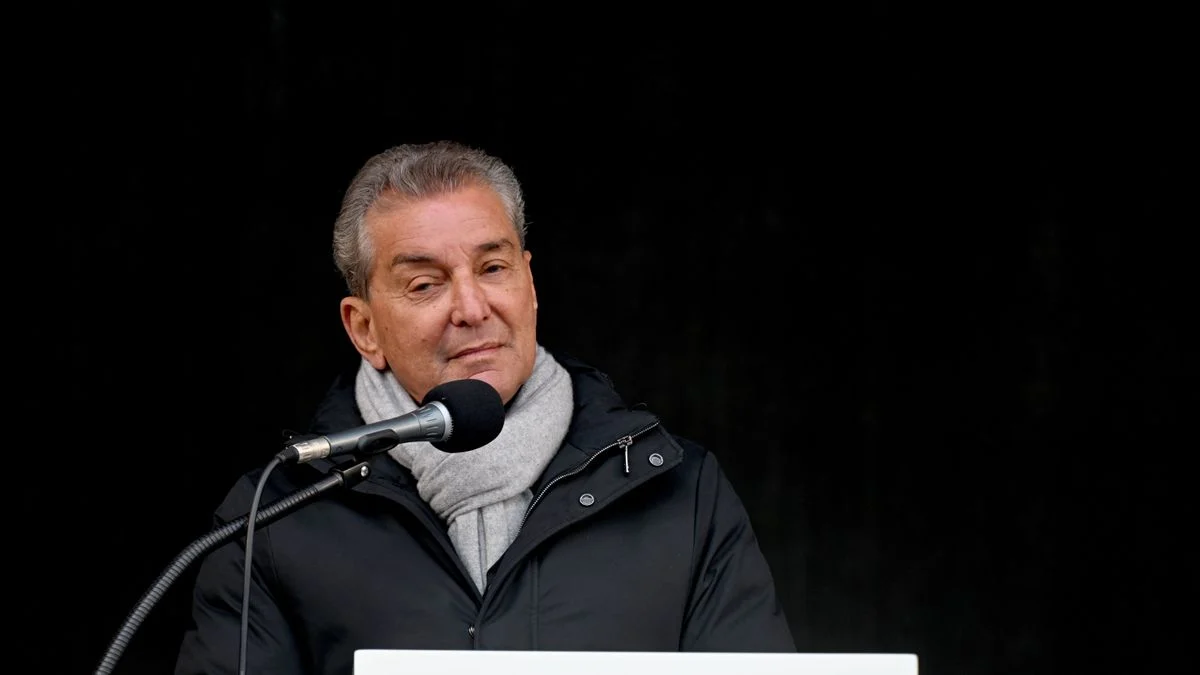
The cancellation has drawn sharp, stinging rebukes from public figures, most notably the prominent author and television host Michel Friedman. For Friedman, the decision represents not merely a logistical failure, but a profound moral capitulation that threatens the integrity of cultural remembrance in modern Germany.
The Catalyst: A Memorial Scrapped
The "Verstummte Stimmen" concert was slated to take place immediately preceding the premiere of Richard Wagner’s early opera Rienzi. The event was designed to be a moment of critical reflection, featuring a keynote address by Friedman, aimed at honoring the Jewish musicians and artists who were systematically erased from the festival’s history during the National Socialist era.
However, organizers announced that the event would no longer proceed. The timing of the cancellation—occurring during the festival’s 150th-anniversary celebrations—has amplified the intensity of the backlash, as critics argue that the refusal to engage with the "darker chapters" of the institution undermines the very purpose of an anniversary celebration.
A "Suicide of Democracy"
Michel Friedman, a vocal advocate for Jewish life and historical accountability in Germany, did not mince words when speaking to the Süddeutsche Zeitung. He characterized the decision as a fatal blow to the principles of an open society.
"This is the death by suicide of a democracy," Friedman stated. "The seriousness of confronting the antisemite Wagner is reduced to absurdity by this cancellation."
Friedman’s critique centers on the danger of retreating in the face of pressure. By failing to hold a space for those who were excluded or murdered under the Nazi regime, he argues, the Bayreuth Festspiele are effectively choosing to sanitize their own history rather than face the uncomfortable truths of their institutional lineage.
Official Responses: Security or Abdication?
The official justification provided by the festival leadership has ignited further debate. Heinz-Dieter Sense, the interim managing director of the Bayreuth Festspiele, addressed the decision in an interview with the Bayerischer Rundfunk. Sense cited insurmountable security challenges as the primary catalyst for the cancellation.
"Because one cannot handle the highest security level in the Festspielhaus twice in a row," Sense explained. "The time between the end of the morning event and the beginning of the afternoon event is too short. Given the current global situation, everyone is tremendously cautious. If no one can guarantee that it is feasible, then I cannot hold the event."
Sense’s comments highlight a growing tension in European cultural institutions: the struggle to balance the duty of public commemoration with the physical safety of participants in an era of heightened security threats. However, this explanation has failed to satisfy critics who view security as a secondary concern compared to the moral necessity of the event.
Friedman dismissed the security argument as a hollow excuse. "Then secure the event," he retorted. "And spare us the Sunday sermons!" His argument is rooted in the belief that if the state and cultural institutions cannot protect those who wish to speak against intolerance, then the democratic project has already failed.
A Legacy Haunted by History
To understand the gravity of this cancellation, one must look at the unique and heavy history of the Bayreuth Festspiele. For 150 years, the festival has been a beacon of German high culture, but its relationship with Jewish history is inextricably linked to the personal biases of its founder and the subsequent embrace of the festival by the Third Reich.
Richard Wagner himself was an avowed antisemite whose writings provided a cultural and intellectual framework that was later weaponized by the Nazi Party. During the Hitler era, Bayreuth became a central site of National Socialist propaganda. Winifred Wagner, the festival’s director at the time, was a close friend and fervent supporter of Adolf Hitler, who was a frequent and honored guest at the festival.
For decades, the post-war festival leadership has struggled to reconcile this legacy. While modern iterations of the festival have made strides in commissioning avant-garde, critical, and deconstructive stagings of Wagner’s operas, the cancellation of "Verstummte Stimmen" is viewed by many as a regression—a sign that the festival is uncomfortable with the "critical look at history" that director Katharina Wagner has publicly championed.
The Wider Implications
The incident at Bayreuth is part of a broader, ongoing national conversation in Germany regarding the "culture of remembrance" (Erinnerungskultur). As the generation of eyewitnesses to the Holocaust passes away, the burden of maintaining historical consciousness has shifted to institutions.
1. The Erosion of Public Space
Critics argue that if major cultural institutions like Bayreuth allow security concerns to dictate their programming, they are effectively granting "veto power" to the very extremist elements that threaten democratic discourse. If the threat of disruption or violence is enough to silence a memorial, the public square becomes increasingly narrow.
2. The Credibility Gap
By cancelling the event, the festival has arguably caused more damage to its reputation than the event itself might have. The optics of a 150-year-old institution failing to confront its own history—specifically when that history involves the persecution of Jews—risks alienating both the artistic community and the public. It suggests that the institution is willing to pay lip service to historical reflection but is unwilling to commit the resources required to protect that reflection in reality.
3. The Responsibility of the State
As a heavily state-subsidized institution, the Bayreuth Festspiele carry a responsibility that transcends simple operatic production. They are a national symbol. The fact that the federal and state authorities, who provide significant financial support to the festival, have not intervened or provided a bridge for the event to continue has raised questions about the level of political commitment to "never again."
A Call to Action
The reaction to the cancellation has been widespread, with historians, Jewish advocacy groups, and cultural commentators calling for an immediate reversal or a rescheduled alternative. The consensus among these voices is that the act of remembrance is not a luxury to be enjoyed when conditions are "safe," but a fundamental requirement of cultural life in a post-Holocaust Germany.
"If we stop being able to look at our own history because it is inconvenient or dangerous," one commentator noted, "we are not just losing a concert. We are losing our ability to learn from the past."
Conclusion
As the curtain rises on the 150th anniversary of the Bayreuth Festspiele, the absence of "Verstummte Stimmen" will loom larger than the performance itself. The festival finds itself at a crossroads: it must decide whether it wishes to remain a museum of 19th-century aestheticism, protected from the realities of the modern world, or if it will choose the harder, more courageous path of confronting the ghosts of its own past.
For Michel Friedman and those who share his outrage, the message is clear: True democracy is measured by the ability to defend the uncomfortable truths. By cancelling the memorial, Bayreuth has failed to answer the call of history, leaving the "silenced voices" silent once more—a silence that echoes far beyond the walls of the Festspielhaus.