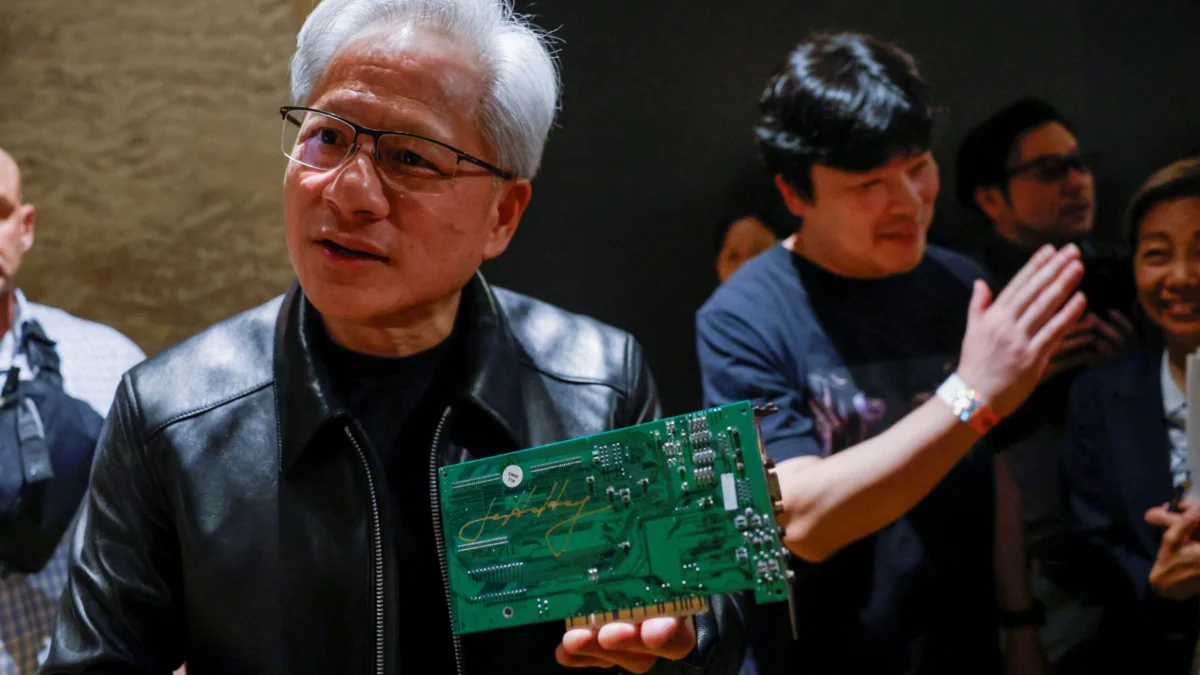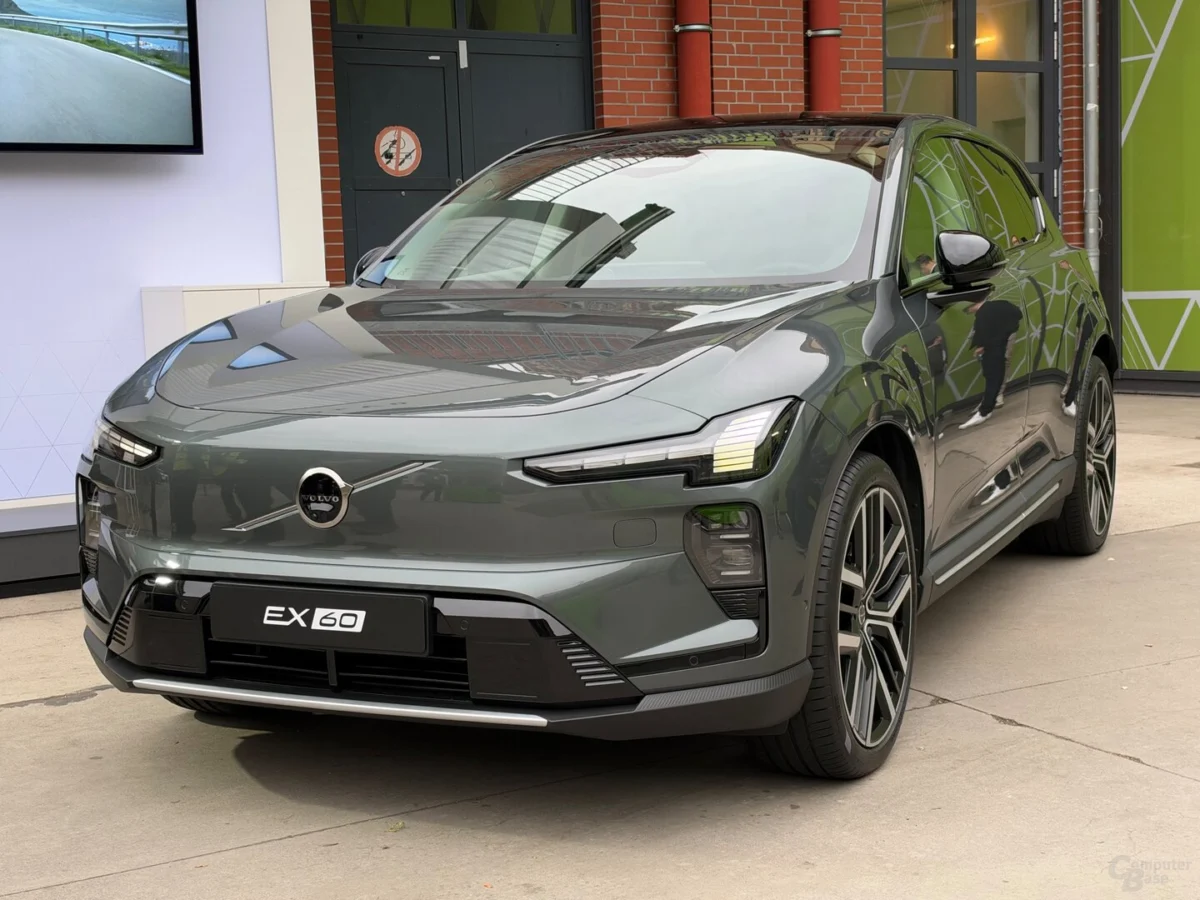
The automotive industry is currently embroiled in a high-stakes race to define the future of personal mobility. As software increasingly becomes the primary differentiator between luxury vehicle manufacturers, Volvo Cars has doubled down on its strategic partnership with semiconductor giant Nvidia. At the recent Nvidia GTC conference in Berlin, Volvo’s leadership outlined an ambitious roadmap to bring advanced, semi-automated driving capabilities—classified as "Level 2++"—to the mass market before 2030.
This initiative represents a pivotal shift for the Swedish automaker, moving away from experimental, sensor-heavy pilot programs and toward a standardized, scalable software architecture that promises to redefine the relationship between the driver and the machine.
The Core Objective: Defining Level 2++
At the heart of Volvo’s strategy is the implementation of a "Level 2++" automated driving system. While SAE Level 2 is common in modern vehicles—allowing for adaptive cruise control and lane-centering—the "++" designation signifies a significant leap in capability.
Under this proposed system, a vehicle will be capable of navigating from parking lot to parking lot with minimal human intervention. A driver would simply input a destination, and the vehicle would handle the complexities of city traffic, winding country roads, and high-speed highway merging. However, Volvo is careful to maintain a clear distinction regarding legal and safety responsibilities: the human driver remains the primary supervisor.

"We want to start with L2++, which covers a very broad range of driving scenarios, but we want to keep the driver consciously in charge," explained Alwin Bakkenes, Head of Software Engineering at Volvo Cars. This approach acknowledges the technological limits of current artificial intelligence while pushing the boundaries of what a vehicle can handle in diverse, real-world environments.
Chronology: From Lidar Ambitions to a Software-Defined Future
Volvo’s path to this point has been iterative and occasionally turbulent.
- The Lidar Era (2021–2024): Volvo initially made headlines by integrating Luminar Lidar sensors into its flagship models, the EX90 and ES90. The intent was to create a hardware-ready platform for advanced autonomous capabilities.
- The Pivot (2025): Due to supply chain complexities and challenges in realizing the full potential of the integrated Lidar software, Volvo made the difficult decision to move away from Lidar for its current model year 2026 vehicles.
- The Nvidia Partnership (Present): With the focus shifting toward software-defined performance, Volvo is now betting on a high-performance, camera-and-radar-centric approach powered by Nvidia’s Orin X platform.
- The 2030 Horizon: The company has set a target to roll out this L2++ functionality across a wider range of vehicles well before the turn of the decade, moving away from exclusive high-end packages to a more democratic, unified software architecture.
Technical Foundations: Hardware and Sensor Fusion
The backbone of Volvo’s automated future is the Nvidia Orin X, a centralized computing platform that serves as the "brain" of the vehicle. By centralizing processing power, Volvo aims to reduce the fragmentation that often plagues automotive software stacks.
The Sensor Array
To achieve L2++ performance, the vehicle’s "eyes" must be significantly upgraded. While current production vehicles may utilize five exterior cameras for basic safety and lane-keeping, the new system will require a total of ten cameras. This includes high-resolution, long-range optics to monitor the rear and side profiles, as well as specialized sensors for navigating complex intersection scenarios.

Redundancy and Safety
A major point of contention in autonomous development is safety. Bakkenes confirmed that for the L2++ system, Volvo is implementing rigorous redundancy protocols. This includes:
- Redundant Power Supply: Ensuring that the computer never loses power, even in the event of a primary electrical failure.
- Actuator Redundancy: Independent, fail-safe systems for both steering and braking.
- Halos OS: The use of Nvidia’s safety-certified operating system ensures that the software stack meets the stringent functional safety requirements demanded by European and international regulators.
Interestingly, Volvo has determined that while redundant actuators and power are essential, a redundant computer platform is not strictly required for this level of automation, highlighting the efficiency of the Nvidia architecture.
Market Strategy: The "Trial Before You Buy" Model
Perhaps the most consumer-centric aspect of Volvo’s plan is its marketing strategy. Unlike competitors who often gatekeep advanced features behind "Pro" packages or expensive one-time hardware purchases, Volvo intends to make the L2++ capability a standardized feature across various models.
Universal Hardware, On-Demand Software
The vision is to equip as many vehicles as possible with the necessary camera and sensor suite from the factory floor. This allows the software to be activated at a later date, potentially via an over-the-air (OTA) update.

"We want to make this available as a test before purchase," Bakkenes noted. This model shifts the industry standard from a binary "buy or not" choice to an experiential approach. Consumers can test the system during a trial period, allowing them to assess its utility in their daily commute—be it urban traffic jams or long-distance highway travel—before committing to a purchase or a subscription.
While the pricing model (subscription vs. one-time fee) remains undecided, the move toward standardizing hardware is a clear indicator that Volvo expects software-driven features to be a primary revenue stream in the coming decade.
Official Responses and Strategic Philosophy
The collaboration between Volvo and Nvidia is described by both parties as a "true partnership" rather than a simple supplier-buyer transaction.
The Security Alignment
Volvo has consistently built its brand identity around safety. Bakkenes emphasized that the primary filter for any technology choice was whether it matched Volvo’s safety culture. "We found that we share the same understanding of safety," he said. This means that the Nvidia-powered system is not just being "plugged in"; it is being tuned to mimic the characteristic "Volvo feel"—smooth deceleration, predictable cornering, and intuitive driver-assistance alerts.

Data-Driven Evolution
Volvo plans to leverage the vast data streams coming from its global fleet to train its AI models. By combining real-world driving data with synthetic scenarios (digital twins), the company can stress-test its software against "edge cases"—rare, dangerous, or complex traffic situations that are difficult to replicate in physical testing.
Broader Implications: What This Means for the Consumer
The move to a unified, software-defined architecture has massive implications for the automotive market.
1. The Death of Model-Specific Complexity
By decoupling software from specific vehicle hardware, Volvo is effectively shortening its development cycles. If a breakthrough is made in the software for the EX60, it can theoretically be ported to other models in the lineup much faster. Bakkenes hinted that this could result in faster-than-expected rollouts, with newer vehicles potentially receiving the technology ahead of the 2030 target.
2. The Evolution of "Eyes-Off"
While L2++ keeps the driver engaged, it serves as a stepping stone. Volvo’s ultimate goal remains "Eyes-off" and "Mind-off" automation. By building the L2++ foundation now, the company is gathering the necessary data and public trust to bridge the gap toward Level 3 and Level 4 autonomy in the future.

3. The Future of the Dashboard
As vehicles become more capable of navigating on their own, the interior experience will inevitably change. If the car is handling the steering and braking, the screen real estate currently occupied by navigation and status alerts may eventually shift to entertainment and connectivity, fundamentally changing how we use our time while in transit.
Conclusion
Volvo’s strategy for the next five years is a testament to the pragmatism currently sweeping through the premium automotive sector. By tempering the hype of "full self-driving" with the tangible, high-utility promise of L2++, Volvo is positioning itself to be a leader in accessible, high-tech mobility.
The shift to a standardized hardware suite, combined with a flexible "try-before-you-buy" software model, suggests that the car of the future will be less about the engine under the hood and more about the intelligence behind the glass. With Nvidia as a partner, and a clear focus on safety-certified, scalable software, Volvo is not just building cars; it is building a digital ecosystem designed to make the road safer, one kilometer at a time. Whether this approach will satisfy the demands of a tech-hungry market remains to be seen, but for now, Volvo has provided a clear, realistic roadmap that keeps the driver in the loop while inviting them to embrace the future of driving.