As the alpine ski world turns its gaze toward the iconic Rettenbach Glacier in Sölden, one name is being whispered with increasing frequency among the sport’s elite: Emma Aicher. Following a breakout season that defied expectations, the 22-year-old German-Swedish sensation enters the new World Cup campaign not merely as a rising star, but as a legitimate contender for the sport’s most prestigious prize—the overall Crystal Globe.
The Main Facts: A New Challenger in the Alpine Arena
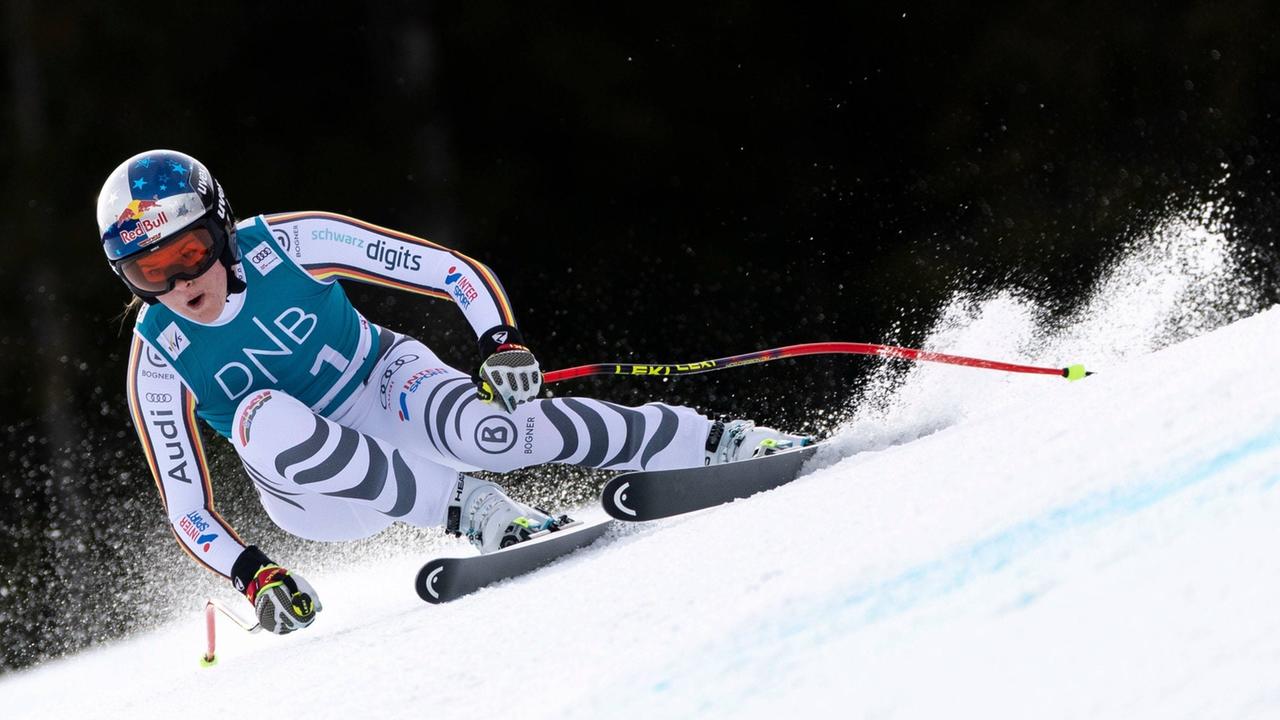
The alpine ski calendar resets this weekend, but for Emma Aicher, the narrative is a continuation of a meteoric rise. Last winter, the 22-year-old athlete—representing the SC Mahlstetten—cemented her status as an elite all-rounder. Her trophy cabinet now boasts two Olympic silver medals, three individual World Cup victories, and a consistent presence on the podium that unsettled the established order.
However, the most telling statistic of her previous campaign was her proximity to greatness. Aicher finished the season just 87 points shy of Mikaela Shiffrin in the overall standings. For a skier who had previously considered such a trajectory "undesirable" or "unthinkable" at the season’s outset, the gap represents more than just a deficit; it serves as a roadmap for what is possible in the upcoming months. As the team gears up for Sölden, Aicher remains focused, grounded, and typically understated. "I’ve been race-free for long enough," she remarked during her pre-season kit fitting. "It is good that the racing is finally starting again."
Chronology: From Prodigy to Powerhouse
To understand Aicher’s current position, one must look at the timeline of her evolution. Just seven months have passed since the final gate of the previous season was cleared. While many athletes spent the summer analyzing split times and reliving highlight reels, Aicher took a different approach. She spent the majority of her off-season away from the spotlight, almost forgetting the magnitude of her own achievements.
"People had to remind me of what happened last winter because I hadn’t really thought about it," Aicher admitted. This characteristic humility is a hallmark of her personality, yet it masks a relentless work ethic.
The previous season was a masterclass in versatility. By competing across all four disciplines—Slalom, Giant Slalom, Super-G, and Downhill—Aicher pushed the boundaries of her physical and technical capabilities. While she dominated the technical events, her ability to secure points in speed disciplines kept her in the hunt for the overall title until the final races of the season. This summer, she has specifically targeted the "missing links" in her performance, dedicating rigorous hours to refining her technique in Giant Slalom, a discipline she identified as needing improvement compared to her peerless Slalom prowess.
Supporting Data: Analyzing the Path to the Crystal Globe
The path to the overall title is rarely linear, but the data suggests Aicher has the necessary components to bridge the 87-point gap. Her performance metrics from last season show a 92% finish rate in completed runs, an indicator of both technical stability and tactical maturity.
Furthermore, the competitive landscape is shifting. Mikaela Shiffrin, the long-standing titan of the sport, has signaled a strategic pivot, indicating she may limit her schedule in her signature slalom events to prioritize longevity and focus on specific targets. This tactical decision by the American legend opens a window of opportunity for the younger generation, with Aicher positioned at the front of the queue.
However, the field remains crowded. The return of several top-tier athletes from long-term injuries adds a layer of unpredictability to the rankings. Aicher acknowledges this reality, noting, "Everything starts at zero. You have to fight for every single point to stay at the top. The field is deeper and more competitive than ever."
Official Responses and Perspectives: A Philosophy of Focus
Despite the mounting pressure and the media circus surrounding her, Aicher maintains a perspective that is refreshing in the high-stakes world of professional skiing. When asked about her newfound fame and the autograph-seekers who now follow her, she remains genuinely perplexed.
"I still find it weird when people ask for autographs. I think, ‘Why?’ It’s strange that people know who I am," she said. "It’s different from last year, but at the end of the day, I’m working for this. I want to be where I am, but I don’t want the fame to change the focus on the skiing."
Her coaching staff at the German Ski Federation (DSV) has praised her mental fortitude. By avoiding the trap of setting concrete, ego-driven goals—like explicitly stating "I will win the Globe"—Aicher maintains a "process-first" mentality. This approach allows her to isolate performance variables. Instead of obsessing over medals, she focuses on the minutiae of her edge angle, her line choice, and her recovery times.
The Human Element: Outside the Skiing World
Perhaps the most fascinating aspect of Aicher’s personality is her desire for anonymity. In a rare moment of levity during an interview, she revealed an unusual wish: if she could be invisible for a day, she wouldn’t use it to spy on rivals or visit exclusive resorts. Instead, she would shadow the American actor Adam Sandler on a film set.
"I think he’s cool, and he’s funny," she explained. "To see what really goes on behind the scenes in that industry, to just be a fly on the wall, would be a totally different experience." This curiosity about the world beyond the snow-covered mountains suggests a well-rounded individual who understands that athletic performance is only one dimension of her identity.
Implications: A Winter of Consequence
As the circuit prepares for the World Championships in Crans Montana in February, all eyes are on the German star. The implications of this season are significant. If Aicher can maintain her consistency, she could become only the fourth German woman in history to capture the overall Crystal Globe, a feat not seen since the days of Maria Höfl-Riesch in 2011.
The Sölden opener will serve as the first litmus test. The Rettenbach glacier is notorious for its steep, demanding pitch—a section Aicher openly admits is not her favorite. "It’s not my favorite slope, but I will give my best. If it goes well, it’s great. If it doesn’t, I know exactly what I need to work on for the rest of the season."
This pragmatic outlook is exactly what makes her a dangerous competitor. She does not view a single race in isolation; she views it as data. For Emma Aicher, the pressure of the world stage is simply noise; the only thing that matters is the gate in front of her.
As the starting gun fires in Sölden, the sport of alpine skiing finds itself at an inflection point. The old guard is being challenged, and a new, unassuming, yet incredibly talented force has arrived. Whether she claims the trophy this year or eventually, one thing is certain: the future of women’s alpine skiing has a new, formidable face, and her name is Emma Aicher. She is not just racing for points; she is racing to redefine what is possible for her generation. The snow is ready, the gates are set, and for the first time in a long time, the favorite for the title is looking at the challenge not with fear, but with a quiet, steely resolve.