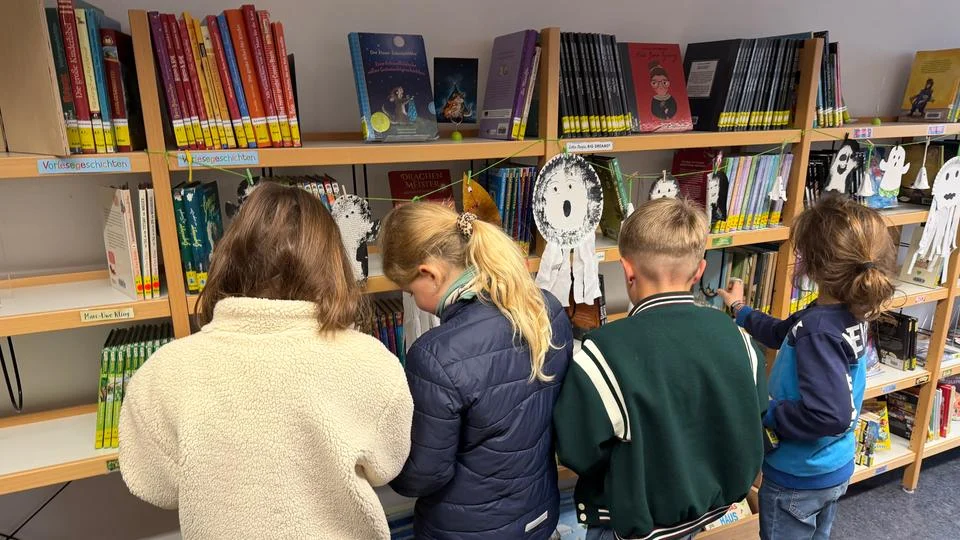
In the heart of the Fulda district lies a beacon of cultural vitality that defies the prevailing narrative of the “dying library.” The municipal library in Kalbach, while modest in physical scale, has emerged as arguably the most successful institution of its kind in the entire region. Amidst a national trend where the number of registered libraries in Germany has dwindled from over 900 in 1999 to roughly 600 today, Kalbach stands as a defiant outlier. Its secret? A sophisticated blend of traditional, high-touch community engagement and a nimble, trend-conscious approach to modern media.
The Pulse of the Library: A Hub of Activity
Stepping into the Kalbach library on a typical weekday, one is immediately struck by the atmosphere. It is not the hushed, sterile environment often associated with archives, but a buzzing, vibrant social space. Users of all ages drift between shelves, scouting for new novels, board games, and digital media.
At the center of this hive is Bianca Riediger, the volunteer director whose infectious energy keeps the gears turning. For Riediger, the busiest moments are predictable yet exhilarating: around 10:00 a.m., the neighboring primary school releases its students for their morning break, and a wave of children floods the library. They aren’t just here for books; they are here because the library has become an essential part of their social and educational fabric.
“You can just come here whenever it’s open,” says young reader Annemarie, a frequent visitor. “It’s relaxing. You can just read books, and it’s a break from the routine.” For Annemarie, like many others, the library is a sanctuary. Whether she is diving into the mystery-solving adventures of The Three Investigators (Die drei Fragezeichen), tracking the humorous escapades of Diary of a Wimpy Kid (Gregs Tagebuch), or engaging with the equestrian tales of Ostwind, the library provides a gateway to worlds beyond the classroom.
By the Numbers: An Unprecedented Success Story
The statistics emanating from this small facility are nothing short of remarkable. Despite operating on a limited schedule—open only two days a week for a total of four and a half hours—the library has processed roughly 16,000 media loans as of October.
To put this in perspective, on peak days, the library records more than 400 checkouts. For many similar-sized libraries, 400 loans might represent the total volume for an entire year. With a curated collection of approximately 3,500 items—spanning children’s literature, comics, adult fiction, and specialized games—the library maintains a high turnover rate. Children’s literature and adult fiction are the clear heavyweights, each accounting for nearly 900 titles. This high-velocity circulation demonstrates that the community is not merely "visiting" the library; they are actively consuming its resources at an astonishing rate.

A Chronology of Community-Centric Evolution
The library’s current success is not an overnight phenomenon but the result of a strategic, years-long evolution.
- Early Adaptation: Recognizing that physical books alone were not enough to capture the attention of a digital-native generation, the team began integrating "Tonies" several years ago. These audio-figure systems—which play stories and music when placed on a docking station—became a cornerstone of the children’s section, bridging the gap between tactile play and digital audio consumption.
- The Shift to Experience: Moving beyond passive lending, the library began hosting recurring events. From book-bingo nights to art exhibitions, the space transformed into an event venue.
- Current Innovation: This year, the library introduced the Kamishibai (Japanese paper theater). This analog storytelling tool, consisting of a wooden frame and illustrated cards, has been a hit for family gatherings, providing a creative, non-digital alternative for parents and children alike.
- Future Planning: Looking ahead, the library continues to secure high-profile engagements, such as the upcoming reading by author and radio host Uta Rosa Schmidt, designed to keep the institution at the forefront of local cultural discourse.
The "Third Place" Philosophy
The success of the Kalbach library is firmly rooted in the sociological concept of the "Third Place." Coined by Ray Oldenburg in 1989, the term refers to social surroundings separate from the two primary environments of home (the first place) and the workplace or school (the second place).
"It is a place where you can meet and network without having to buy anything," explains Riediger. "Regardless of who you are, you are welcome here. We exclude no one."
This low-threshold accessibility is crucial. In an era where public spaces are increasingly commodified—where sitting in a café requires a purchase and community centers are often locked behind membership fees—the library remains a rare, democratic space. By fostering an environment that encourages conversation, the staff has built a feedback loop. When volunteers chat with patrons, they learn exactly what the community wants to read, allowing for hyper-targeted collection development. "Often, we’ll be discussing a new title and say, ‘Oh, this would be perfect for Mrs. So-and-So,’" Riediger notes.
Official Perspectives and Educational Impact
The library’s relationship with the local primary school is symbiotic. Elke Lauer, a teacher at the school, views the library as a "jackpot." The library management has even aligned its opening hours with the school’s break schedule to ensure maximum accessibility.
"For our children, I notice that the vocabulary has narrowed over the years," Lauer observes. "Whether it’s a picture book, a comic, or a Tonie, every contact with literature promotes the students’ ability to express themselves." Lauer emphasizes that the library provides a vital equalizer; it offers access to literature for children whose home environments may not prioritize reading, effectively bridging the educational divide.

However, the broader landscape in Hesse remains concerning. The Hessian Specialist Agency for Public Libraries (Hessische Fachstelle für öffentliche Bibliotheken) warns that the reliance on aging, volunteer-led management is a structural vulnerability. Many library directors are nearing retirement, and finding successors in rural areas is increasingly difficult. This creates a potential "knowledge gap" and a risk of service collapse if the institutional memory of these volunteers is not passed down.
Challenges and Future Implications
Despite its current triumphs, the Kalbach library faces the same pressures as its peers: the struggle to stay relevant in a digital world and the need to shed the "dusty" image that many public libraries still carry.
Riediger is acutely aware of this. "We have to show presence," she insists. "We must hold events that bring people from outside into the library, and we have to work on that dusty image." This involves initiatives like serving mulled wine and cookies during extended evening hours, turning the library into a festive, social destination rather than a quiet repository of paper.
The implication of Kalbach’s success is clear: the model of the "small-town library" is not obsolete; it is merely in need of a reboot. By prioritizing personal connection, staying agile with new media trends, and acting as a true "third place" for the community, rural libraries can thrive. As the state of Hesse continues to grapple with the decline of its library network, Kalbach serves as a roadmap. It proves that when a library stops being a warehouse for books and starts being a living, breathing community hub, the public will not only return—they will show up in record numbers.