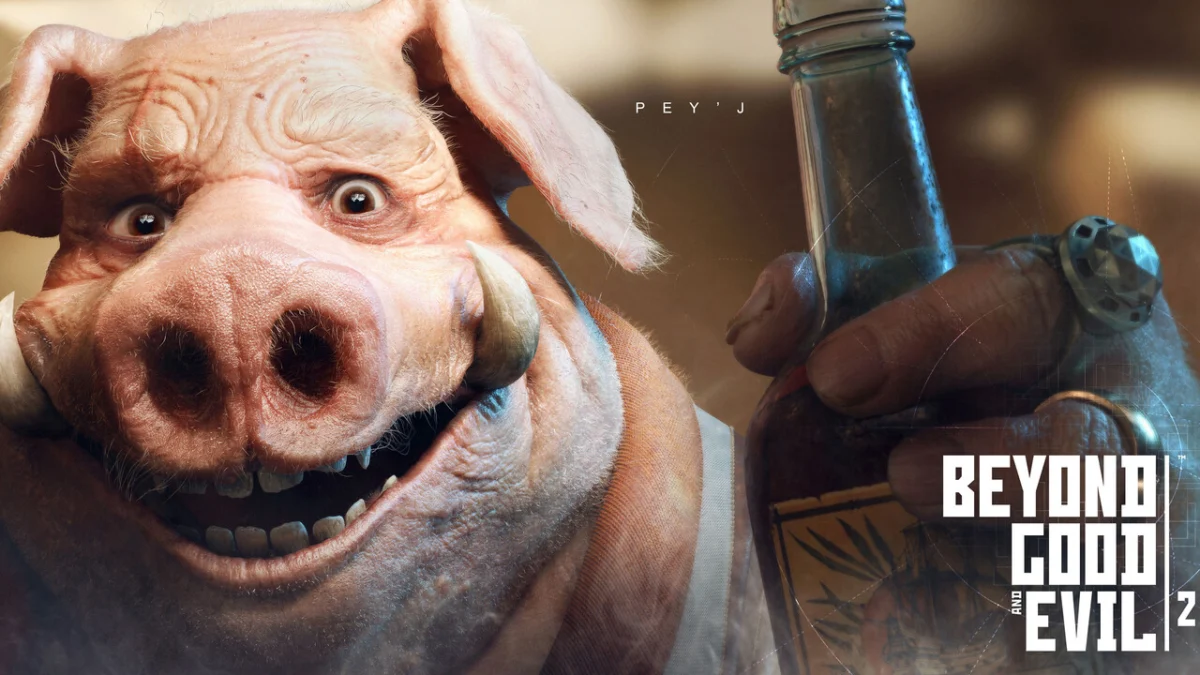
Nearly two decades after its initial tease, Beyond Good & Evil 2 remains the gaming industry’s most prominent "ghost." Despite being a title that has theoretically been in development for eighteen years, a recent investigation by the French outlet Origami paints a sobering picture: the project is still trapped in pre-production. With at least 250 developers at Ubisoft Montpellier currently assigned to the title, the game stands as a testament to the volatility of modern AAA development, characterized by shifting creative visions, technical hurdles, and a mounting sense of uncertainty within the studio walls.
The Endless Pre-Production Cycle
The core revelation from Origami’s investigation is the stagnation of the development pipeline. Despite Ubisoft Montpellier dedicating a significant workforce of at least 250 people—supported over the years by satellite studios like Ubisoft Paris and Ubisoft Mainz—the game has yet to clear the internal "Gate" reviews required to enter full-scale production.
In Ubisoft’s internal hierarchy, a "Gate" review is a critical milestone where project leads must demonstrate that a title meets specific criteria to justify further funding and resources. For Beyond Good & Evil 2, these gates have become an insurmountable wall. Instead of moving forward, the team has been caught in a loop of re-evaluating, re-defining, and discarding core mechanics. The game’s world structure, combat systems, and narrative flow have been overhauled multiple times, effectively resetting progress and keeping the project in a state of perpetual design iteration rather than construction.
Chronology of a Development Nightmare
To understand why Beyond Good & Evil 2 is currently in such a precarious position, one must look at the timeline, which reads more like a series of false starts than a coherent development roadmap.
2003–2008: The Initial Promise
The original Beyond Good & Evil, released in 2003, remains a cult classic, beloved for its charm and innovative gameplay. Following its success, rumors of a sequel circulated for years. In 2008, Ubisoft finally pulled back the curtain, showing a cinematic teaser that promised to expand the world of Jade and Pey’j. However, the project soon fell into development hell. Serienerfinder Michel Ancel and his team were pulled toward other internal projects, and the momentum stalled.
2015–2017: The Prequel Rebirth
By 2015, reports surfaced suggesting the game had been canceled entirely. Ubisoft, however, refuted these claims, confirming in 2016 that development was back on track. In 2017, the game was re-announced, but with a massive caveat: it was no longer a sequel, but a prequel. This version focused on "System 3," a sprawling space-pirate setting. This era of development saw massive technical demos and high-profile E3 presentations, leading many to believe that the game was finally on the home stretch.
2018–2026: The Identity Crisis
Since the 2018 E3 showcase, the public has heard very little. Behind the scenes, the game has undergone a radical identity shift. Between 2019 and 2022, the project was reportedly designed as a "connected universe" multiplayer game, heavily influenced by the success of Fortnite and Destiny. The goal was to create a living, breathing, open world where players would naturally encounter one another.
However, as industry trends shifted, so did the vision. The team pivoted away from the always-online multiplayer model, reducing the focus on large-scale social interaction in favor of a more traditional, narrative-driven single-player experience with optional co-op. This pivot required massive overhauls to the combat system, which is now reportedly leaning toward the style found in Insomniac’s Spider-Man titles, all while running on the proprietary "Voyager" engine—the same technology that has been in development for years to facilitate the game’s massive, seamless space-travel mechanics.
Structural and Cultural Challenges
The struggle of Beyond Good & Evil 2 is not merely technical; it is deeply rooted in the organizational culture at Ubisoft. According to insiders, the project has suffered from a lack of consistent leadership and a clear vision of what the final product should look like.
The "Gate" System and Creative Drift
The "Gate" review system is designed to provide accountability, but in the case of this title, it has created a culture of anxiety. Because the requirements for passing these gates have been changed so frequently, developers are often forced to scrap work that took months to produce. This "sunk cost" cycle leads to a sense of exhaustion. Developers report that the fundamental question—what is this game?—remains unanswered for many of the newer hires, who find themselves struggling to understand the project’s core identity after so many iterations.
The Talent Drain and Morale
The constant reshuffling of staff and the lack of a firm release date have taken a toll on morale. While newer employees often start with high energy, the realization that they are working on a project that has been in "pre-production" for nearly a decade is disillusioning. The loss of key creative figures and the constant reorganization of Ubisoft’s internal studios have stripped the project of the "untouchable" status it once held.
Official Stance vs. Internal Reality
Ubisoft has publicly maintained that Beyond Good & Evil 2 is a priority. Even as recently as January 2026, when the company announced significant restructuring and the cancellation of several other unannounced projects, Beyond Good & Evil 2 was conspicuously spared. In statements to media outlets like Kotaku, the publisher reinforced that the game remains in active development.
However, the contrast between these corporate reassurances and the reality on the ground is stark. Employees describe a sense of "orienting helplessness." While leadership has not officially canceled the project, they have also failed to provide a concrete roadmap, leaving the 250-strong team in a state of limbo. The project is currently at a make-or-break juncture: the next "Gate" review is expected to be the final determining factor for whether the project enters a sustainable, standard production cycle or if it is finally shelved for good.
Implications for the Future
The saga of Beyond Good & Evil 2 serves as a case study in the dangers of "feature creep" and the pitfalls of an over-reliance on internal proprietary technology. By attempting to chase industry trends—moving from a sequel to a prequel, then to a massive multiplayer universe, and finally back to a narrative-driven adventure—Ubisoft has effectively sabotaged its own progress.
What happens if it stays in limbo?
If the project fails its next internal review, the financial write-off would be substantial, but perhaps less damaging than the reputational hit of releasing a title that feels disjointed or outdated. The gaming industry has evolved significantly since 2008; a game that relies on technical promises made a decade ago may struggle to compete in today’s market, where player expectations for narrative depth and graphical fidelity have moved beyond the initial scope of the Beyond Good & Evil 2 design documents.
The "Last Chance" Outlook
The coming months will be critical. If the development team can successfully align their vision with the current "Gate" requirements, we may see a pivot toward a more focused, manageable production phase. However, if the cycle of iteration continues, the probability of cancellation rises significantly. For now, the game remains a paradox: a project with a massive budget and a dedicated team, yet one that has failed to define itself in a way that allows it to actually exist in the hands of the players.
The community remains hopeful, as the legacy of the first game is immense. Yet, after 18 years of "coming soon," the patience of both the industry and the consumer is wearing thin. Beyond Good & Evil 2 is no longer just a game; it is a warning about the fragility of creative vision in the face of corporate bureaucracy and the relentless, often self-defeating, pursuit of perfection.