As Europe grapples with intense heatwaves, a meteorological paradox confuses the public: If the sun reaches its highest point at noon, why does the thermometer keep climbing well into the late afternoon?
The shimmering haze above the asphalt, the collective search for shade, and the rising chorus of voices calling for a "siesta" culture in Germany are all hallmarks of a summer under siege. With temperatures frequently exceeding 30 degrees Celsius (86°F) and regional spikes pushing toward 37°C or higher, the public perception of "midday heat" seems intuitively correct. However, meteorologists point out a fundamental discrepancy between the sun’s position in the sky and the atmospheric response on the ground.
The Core Paradox: Why Noon Is Not the Hottest Hour
To the average person, the term "midday heat" implies that the period between 12:00 PM and 2:00 PM is the most punishing. Yet, data from the German Weather Service (DWD) consistently shows that the daily maximum temperature—the peak of the heat—is rarely recorded at noon. Instead, it frequently occurs between 3:00 PM and 6:00 PM, and in some extreme cases, even later.
This phenomenon is not a meteorological error; it is a matter of physics and energy balance. To understand it, one must distinguish between solar intensity and ambient air temperature.
The Badhtub Analogy: A Lesson in Thermal Inertia
Tobias Reinartz, a meteorologist at the DWD, utilizes a simple yet effective metaphor to explain this lag: the "Badhtub Model."
Imagine the Earth’s atmosphere as a bathtub. The sun’s radiation acts as a faucet. In the morning, when the sun is low on the horizon, the faucet is only slightly open. Water (solar energy) flows in, but it also drains out almost immediately as the ground and air lose heat through radiation and convection. As the sun climbs higher, the faucet is opened wider.
By the time the sun reaches its zenith—the solar noon—the inflow of solar energy is at its absolute maximum. However, the bathtub is not yet at its fullest. Because the energy being added still exceeds the energy being lost, the "water level" (the temperature) continues to rise. It is only in the late afternoon, when the sun has descended and the "faucet" has been closed enough that the inflow no longer outweighs the outflow, that the temperature reaches its absolute peak. Only then does the cooling process begin.
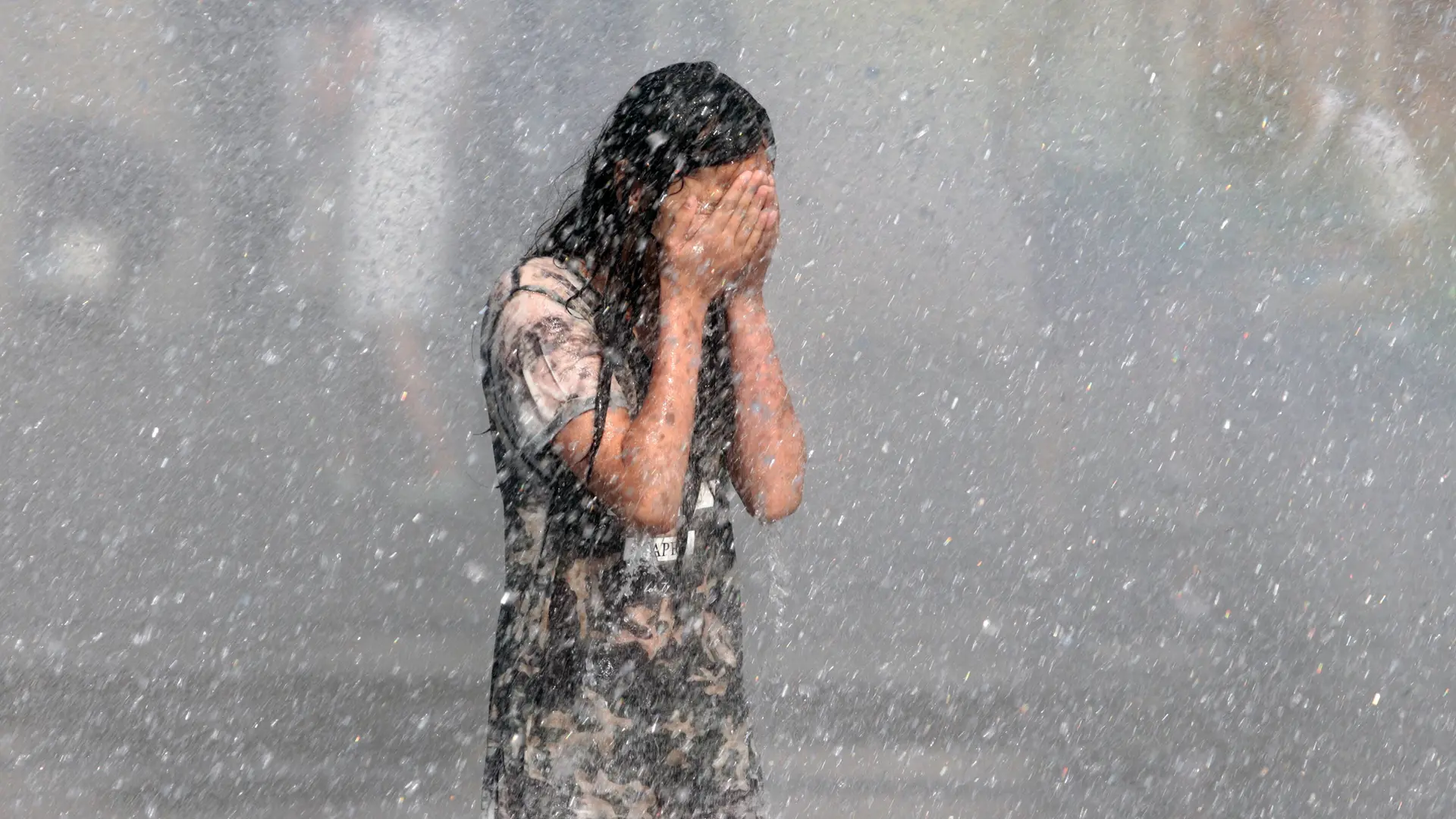
Chronology of a Heatwave: From Dawn to Dusk
To illustrate this, we can look at recent temperature profiles across German cities. In Saarbrücken, a peak of 37.5°C was recorded at 3:50 PM. In Kitzingen, the heat intensified until nearly 5:00 PM.
This delayed peak is a consistent feature of the summer climate, provided the skies remain clear. The process follows a predictable, yet often misunderstood, timeline:
- Morning (6:00 AM – 10:00 AM): The sun rises and begins to heat the surface. The atmosphere is generally cool after the night, and the ground starts absorbing solar energy.
- Solar Zenith (12:00 PM – 1:30 PM): The sun is at its highest point in the sky. The radiation intensity is at its peak. While the air temperature is rising rapidly, it has not yet reached its potential maximum because the thermal mass of the environment is still "loading."
- The Accumulation Phase (1:30 PM – 4:00 PM): Even as the sun begins to descend and the radiation intensity weakens, the ground and surrounding structures continue to radiate stored heat into the air. The net energy balance remains positive.
- The Daily Maximum (4:00 PM – 6:00 PM): The point at which the energy loss from the Earth finally catches up to the solar input. This is when the highest thermometer readings of the day are observed.
- Cooling Phase (6:00 PM – Dawn): The sun is low or below the horizon. The Earth sheds heat rapidly into the night sky, and temperatures begin their downward trajectory.
The Human Factor: Why "Midday" Still Feels the Worst
If the temperature is technically higher at 4:30 PM, why does the period around 1:00 PM feel so much more intense? The answer lies in the human physiological experience versus the meteorological measurement.
Meteorological data is standardized by measuring air temperature in a shaded, well-ventilated enclosure (a weather station). This ensures that we are measuring the temperature of the air itself, not the heat absorbed by an object sitting in direct sunlight.
However, humans are not shielded by these standardizations. At solar noon, the sun’s rays hit the Earth at the steepest possible angle. This means the radiation is passing through the thinnest possible layer of the atmosphere, resulting in the highest concentration of UV radiation and direct thermal energy hitting the skin.
When you stand in the sun at 1:00 PM, you are experiencing "Radiant Heat." Even if the thermometer in the shade says 30°C, the energy absorbed by your body is vastly higher than it would be at 5:00 PM, when the sun is lower, the light is filtered through more atmosphere, and the radiation is less intense. Therefore, the "Midday Heat" is not a myth regarding the intensity of the sun, but a misnomer regarding the ambient air temperature.
Implications for Public Health and Urban Planning
The realization that the hottest air temperatures occur in the late afternoon has significant implications for how cities and individuals should prepare for extreme weather.

1. The Timing of Ventilation
Many people open their windows in the afternoon, believing that the heat has peaked and it is now cooling down. However, if the daily maximum is reached at 5:00 PM, opening windows at 3:00 PM only invites the hottest air of the day into the home. Experts recommend keeping windows closed and blinds drawn until the evening, specifically after the sun has set, to allow for the effective exchange of indoor and outdoor air.
2. Urban Heat Island Effects
The "Badhtub" model is exacerbated in cities due to the Urban Heat Island (UHI) effect. Concrete, asphalt, and brick buildings have high thermal mass. They absorb the solar energy throughout the day and act like massive heaters, releasing that energy slowly throughout the night. This prevents the "drain" in the bathtub from working efficiently, leading to "tropical nights" where temperatures fail to drop below 20°C, providing no respite for the human body.
3. Occupational Safety and Policy
The push for a "Siesta" or a shift in working hours is gaining traction. If the most physically taxing work is performed during the peak of solar radiation (noon to 2:00 PM), workers face higher UV exposure. If work continues until 5:00 PM, they face the highest ambient temperatures. Policymakers are now looking at more flexible labor laws that allow for longer breaks during the 1:00 PM – 4:00 PM window, which balances the need for productivity with the reality of thermal stress.
Scientific Data and Future Projections
Climate models indicate that as global temperatures rise, the duration and frequency of these extreme heat events are increasing. The lag between solar zenith and peak temperature is a constant of physics, but the baseline temperature from which the day starts is rising.
According to data from the German Weather Service, the last decade has seen a higher frequency of "heat days" (days exceeding 30°C). Furthermore, the trend suggests that the cooling phase in the evening is becoming less effective due to higher nighttime temperatures. This lack of overnight recovery is the most dangerous aspect of modern heatwaves, as it places a cumulative stress on the human cardiovascular system.
Conclusion: Understanding the Science of Survival
The distinction between "midday heat" and "late afternoon peak" is more than a trivial academic debate. It is a vital piece of information for anyone living in a warming climate. By understanding that the air temperature continues to rise even as the sun’s direct intensity begins to wane, individuals can make better decisions regarding when to exercise, when to ventilate their homes, and when to seek shade.
While the sun’s highest point marks the height of the solar radiation challenge, the clock of the atmosphere tells a different story—one that demands caution well into the evening hours. Recognizing this distinction is not just about understanding meteorology; it is about protecting health in an increasingly hot world.